Ferrets as House Pets: Ten Qualities Worth Considering
Emerson Turner
Ten Qualities That Make Ferrets Worth Considering
1. Curiosity and play drive make them endlessly watchable
Hand a ferret a plastic grocery bag, a big cardboard tube, or a box, and it can stay amused for a long stretch. These animals investigate anything new in their space and pick up on changes almost immediately. Water, snow, leaves, and sand all invite digging and splashing. Small squeaky toys and other little pet-store toys are also favorites.
2. With patience and careful introductions, they can coexist with dogs and cats
Ferrets and other household pets can learn to get along, provided introductions are gradual and brief at first. Every meeting between new animals needs supervision. If a larger pet shows predatory behavior rather than playful interest, step in and protect the ferret, and take care not to reward rough play. Consistent supervision does a great deal to teach animals how to behave around one another.
3. Given attention and care, they are affectionate animals
A ferret needs roughly three to four hours outside its cage daily for play. Without enough attention, it will not be content — these are not animals that can stay caged around the clock. Their curious nature calls for space to play and explore. Because they are prone to accidental injuries, the environment must be safe: keep them away from electrical cords, objects that could fall on them, houseplants (they like to dig in them), and pools. Think of it as baby-proofing a room the way you would for a two-year-old. Keep their nails trimmed so they don't snag on fabric or carpet; when a nail catches, a ferret tends to panic and pull it loose too far, which can cause bleeding.
4. They look adorable in an outfit
You can sew or buy cute outfits to show off your ferret when friends or guests visit and you want it looking its best.

Why ferrets make great pets
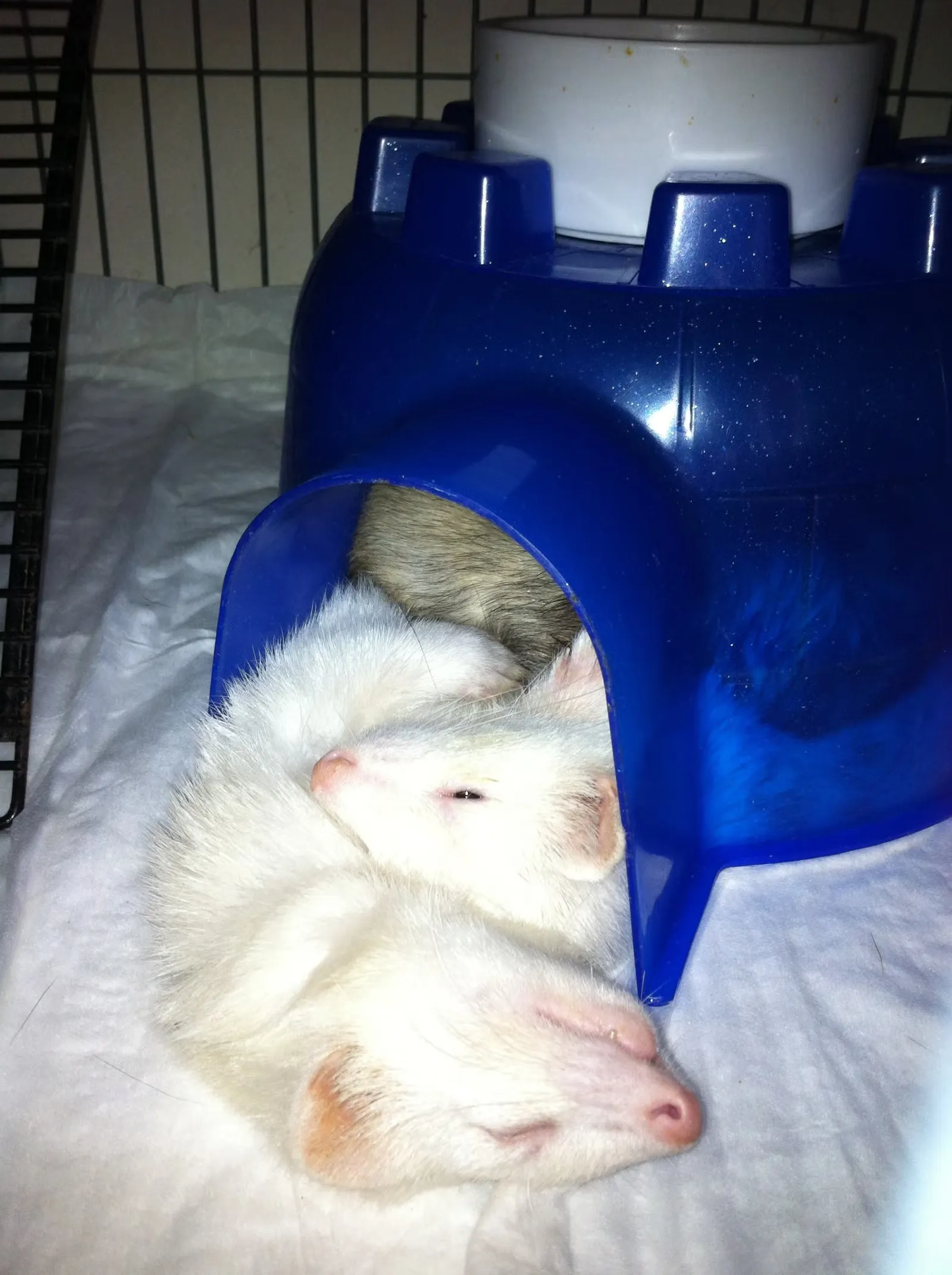
Ferrets are communal creatures: Joey, Al, and King are all piled in a house sleeping soundly together.
5. They are quiet, limited to footsteps, playful squeaks, and chirps
Ferrets don't make much noise. During play they chirp and squeak happily at their companions — no barking at the door, no howling. They are quiet enough that neighbors may never realize one lives nearby. A ferret may try to climb into your shoes to play or sit inside them, and they have been known to nibble toes, though training them out of it is quite easy. Every animal goes through a teething stage, and it is usually not a problem. Positive reinforcement works best: give plenty of attention for good behavior and emphasize rewards over punishment. With repetition, treats, and patience, they can be taught to use a litter box outside the cage.
6. Compared with a large dog, they are relatively inexpensive — closer to the cost of a small kitten
Ferrets generally cost less to keep than dogs or cats, and they eat little — roughly as much as a small kitten. They drink from a water bottle, much like a hamster or rabbit. Wood chips should not be used as bedding because of their oils and ferrets' allergies. Puppy pads work well and can be bought online; the quilted Pee Pee Pads by Pet Select are among the best options, being highly absorbent and easy to roll up and seal in a plastic bag to contain odor. Baby wipes also work well for cleaning the plastic tray beneath the pads during changes. Ferrets like a clean cage, so change the pads every two to three days for a single ferret and daily if you have more than one. Pet stores sell bedding, but it can be quite messy; if your cage has hammocks or a soft sweater for your ferret to tunnel into and sleep, pads work fine on the cage floor and are easier to clean up.
7. They interact well with people and can learn tricks
Ferrets are smart and capable of learning tricks. With rewards, they can learn to roll over, shake hands, stand up, and perform other fun behaviors. Special ferret treats sold in pet stores work well — Bandits Brand ferret treats are a good choice. They also enjoy the taste of creamy peanut butter on a spoon or baby food bananas.
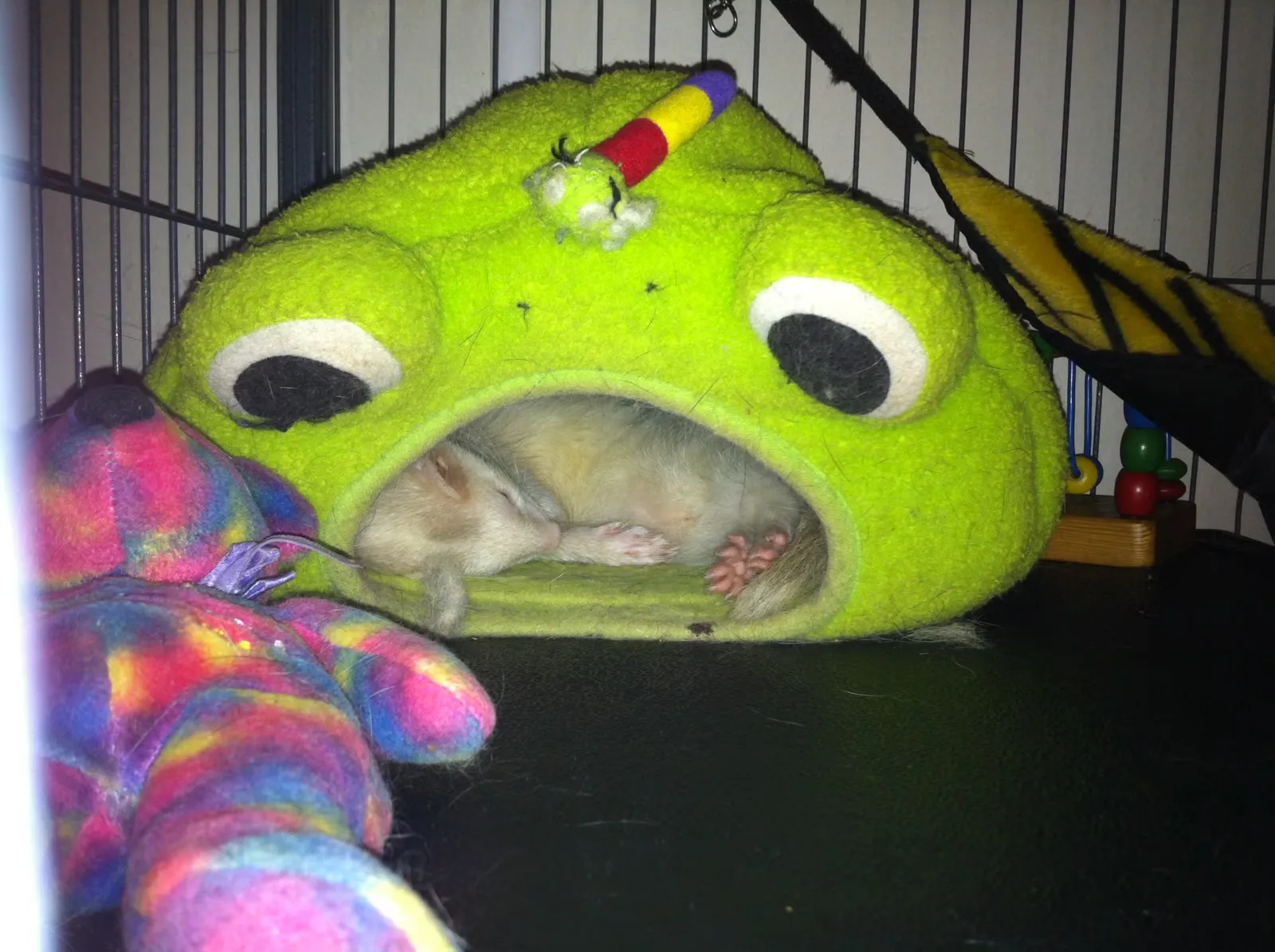
Shiva is sleeping in her favorite spot, a big green frog. She collects green plastic bathtub frogs as well as earrings and money in her stashes.
8. Pet-store ferrets may have had their scent glands removed
Ferrets bought in US pet stores are mostly Marshall ferrets, and they usually have their scent glands removed in a sometimes controversial procedure called descenting. This leaves them smelling like any other house pet. They can be bathed once every week or two with ferret shampoo, taking care not to get soap or water in their ears or eyes.
9. They suit children who can spend enough time at home playing with them (three to four hours daily)
At twelve, most children are mature enough to handle and care for an exotic pet carefully with supervision. Through their teenage years, they can learn the responsibility of feeding a pet and cleaning up after it. A ferret is hard to keep as an indoor pet if the children are outside most of the time. Ferrets lack the homing instinct of a dog or cat and will get lost because they are always chasing something new. Train them right after you get them to come to the sound of a squeaky toy, in case of fire or another emergency; if they slip outside by accident, they may hear the sound and return.
10. Ferrets stash their favorite things and are natural collectors
Ferrets love to collect favored objects. Each has its own personality and gravitates to different items — shoes, foam slippers, rubber objects, squeaky toys, shiny keys, money, or jewelry. The stash usually ends up under a bed or dresser or in a closet.
Ferret Diet
- High-protein ferret food
- Ferrivite vitamins
- Plenty of fresh water
- Ferret treats flavored with protein, bananas, or peanut butter
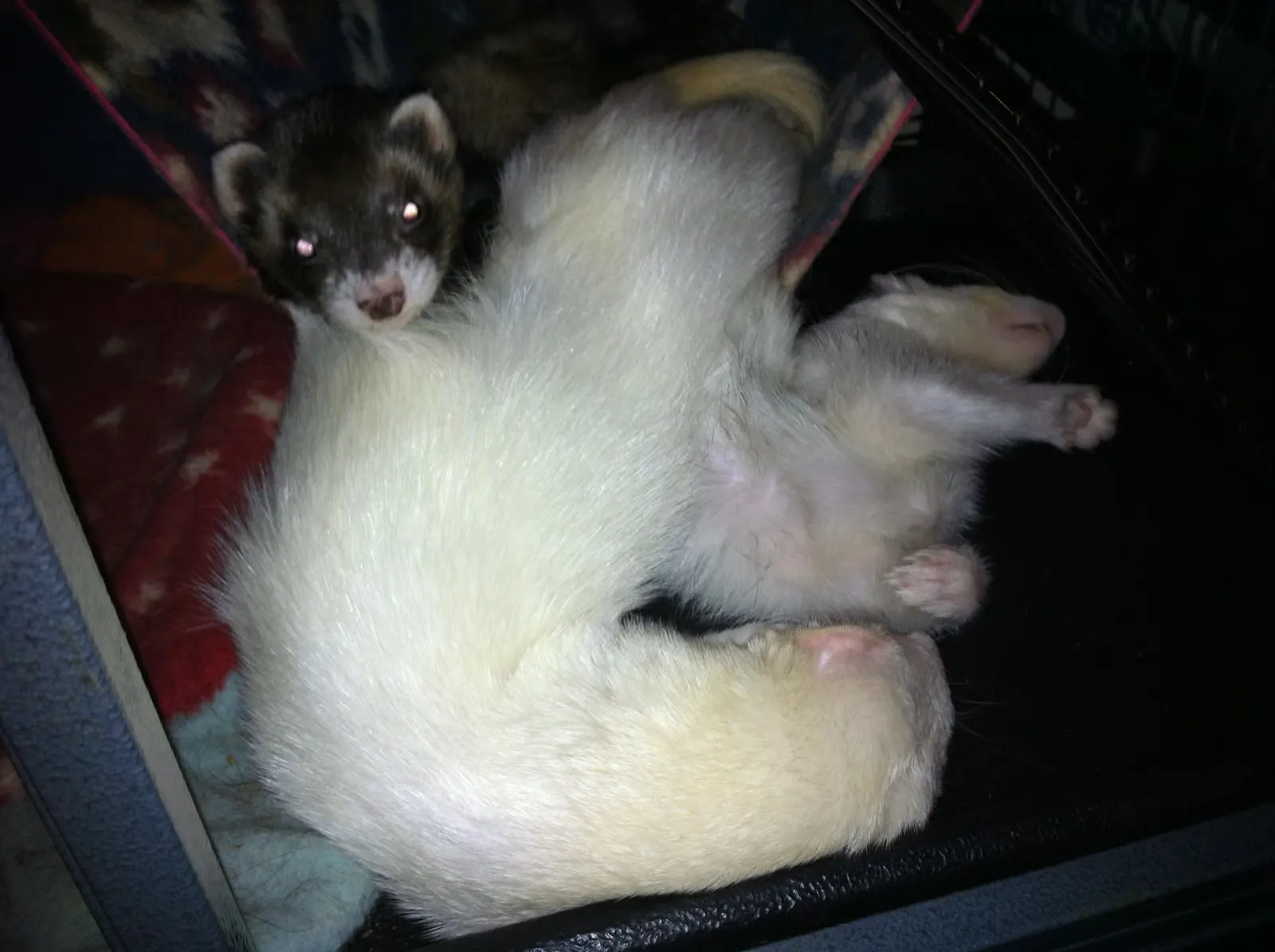
Three ferrets (Joey, Al, and King) in a hammock. They like to twist into comical sleeping positions.
This article is accurate and true to the best of the author's knowledge. It is not meant to substitute for diagnosis, prognosis, treatment, prescription, or formal and individualized advice from a veterinary medical professional. Animals exhibiting signs and symptoms of distress should be seen by a veterinarian immediately.