Bringing a New Mouse Home? Here's How to Merge Two Males Without Bloodshed
Robin Watson
When Pet Store Advice Contradicts Itself
Walk into almost any pet store and you'll see a sign explaining that mice are social creatures who suffer when kept alone. Yet the moment you try to buy two—especially two males—an employee will often warn that they'll fight. Both claims have truth to them. Male mice do have an instinct to settle dominance, and that can lead to squabbles or worse. But they also benefit from company. This guide focuses on male mice, since they present the trickiest introduction challenges.
The Simplest Route: Raise Them Together
If you can, purchase young mice from the same litter and bring them home at the same time. Mice who grow up as cagemates—like our Sasuke and Gaara—usually have an easier time sharing space as adults than strangers do. That said, even this approach has pitfalls. We once placed two juveniles with an adult male, Hannibal, thinking the age gap would let Hannibal settle into the alpha role without conflict. Initially it seemed to work. But when Sasuke matured, his own alpha tendencies emerged, and his challenge to Hannibal turned violent.
The lesson: introduce mice either before any of them hit maturity or after all of them are fully grown. Mixing developmental stages often backfires later.
The catch is that mature mice can be hard to find. Most stores sell only juveniles and adolescents. We could have waited for Gaara and Sasuke to grow up before introducing them to Hannibal, but we lacked the experience to know that at the time.
Featured Gallery
1 / 2

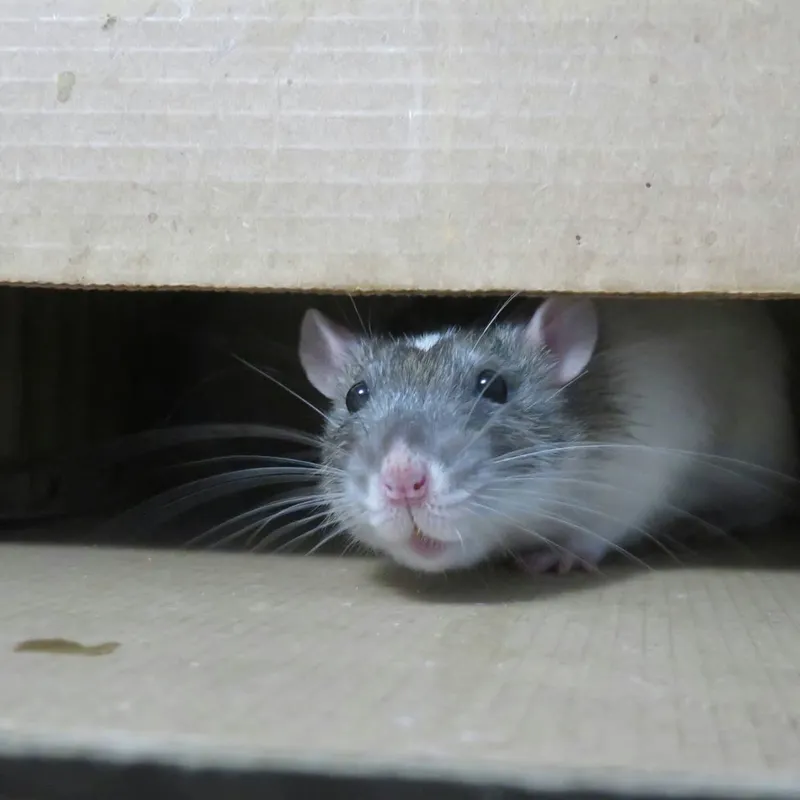
Put mice together in a box, and territorial fights are less likely.
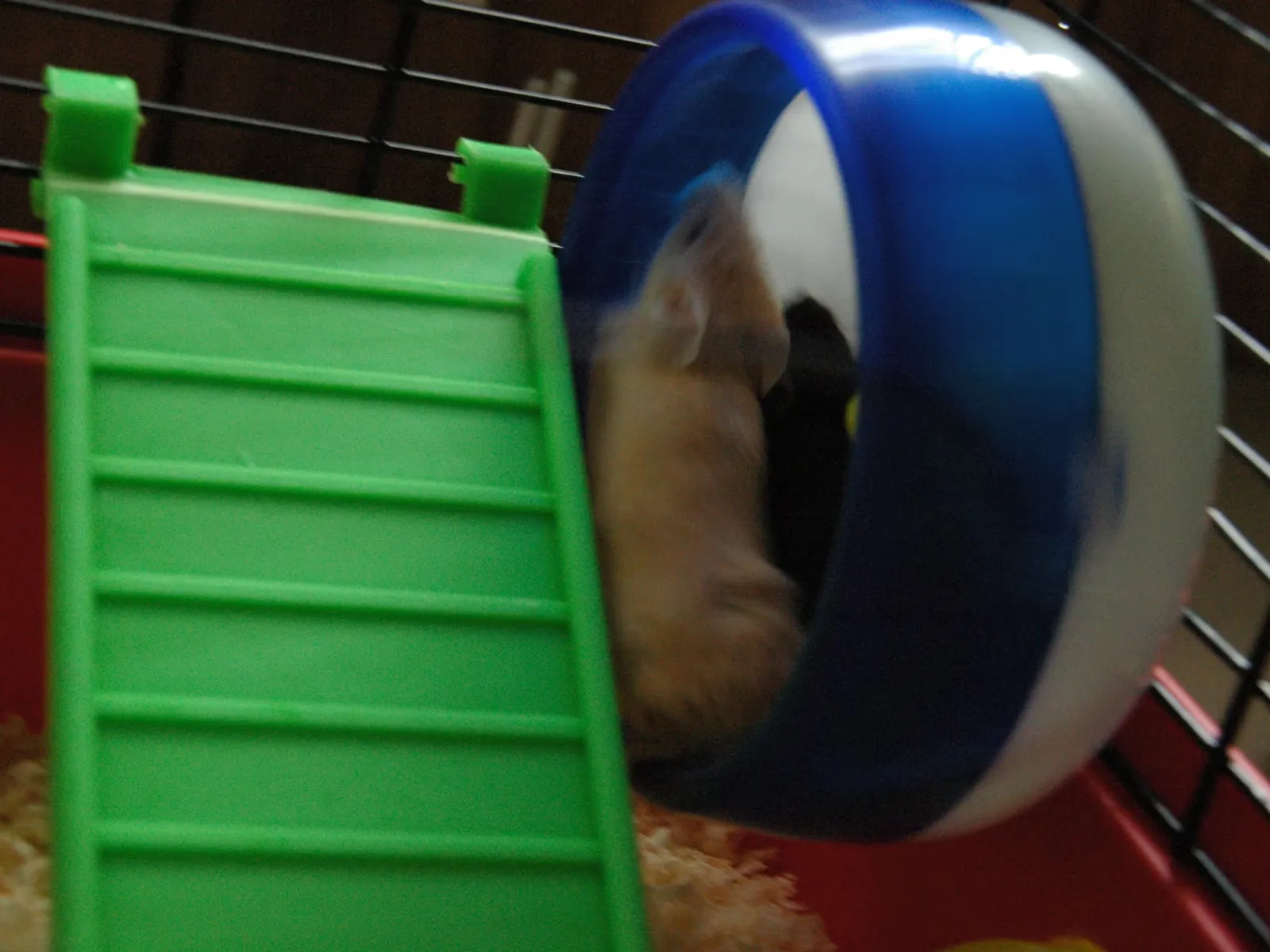
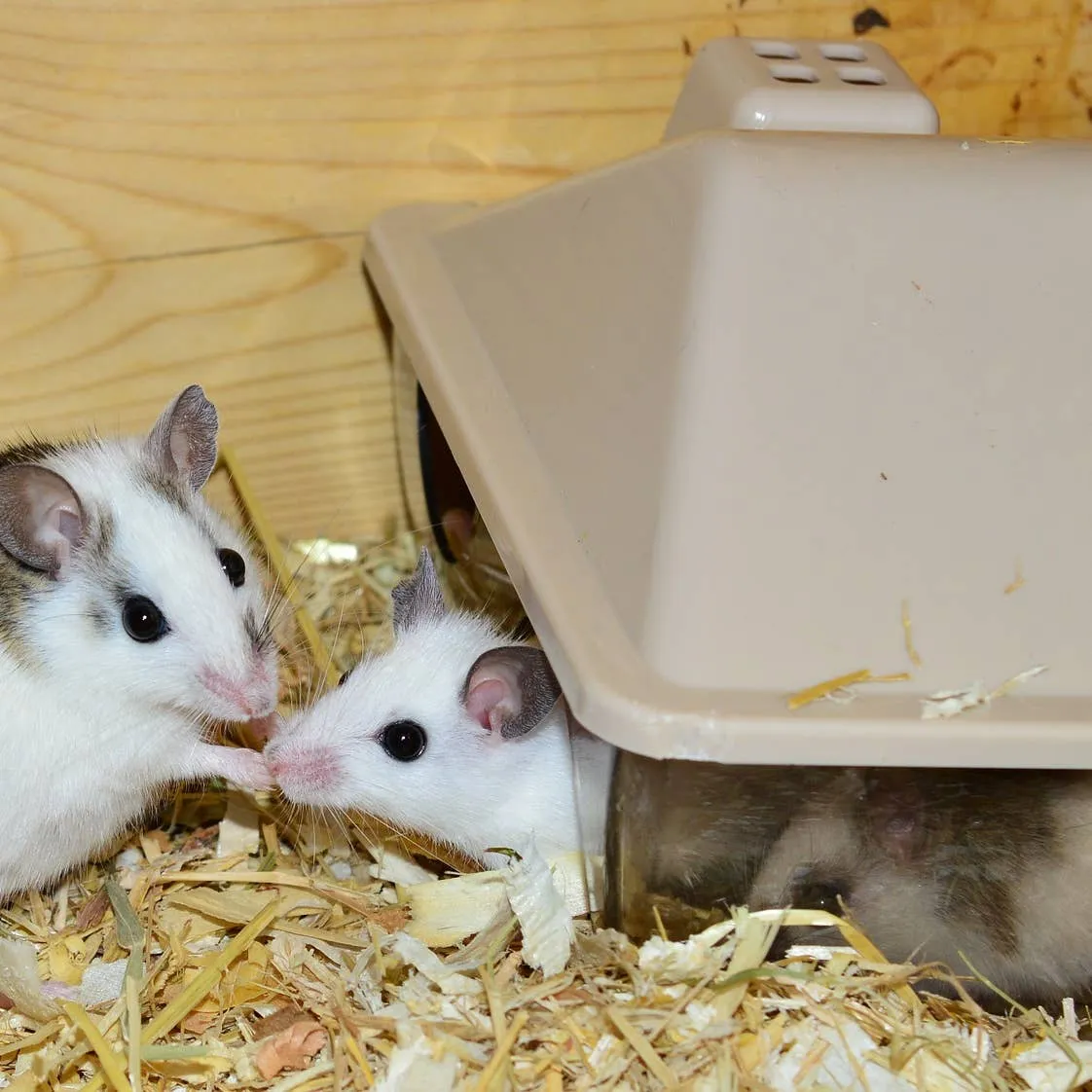
Mice are social and enjoy doing things together.

Mice will play together, but scuffles are inevitable.

Sometimes, even mice who live together peacefully will have conflicts.

What do you see: Two mice having fun by offsetting the weight of their wheel, or two mice fighting for control?
Techniques for Introducing Mice
Below are the methods we tested, along with our sense of how well each one worked. First, gather these supplies:
- One cage per mouse, even if some are just small travel carriers
- A box with high, smooth sides—plastic is ideal, but thick cardboard can work
- Fresh bedding
- Several tubes and small boxes so each mouse can retreat if it wants to
Start on Neutral Territory
Mice mark and defend territory. Dropping a newcomer into an established cage almost guarantees a fight. Instead, put all the mice into a box none of them has claimed. Young mice in particular can jump and climb, so the sides should be roughly two feet tall and smooth. If the water bottle gives them enough height to leap out, wedge it into a corner and cover that section with a piece of cardboard.
Because no mouse has scent-marked the box, none feels territorial. With that trigger removed, the mice tend to focus on each other rather than on defending space.
Dab Vanilla on Their Rears
The idea is that vanilla overwhelms each mouse's individual odor. If every mouse smells the same, the reasoning goes, they'll accept one another as friends.
We tried it. It may have helped; it certainly didn't hurt. What we observed, though, was three mice spending twenty minutes cleaning vanilla off their fur, then sniffing one another. Every introduction attempt that included vanilla failed. That's only our experience, so I wouldn't dismiss the method outright.
Time It Just Before They Normally Sleep
If you've kept a mouse for any length of time, you know its sleep schedule. Most mice are daytime sleepers, so a morning introduction may leave them too drowsy to care about strangers. But unlike the vanilla trick, this approach pushes them to do something together. Mice who don't know each other—even mice who dislike each other—will huddle for warmth while sleeping. Ours seemed to bond during those shared naps.
Let Small Squabbles Happen
Once together, the mice will focus on sorting out who ranks where. You'll hear squeaking and likely see a fair amount of male-on-male mounting. Let it be. The lower-ranking mice don't enjoy it, but it doesn't injure them, and they need to determine who's in charge. The alpha mouse tends to take responsibility for grooming the others and building the nest; dominance doesn't necessarily mean tyranny.
Keep a close eye, though, to distinguish hierarchy-setting from genuine fighting.
Stay Patient and Keep Trying
We attempted introductions on three separate weekends. The first two ended badly, and we gave up. Hannibal went back to living alone, while Gaara and Sasuke moved into a new cage together. A few days later, I noticed Gaara—normally a laid-back mouse—picking on Sasuke. It was irritating, but instead of separating them, I wondered what would happen if I brought the more aggressive alpha male back into the mix. When I put all three in the box again, they began to get along.
Give It at Least a Day
One source told us that if no fight occurred within the first hour, the mice probably wouldn't fight at all. That wasn't true for us.
Leave them in the box for at least 24 hours, watching closely—I kept the box beside my bed. If they still seem tolerant of each other after a day or two, you can try housing them together.
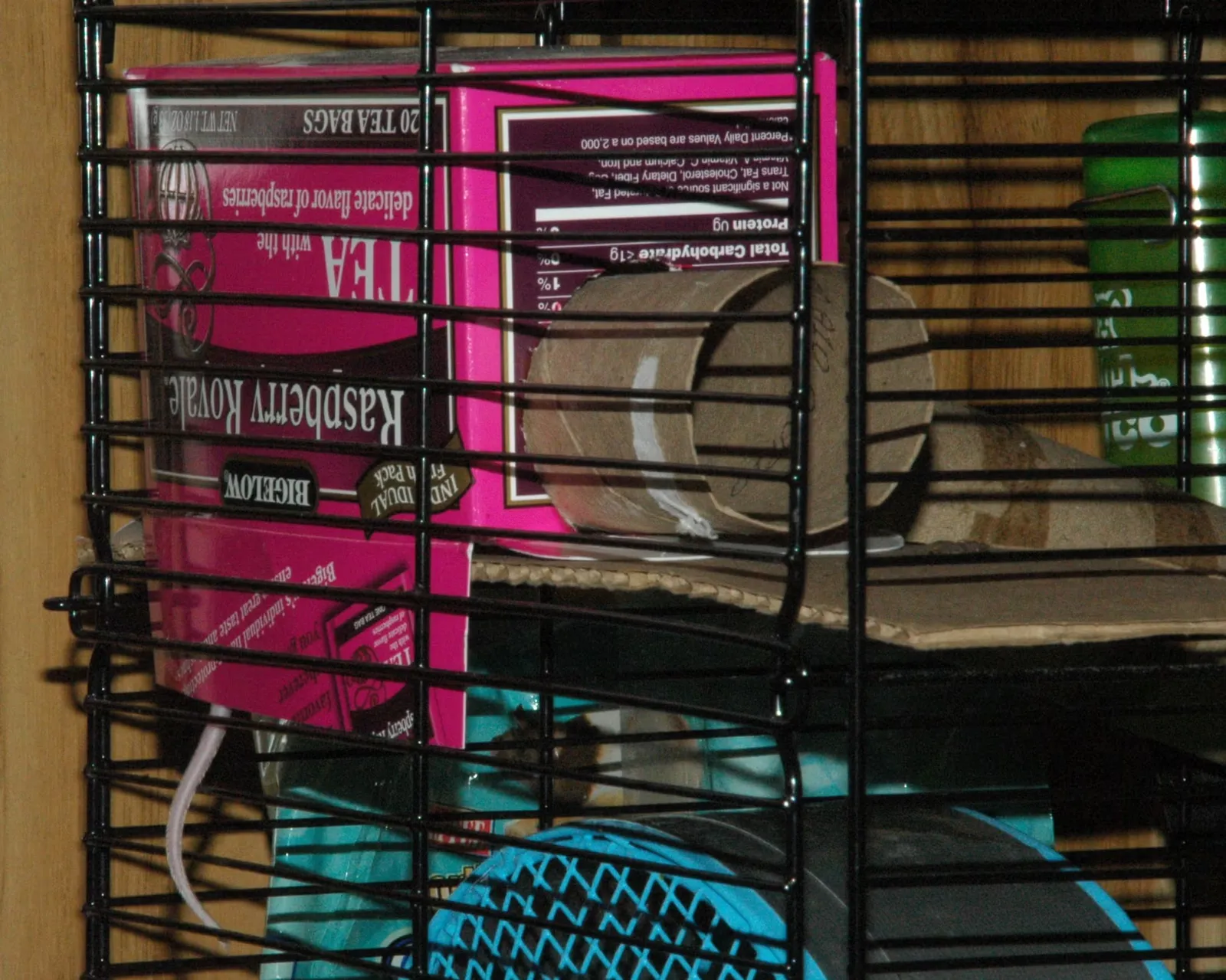
Use boxes, cardboard tubes, and slats to create a changeable environment. Mice will more likely accept new friends if the cage feels different.
Moving Them into a Shared Cage
At this stage, you should still have one cage per mouse. If you have three or more mice, get at least two cages that can connect. A typical cage should house no more than two mice. So with a larger group, arrange for several cages to be linked together. Mice need room.
Clean and Rearrange the Cage
This step requires care. One cage already belonged to a resident mouse. Before adding the newcomers, clean it thoroughly so no scent remains to suggest ownership. If possible, also change the layout. That makes the original mouse feel as if it has moved into a new place, even if it recognizes the cage itself.
If one cage is new—and at least one should be, since you need one per mouse—put them in that one first. They'll find their way to the other soon enough, but the less familiar they are with the cage, the less likely they are to fight over it.
Don't Assume the Job Is Finished
Even if they accept each other now, a reason to fight may appear later. After all, everyone has had a bad roommate. I once lived with someone who hoarded trash, never showered, stole from me, and ate my food. After he finished most of a cake I'd baked, I injected laxatives into the last piece and let him have it. Mice rarely have access to laxatives, so they're more likely to fight to the death.
Hannibal, Sasuke, and Gaara lived together as friends for about two months with only minor squabbles. Then one day Sasuke tired of being dominated, fought back, and injured Hannibal badly. Both survived, but we could never put them near each other again. They had to live in separate cages and could not be out at the same time.
That's our story, and I can't claim it will apply to every mouse you bring home. These animals resemble humans in having complex psychology. Treat our experience as a guideline and prepare for the possibility of failure. If you succeed, leave a comment and tell me what you did.
Pay Attention to Your Alpha Mouse
Since writing this article, we've had several more mice, and I've noticed a pattern when housing males together. As mentioned, the three mice in the photo lived in relative harmony until Sasuke reached adulthood and became the group's alpha. We had to separate him. Sasuke lived alone afterward, while Hannibal and Gaara spent the rest of their lives together without even a minor squabble.
After Hannibal and Gaara died, we bought two female mice as replacements. One turned out to be pregnant, so we ended up with three more. Sasuke stayed in his own cage, the females got one cage, and the males—Sean Bean and Jon Snow—lived together.
Expect Changes When the Alpha Dies
The two brothers lived together with a fair amount of discord—typical for siblings—but got along well most of the time. Then Sasuke died, and things began to shift. Sean Bean grew more aggressive and territorial. When the fighting worsened and Sean Bean terrified Jon Snow into spending all his time in a small corner away from food and water, we separated them.
Test this at your own risk, and always watch male mice closely, but I suspect males can coexist peacefully as long as the group's alpha is housed separately but nearby. Sasuke's death—even though they never interacted—left the room without the scent of an alpha mouse (or so I assume), and one of the others had to fill that role. If you try this, leave a comment; I want to know whether it works for others.
This article is accurate and true to the best of the author’s knowledge. It is not meant to substitute for diagnosis, prognosis, treatment, prescription, or formal and individualized advice from a veterinary medical professional. Animals exhibiting signs and symptoms of distress should be seen by a veterinarian immediately.