Essential Guide to Keeping Neon and Cardinal Tetras
Harper Kelly
Featured Gallery
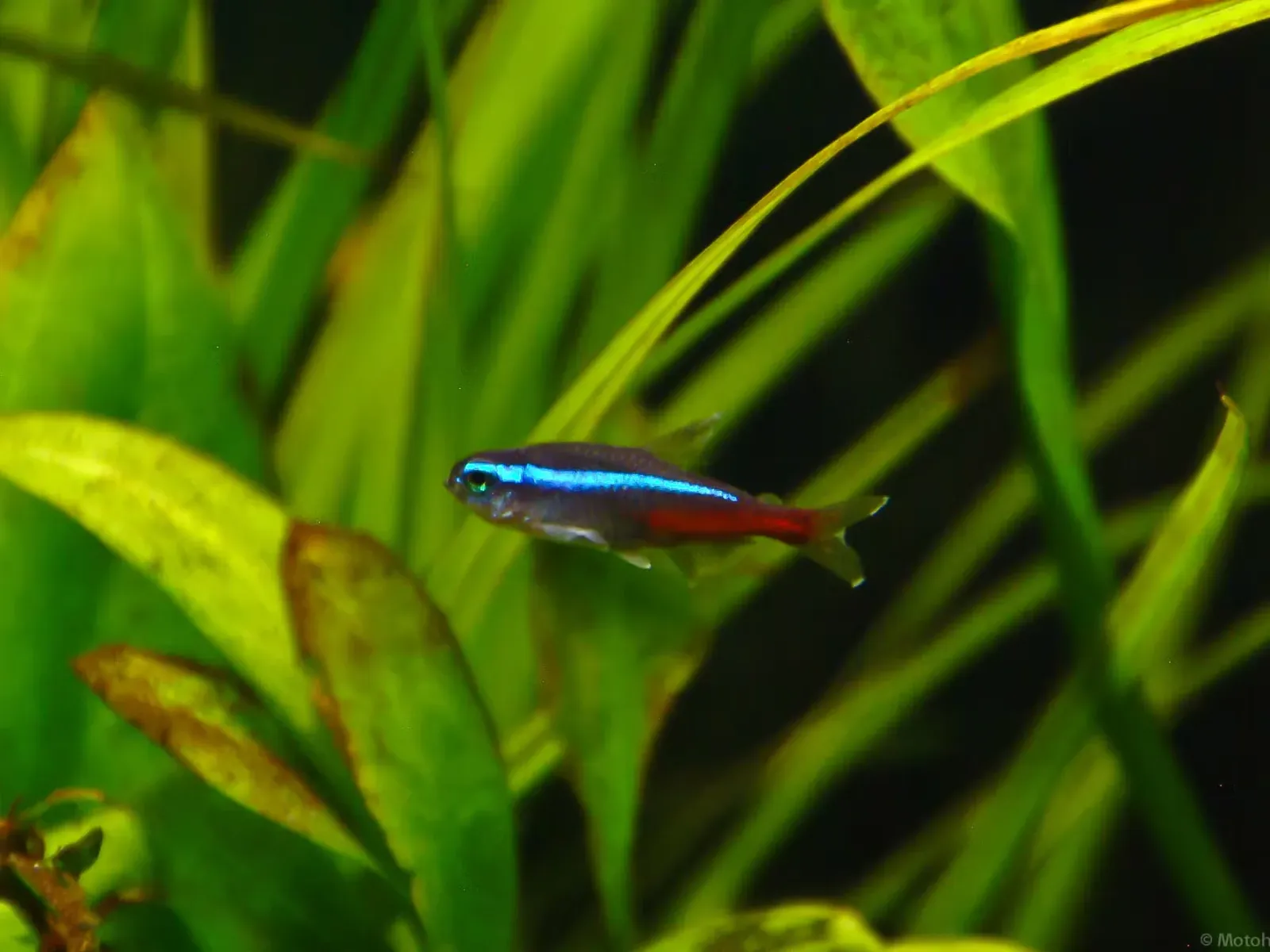
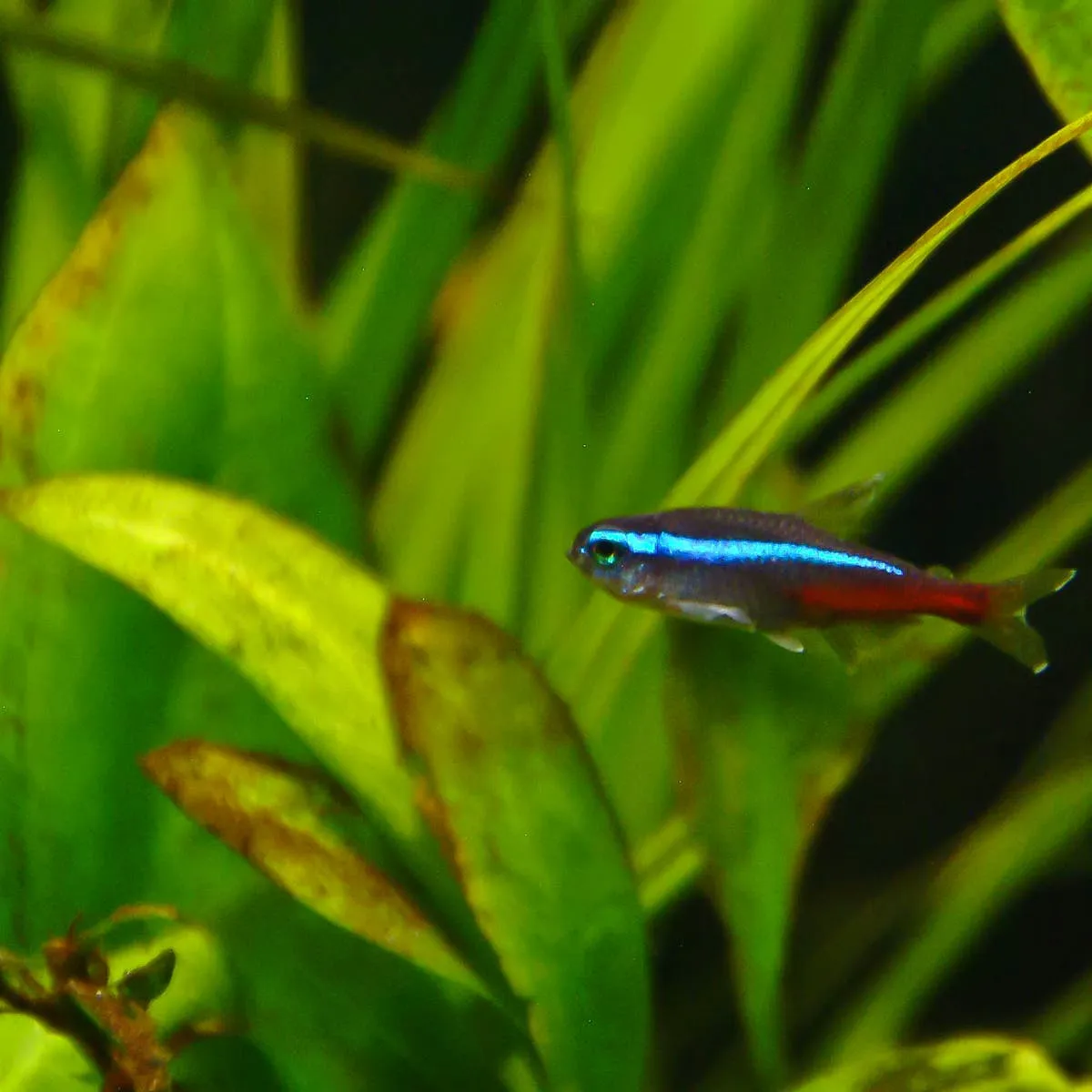
_Notice that the neon tetra’s red stripe extends only halfway across the body.
Moto "Club4AG" Miwa, CC-BY 2.0, from flickr_
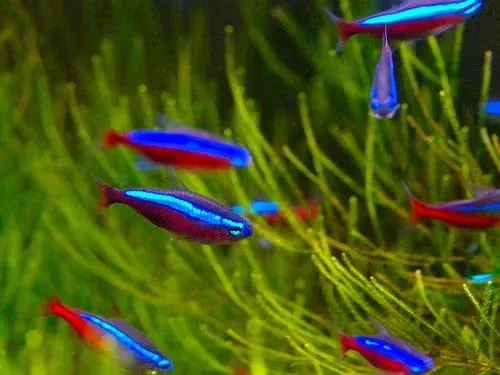
_Meanwhile, with cardinal tetras, the red line stretches from tail to head.
Leino Olé, CC-BY 2.0, from flickr_
Distinguishing Neon Tetras from Cardinal Tetras
The main visual distinction between neon and cardinal tetras lies in the red stripe along their lower body: in cardinal tetras, this stripe runs the entire length of the fish, while in neon tetras, it typically ends around the midpoint. Additionally, cardinal tetras usually attain a slightly larger size than neon tetras.
Comparing Neon and Cardinal Tetras
Neon tetras have a longer history in the aquarium trade, and extensive breeding and inbreeding have resulted in many individuals being more delicate and prone to stress. Cardinal tetras, by contrast, are relatively newer to the hobby and are closer to their wild counterparts, which can make them less adaptable to fluctuating water conditions. Because cardinal tetras are more sought after for their brighter colors, they often come with a higher price tag.
Care Requirements for Neon and Cardinal Tetras
Neon tetras can be quite hardy in an aquarium if they are not inbred. As one of the smallest fish available in the hobby, they should not be housed with predatory fish that could eat them. These fish are active and thrive in groups, so they must be kept in schools of at least six. In the wild, they inhabit heavily planted areas, so providing numerous hiding spots in the tank is important. It's also advisable to maintain slow water flow to replicate their natural habitat.
Cardinal tetras have care needs that closely mirror those of neon tetras, and the two species can coexist in the same tank. They may even school together. Like neon tetras, they are peaceful community fish and require the company of other schooling fish to feel safe. Since they come from the same natural environment as neon tetras, they also need abundant plant cover for hiding.
Cardinal Tetra Profile
Scientific Name: Cheirodon axelrodi
Family: Characidae
Distribution: South America, especially the Amazon Basin
Temperament: Peaceful, suitable for community tanks
Diet: Omnivorous, primarily insects and larvae
Lifespan: Approximately 5 years
Adult Size: Roughly 1.5–2 inches
Tank Size: 10 gallons or more, as they are active schooling fish
Temperature: 70–78°F
Neon Tetra Profile
Scientific Name: Paracheirodon innesi
Family: Characidae
Distribution: South America, particularly the Amazon Basin
Temperament: Peaceful, community fish
Diet: Carnivorous, mainly insects and insect larvae
Lifespan: Up to 10 years
Adult Size: About 1.25–2 inches
Tank Size: 10+ gallons, as they are active schooling fish
Temperature: 70–78°F
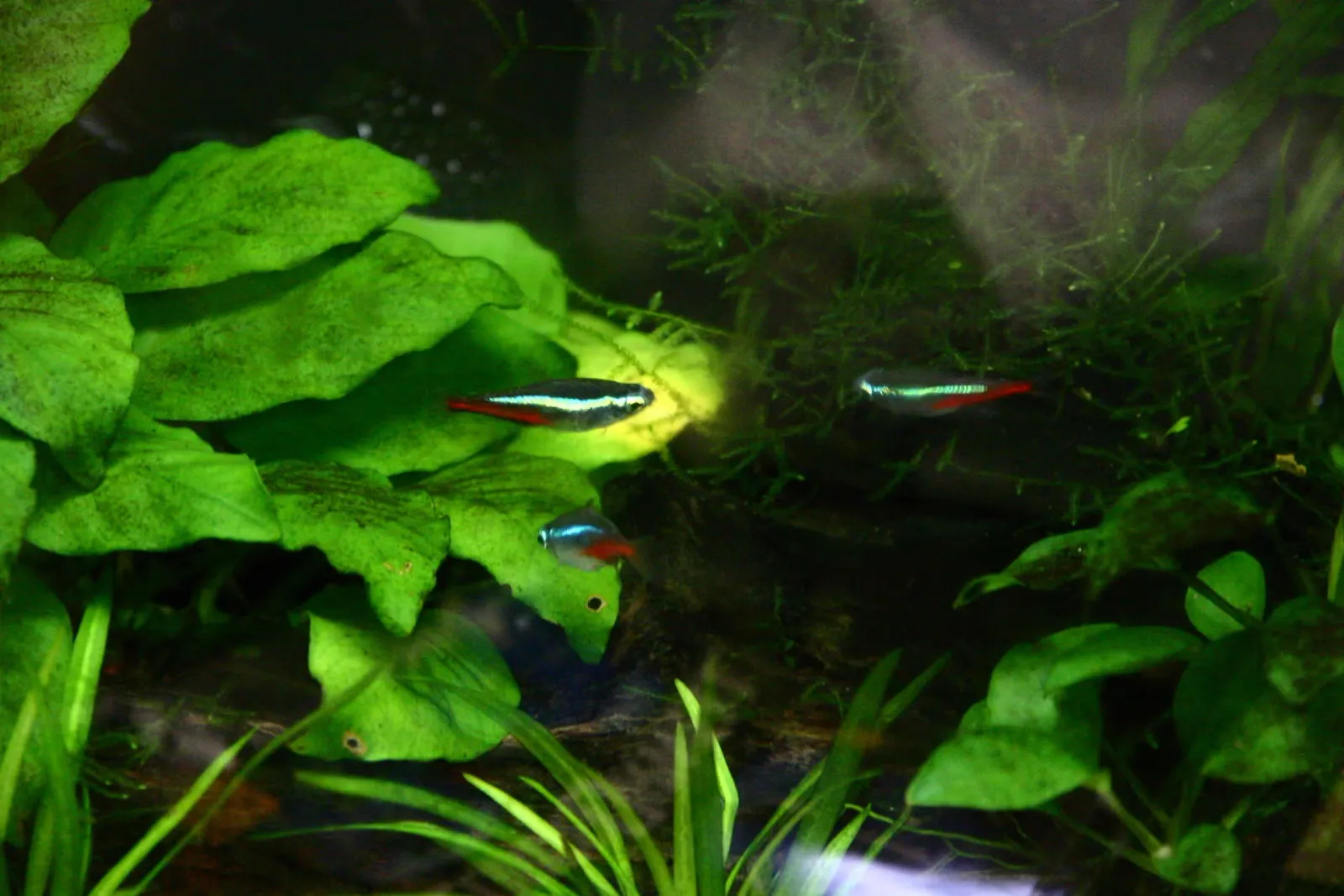
Neon and cardinal tetras often live in blackwater environments.
audrey_sel, CC BY-SA 2.0, from flickr
Natural Habitat
Neon and cardinal tetras are native to the Amazon Basin in South America. They are commonly found in blackwater environments where tannins from decaying wood leach into the water. Their habitat is rich in foliage, including leaf litter, logs, and aquatic or semi-aquatic plants.
Some populations inhabit clearwater rivers, which have transparent water but abundant vegetation. The water in their natural habitat is soft and acidic, and it's best to replicate these parameters in the home aquarium. They generally live in flowing water, so a good filter—ideally one that uses peat—should be used for their tank.
Housing
- Tank size: As active fish, neon and cardinal tetras need ample space for hiding, swimming, and schooling. A minimum of 10 gallons is recommended.
- Décor: The most natural choices are Amazonian plants like Echinodorus paniculatus (Amazon sword). While decaying wood and leaf litter are present in the wild, they are not advised in a closed aquarium because their decomposition can cause ammonia spikes. Artificial plants and decorations are fine as long as they have no sharp edges or leach toxic chemicals.
- Substrate: Both species do well with any substrate that is not small enough to be swallowed and cause choking. Choose gravel too large to fit in their mouths, or very fine sand that passes through without harm. Darker substrates are preferred because bright colors can stress fish, and light-colored substrates can make fish appear faded.
- Lighting: Since tetras come from low-light areas, a dim aquarium light is recommended. Growing floating plants to provide shade can make the tank more natural.
- Equipment: These tropical fish need a heater to maintain 72–80°F. A filter is also necessary to host beneficial bacteria and to aerate and clean the water. A peat filter is a natural choice as it creates soft, acidic water and may encourage breeding.
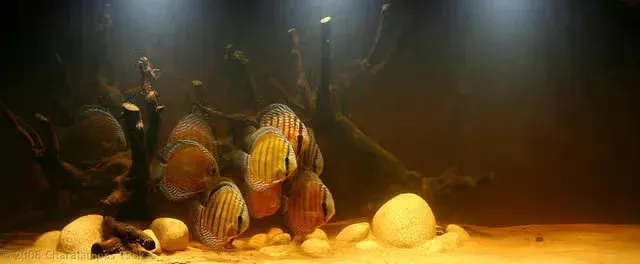
Peat-filtered aquariums replicate the natural habitat of neon and cardinal tetras.
Andreea Filip, CC BY-SA 2.0, from flickr
Feeding
Although the primary diet of cardinal and neon tetras consists of insects, they should be offered a variety of other foods to ensure balanced nutrition and good health. Feed them small amounts daily, and make sure all members of the school are eating. Occasionally skipping a feeding can help prevent obesity. Here are suitable foods:
- Algae (wafers, live algae, etc.)
- Bloodworms (frozen, freeze-dried, live)
- Tropical fish flakes/pellets
- Baby/small brine shrimp (frozen, freeze-dried, live)
- Wingless fruit flies
- Tubifex worms (ensure they are thoroughly cleaned before feeding)
- Frozen peas that have been de-shelled and thawed (this can aid digestive health)
- Guppy/small fish fry
Tankmates
Neon and cardinal tetras can easily become prey for larger fish, so they should only be kept with other small, peaceful, or herbivorous fish. They also require tropical tankmates, so goldfish are not suitable. Here are some possible tankmates:
- Bettas (avoid unusually aggressive individuals)
- Livebearers, such as guppies, platies, etc.
- White cloud mountain minnows
- Many other schooling tetras, such as lemon tetras
- Many bottom-dwelling, algae-eating fish (otos, cories, some pleco species, etc.)
- Aquatic snails
- Small freshwater shrimp, such as ghost shrimp
- African dwarf frogs (do not confuse with African clawed frogs)
- And most importantly, more cardinal and neon tetras! They need to be kept with their own kind to avoid stress and potential death from related complications.
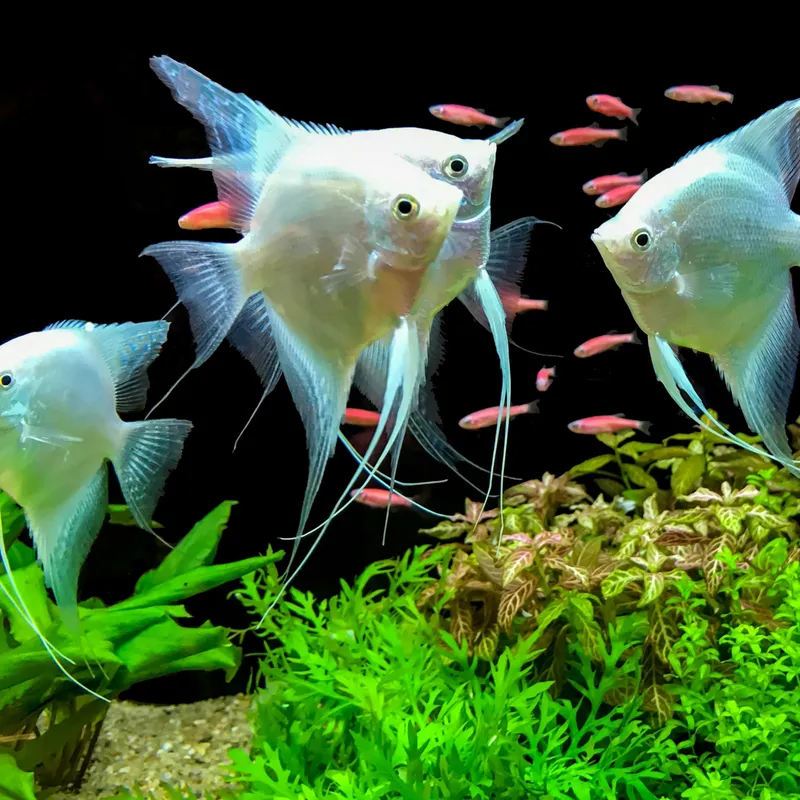
Before purchasing tankmates, research their eating habits. Avoid fish like angelfish or Oscars, which will eat the tetras as soon as they see them.
Final Thoughts
Neon and cardinal tetras are beautiful, small, and rewarding pets, which explains their popularity in aquariums. They are not difficult to care for when provided with a suitable home and proper diet. Happy fishkeeping!
- Fish Care: White Cloud Mountain Minnows Often overlooked as a choice in the aquarium, the white cloud mountain minnows are very lively, enjoyable pets to keep. Their small size means they don’t need a large aquarium, but enough room for their…
- Fish Care: Siamese Fighting Fish The Siamese fighting fish, more commonly known as the betta fish, is one of the most popular aquarium fishes kept today. They are known for their elaborate fins, their easy care, and their extreme aggression…
Sources
- Essential Guide to Keeping Neon and Cardinal Tetras — pethelpful