Turning a Fish Tank Into a Working Aquaponic Garden
Morgan Young
Assembling Your Aquaponic System
Putting together a system that actually works may sound like a dull chore, but for anyone building an aquaponic setup it tends to be the high point. This is the moment your project starts functioning, and the first batch of food you grew yourself is not far off. Even so, there is still plenty left to go over before that happens.
What follows covers the nitrogen cycle, how to stock the tank, the way pumps and lights should be used, and how to get your first aquaponic seeds started. Once this stage is behind you, the tank can genuinely be described as working on your behalf.
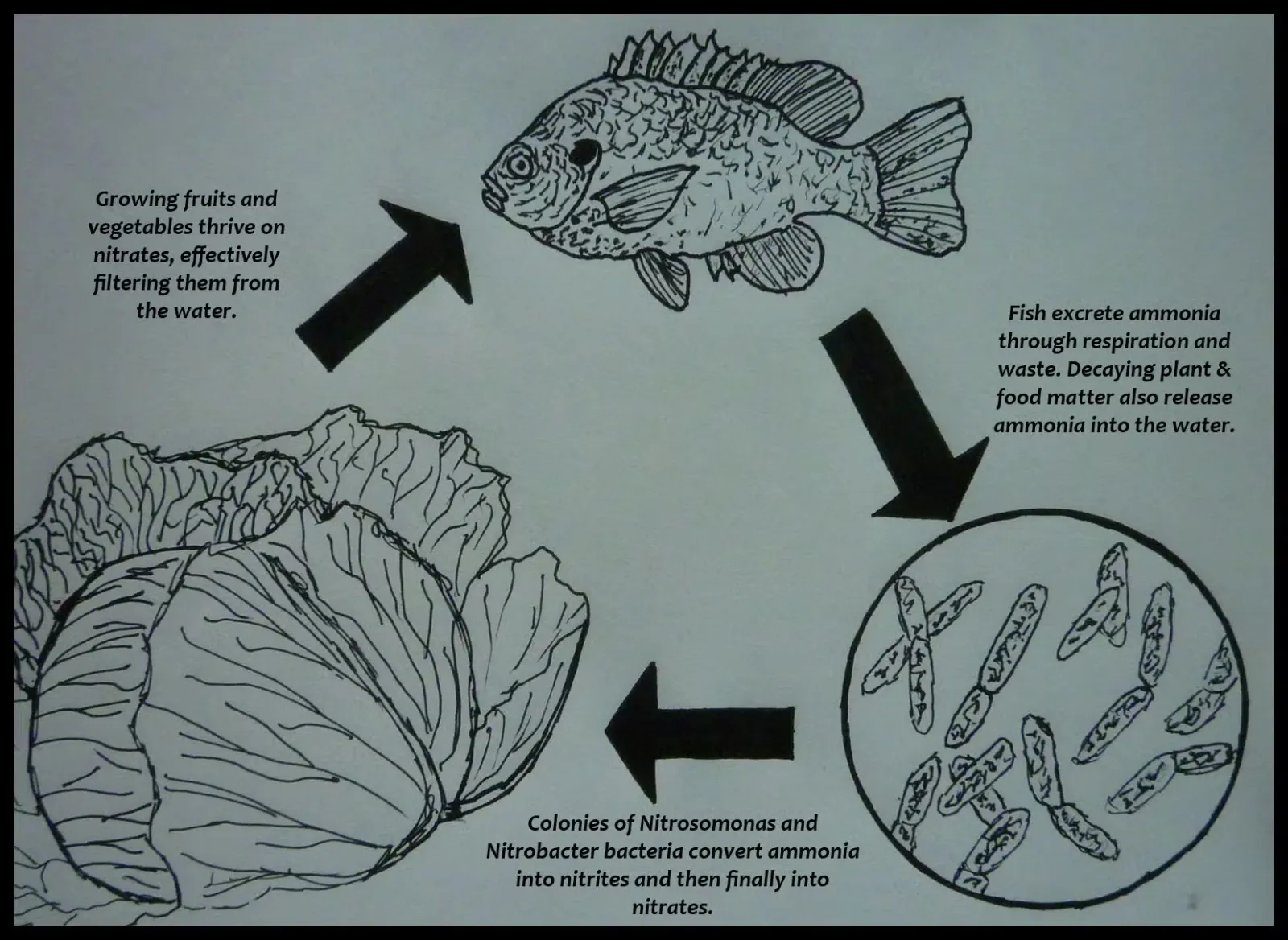
Aquaponics Nitrogen Cycle. © Joe Macho
How Nitrogen Moves Through an Aquaponic System
- Ammonia enters the tank water from fish waste as well as from decaying leftover food and plant matter.
- In a system that is already established, nitrifying bacteria transform that ammonia first into nitrites and eventually into nitrates.
- The plants then take up these nitrates quickly, which sends filtered water back to the aquarium.
Adding Fish to the Tank
For newcomers especially, this tends to be the most difficult part. Stocking advice is often vague, and the old guideline of one inch of fish per gallon does not hold up. If getting the most out of your aquaponic system matters to you, the points below are worth reviewing.
- Pick fish whose size suits your tank. The aim is a comfortable, healthy environment for the fish rather than a cramped one. Common sense is the best guide here: a two-inch minnow belongs in a 10-gallon tank, while an eight-inch cichlid does not.
- Add fish gradually, a few at a time. Putting in too many fish at once can overwhelm the bacterial colonies you have established, which raises ammonia levels in the water. Conditions like these can kill fish in a short period. To keep water quality from deteriorating, introduce a few fish, then give the bacterial colonies a week to catch up with the extra load before adding more.
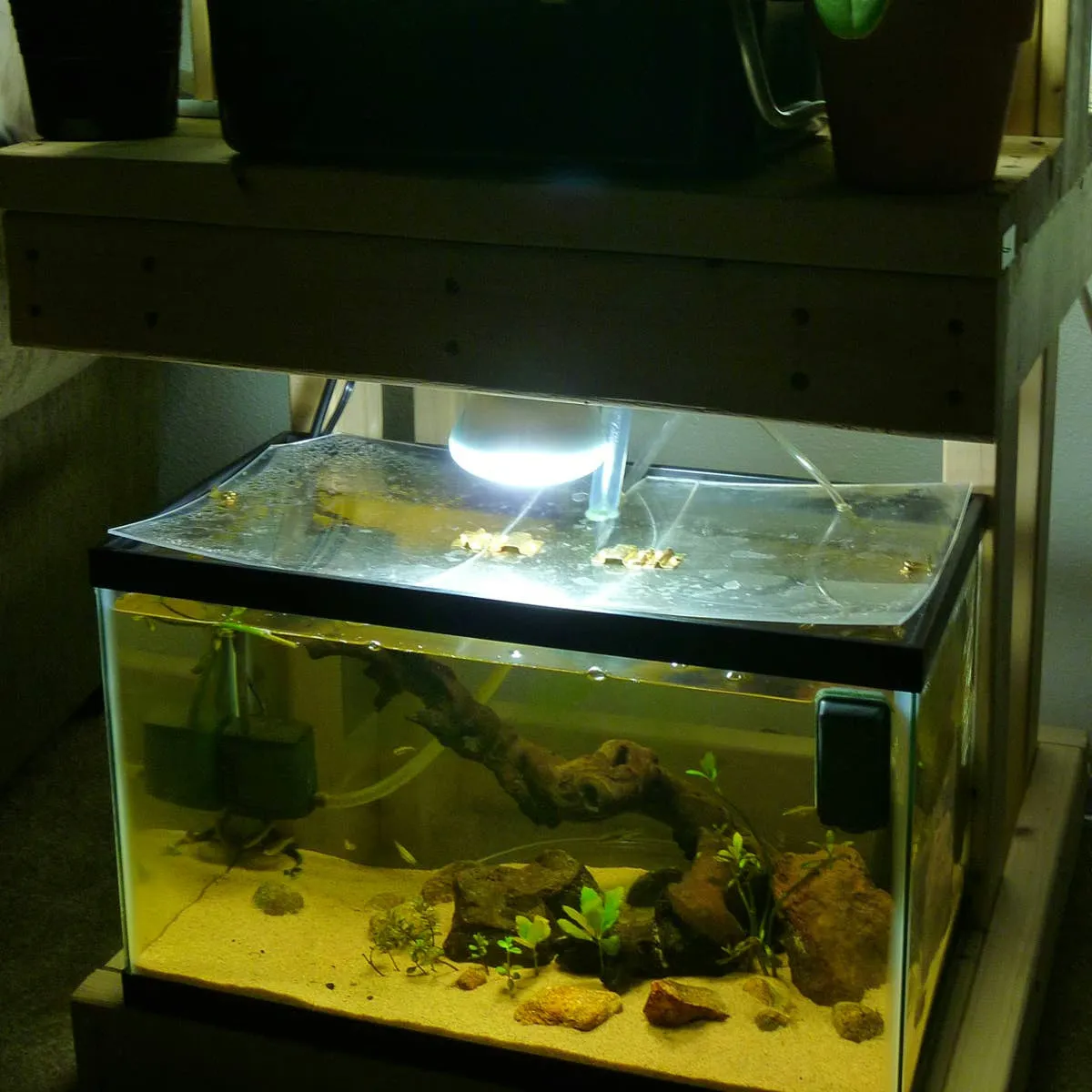
- Keep the tank slightly overstocked. Actively growing plants draw heavily on nitrates and can absorb the extra waste produced by a few additional size-appropriate fish. The 10-gallon aquaponic setup pictured at the top of this article, for instance, holds three fathead minnows, five white cloud minnows, and 10 ghost shrimp. These inhabitants have room to swim freely while their numbers are high enough to feed the roots of the crops above.
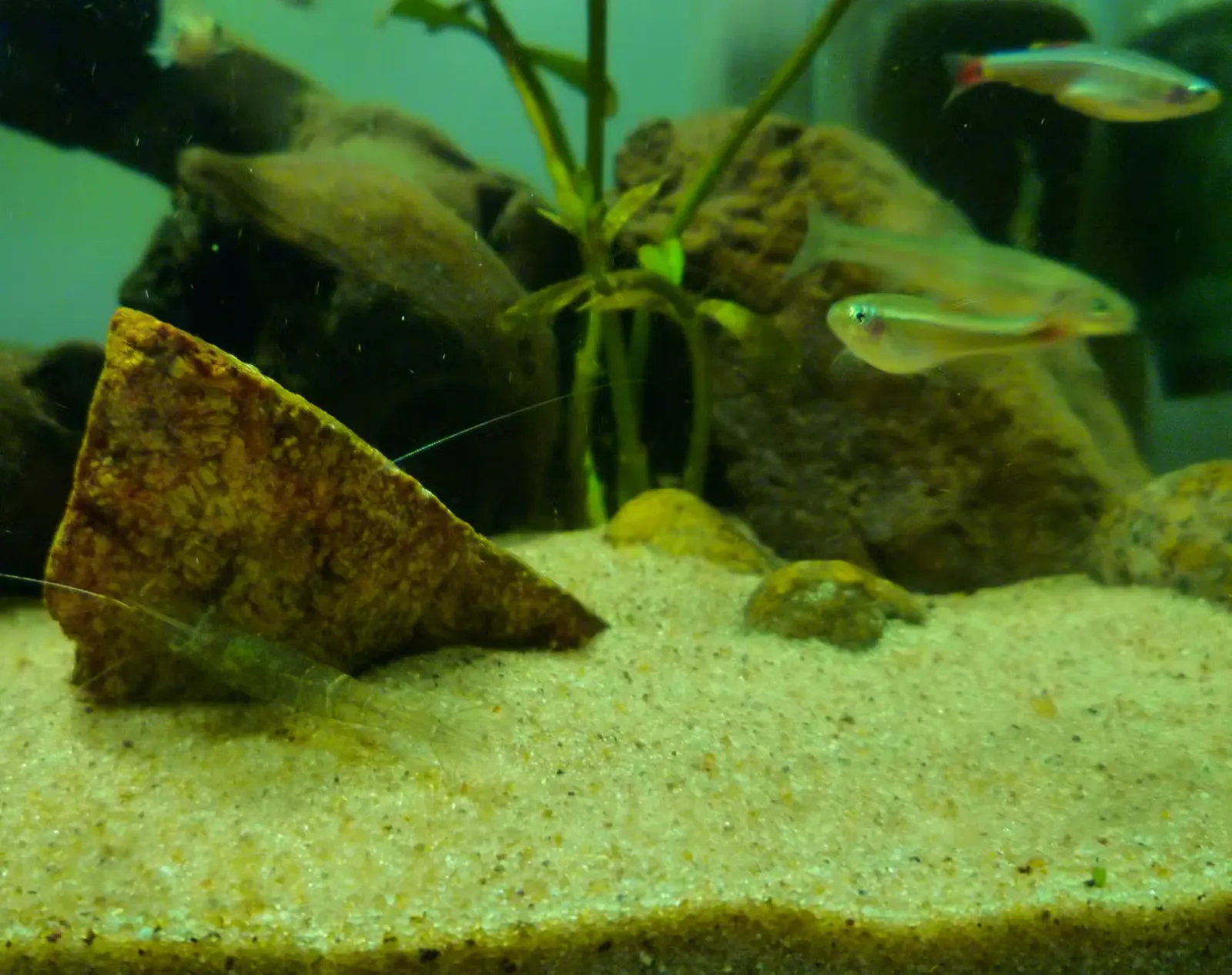
Here are some of the fish in the 10-gallon aquaponic setup: fathead minnows, white cloud minnows, and ghost shrimp.
Using Lights and Water Pumps
Now we move away from the tank and turn to the grow bed. Paying close attention to photoperiods and how water is delivered is key to keeping crops healthy and productive.
- Lights: The light spectrum and the duration of the photoperiod (how long plants are exposed to light) change with each stage of growth. Although individual species vary, the table below shows typical photoperiod lengths and light spectrums for each stage.
- Water pump: Because roots need oxygen while the lights are off, the pump should be set to run only during the lighted period. How long the pump runs comes down largely to personal preference. A common approach is running it for 15 minutes every couple of hours. In my own setup, I let the pump provide a continuous drip for the entire time the lights are on. Experiment with your own system and find what suits you.
| Growth Stage | Photoperiod Length | Spectrum of Light |
|---|---|---|
| Seedlings/Very Young |
|
18–24 Hours
|
6700°K
| |
Vegetative
|
14–18 Hours
|
Heavy 6700°K, with 2700°K
| |
Flowering
|
10–12 Hours
|
Heavy 2700°K, with 6700°K
|
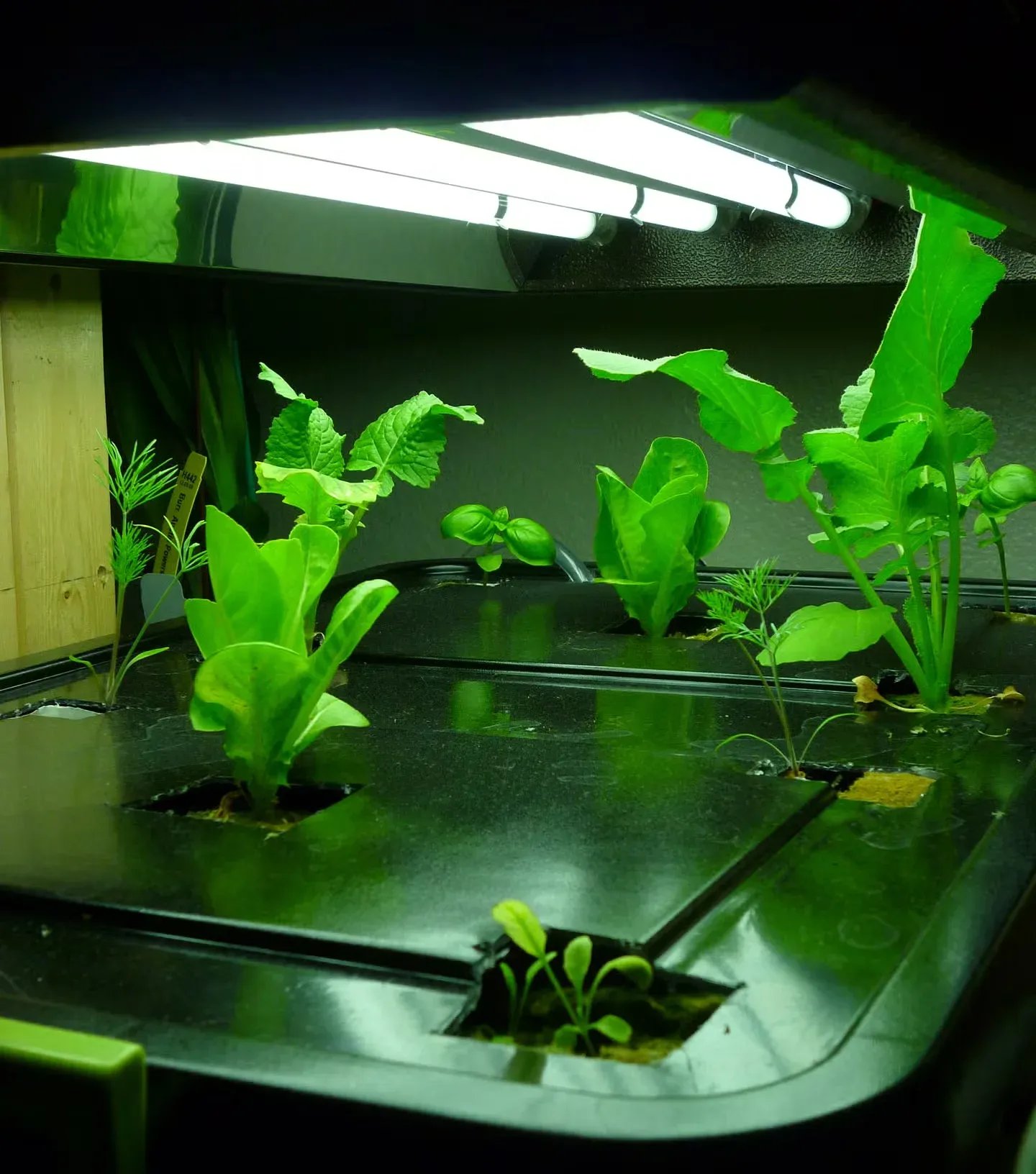
Here are some of my small aquaponic vegetables. From front to back: Arugula, Gem Romaine Lettuce, Dill, Broccoli Raab, Sweet Basil.
Sowing Your First Aquaponic Seeds
Once the system has been adjusted to your liking, the first seeds can go in. Gardeners differ in how they start seeds, and there are in fact many methods that work. My own preference is to germinate seeds in rockwool. This inert growing medium offers close to ideal water-to-oxygen ratios, which supports fast, healthy germination.
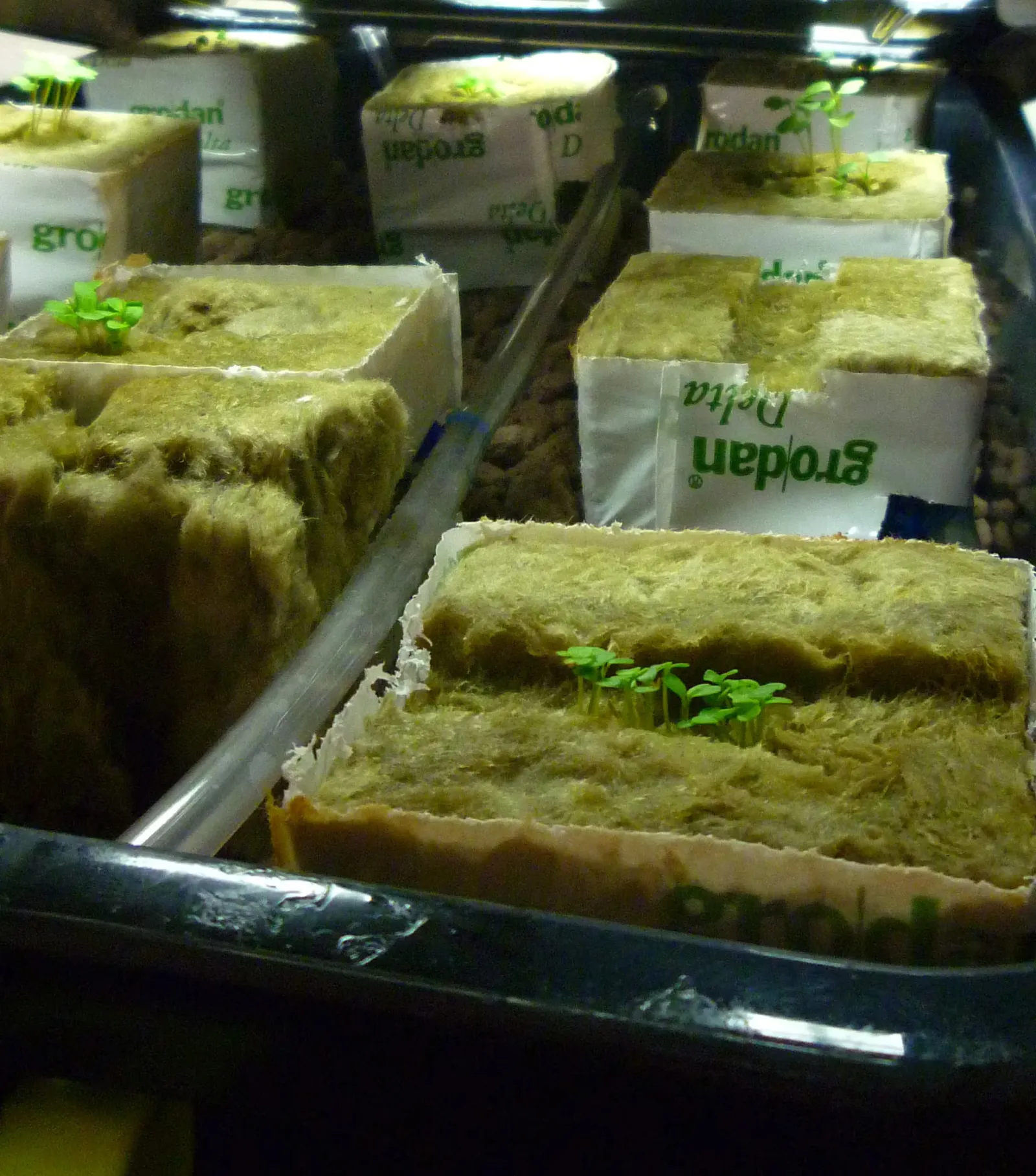
Germinating aquaponic seeds
Giving Seeds the Conditions They Need
- Seeds that need light to germinate: These are the simplest to start because they can be placed straight into the grow bed to sprout. Lights can stay on around the clock during germination. The rockwool should also be watered by hand, keeping it moist without making it soggy. The water pump can be started once the seeds have sprouted.
- Seeds that need darkness to germinate: Some seeds require no light at all to sprout. For these, put the moist rockwool holding the seeds somewhere dark and preferably warm until sprouting occurs. After germination, move them to the aquaponic grow bed right away.
From Ordinary Fish Tank to Aquaponic System
There you have it. With the seeds in place, the tank that was once just a fish tank has now become a full aquaponic setup. That is a pretty satisfying result, if you ask me. It has been a long process, and now that the hard work is finished, only aquaponic maintenance remains, which I address in my next article. For now, thank you for reading this guide on building a functional aquaponic system. Any questions or comments you have are welcome.
Want to See My Setup in Action?
Curious? I know I would be. After all this discussion, a video example of the 10-gallon aquaponic setup would be a nice way to see it working, right? You are in luck. Below is a video of my experimental small aquaponic setup. The plants growing above are about three weeks from seed. Enjoy.
Aquaponics Basics
- Aquaponics: The Basics of Fish Tank Hydroponics Small aquaponics will change the way you look at your aquarium! With just a few modifications, any fish tank can produce fresh fruits and veggies!
Sources
- Turning a Fish Tank Into a Working Aquaponic Garden — pethelpful