Budgie Nutrition: Safe Foods and Feeding Tips
Toby Howard
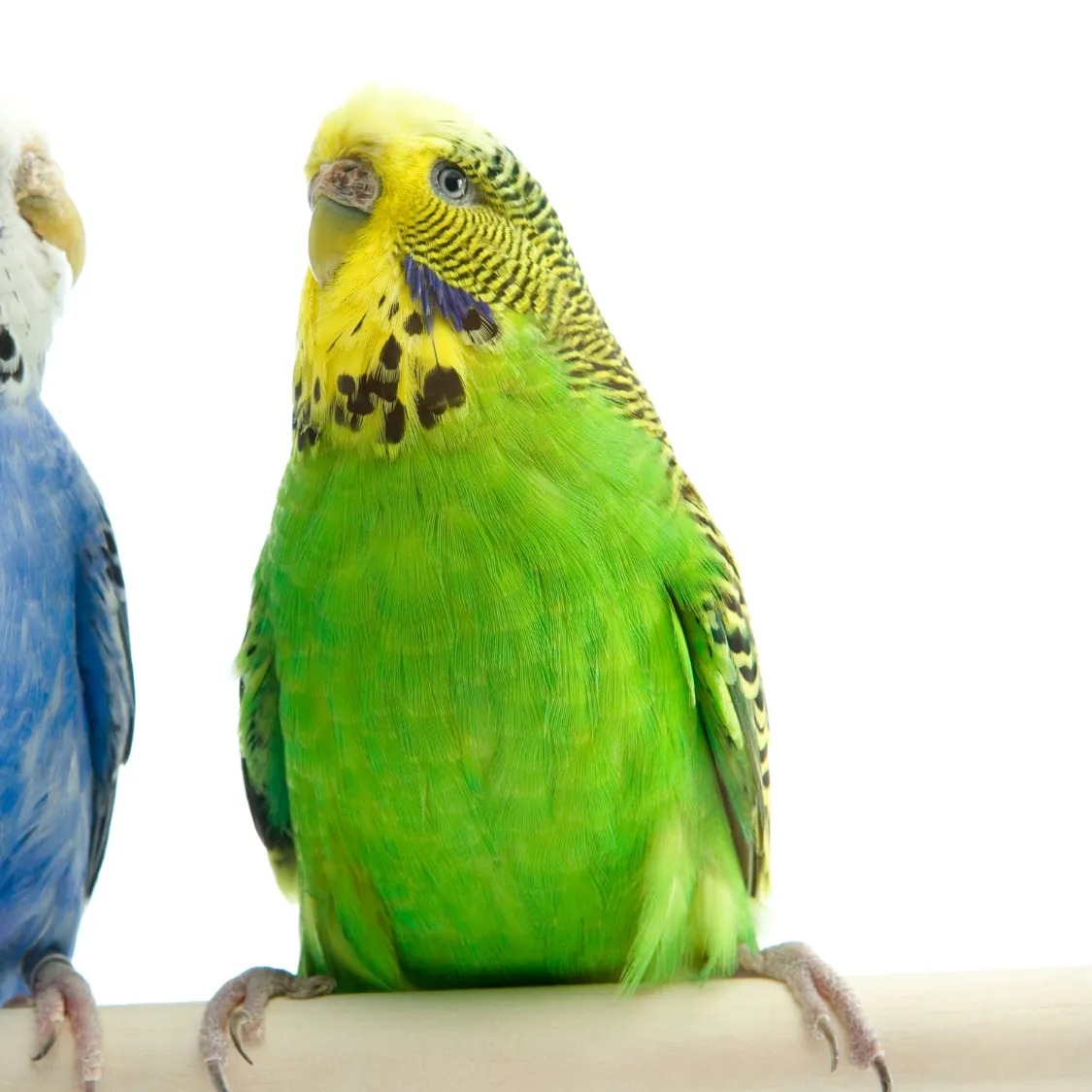
What Can Budgies Eat?
Budgies are omnivores, meaning they can digest both plant matter and insects. In their native Australia, they consume a diverse diet that includes grass seeds, leaves, and insects, often flying long distances to find food. For domesticated budgies, replicating this natural variety isn't feasible, but it's still crucial to keep them healthy with a diet as close to natural as possible. Tamed budgies are curious and will try new foods, so the owner must provide a balanced meal.
Note: Budgies eat insects and so qualify as omnivores, but do not offer them a steak or other slice of meat. They cannot digest this. The same goes for milk.
What Should a Budgie Eat?
These are the main components of a budgie's diet.
1. Premium Seed Mixtures
Seeds are a staple for budgies, so a high-quality mix of live seeds is essential. Always opt for premium food; cutting costs on food isn't advisable. Premium brands typically include seeds, millet, oat, grit, and eggfood, along with additives that promote health.
How to Handle a Picky Budgie
A downside of mixed seeds is that picky budgies will select their favorites, often the fattest seeds, and leave the healthier ones. If this happens, don't refill the bowl until it's almost empty. Be aware that empty husks may accumulate, so check for edible seeds. Alternatively, limit feeding to set times in the morning and evening. Initially, your budgie may resist, but soon it will learn to eat all seeds, not just the tastiest.
2. Pellets: Compressed Seeds and Fruit
Pellets, about the size of seeds and made from compressed seeds and fruit, offer a complete diet and prevent selective eating. However, not all budgies accept pellets. Packages often include a conversion schedule, but some birds never switch. Always provide fresh water, grit, fruits, and vegetables alongside pellets.
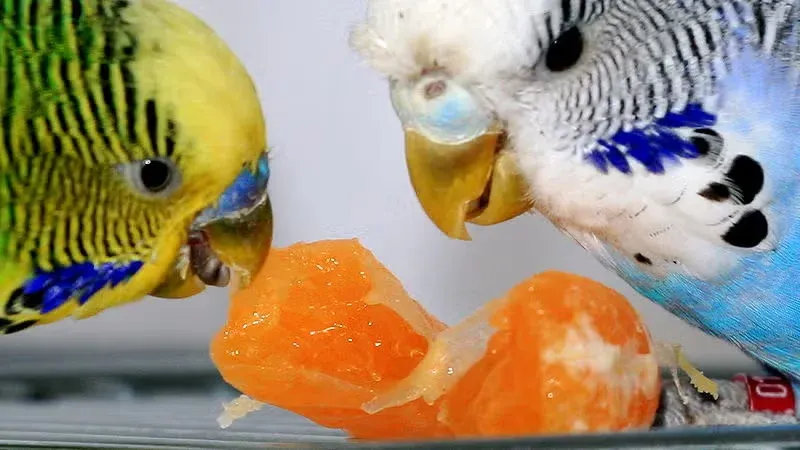
Two budgies enjoying a slice of tangerine
by Falk Lademann
3. Fruits and Vegetables
Fruits and vegetables are healthy additions that support long life. Offer a fresh piece daily. Each budgie has preferences and may need time to adjust. Placing the produce in the same spot in the cage helps the bird recognize it as food. Eventually, curiosity will lead it to try a nibble. If your budgie dislikes a particular item, try variety. Watching you or other budgies eat can also encourage them. Many budgies enjoy apples, carrots, oranges, bananas, pears, and lettuce. Limit lettuce to avoid diarrhea.
Warning: Rhubarb and avocado are poisonous to budgies! Avoid the cabbage family.
4. Eggfood
While often given during breeding or molting, eggfood can be offered at least weekly. It's rich in minerals and nutrients, essential for a balanced diet. Eggfood is healthy, easy to digest, and delicious. It strengthens bones (high in calcium), boosts vitality, and stimulates growth. It's excellent for mother budgies and their young. However, eggfood is high in fat; limit to twice a week when not breeding or sick. When birds are sick or breeding, keep eggfood available. To prepare, put dry eggfood in a bowl, add a little water to moisten, stir, and offer. Don't leave it in the cage too long as bacteria grow quickly.
5. Grit
Some argue budgies don't need grit since they dehusk seeds, but they do. Grit consists of small, sharp stones that provide calcium for strong bones and growth. More importantly, it aids digestion. Budgies have two stomachs: the first adds digestive fluids to soften seeds, and the second, a muscular stomach, grinds food with the help of grit to release nutrients. Since grit is eventually ground to powder, regular replenishment is needed. Oystershell grit is the most nutritious.
6. Mineral Blocks (for Beak Maintenance)
A budgie's beak grows continuously. Without maintenance, it becomes long and pointy, making eating difficult and causing chest injuries. Mineral blocks or cuttlefish bones help wear down the beak. However, cuttlefish bone is high in salt, so mineral blocks are preferable. They also provide calcium, promoting strong bones and eggs and preventing eggbinding.
7. Fresh Water
Budgies need water, replaced at least daily and always available. It should be neither ice cold nor hot. Soda water is not good. Bottled water is the healthiest.
Featured Gallery
1 / 1
property of author
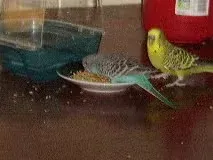
_A budgie enjoying a healthy nibble
property of author_
property of author
What Else Can You Feed Them?
Here are some treat ideas and optional foods.
1. Millet
Millet is a favorite treat for almost all budgies and is great for taming new birds. It's easy to digest, often used to teach young budgies to eat seeds or encourage sick ones to eat. High in fat, offer only once a week, about half a string per bird. While not a substitute for seed mix, it's better than candy sticks.
2. Candy Sticks
These are seeds glued with honey into sticks. They're popular and budgies love them due to their sweetness. However, they contain a lot of sugar, so offer infrequently. Excess sugar can cause diabetes, obesity, and crop infections.
3. Cold Tea
Tea can be healthy for budgies if plain and diluted, without honey or sugar. It can support sick birds. Prepare tea normally, dilute with equal water, cool, and offer alongside fresh water.
Types of Tea and Their Benefits
- Chamomile: Strengthens the immune system and helps fight off infections.
- Sage: Helps with diarrhea.
- Black tea: Helps with stress and supports bloodflow.
- Thyme: Helps fight fungal infections.
- Stinging nettle: Improves vitality and purifies.
- Fennel: Improves digestion.
Note: If your budgie is sick, take it to the doctor. Giving it tea should not be the only treatment!
4. Other Things
Other safe foods include bread crumbs, dry toast, a little dry boiled rice or macaroni, a few drops of yoghurt, a small bit of cheese, etc. One golden rule: When in doubt, don't feed it to a bird!
Don’t Take the Risk!
When in doubt, don’t feed it to your bird!
What Not to Feed a Budgie
Some foods are never safe for budgies, being unhealthy, hard to digest, or poisonous.
Don’t Let Them Eat Off Your Plate
Human food is often bad for budgies' tiny kidneys and can be poisonous. Avoid salt (bad for kidneys) and sugar (causes infections, obesity, and other problems).
Foods That Are Lethal to Budgies
These foods are absolutely forbidden because they’re lethal to a budgie:
- Avocado
- Tobacco
- Rhubarb
- Chocolate
- Coffee
- Cola
- Alcohol
Disinfectants also contains alcohol, so avoid using them while cleaning!
How Much Food Do Budgies Need?
For a single budgie, buy smaller bags to keep seeds fresh. A normal budgie needs about two overflowing tablespoons of seeds per day. With multiple budgies, keep extra bags on hand. Check the date label.
A Fresh, Quality Diet Leads to a Healthy Life
Budgies can eat a lot, but not everything. Prioritize quality and freshness over price, as it affects lifespan and health. Avoid sugar and salt, and never feed anything from the poisonous list. Your budgie will reward you with a long, healthy life.
Sources
- The Importance of Clean Budgie Drinking Water Budgies need clean water at all times, which can be a challenge. Here are some tips to make sure your budgie drinking water is safe.
- Feeding Budgies | VCA Animal Hospital | VCA Animal Hospitals Curious about what to feed your pet budgie? There are several considerations to make when it comes to their diet. Visit vcahospitals.com for expert advice.
This article is accurate and true to the best of the author’s knowledge. It is not meant to substitute for diagnosis, prognosis, treatment, prescription, or formal and individualized advice from a veterinary medical professional. Animals exhibiting signs and symptoms of distress should be seen by a veterinarian immediately.
© 2011 Elysianphoenix
Sources
- Budgie Nutrition: Safe Foods and Feeding Tips — pethelpful