Hummingbird Feeders in Autumn: Timing Their Removal for Migration Season
Sam Cooper
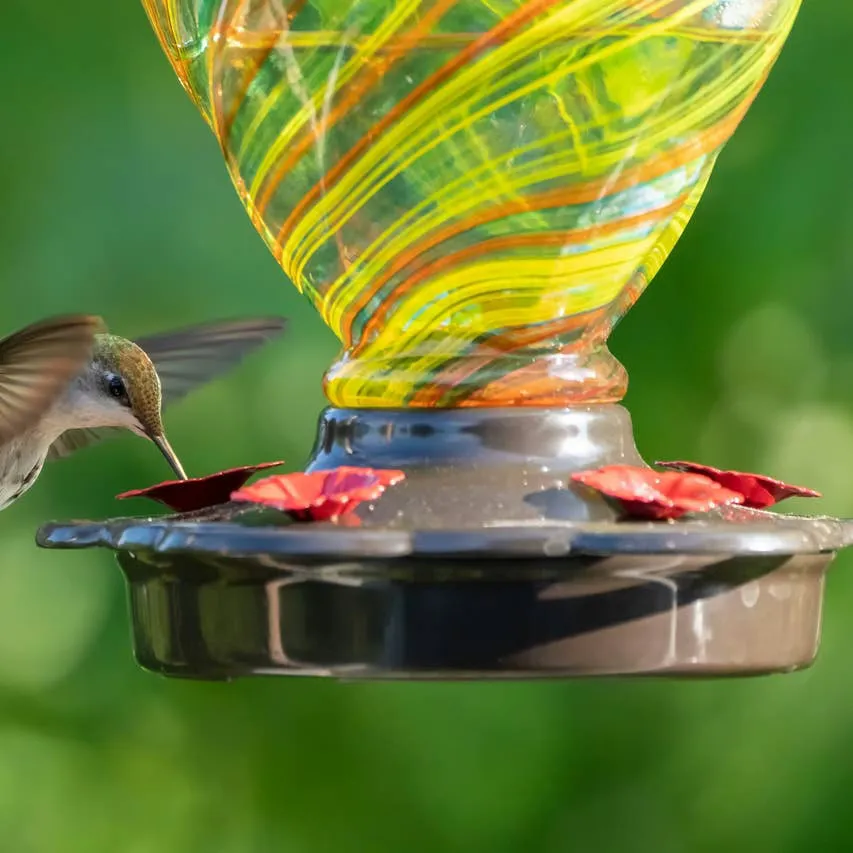
Even if the weather outside doesn't quite match the calendar, autumn has arrived, and temperatures will soon begin to drop. With the cooling trend, countless migratory birds across the nation will prepare for their yearly trip south—hummingbirds included. For those who enjoy watching birds, this season often brings uncertainty, prompting questions such as, “When do you take down your hummingbird feeder?” and “Is it possible to take your hummingbird feeders down too early?” After all, you wouldn't want to remove it and then have these tiny creatures pass through your yard with nothing to eat. The reassuring news is that as hummingbird season nears its end, you're likely not alone in seeking answers. Fortunately, Robert Mulvihill, Lead Ornithologist at the National Aviary, provides guidance on the optimal time to stop feeding hummingbirds and other key details. This way, you can keep supplying sugar water to your feathered visitors during their long southward journey, as migrating hummingbirds still require stopover spots to rest and refuel—so why not be a part of their trip?
When Does Hummingbird Migration Start in the Fall?
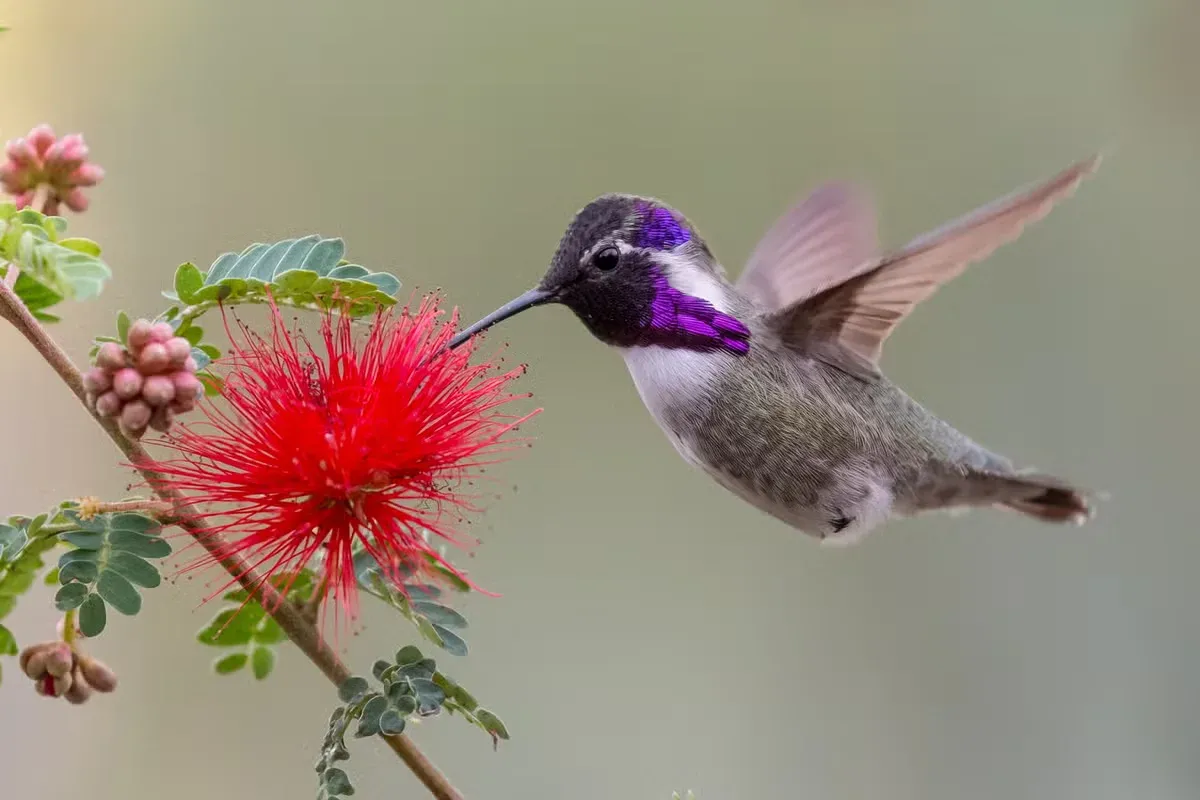
Hummingbirds can zip and zoom through backyards during migration.
Image via Getty Images/Cal Holman / 500px
If you've seen fewer hummingbirds in your yard recently, that's expected: fall hummingbird migration is already in progress. Throughout much of the country, hummingbirds are now heading south, though the exact timing depends on the species and region. In the eastern U.S., ruby-throated hummingbirds typically move during September, with some still visiting yards and feeders into early October. These birds don't all depart simultaneously, though. Males usually go south first, then females, and finally the young hummingbirds raised over the summer. In the West, hummingbird migration can differ significantly. This area hosts a wider range of hummingbird species, and their migration schedules vary widely. Some may already be deep into their journey, while others might continue moving through the country later in the fall. As individual birds travel south toward wintering grounds like Mexico and Central America, they need to stop along the way to rest and regain energy. So even though migration is happening now, it doesn't necessarily mean the hummingbirds in your yard are gone for the season.
Why You Shouldn't Take Down Your Feeder Too Early
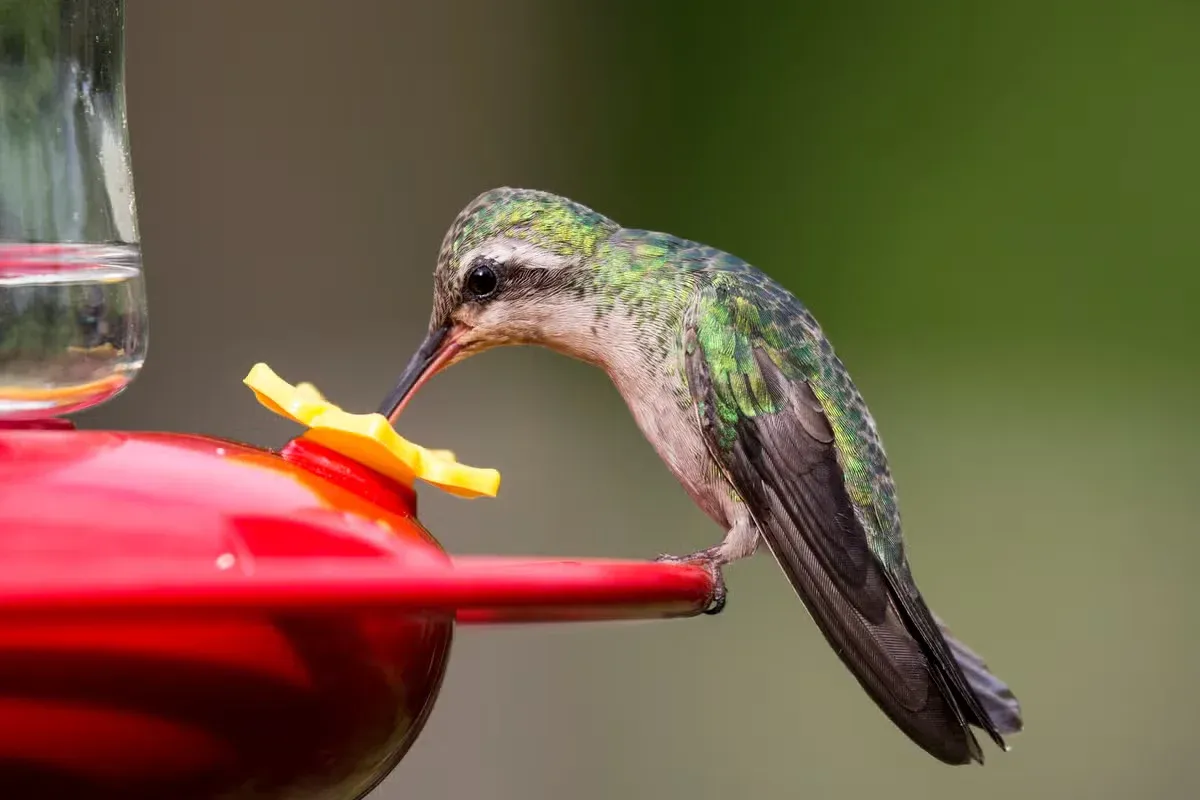
This tiny traveler may still need plenty of fuel as migration gets underway.
Image via Getty Images/Daniel A. Leifheit
Believe it or not, hummingbirds have extraordinarily high metabolisms. In fact, they have to eat constantly in order to survive, even when they are flying south. So how much do they eat? The average hummingbird eats around 3-7 calories a day, and while that might not sound like much to us, to them, that's the equivalent of a human eating around 155,000 calories every day. And that's just to fuel a hummingbird's normal daily activities. However, what happens when they've got a long migration ahead of them? “In fall, hummingbirds feed voraciously in order to put on stores of fat that they can use for energy to make long, non-stop migratory flights in the daytime,” Mulvihill explains. “As they approach the Gulf of Mexico some of them begin to fatten even more, even doubling their weight, in order to safely make the 500-mile, non-stop flight across the Gulf to Mexico. Others take the longer route over land along the western edge of the Gulf. Either way, it is an impressive feat for a bird that weighs only three grams when its tank is empty.” Simply put, these backyard birds need more food than ever late in the season. As the flowers they feed on begin to die off, more and more of them will turn to food sources like hummingbird feeders in fall until they reach their wintering destination. So with that in mind, you don't want to bring your feeders in too early! If you keep them out, you'll be able to continue to attract hummingbirds to your yard and help them stay healthy and energized for their flight to their winter home. Without your help, it can be hard for them to find food.
Will Leaving Your Hummingbird Feeder Up Stop Migration?
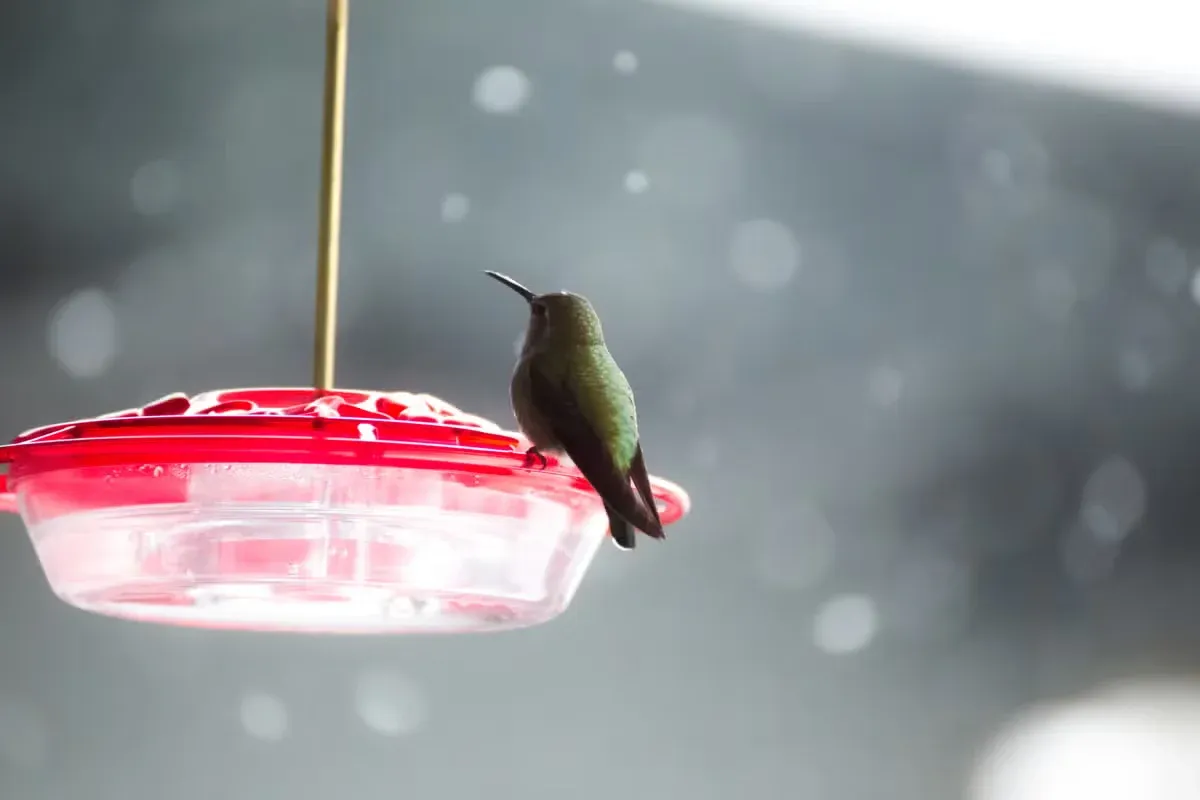
A full feeder won’t stop a hummingbird from flying south.
Image via Getty Images/shanecotee
If you're a birdwatcher and you're worried that keeping your hummingbird feeder filled will convince these tiny birds to stick around longer than they should, you can put those fears to rest. “The irrepressible urge to migrate will pull them all south before the middle of October at the latest, regardless of whether you take in your feeder or not,” Mulvihill reassures. “They not only leave feeders behind, but many fall-blooming flowers, too, so food will not keep them from migrating. To summarize, you can keep your hummingbird feeders up into October, and it will not keep your ruby-throated hummingbirds from migrating—it will only help fuel their migrations.”
How Do You Know When It's Time to Stop Feeding Hummingbirds?
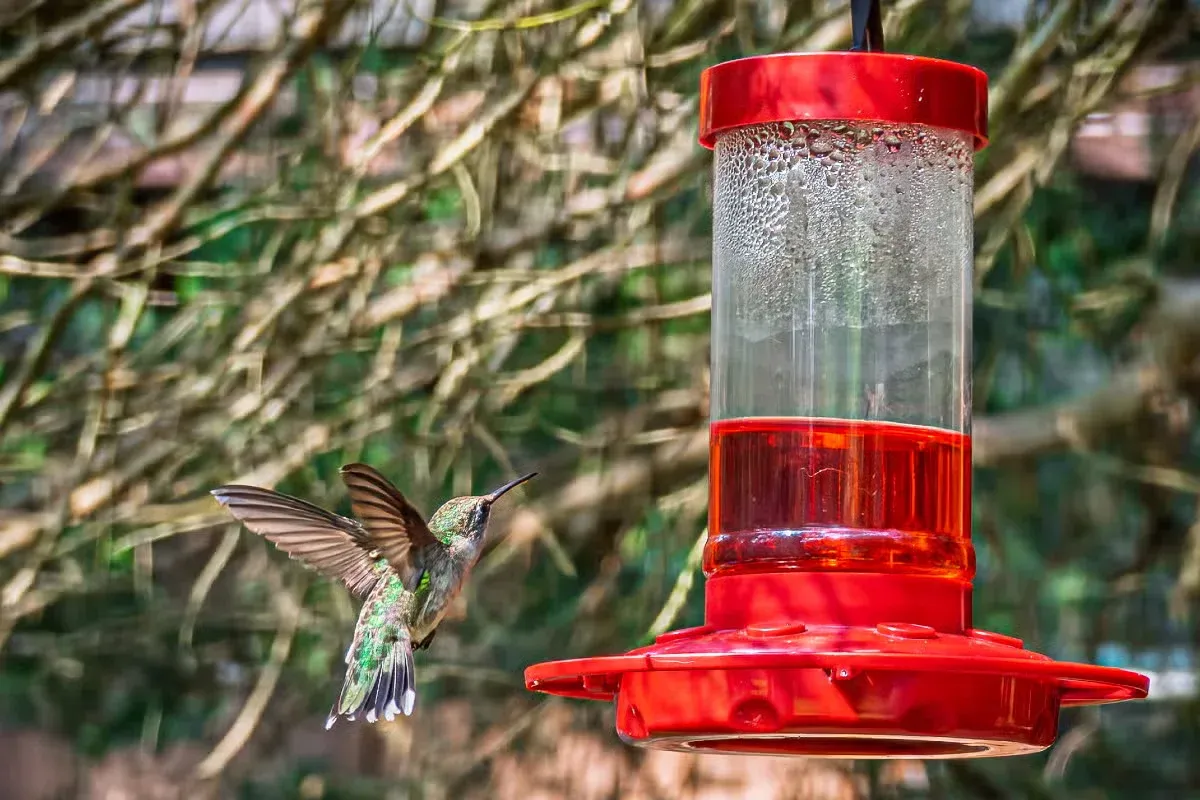
Your feeder may stay busy even as the seasons begin to change.
Image via Getty Images/Ennui Captured / 500px
While there is a rough date that most people can start taking down their hummingbird feeder for the season, Mulvihill doesn't advise people to go off calendar dates alone. Instead, he recommends that people observe hummingbird activity in their area, particularly around their backyard feeder. “In the eastern U.S., ruby-throated hummingbirds will continue to visit hummingbird feeders through much of September, and a few may even visit a feeder in early October,” says Mulvihill. “In fact, because they have produced young over the summer, the total number of hummingbirds visiting feeders in fall will be greater than in spring.” In other words, don't assume that fewer hummingbirds means the season is over. As long as you're still seeing them regularly at your feeder, that's a good reason to keep providing food for them and keep your hummingbird feeder filled.
When Should You Take Down Your Hummingbird Feeder in the Fall?
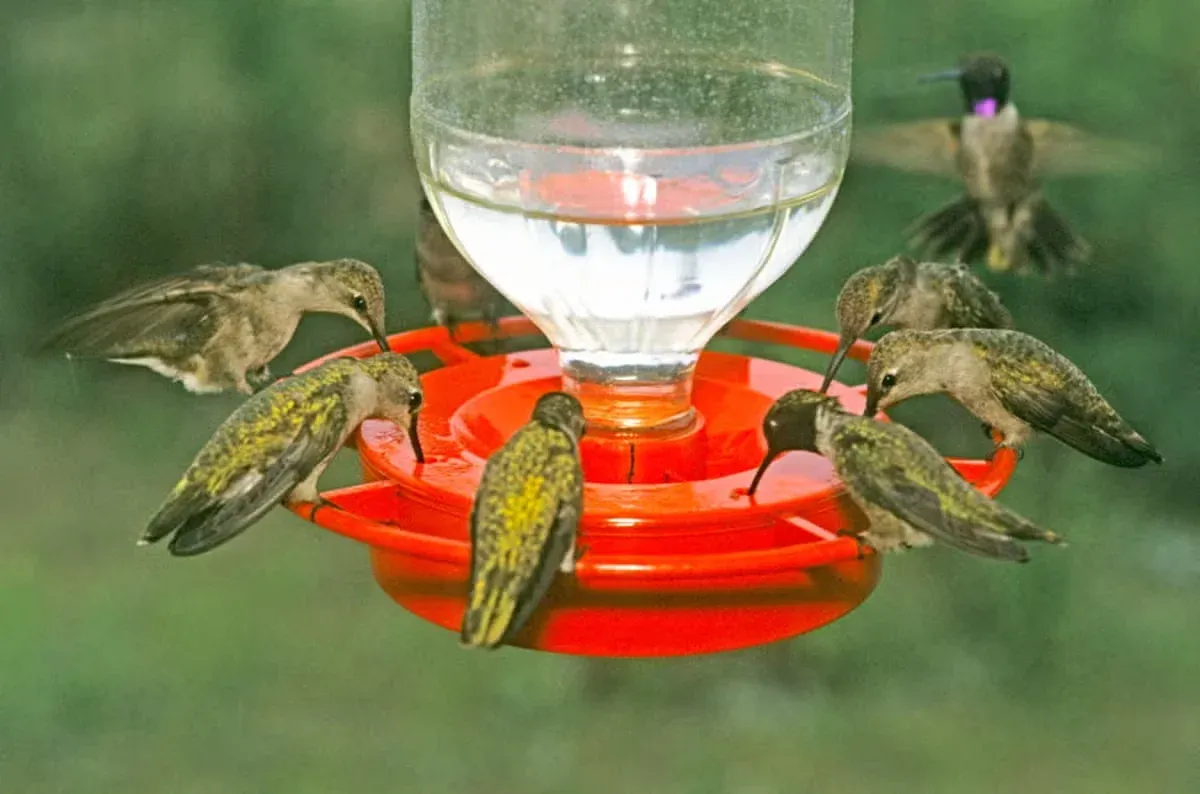
Even as autumn arrives, hummingbirds may still be visiting feeders in search of food.
Getty Images Wild Horizon
Depending on where you live and which hummingbirds pass through your area, your season may end earlier or later. So, when is it actually safe to put your hummingbird feeder away this fall? Mulvihill advises birdwatchers wait until at least October 10 before considering taking it down. Once that date arrives, you'll want to start paying closer attention to any hummingbird activity around your feeder because the most important thing isn't the date, it's when you see your last hummingbird. To help you feel more confident that hummingbirds are no longer in your area, Mulvihill recommends waiting about two weeks after your last hummingbird sighting before putting your feeder away for the season. Once you've gone that stretch without a hummingbird visit, you're safe to clean your feeder and bring it inside for the rest of the year.
Do Any Hummingbirds Stick Around Into Winter?
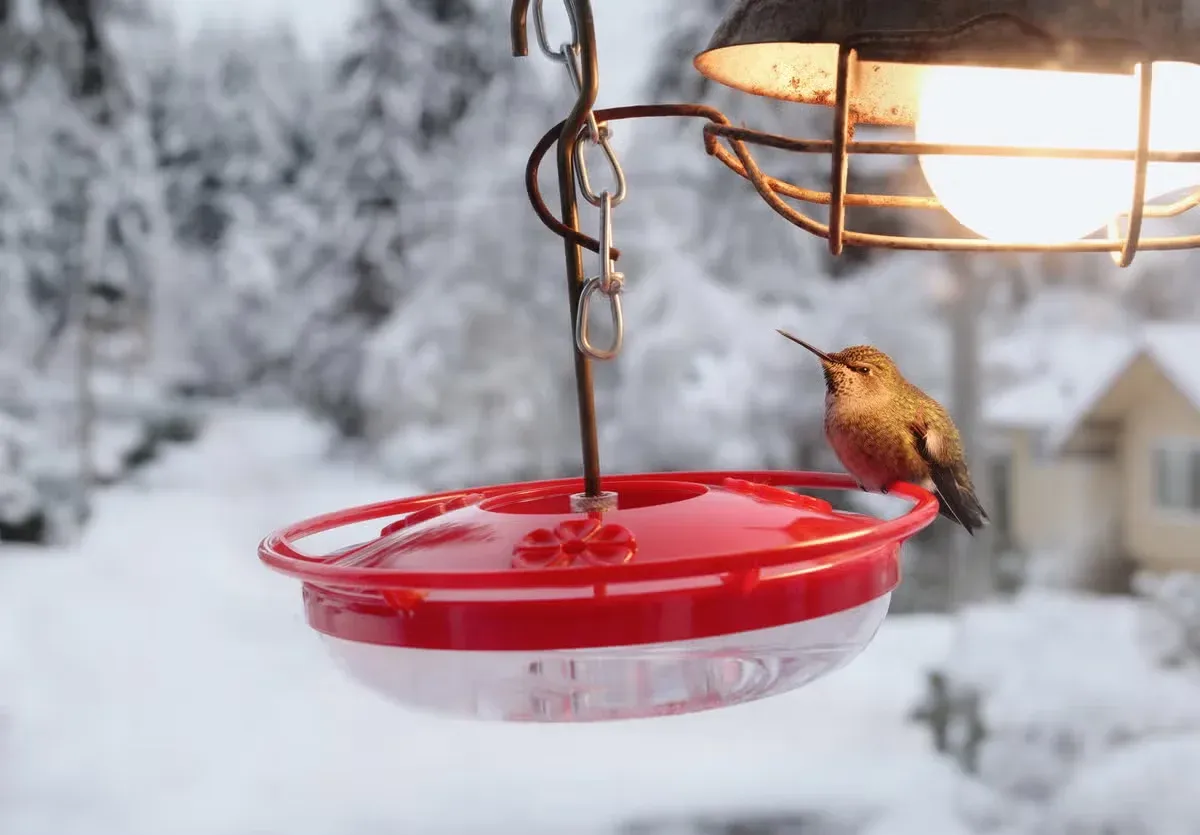
These tiny birds don’t always follow the same migration schedule.
Image via Getty Images/Petra Richli
For most people, hummingbird season winds down in October. But in some parts of the country, you may still see hummingbirds well into November, and that can change when you should put your feeder away. Western hummingbird species occasionally pass through the eastern U.S. after the ruby-throated hummingbirds have headed south, giving birdwatchers another reason to keep their feeders stocked later in the year. “Beginning in 1990, birders and ornithologists observed that western hummingbird species were passing through the Great Lakes and Mid-Atlantic states on their way to the Gulf of Mexico, and a new hobby, winter hummingbird feeding was born!” says Mulvihill. “The western U.S. has a much greater variety of hummingbirds than the East, including Rufous, Allen's, Anna's, black-chinned, broad-billed, and more, so hummingbird fans in the East hope to attract one or more of these by keeping their feeder full until late in the year. Typically, western hummers do not first appear until after the ruby-throated hummingbirds have left, and they usually find a feeder before the end of November.” So while many people can safely bring their hummingbird feeders inside around mid-to late October, there's nothing wrong with leaving one up longer if hummingbirds are still visiting. Just remember that cold weather creates another challenge: hummingbird nectar can freeze. If temperatures are expected to dip below freezing, Mulvihill recommends using a plug-in hummingbird feeder with a built-in heater to keep the nectar liquid and available to late-season visitors.
What If Hummingbirds Stay Later Than Normal?
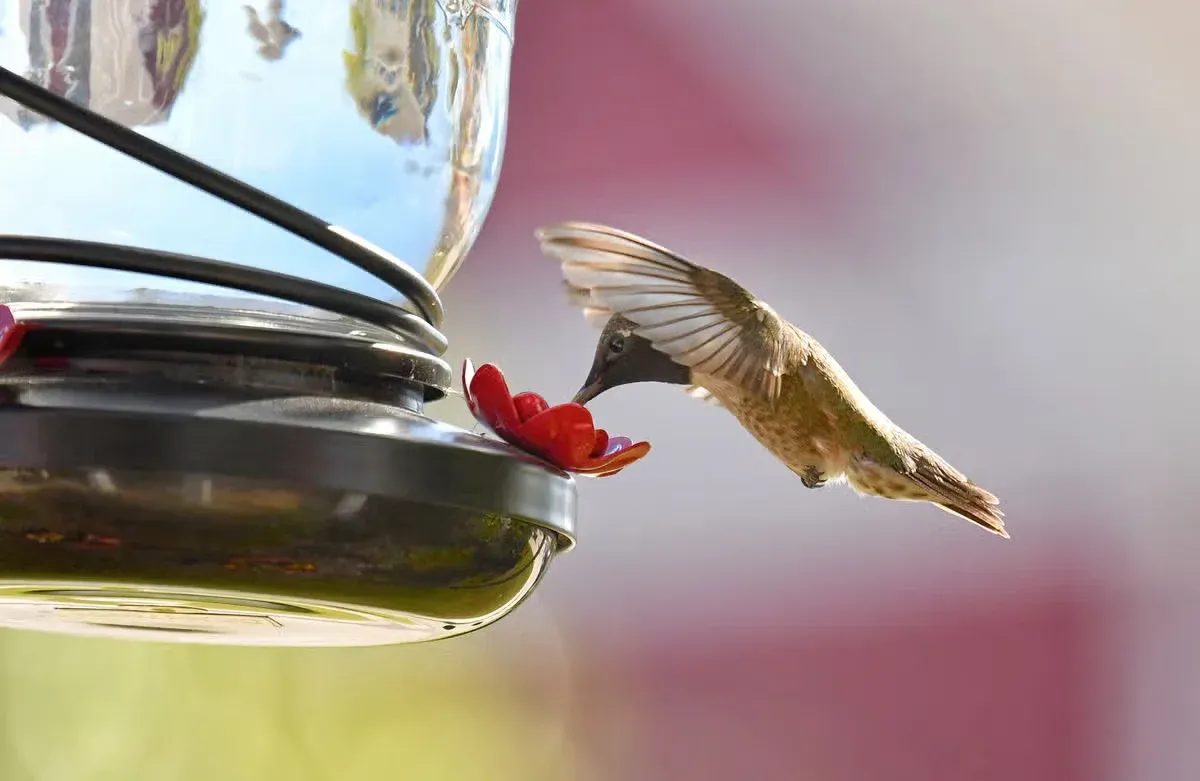
The last hummingbird of the season may arrive later than you expect.
Image via Getty Images/Jeff R Clow
Even after you think hummingbird season is over, don't be surprised if one makes a late appearance at your feeder. If that happens, keep your food source available as long as you notice that bird is still stopping by. In very rare cases, people have helped lost hummingbirds survive an entire winter by keeping a feeder stocked until spring. That's a much bigger commitment, though, and not something to take on lightly. For most backyard bird lovers, however, a late-season visitor simply means keeping the feeder clean, the nectar fresh, and the food source available until the bird moves on.
How Often Should You Change Hummingbird Nectar in the Fall?
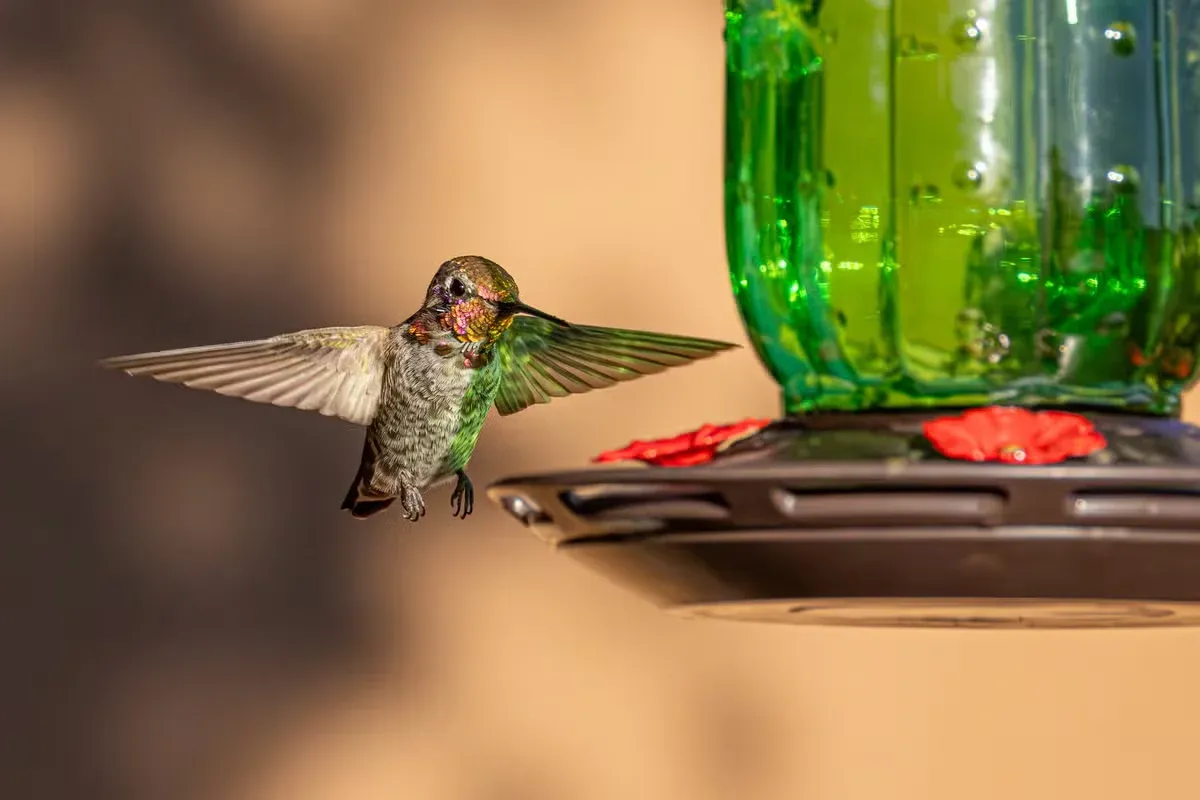
A clean feeder can give hummingbirds an extra source of energy during migration.
Image via Getty Images/Beata Whitehead
While you wait for hummingbird season to come to a close, what should you do in the meantime? Simply put, nothing different than you would do in the summer, says Mulvihill. The same hummingbird nectar and feeder cleaning regimen that you use in the summer should serve you until the end of the season. Mulvihill recommends cleaning and refreshing your feeder about once every three days, using a simple 4:1 solution of fresh water to plain sugar for the nectar. In other words, there's no need to change your nectar recipe just because fall has arrived, you just need to keep up with the same regular maintenance.
Sources:
- Robert Mulvihill, Lead Ornithologist for the National Aviary
- Audubon
- #Pets
- #Birds
- #All Pets
- #Wild Birds
- #Pet News
- #Hummingbird
- #Bird Watching
- #Bird Types
- #Bird Care & Feeding
- #Animal News