Turning Your Garden Into a Year-Round Robin Retreat
Blake Hall
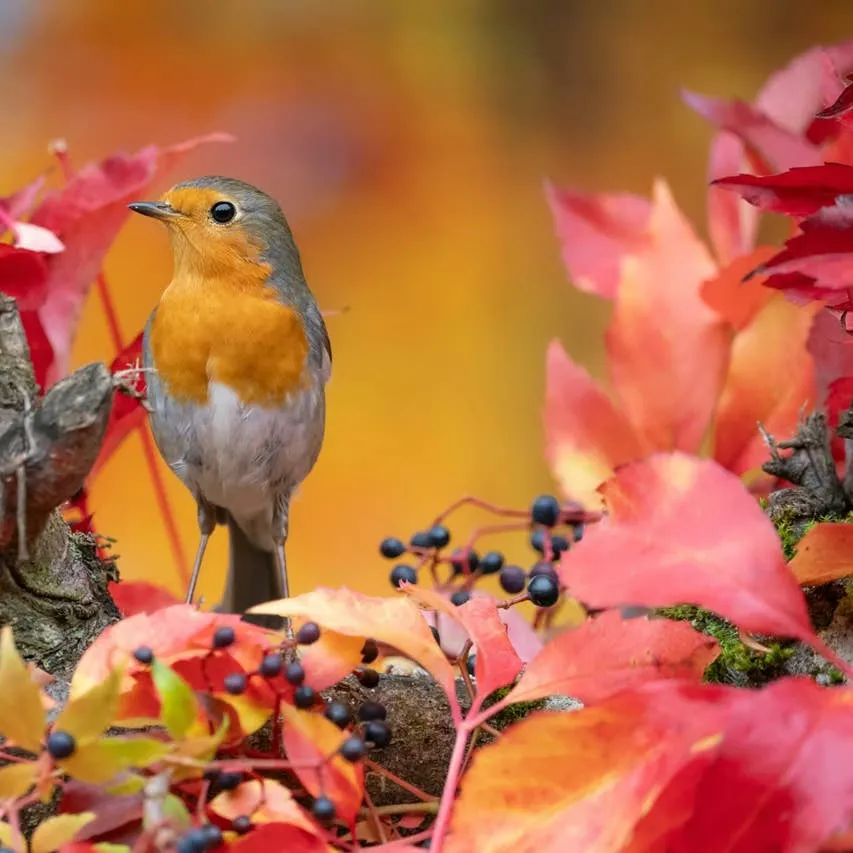
Among the many colorful birds that visit American backyards, the American robin stands out as one of the most recognizable and widely distributed. For those who hope to see robins on their property throughout the entire year, there is an encouraging fact: not every robin flies south when winter arrives. This raises an obvious question: what can a homeowner do to keep robins coming around in every season?
These songbirds have become a common sight in residential areas because they have adapted remarkably well to human environments. Robert Mulvihill, Lead Ornithologist for the National Aviary, describes them as "an iconic bird of parklands and suburban and urban lawnscapes." He adds, "The sight of a one or a pair of robins hopping across a lawn, cocking their head to peer into the grass for worms, is a sight most everyone has seen many times."
For bird enthusiasts who want to see more of these creatures near their homes, there are practical steps that can make a yard more attractive to them. By supplying the right food and habitat across the seasons, you can create a more inviting space if robins already live in your region. The advice below, drawn from Mulvihill, points to a single straightforward approach for drawing robins to your yard throughout the year. The answer may catch you off guard. Before long, you could be enjoying these birds every month.
Where Do Robins Spend the Winter in the United States?
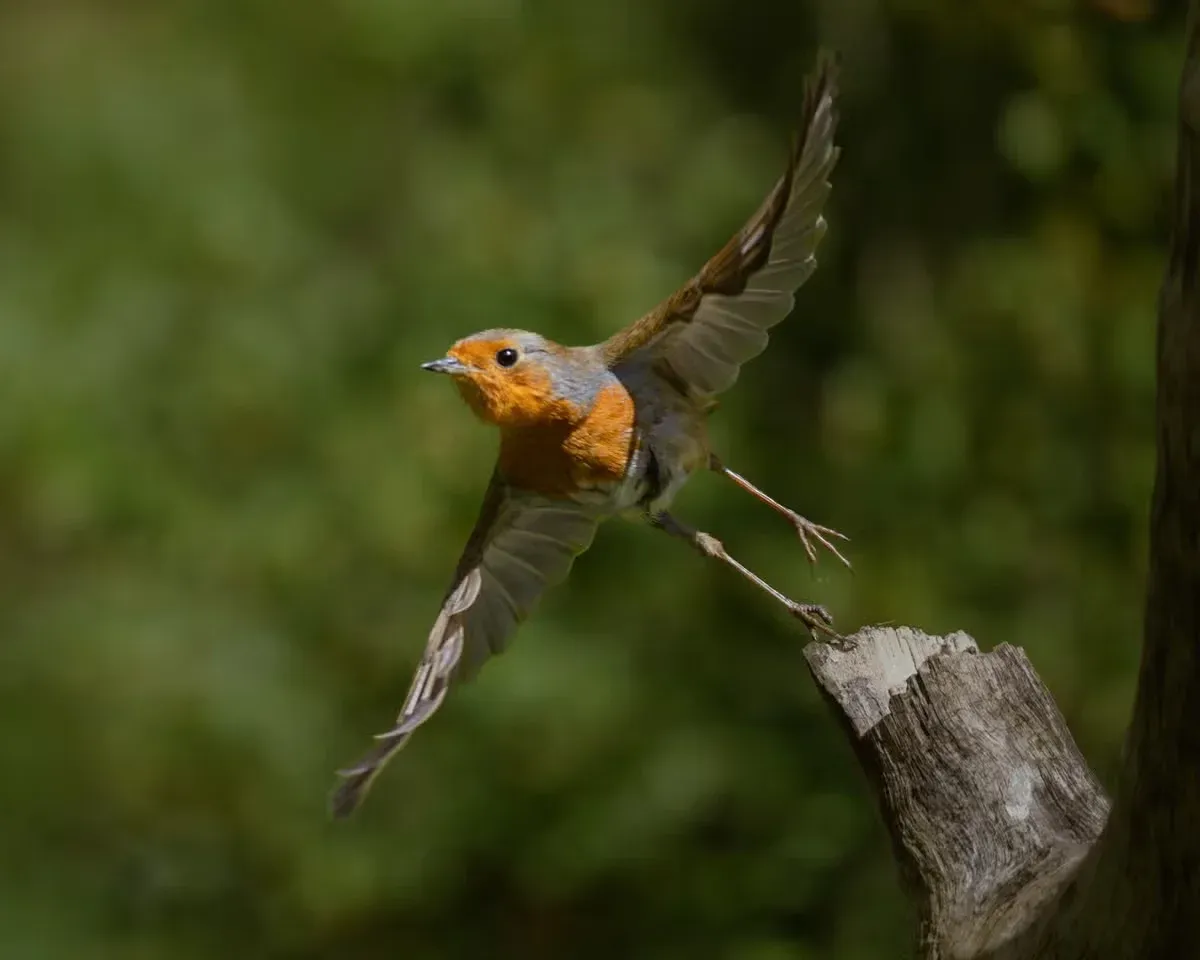
American robins are a familiar sight in yards across the U.S.
Getty Images Paul Beeley
Because not all robins head south for the winter, their winter whereabouts are largely determined by their location. When resources grow scarce in their primary habitat range during winter, some robins will fly south to areas with warmer temperatures and more abundant food. However, these migration habits are not uniform across the entire robin habitat range.
Mulvihill explains: "The farther north you are in the range of the American Robin [which stretches from the Arctic Circle in northern Canada/Alaska all the way down to southern Mexico], the more likely it is that many, if not all individual robins migrate south before winter, then return north with spring. If you live farther south, the reverse may be true, with most robins staying put." He continues, "In areas far enough south that it rarely freezes, and where robins can find worms and other invertebrates year-round, they may become year-round residents. Where the ground freezes and is often covered in deep snow, they nevertheless may stay, as long as there is an abundance of fruiting trees and bushes that can carry them through the winter months. If not, they may wander south only as far as needed to find enough food."
So which regions are robins most likely to inhabit through the winter? The eastern United States offers the best odds, according to Mulvihill, where robins can be found year-round. Above a certain latitude, however, the situation becomes less predictable. "Robins are uncommon or rare in the winter months at latitudes above about 42⁰N, which is most of New England, the Upper Midwest, and Canada, also at higher elevations below 42⁰N, and they are normally absent in winter above 45⁰N latitude."
Attracting Robins to Your Yard Throughout the Year
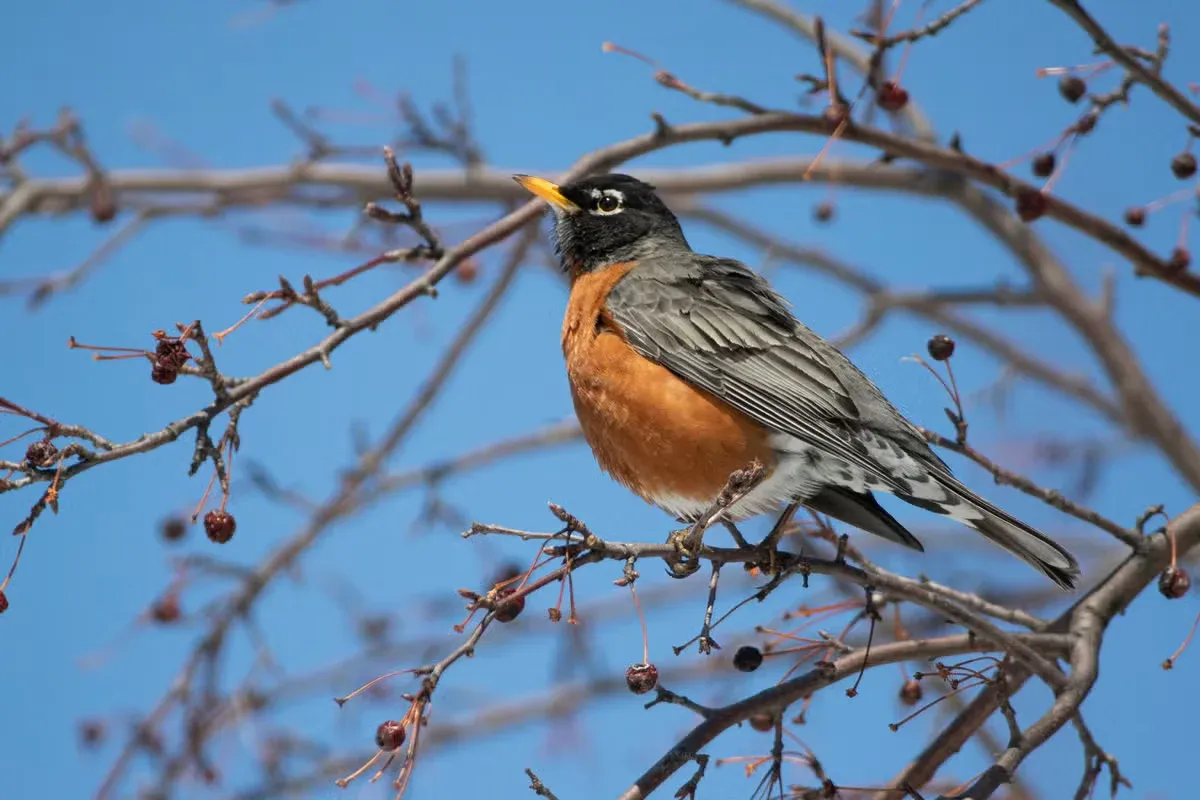
An American robin searches for food in a backyard.
Image via Getty Images/Stan Tekiela Author / Naturalist / Wildlife Photographer
It is worth noting that the most effective approach to attracting birds varies by species, since different birds have different dietary needs. But if your goal is simply to increase the chances of robins visiting, you can do that. Birds are highly intelligent, and drawing them in does not require extreme measures.
If robins are year-round residents in your part of the country, experts point to one simple strategy for making your yard more appealing: offer a dependable food source that spans multiple seasons. Instead of depending on just one berry-producing plant, select a combination of native or regionally suitable fruit-bearing plants that yield food from spring all the way through winter.
This approach works because a reliable food supply is one of the strongest draws for birds. By picking plants that fruit at different times of year, you give robins a reason to keep coming back to your yard and garden.
Mulvihill suggests the following plants for each season:
Spring and Summer: Early Fruits for Robins
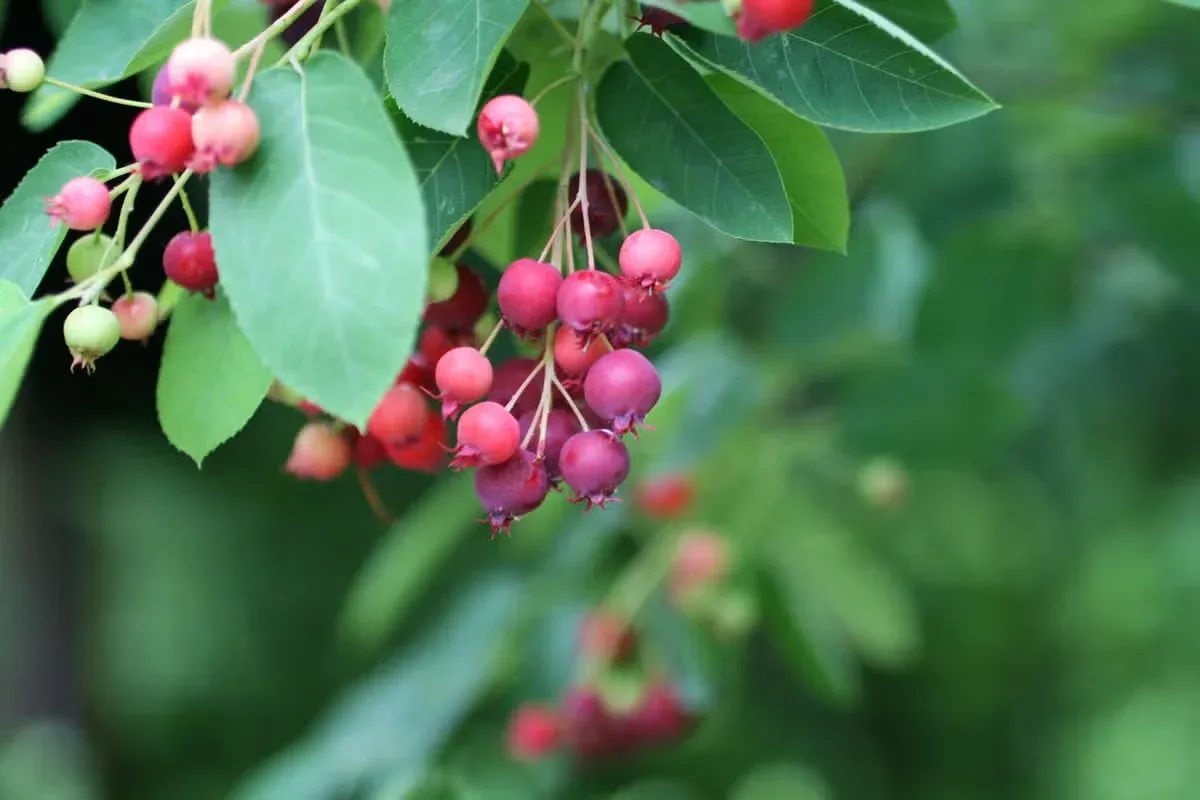
Bird-friendly landscaping can help attract American robins to residential yards
Image via Getty Images/merrymoonmary
For early spring fruit, Mulvihill notes that robins are fond of the serviceberry bush, which also goes by the names Juneberry or Shadbush. If your garden does not already have one, planting one could be a good move to make your yard more robin-friendly.
Mulvihill shares: "These trees and bushes bloom beautifully in early spring and set many small red fruits that ripen earlier than most others, as the name suggests, beginning in June. Robins and other birds will literally wait and watch for the fruits to ripen, and they will pluck each one off as soon as they do! Good luck trying to harvest any of the uniquely delicious fruits for yourself, though, even though we hear that serviceberry cobbler and jam is wonderful!"
As late spring transitions into early-to-mid summer, many common garden berries begin to appear: blueberries, raspberries, blackberries, and others. If you are willing to share your crop with the robins, consider leaving the netting off a few of your bushes.
Summer and Fall: Maintaining the Food Supply
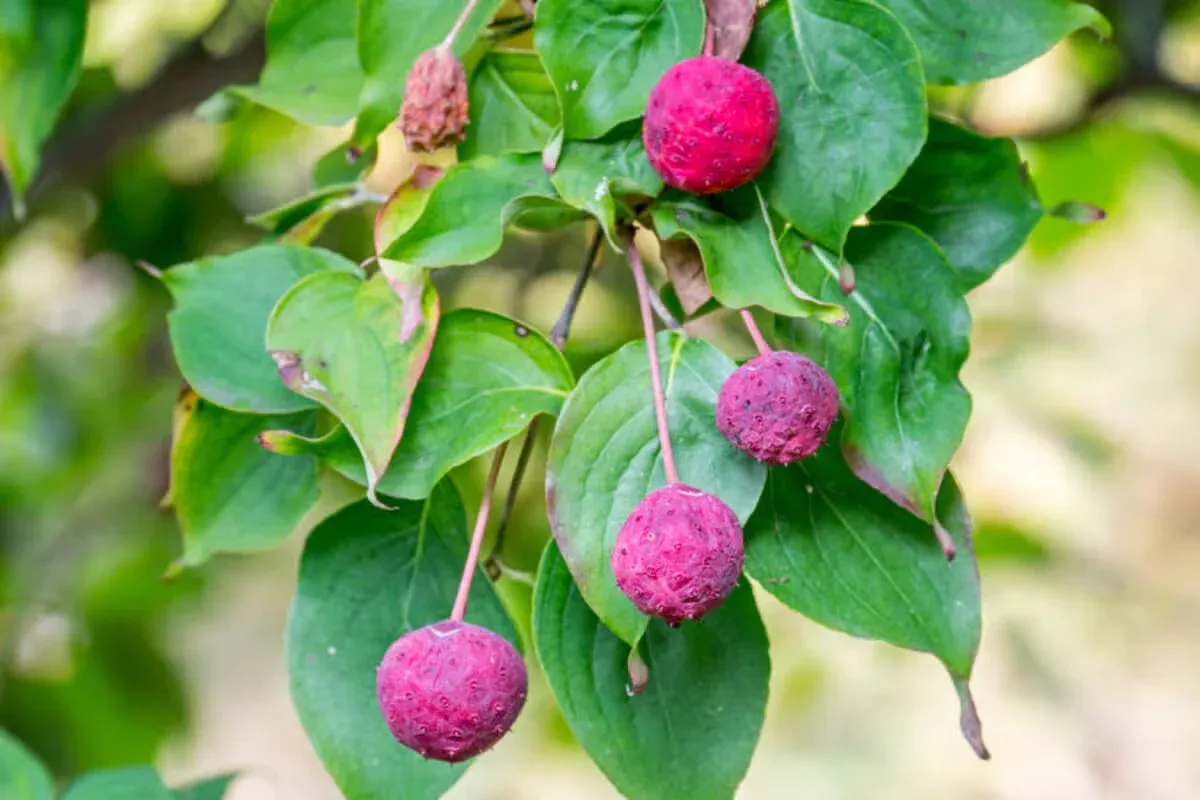
Fruit-bearing plants can help attract robins to your yard.
Image via Getty Images/Arterra
Once your preferred summer berries have finished, the robin food source does not have to end. Many fruit-bearing plants continue to produce well into late summer and fall, such as:
- Wild black cherries
- Honeysuckles
- Dogwoods
- Pokeberries
- Oriental bittersweets
- Virginia creepers
Winter: Fruit-Bearing Plants Robins Love
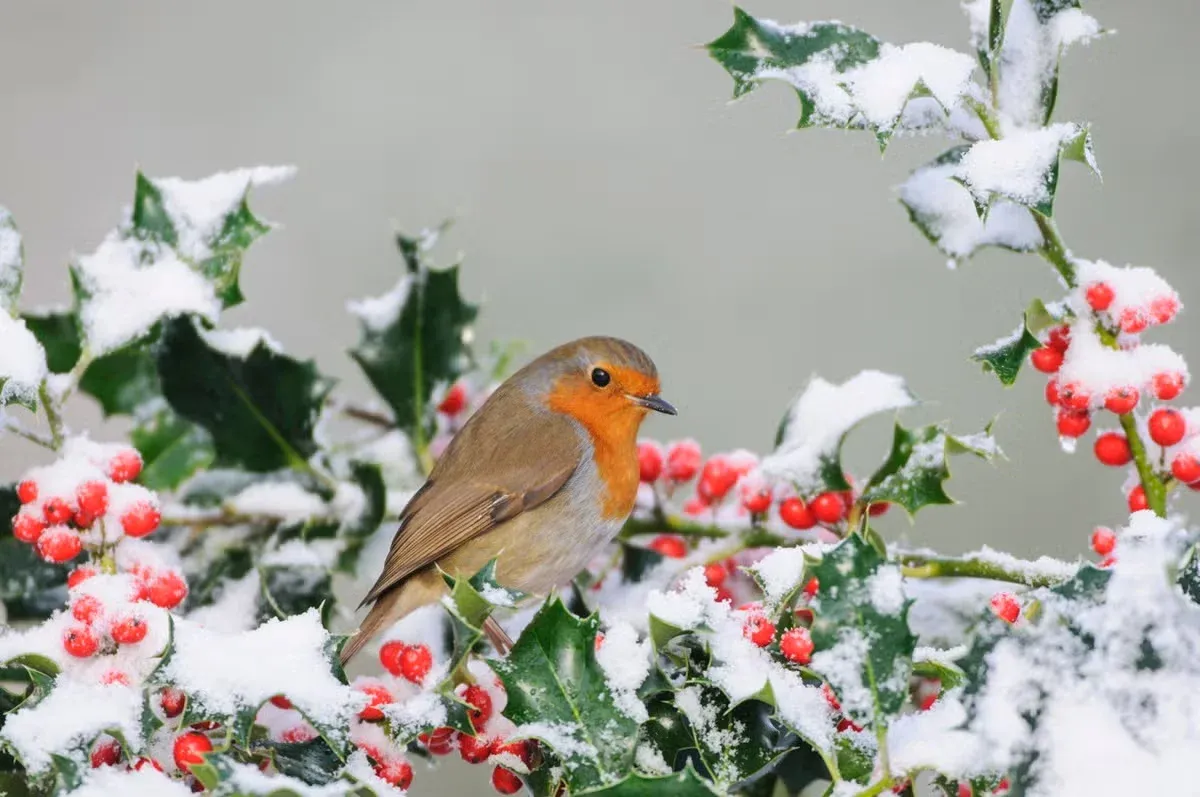
Robins can remain in some parts of the U.S. throughout the winter.
Getty Images Ray Kennedy
Since fruit becomes harder to find during the colder months, you might wonder what robins eat in winter. Fortunately, a few plants produce fruit that these birds can rely on all season, and one of them is a go-to for robins in months like December when snow covers the ground.
Mulvihill recommends: "One of their favorites, and one you would do well to add to your landscaping if you want to attract robins in winter, is the American Holly. Some ornamental crabapples also have comparatively small red fruits that persist into winter. One especially good variety is the redbud, or zumi, crabapple (Malus × zumi, var. calocarpa), because following its abundant springtime bloom, it sets a large crop of small red fruits that persist into winter. Not only will robins eagerly consume them, but so, too, will flocks of Cedar Waxwings!"
Making Your Yard Robin-Friendly
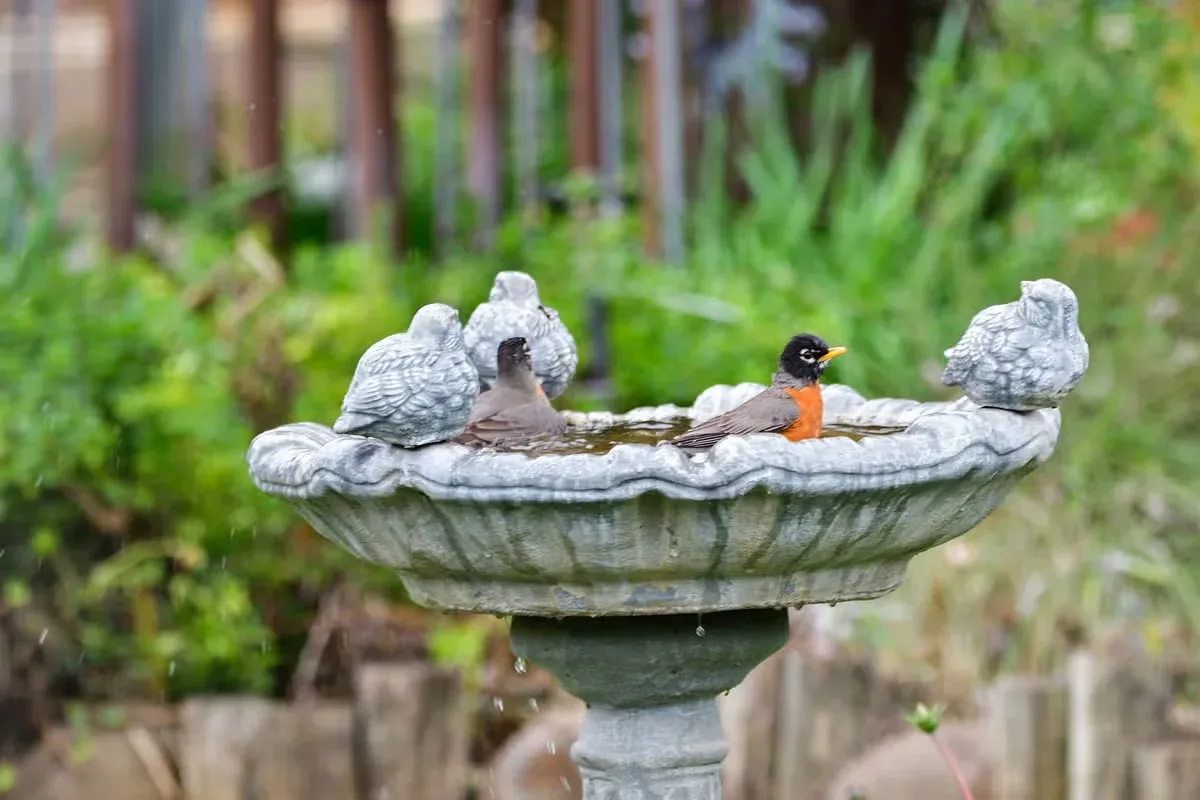
Birdbaths can attract American robins looking for water and a place to bathe.
Image via Getty Images/Barbara Rich
Food is the primary thing most robins seek, and if you can supply their preferred foods consistently through the year, you are in a strong position. In addition to planting a wide variety of fruit producers, it is advisable to cut back on or stop using pesticides in the garden, reserving them only for situations where they are truly needed to protect your landscaping. Many pesticides are harmful to birds, and the presence of insects in your garden can help draw robins, especially during nesting season.
Finally, remember to provide two other essentials that robins need: fresh water and shelter.
Mulvihill points out: "American Robins are very fond of bathing at all seasons, but especially in summer. If you always keep a birdbath clean and filled, you will invariably attract robins. You will make them more likely to use it if there is a tree close by that they can use as a safe and convenient perch to dry off and preen after their bath!"
Source:
- Robert Mulvihill, Lead Ornithologist for the National Aviary
Sources
- Turning Your Garden Into a Year-Round Robin Retreat — pethelpful