A Complete Guide to Raising a Happy Quaker Parrot
Toby Howard
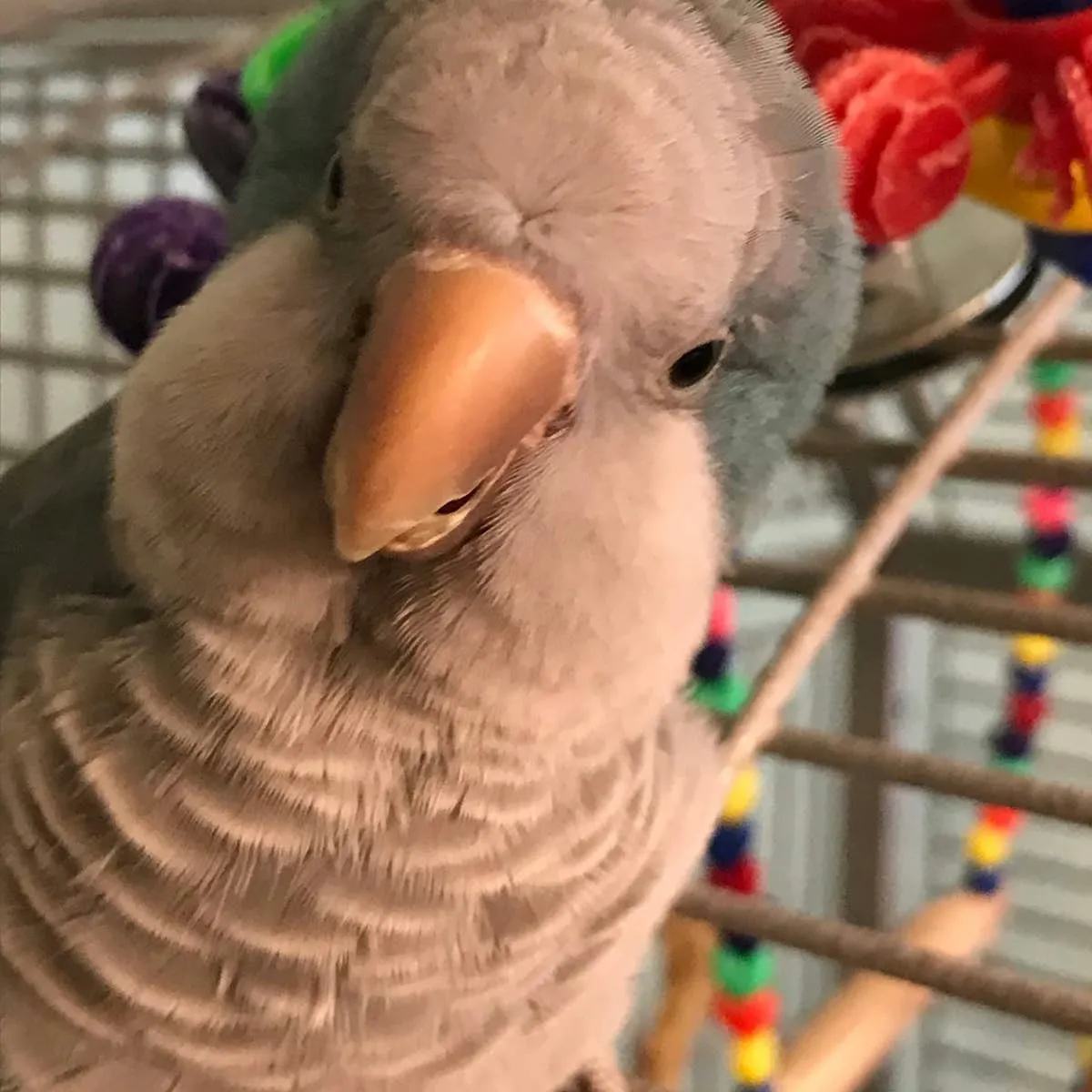
Quaker Parrots as Companion Animals
Quaker parrots are delightful birds known for their playful nature, comical behavior, and talent for talking. To keep them healthy and content for years, you need to provide proper care. This guide offers tips on looking after your pet and highlights things to avoid, so you can enjoy your feathered friend for a long time.
Setting Up Your Home for a New Quaker
Once you've decided to bring a Quaker parrot into your life, you'll need to prepare a few things before he arrives.
- Carrier: You'll need a carrier to bring your bird home and for vet visits or other trips. I use a cat carrier with a perch inside for my Quaker.
- Enclosure: Quakers are active and require a cage of at least 18″ x 18″ x 18″. Anything smaller won't allow enough room for movement and wing flapping.
- Location: Choose a spot for the cage away from drafts, with natural light, and in a low-traffic area away from other animals.
- Toys: These curious birds need a variety of toys. They often take them apart; my Levi has destroyed several. Rotate colorful toys with different features to keep your bird mentally engaged.
- Dishes: Ideally, use three separate containers: one for fresh water, one for main food, and one for fruits and veggies.
- Food: Your breeder can suggest healthy options. The food I give my Quaker is linked in this article.
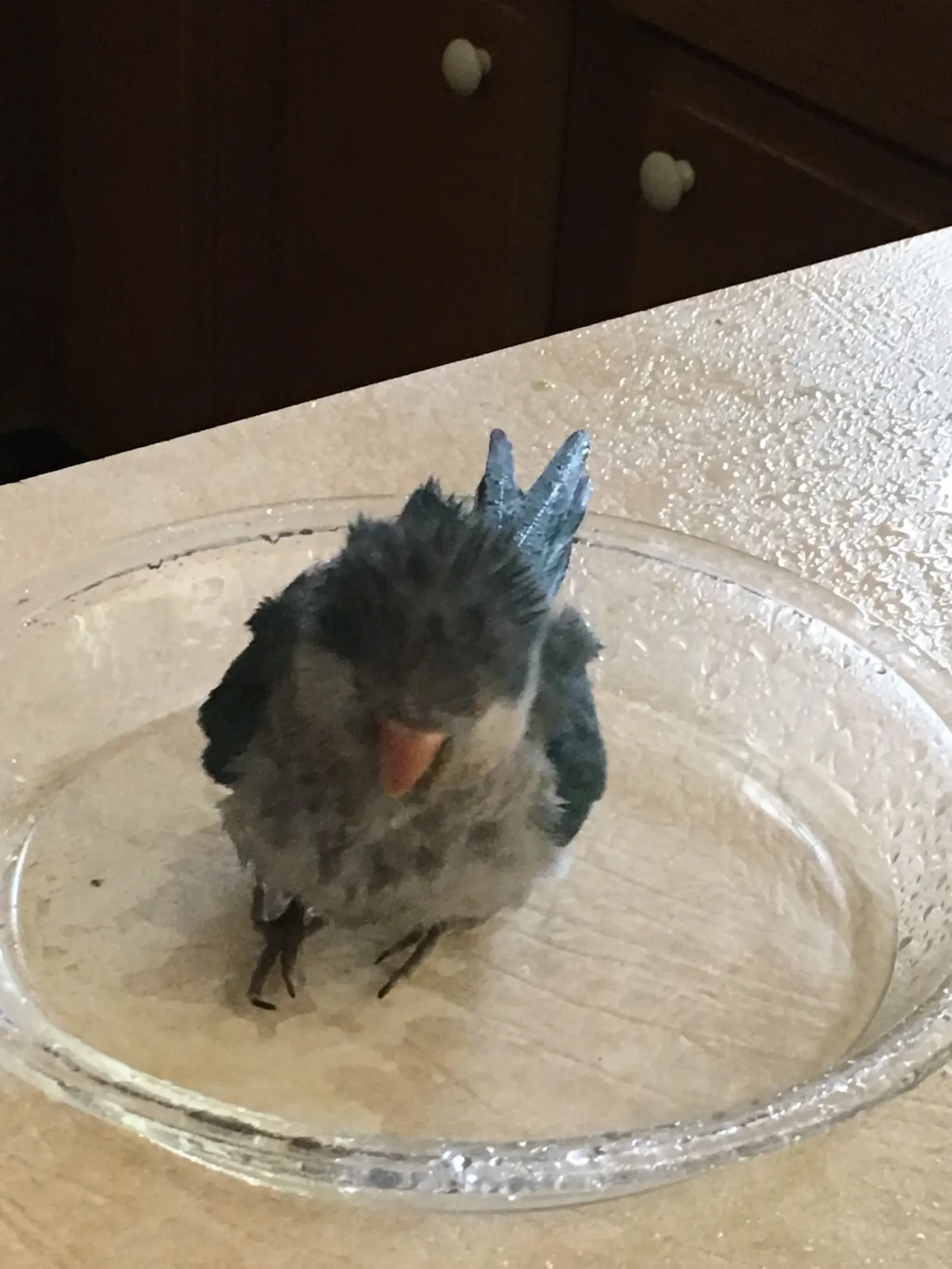
Quakers naturally bathe in the wild. A small dish or a misting bottle will work to fulfill this need for your parrot.
personal photo of the author
Diet and Nutrition for Your Quaker
In the wild, Quaker parrots eat a mix of seeds, nuts, berries, and plant matter like leaf buds and blossoms. A balanced, varied diet is crucial for their health and natural foraging instincts. I feed my pet Tropimix Small Bird Food, which includes pellets, seeds, dried fruits, and vegetables. This provides variety and lets my Quaker, Levi, forage.
Seeds
Wild Quakers eat seeds when they're in season. But commercial seed mixes often contain high-fat seeds like peanuts and sunflower seeds. Pet birds tend to pick out their favorites, which are usually the fatty, low-nutrient ones—similar to a child choosing candy. A Quaker should never eat only seeds; that can lead to serious malnutrition.
Fruits and Vegetables
Fruits and vegetables are vital for your Quaker. Wash them well to remove chemicals, then cut into small, easy-to-eat pieces. You don't need to peel them—the skins have nutrients too.
When choosing veggies, remember that pale ones like iceberg lettuce, head lettuce, or celery are high in water and low in nutrients. Also, avocado can be toxic to your Quaker.
Pellets
Pellets are formulated to meet all your parrot's nutritional needs. If your bird eats seeds, it's important to gradually switch them to pellets. Do this slowly so your bird doesn't stop eating. Never remove all seeds without introducing pellets and ensuring your pet eats them. This can take days to months.
Human Foods
My Levi enjoys eating with the family. We put him on his play gym with a special bowl for this. Just watch the food temperature. Avoid sweet or caffeine-containing foods like chocolate, as they can be toxic. Obviously, never give alcohol. Dairy should be limited. Levi likes small pieces of egg. A good rule: the food should be wholesome and nutritious—good for both you and your bird.
Water
Always provide fresh, clean water. Depending on your tap water, you might consider bottled water. Clean your pet's dishes thoroughly every day.
Healthy Treats for Your Quaker
Fresh Fruit or Vegetable Pieces | Popcorn | Nuts |
Toasted Pumpkin Seeds | Beans (cooked and cooled) | Pieces of Pasta |
Cheerios (or non-sugary cereal) | Corn on the Cob | Whole Grain Bread |
Site, smell, sound, and taste are all important to your Quaker. A variety of treats will keep him happy!
Foods to Avoid
- Avocado: Contains persin, a fungicide that can be heart-toxic to birds—especially smaller ones, but it's been found in many species.
- Chocolate: Can cause hyperactivity, rapid heart rate, and seizures.
- Sunflower Seeds: Only in moderation; they're high in fat and can cause fatty liver disease, a common issue for Quakers.
- Apple Seeds and Fruit Pits: Contain cyanide. Apple pieces are fine, but never give seeds or pits.
More Information About Harmful Foods
For a more complete list of foods to avoid, see the article linked below.
- Foods Toxic to Pet Birds | Pet Birds by Lafeber Co. Foods on your avian vet’s do not feed list include chocolate, avocado, onion, and high-fat and high-sugar foods.
Dangerous Items for Your Bird
Some items pose serious risks to your bird's health. This list isn't exhaustive but highlights key dangers to keep your pet safe.
Windows, Doors, and Mirrors: Birds don't see them as barriers and may fly into them, causing severe injury or death. A friend lost her pet when it flew into a small mirror, which fell and killed the bird instantly—a tragic accident. Open doors and windows are obvious hazards.
Standing Water: Sinks, toilets, and open pots of water are risky if your bird is out. Cover them to prevent drowning.
Other Pets: Dogs, cats, or other birds can be dangerous. Even if they seem harmless, they could injure your bird. My pet once chased our Golden Retriever and tried to bite his nose.
Plants: Many houseplants are toxic, and your bird's curiosity and chewing can lead to poisoning.
Ceiling Fans: Risky for flying birds. Keeping wings clipped is safer.
Loud Noise: Can stress birds, lowering their resistance to infections.
Fumes: From cooking, burning food, cleaners, candles, painting, or other gases can be dangerous.
Polytetrafluoroethylene (Teflon): A parrot's respiratory system is sensitive due to its double breathing. Inhaled Teflon fumes can cause serious health problems or death. It makes me wonder what it does to us. Items that can emit these fumes include:
- Non-stick pots and pans
- Heat lamps
- Iron soleplates
- Griddles
- Coffee makers
- Many cooking utensils
- Hot-air popcorn makers
- Pizza pans
- Portable heaters
- Any non-stick cookware
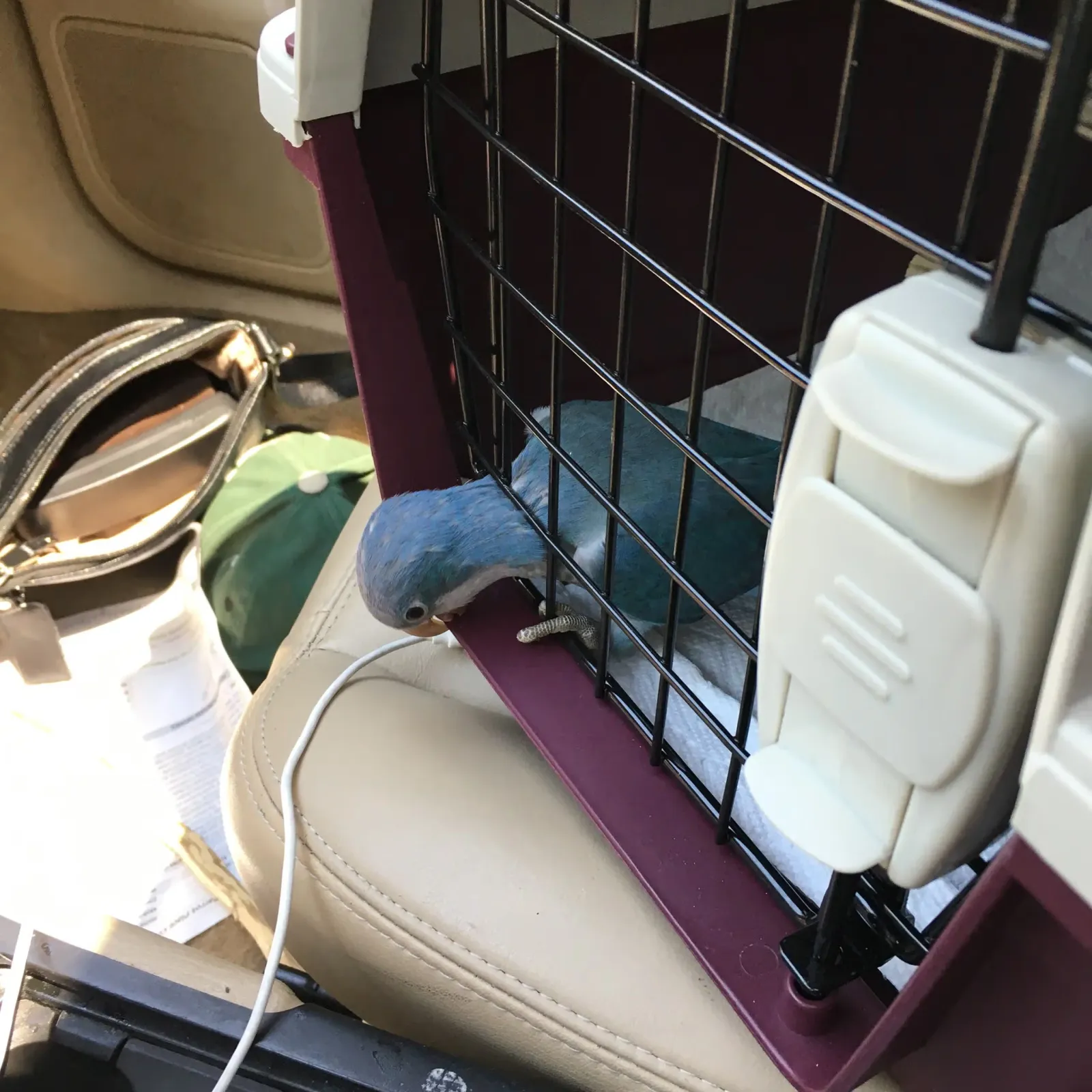
Levi making mischief and potentially putting himself into danger! These pets are quite inquisitive and can unknowingly put themselves into danger. Be aware of dangerous or toxic items around them.
personal photo of author
Warning Signs of Illness
If you suspect something is wrong with your bird, it probably is. Birds instinctively hide illness to avoid predators. Learn to observe your bird carefully and check regularly. Any sudden change warrants investigation and a vet visit. Watch for these symptoms:
- Coughing
- Eye discharge
- Favoring a leg or wing
- Changes in droppings or blood in droppings
- Feather plucking outside normal molting
- Fluffing up
- Sitting on the cage floor
- Stopping normal activities (not singing, chattering, playing, eating, or pooping)
If these are unusual for your bird, they could signal illness, and a vet visit is necessary.
History
The Monk Parakeet (Myiopsitta monachus), also called the Quaker Parrot, comes from subtropical regions of Argentina and nearby South America. Feral populations exist in many parts of the United States and Europe, started by pets that were released. These birds are very hardy and often survive if set loose. This hardiness has led some states to ban them. They are naturally green but can be blue, cinnamon, or rarely yellow through breeding.
Interesting Facts About the Quaker
- They are small to medium-sized parrots, great for smaller homes or apartments, though they can be noisy.
- The green Quaker is about 12 inches long and weighs 3 to 4.5 ounces. Blue Quakers are slightly smaller.
- With proper care, they can live 30–35 years, so they are a long-term commitment.
- Quakers are among the top ten talking parrots. Mine knows about twenty appropriate words and several funny ones.
- Scientists say birds can show emotion—a trait found only in higher vertebrates.
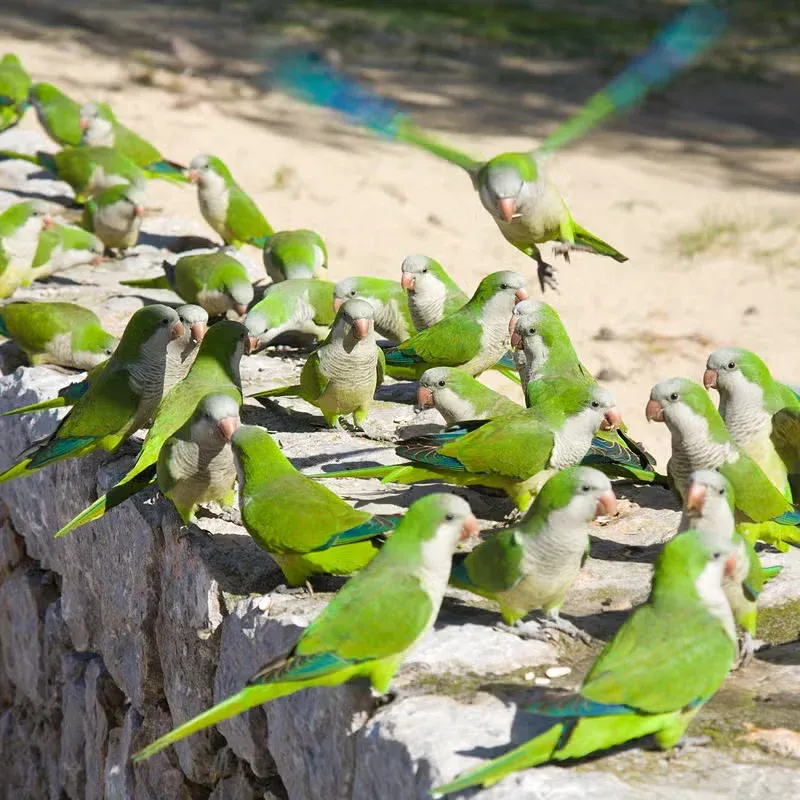
Feral Quakers living in the wild in Spain
Wikipedia
We Love Our Quaker, Levi, and We Hope You Will Love Yours
With proper care, attention, and mental stimulation, you'll have a happy, healthy pet. My husband and I laugh with our pet regularly—and yes, he laughs too! Enjoy your Quaker.
This article is accurate and true to the best of the author’s knowledge. It is not meant to substitute for diagnosis, prognosis, treatment, prescription, or formal and individualized advice from a veterinary medical professional. Animals exhibiting signs and symptoms of distress should be seen by a veterinarian immediately.
Questions & Answers
Question: Are Quakers hard to breed in captivity? How many babies in a clutch?
Answer: Quaker parrots are one of the easiest parrots to breed in captivity. They generally lay from 5-12 eggs in a clutch and can take from 24-28 days to incubate them. The most difficult part is sexing the parrots to make sure you have a male and female. Once you know you have a pair it is making sure you have a suitable nest box. Then do some research on hand feeding the babies as this makes a gentle pet later. Good luck on your endeavor – it can be very fun and rewarding.
Question: I have a 1 year old male Quaker. Healthy, happy, chatty. We love him but he has become very hormonal. Without a mate, he’s pretty frustrated. He bites hard for no apparent reason. We blocked the place he tried to nest in. We tried to distract him when he started acting sexual, but since that didn’t work, we now walk away from him. What can we do to stop the sudden agression towards us? Do you know of any other sites on which I can ask for help?
Answer: Just wondering if this aggressiveness is only in his cage? If this is the case you might find he is a sweet fella as soon as you remove him from the cage. Quakers tend to be very possessive of “their territory” due to the complexity of their nests in the wild. This possessiveness turns to aggressive behavior with their cage in captivity. I remedied this by stick training them – I train them to step up on a stick making them easy to remove from the cage and my baby turns sweet again. As for the sexual behavior – I would just continue to ignore the behavior – it again is a natural thing for a quaker to do.
Question: I found a Nova Microdermabrasion 61″ Large Bird Cage on Amazon, and I was wondering if that would be big enough for a Quaker Parrot?
Answer: Yes, this looks like a very good choice. It is large enough and with the play gym on top, your Quaker can play all around his cage. I open the top door when I am home and Levi enjoys the freedom to walk all around his cage, inside and out.
Question: What does it mean when a parrot twists their head all around and opens their mouth?
Answer: It can mean many things. If they squawk loudly while doing it, it can mean that they are territorial. It could also be an inquisitive look or an invitation to play a game by mimicking back. My parrot likes when I tilt my head back and forth with him, and will jibber in delight once we start our game.
Question: What is the minimum cage size required for a Quaker Parrot?
Answer: It is not good to have a cage smaller than about 18″ x 18″ x 18″. Quakers are very inquisitive and love to play, tear apart and figure things out, so they need a lot of toys and space to keep them happy. If your space allows for a larger cage, it only benefits your pet; it will keep your bird happy and content. So a large space and toys are great for a Quaker Parrot.
Question: We are in love with our blue Quaker – he has become quite aggressive and while he used to come out of his cage by running headfirst into our hand, he now refuses to come out of his cage. The only way is to grab him with a towel! This started back in April after we went on a week-long vacation. How do you train Blue Quaker parrots to step up?
Answer: Yes, most Quakers behave this way – in the wild, Quakers build very intricate nests. They protect this nest, and it appears to be an inbreed characteristic. By teaching your pet to step up onto a stick or bird perch, you can easily take them out of their cage. I started this training by having mine “step up” from one finger to the other. This is completed by gently pushing your finger into their chest while saying, “step up.” When they begin to do this automatically when you say this command, then start training with a stick. It will be easy to get them out of the cage using the stick to get them out – once they are out of their cage, you will have a sweet bird again.
Question: I have a 3 yr old quaker parrot who has been pulling out his feathers around his front, since last night, to the point of bleeding and bare around neck and shoulder. What should I do to help my quaker parrot to stop plucking his own feathers?
Answer: Feather plucking is often a sign of stress in a bird. With how the plucking began so suddenly, has anything recently happened to cause stress in your bird? Have you moved the cage, added a pet, or anything else? That is what I would first look at – then I would look at diet. have you recently changed his food? Another idea could be boredom – Quakers are naturally curious and need toys to challenge them and keep them interested. With bleeding though, it would be a good idea to bring him to an Avian Veterinarian.
© 2017 Susan Sears
Sources
- A Complete Guide to Raising a Happy Quaker Parrot — pethelpful