A Complete Guide to Raising a Healthy Pet Budgie
Harper Kelly
Is a Budgie the Right Companion for You?
Budgies bring joy with their playful antics and affectionate nature. They enjoy interacting with their human friends and other budgies, often expressing themselves through chirps, dances, and songs. But before you bring one home, it's crucial to understand what a budgie needs to thrive. This will help you decide if you can provide the time and care it deserves.
Essential Supplies for Your Budgie
Cage (at least 40 x 20 x 32 inches, with both horizontal and vertical bars to allow climbing) | Sandpaper for the cage bottom |
Food and water dishes | Grit (see dedicated section below) |
Perches (natural wood branches like willow, elder, or apple are best; vary thickness to exercise feet and keep nails trimmed) | Cuttlebone (for beak conditioning and calcium) |
Toys (swings, bells, ladders, mirrors are favorites) | Mineral block |
Food (see dedicated section below) | Bird bath |
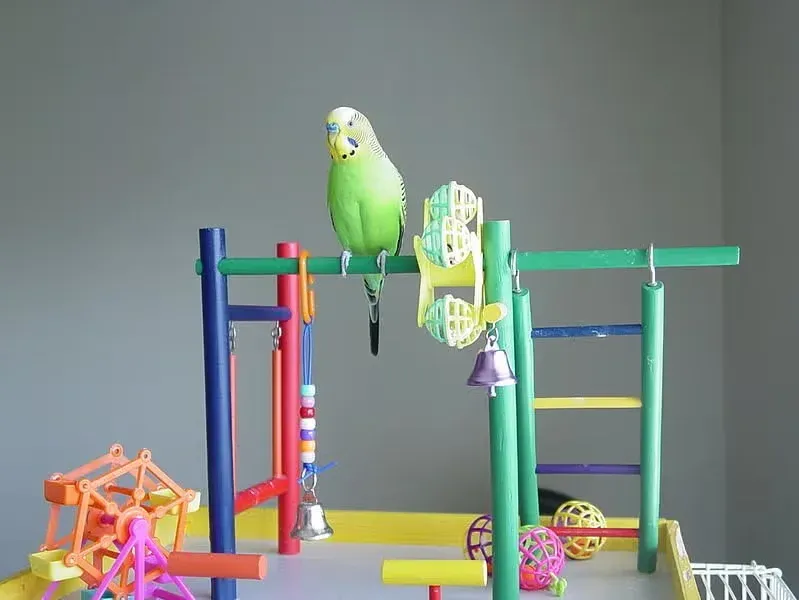
Your budgie will need perches and toys like ladders and swings.
Anna Saccheri (Creative Commons Attribution-Share Alike 2.0 Generic Licence)
What to Think About Before Buying
Budgies are generally low-maintenance, but they do require a long-term commitment. Their typical lifespan is 8 to 10 years, and some live even longer. They need daily exercise and their food and water dishes must be cleaned regularly.
Single Budgie or a Pair?
You must decide whether to keep one budgie or two. While a single budgie can be a delightful companion, it may become lonely and stressed if you can't spend a lot of time with it. In that case, a pair might be better so they can keep each other company.
If you choose a pair, a male and female or two males are recommended. Two females will likely fight and injure each other. A male and female won't breed unless you provide a nesting box.
How to Identify a Healthy Budgie
Whether you buy from a breeder or a pet shop, check for these signs of good health:
- The environment is clean and spacious, not cramped or dirty.
- The budgies are active, playful, and chattering—not timid or silent.
- Eyes and nostrils are clear, with no discharge.
- Feathers are smooth and undamaged.
- Feet are clean and have four toes each.
Ensuring You're Getting a Young Budgie
To confirm you're buying a baby rather than an adult, look for these features:
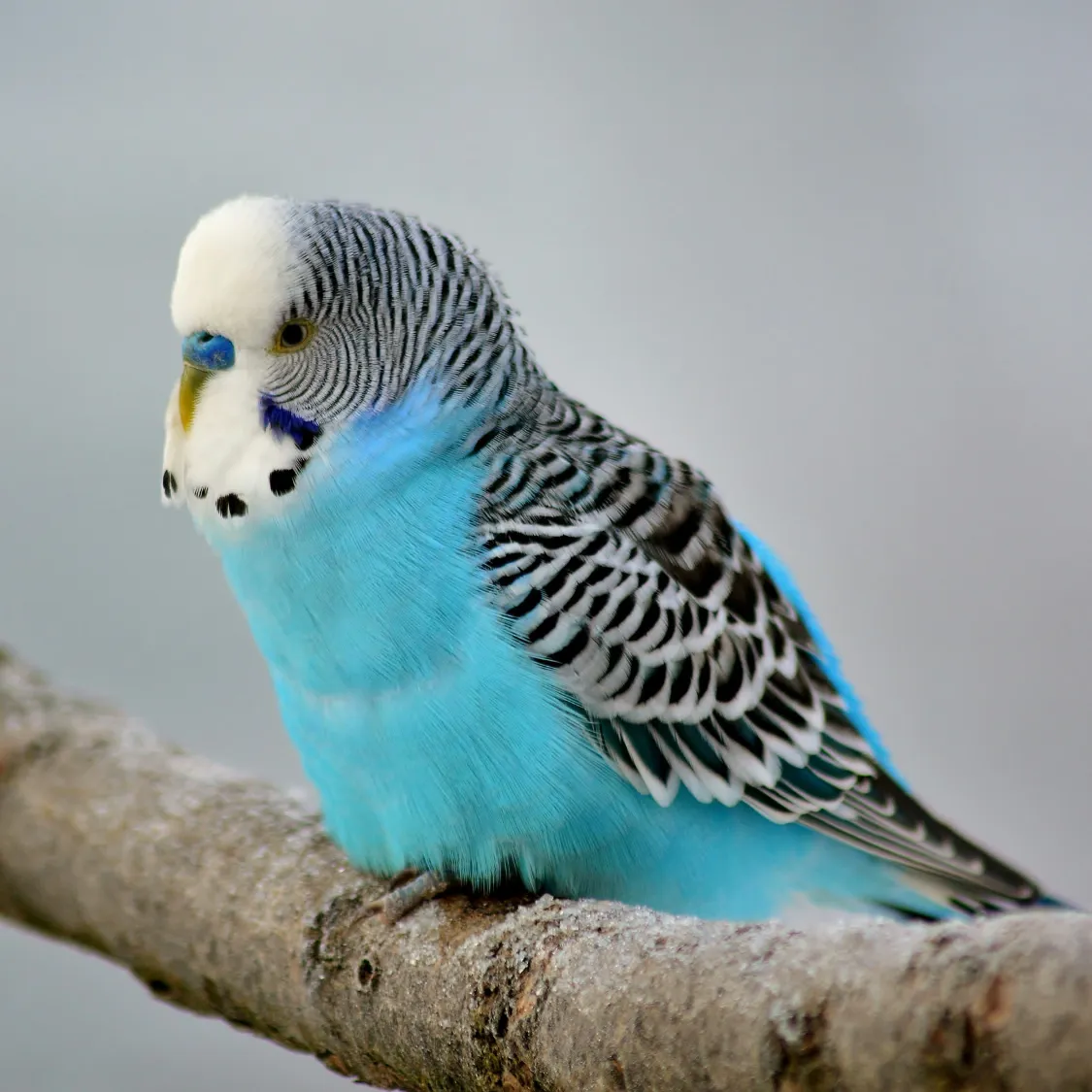
- Head barring extends all the way down to the cere (the waxy area at the base of the upper beak).
- Eyes are solid dark, without the white irises seen in most adults.
- The cere is mauve. Adult males usually have a blue cere, and adult females typically have a brown one.
Helping Your New Budgie Settle In
Before bringing your budgie home, set up the cage in a quiet spot away from loud noises, extreme heat, or drafts. You can cover half the cage with a towel or sheet to give your budgie a hiding place where it feels secure.
When you get home, place your budgie in its cage and leave it alone to adjust. It will be very scared at first and needs time to get used to its new surroundings. It may take a few weeks for your budgie to build confidence.
Feeding Your Budgie
Fresh food and water must be provided daily. The main diet (about 60–80%) should be a high-quality budgie seed mix.
Budgies eat seeds by removing the husk and leaving it behind. This means empty husks accumulate on top of the seed bowl, and you must remove them each day so your budgie can reach fresh seed.
Water must be replaced daily to keep it clean and free of bacteria.
Your budgie also needs a small amount of fresh greens or fruit every day. Safe options include:
Apple | Melon | Peach |
Grape | Chickweed | Pear |
Broccoli | Spinach leaves | Plum |
Kiwi | Carrot | Mango |
Never feed your budgie:
- avocado, or
- lettuce
Place a mineral block and cuttlebone in the cage to help keep the beak trimmed and provide extra minerals for bone health.
What About Treats?
Pet shops and supermarkets sell many commercial treats like seed bells and fruit sticks. These are often high in honey and should only be given occasionally. Budgies also enjoy millet sprays, but millet is fattening, so offer it only once a week.
The Grit Debate
In the past, many budgie experts thought grit was necessary for digestion, helping to break down seeds in the gizzard. Now, it's believed that grit helps birds break down the husks they swallow with seeds; since budgies don't eat the husks, some say grit isn't needed. Ultimately, it's the owner's choice. The PDSA does recommend grit.
Exercise and Out-of-Cage Time
Once your budgie is settled and gaining confidence, ensure it gets enough exercise. Budgies need time outside the cage to fly. The more time you can give, the better. The room must be safe: turn off electric fans and close all windows and doors.
Budgies are skilled escape artists; it's estimated that six out of ten budgies escape each year. Escaped pet parrots have become naturalized in 23 U.S. states.
Be aware that budgies love to chew wallpaper, books, magazines, and papers. If left unsupervised, they can damage your home. Also, remove any poisonous, prickly, or thorny plants from the room.
Other hazards include candles, toilets, water containers they could drown in, ovens, fires, and poisonous substances like graphite in pencils, adhesives, varnishes, and detergents.
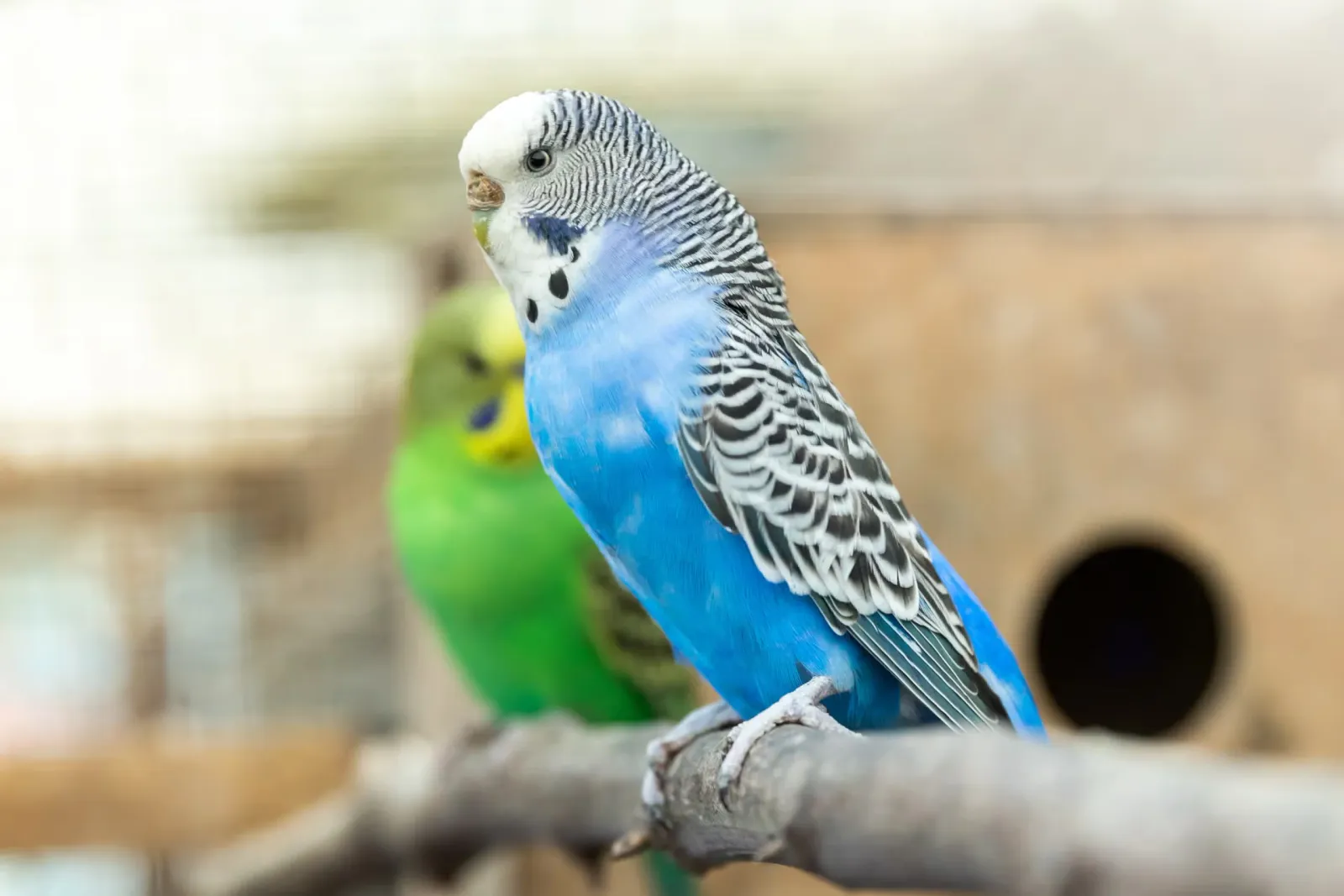
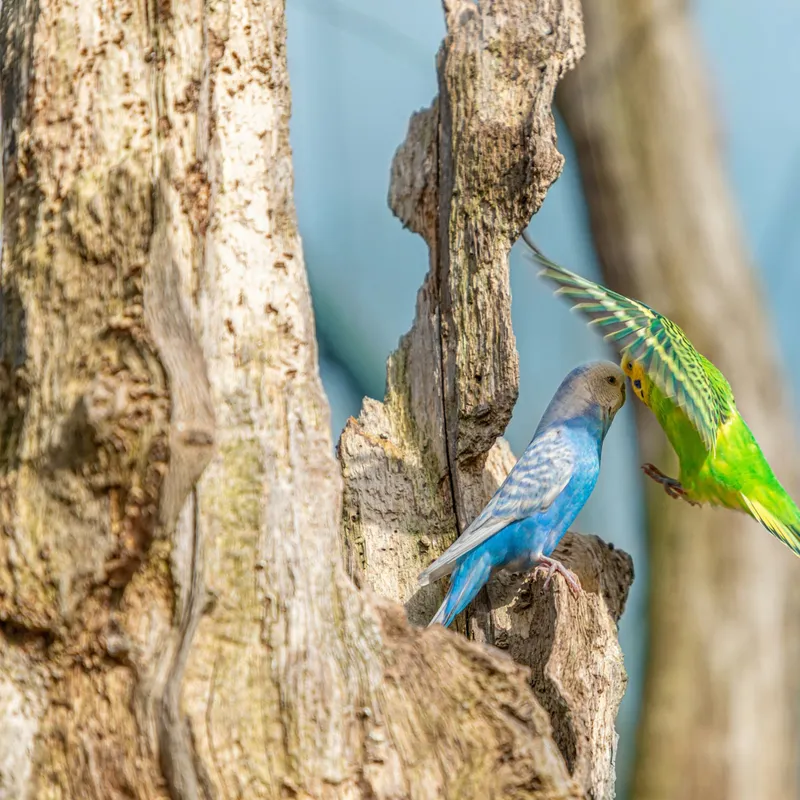
Budgies are diurnal, just like humans, and they may chirp a lot in the morning!
Photo by Bianca Ackermann on Unsplash
Sleep and Rest
Budgies are diurnal, like humans: awake during the day and asleep at night. But if the cage is near a window, your budgie will wake at sunrise and may be very chirpy at that time!
Budgies need at least ten hours of sleep per night. Covering the cage at night and removing the cover when you wake up helps ensure they get enough rest.
Your budgie will also nap during the day. You can tell it's dozing when it sits quietly with eyes closed, one leg drawn up, and its head slightly tucked into its wing.
Hygiene and Cage Cleaning
Your budgie keeps itself clean by preening daily and bathing in its bird bath. However, you must keep the cage and equipment clean and safe.
Hot water and a wire brush are sufficient for cleaning. Never use detergents, as they are poisonous, though pet-safe detergents are available from pet shops.
See the table below for a list of tasks.
Cleaning Schedule for Budgie Owners
| Daily | Weekly |
|---|---|
| Provide clean water and remove husks from the top of the seed. |
|
Clean the cage thoroughly with hot water and, if needed, a pet-safe detergent.
| |
Check the cage and clean any dirty toys or perches.
|
Replace sandpaper.
| |
Remove any fruit or greens that have been in the cage for more than 24 hours.
|
Ensure all toys, perches, and utensils are clean.
|
This article is accurate and true to the best of the author’s knowledge. It is not meant to substitute for diagnosis, prognosis, treatment, prescription, or formal and individualized advice from a veterinary medical professional. Animals exhibiting signs and symptoms of distress should be seen by a veterinarian immediately.
Sources
- A Complete Guide to Raising a Healthy Pet Budgie — pethelpful