Can Two Cats Who Once Coexisted Ever Live Peacefully Again?
Casey Wilson
A Reader Asks Why Her Cats No Longer Get Along
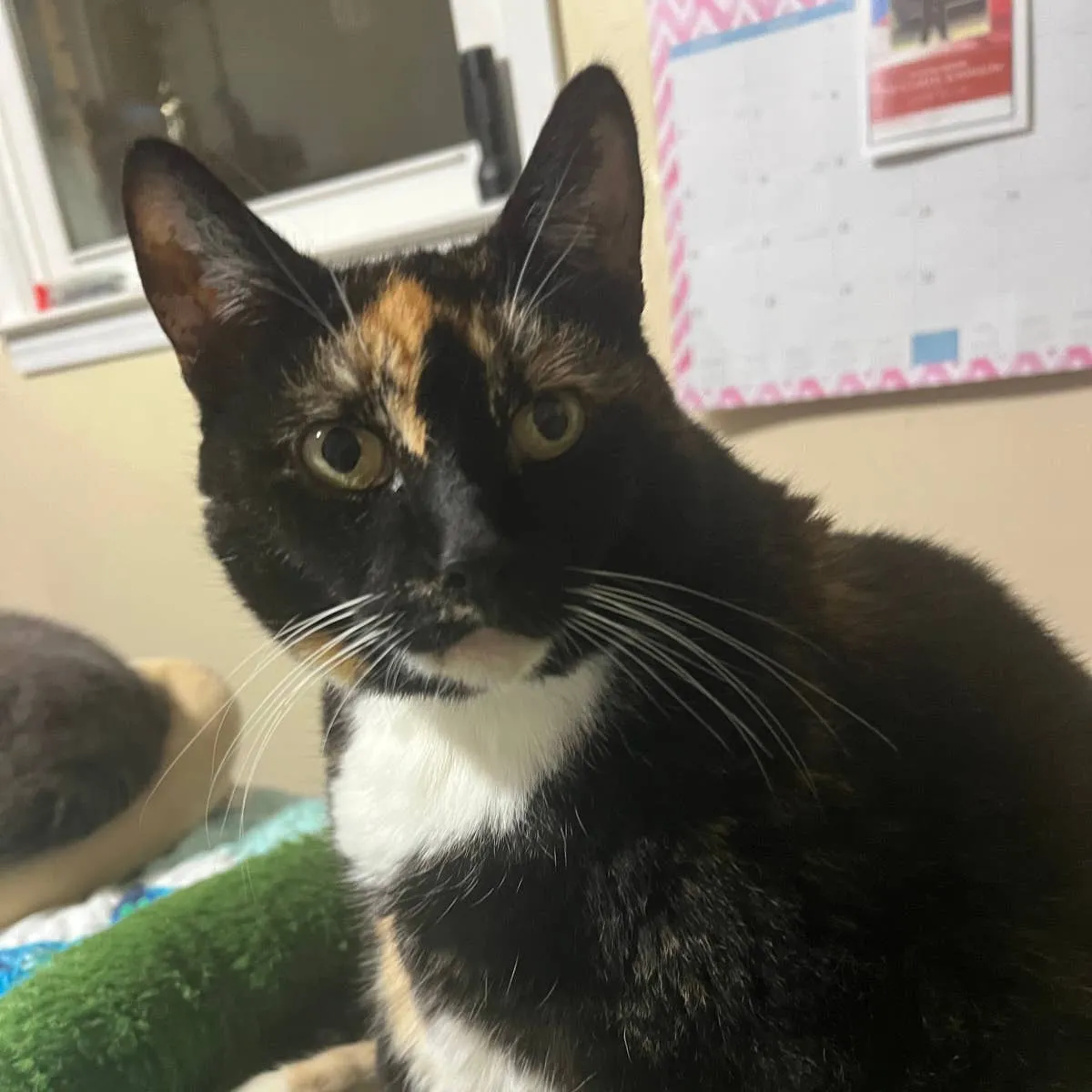
Evelyn and her husband have two female cats, both adopted as strays. One is a large 17-pound Calico named Sharkie, and the other is a Russian Blue called Blue. Because Sharkie was older and bigger, she tried to bully Blue when Blue was smaller and younger. Evelyn stepped in during one of their squabbles, and that settled their differences. The two still don't get along—they simply co-exist and respect each other's territories.
A few years later, Evelyn adopted two male cats that were brothers and could not be separated. Her husband let them out of the box as soon as they got home, so there was no slow introduction to the older cats, yet everyone got along fine. The two males were about 3 months old and were named Tom and Jerry.
For three years, all the cats got along or co-existed fine. But something changed last year. Evelyn doesn't know what Tom did to Sharkie, but Sharkie is now very angry at Tom. Tom is always hiding and lurking around to make sure Sharkie isn't nearby, because she chases and bites him and he is scared. Evelyn feels Sharkie would kill Tom if she could.
This has been going on for a while, and Evelyn thinks Tom is suffering from extreme stress. He keeps cleaning, licking and biting himself, to the point where his two hind legs are almost bald. Evelyn scheduled Tom to see the vet twice but had to cancel twice because she could not get hold of him. Once he suspects something is going on, he bolts and hides.
Evelyn asks how she can get Sharkie to stop being so mean to Tom. She does not want to re-home him and his brother.
Pain-Related Aggression in Cats
There are several possible reasons why Sharkie no longer gets along with Tom, but the first thing Dr. Mark would be concerned about is that she is in pain. She is a big cat and a senior—has Evelyn noticed that she is reluctant to jump up on the couch or scratching post area? She may be feeling bad because of arthritic pain.
It is really difficult to tell for sure how prevalent this problem is, but research has shown that anywhere from 28 to 82% of cats have behavioral changes due to pain. Inter-cat household aggression can be one of those behavioral changes.
Feliway for Behavioral Problems in Cats
Some behaviorists recommend that if there are any indications of pain, a cat should be treated for that problem even before behavior therapy.
If the physical and bloodwork are normal, the behavioral therapy should start with Feliway, a pheromone that helps some cats with aggression toward their housemates. Even with the hormone, the aggression may not totally go away, but at least it tends not to escalate.
Valium or Prozac for Aggressive Cats
That is about as much as we can hope for at this time. Evelyn can talk to her local veterinarian about putting Sharkie on a medication like Valium or Prozac to make her less aggressive.
Dr. Mark does not think Tom did anything to provoke this—it's more likely that he is just the victim. Evelyn may not like the changes in Sharkie if she is on medication, but Tom would surely appreciate it. If Tom were living in a group with Sharkie in the wild, he would most likely re-home himself.
Dr. Mark hopes all goes well with them. A lot of stress changes we see in cats come about slowly, but it sounds like this has been going on for a while, so Evelyn should have Sharkie seen as soon as possible for Tom's sake.
This article is not meant to substitute for diagnosis, prognosis, treatment, prescription, or formal and individualized advice from your veterinarian. Animals exhibiting signs and symptoms of distress should be seen by a veterinarian immediately.