Evaluating a Sudden Bump on the Crown of a Dog's Head
Sam Bailey
What Could Cause a Swelling on the Top of a Dog's Head?
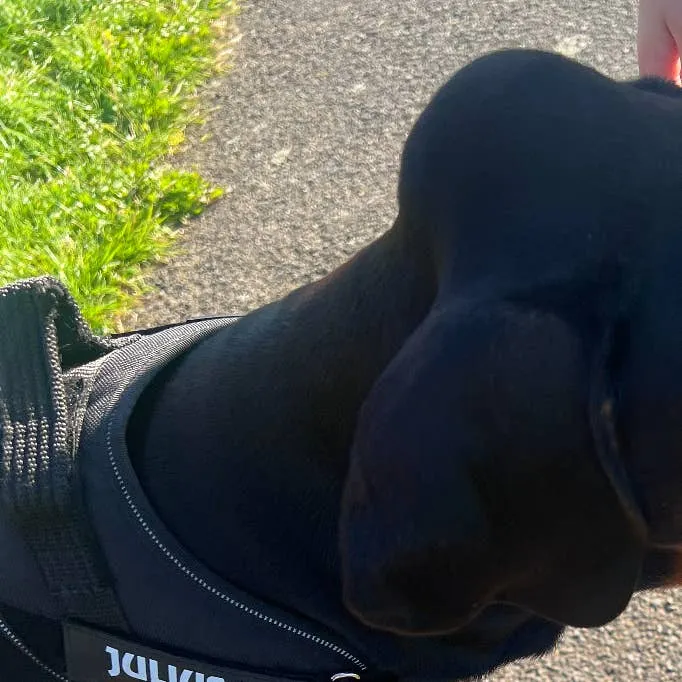
A reader, Mark T., recently asked about an egg-shaped bump that appeared on the top of his Dobermann's head.
Possible Explanations for a Cranial Lump
Several conditions can produce a swelling in that location:
- Abscess: When bacteria enter through a break in the skin, they can create a walled-off pocket of infection. This lump contains white blood cells and fluid and is typically painful.
- Cervical Spondylomyelopathy: This inherited condition, often called wobbler syndrome, generally shows up as incoordination and balance problems. Affected dogs usually have reduced synovial fluid, not increased amounts, but it is possible that a bulge could be linked to cerebrospinal fluid associated with the disease.
- Tumor: Skin cancer can arise anywhere on the body. Diagnosis requires a physical exam and fine-needle aspiration. Not every lump needs to be aspirated, but if it feels firm rather than fluid-filled, your veterinarian will likely want to examine the cells to determine whether further treatment is necessary.
- Occipital Crest: This bony prominence can look enlarged in growing puppies, but the photo you sent does not appear normal. The right ear also looks swollen, though I cannot be certain without an examination. (If your dog also has an aural hematoma, he should be seen soon so that the problem can be addressed before the ear shrivels and becomes permanently deformed.)
- Seroma: This is the most probable cause of a swelling in that area. It is simply a collection of fluid under the skin, similar to a blister in humans, and is often seen on Dobermans' elbows; occasionally we also see them over the bony parts of the head. Seromas are most common after surgery when skin is separated from the body wall (as during a spay), but in a Doberman—with a thin coat and less subcutaneous fat than some breeds—I suspect a bump on the top of the head may be secondary to running into a wall.
The only way to determine which of these lesions is affecting your dog is to have your local veterinarian examine him and insert a needle into the lump. The veterinarian will remove fluid or cells and then examine them, possibly under a microscope, to identify the cause.
Does This Require Emergency Care?
This is not an emergency, but it should be addressed as soon as possible. You should schedule an appointment right away. However, as long as the dog is not wobbling and the lump is not painful, and you cannot get your dog to the veterinarian for several days, applying a warm compress (such as a washcloth soaked in warm water) to the top of the head for about 5 minutes three times a day may help. Just be careful that the compress is not so hot that it burns you.
The warm compress will not help if the lump is an abscess or a tumor, so have your dog seen as soon as you can.
This article is not meant to substitute for diagnosis, prognosis, treatment, prescription, or formal and individualized advice from your veterinarian. Animals exhibiting signs and symptoms of distress should be seen by a veterinarian immediately.