Moving Feathered Chicks Outdoors: Temperature Guidelines and Feather-Loss Checks
Blake Miller
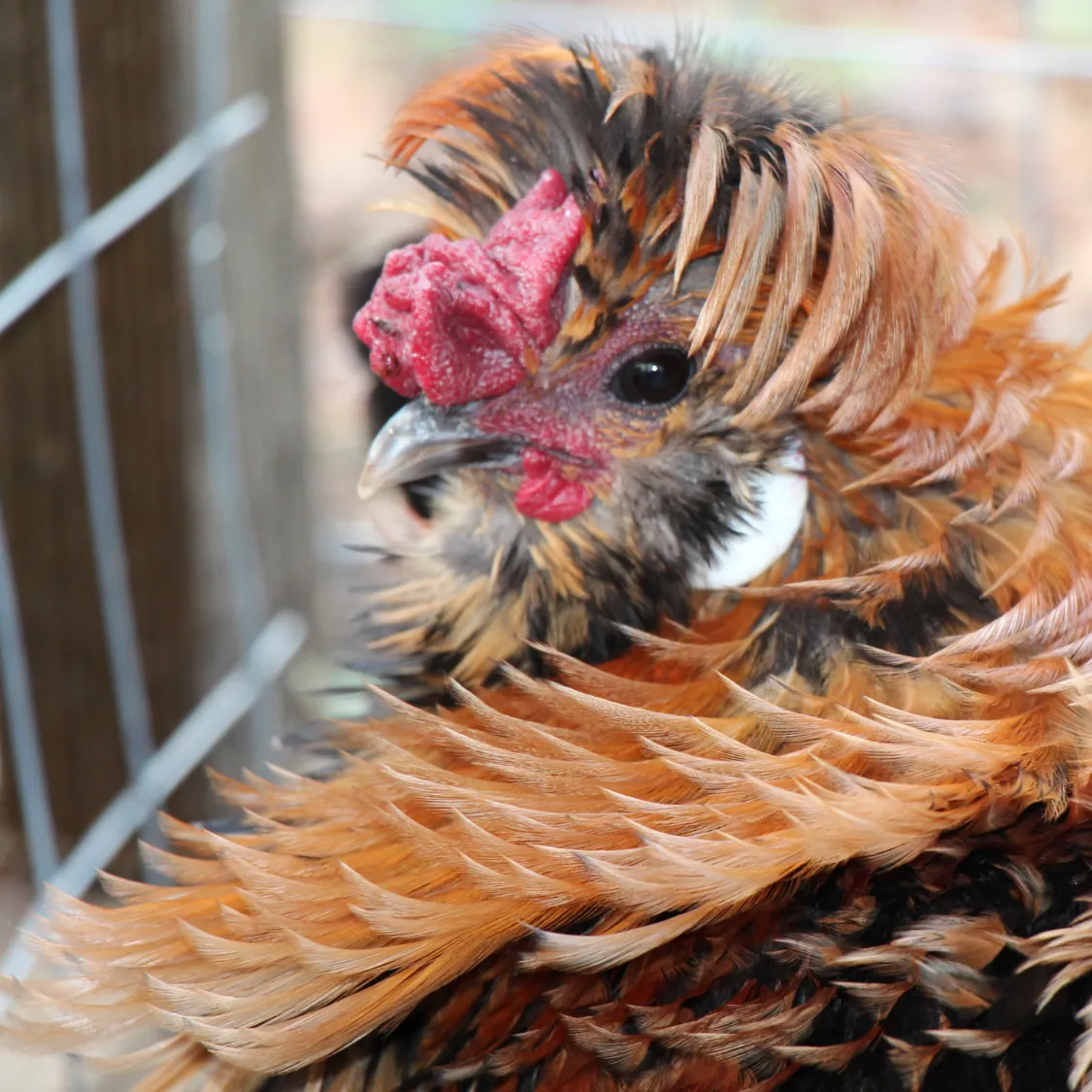
Is It Time to Move Six-Week-Old Chicks to the Coop?
A reader described a flock of six Polish and possibly other Tophat chicks that had turned 6 weeks old that day. The birds were still in an indoor brooder, with plans to keep them inside until 8 weeks. For roughly four nights the heat lamp had been switched off, and the chicks were sleeping on a roost bar built for them.
The setup was a large wading pool lined with sheets of styrofoam insulation, a 250-watt heat lamp suspended from a telescope tripod, and bird netting covering the top. The chicks seemed eager for room to fly: one found a gap in the netting while the light was off and flew out, landing on top of the tripod. The reader caught it and put it back, but the birds regularly flew up onto the roost and jumped at the edge of the improvised wall.
Conditions in NE Missouri at the time were in the 60s at night and the 80s and 90s during the day. The chicks had also been taken outside for a few days during a deep clean of the brooder, and they enjoyed it. With the coop and enclosed run ready, the reader wanted an opinion on moving them out now.
The reader also reported finding 2–3 feathers in the brooder on several occasions, always in different colors, so they clearly came from more than one bird. The question was whether preening could account for the loss, or whether one or more birds were plucking feathers out of boredom. The reader made sure the chicks had distractions to play with and asked for recommendations.
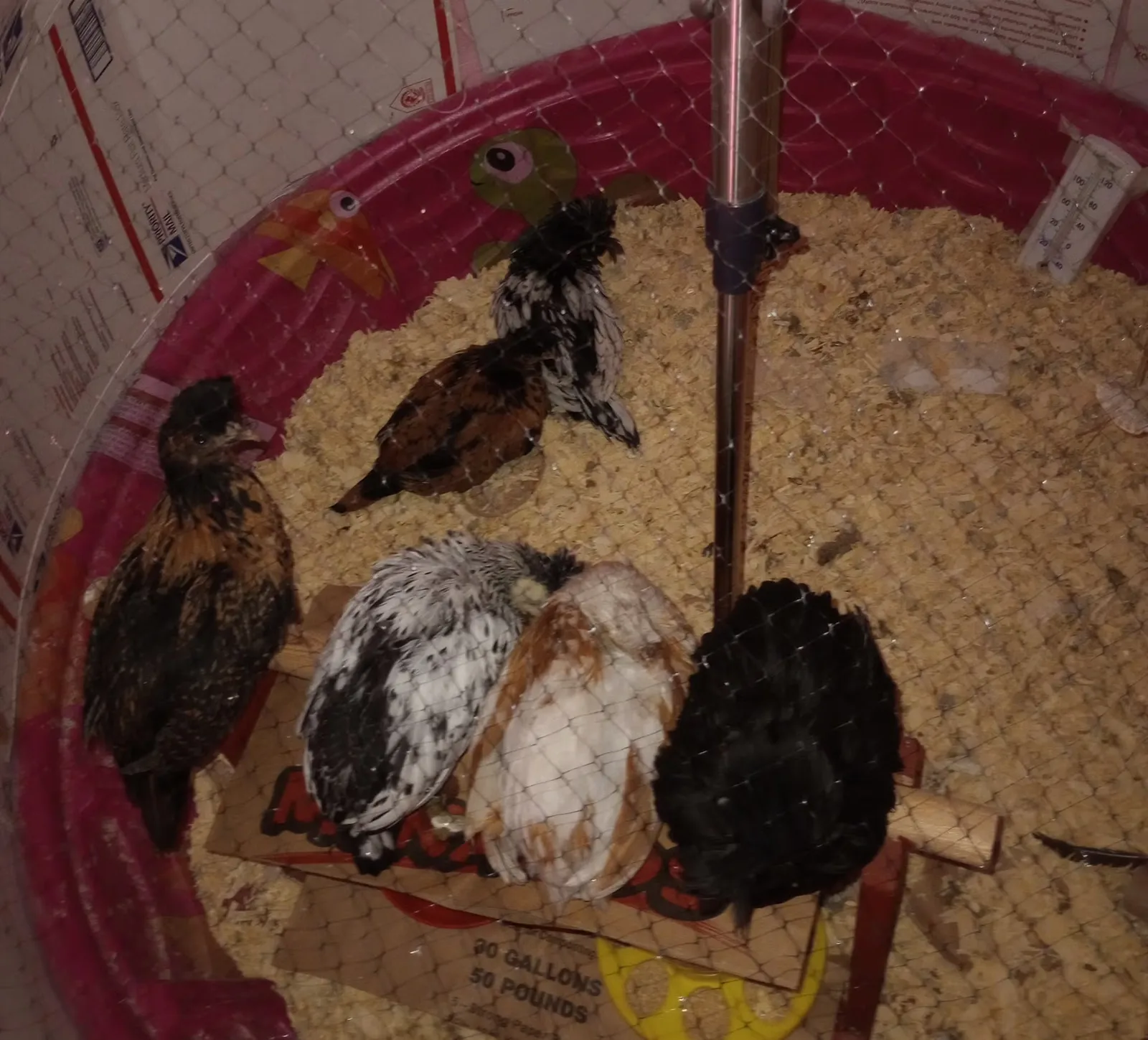
Chicks that have outgrown the brooder may become bored and begin pulling out their own feathers.
Feathered Chicks Can Go Out, but Watch the Nighttime Lows
At this stage the chicks are fine to go outside. They are already feathered and will do well during the day. In a warmer climate, chicks can be let out even sooner without supplemental heat.
In NE Missouri, however, the weather will still need watching for about the next month. Whenever the temperature is expected to fall below 65˚F, supplemental heat is still required.
The coldest point is most likely to come in the middle of the night, so the lows should be monitored until the chickens are older. If a significant nighttime drop is forecast, an option is to let the birds out during the day and bring them back in for the evening.
A sheltered spot where the birds can get out of the rain is also important, since getting wet is a common cause of chilling in small birds. The chickens also need somewhere to hide from predators.
Advice on keeping chickens through cold weather is plentiful. In this region, the key measure is preventing drafts.
Why Young Chicks Shed Feathers
An occasional lost feather is not unusual even in birds of this age. If it is happening often, several factors are worth checking:
- Diet: Are the chicks on a commercial feed? With a homemade diet, a nutritional deficiency that causes feather loss is still possible, though unlikely. Chicks fed a deficient diet would more likely show disease and death.
- Lice or mites: These parasites are common in some chickens but unlikely in chicks of this age.
- Bullying: This is unlikely among young birds that have been together since hatching. It shows up most often when one or more birds are introduced to an established flock.
- Boredom: This is the most probable explanation for six-week-old chicks. They are growing and outgrowing the brooder, and since they can only eat and drink so much, they find other ways to pass the time. If the picking is a secondary effect of boredom, it should stop once the birds are moved outside, although an occasional feather will still turn up.
Top Hats are handsome birds that look good ranging around a yard. The most exotic birds in the author's own flock are Transylvanian Naked Necks, since Top Hats are not available locally. Enjoy the new birds.
This article is not a substitute for diagnosis, prognosis, treatment, prescription, or formal, individualized advice from a veterinarian. Animals showing signs of distress should be seen by a veterinarian immediately.