Sterilization as a Lifesaving Measure for Companion Animals
Toby Howard

Why Sterilization Matters
Many pet owners have sat through a familiar talk at the veterinary clinic—the one where a veterinarian or technician explains why it's important to have their pet spayed or neutered. As a veterinary technologist, I've delivered that talk countless times, often after hearing the comment, "Well, I think I want to breed them." Some people respond with eager agreement; others react with annoyance or disbelief.
The purpose of that conversation is never to offend or argue, but to inform and safeguard the pet. Even if the information isn't welcome, it's part of the job. That said, I'm not criticizing responsible breeders—I've encountered many excellent ones, and I'd prefer they be the ones breeding and selling dogs and cats rather than less scrupulous sources. Many in the veterinary field share this view.
Common Misconceptions About Spaying and Neutering
Some individuals suspect that sterilization is just a way for veterinarians to make money, though many clinics offer the procedure at lower costs. Others see it as mutilation, saying things like, "I'm not letting you cut his manhood off!" In reality, the procedure can make the animal healthier in the long run.
I often ask people to consider the situation from a veterinary perspective. Clinics and hospitals frequently partner with local shelters and rescues, and they see the consequences of unaltered animals firsthand. Shelters and rescues are usually full or over capacity, lacking funds, space, staff, or all three to take in more animals.
In the clinic, I regularly see litters of sick, starving puppies or kittens that have been abandoned or brought in by good Samaritans. While it may sound simplistic, there is a practical way to address or at least mitigate this problem: spaying and neutering.
The Challenges of Keeping an Intact Animal
Maybe I'm biased, but the advantages of sterilization are numerous and significant. Some people don't think overpopulation affects them directly, and perhaps it doesn't—until they get an intact animal and deal with the associated issues. These can include:
- Roaming away from home
- Territorial aggression
- Marking behavior
- Excessive vocalization
- Humping legs
- Urinating on walls and furniture
- Bleeding around the house during heat cycles
- Male dogs or cats appearing in the yard
And then there's the unexpected litter of puppies or kittens in the garage that need new homes. Beyond that, intact animals face serious health risks and rising vet bills later in life from conditions like prostate cancer or mammary tumors. When these problems arise, owners often become quick supporters of spaying and neutering.
In this article, we'll look at the many benefits of sterilization for individual animals and for the larger human and animal populations.
Learn why spaying or neutering a dog or cat benefits the animal, the owner, and society at large.
Jimmy B, CC-BY 2.0, from flickr
Many veterinary clinics and hospitals work closely with local shelters and rescues; they catch the brunt of the consequences of failing to spay and neuter head-on.
1. Population Control
Sterilization prevents animals from reproducing, which helps reduce the number of strays.
Shelter Statistics That Highlight the Crisis
The impact of overpopulation is dire. For instance, in a single Michigan animal shelter in 2003, 40% of the dogs taken in were euthanized. That's 56,972 dogs—156 per day. Only 28% (40,005) were adopted within the year.
The remaining 32% stayed at the shelter, waiting for adoption or euthanasia. At the same shelter, 57% of all cats were euthanized—76,321 cats, or 210 per day. Only 24% were adopted, and the rest remained at the shelter. These numbers come from just one year, one shelter, one state.
How Quickly Animals Can Reproduce
Consider the size of a single litter. Most dog litters average five to eight puppies, but I once assisted with a C-section that produced 14 puppies. Cat litters usually have four to five kittens, though I've seen litters of eight or nine.
The Arizona Humane Society reports that one pair of intact dogs and their offspring can produce 67,000 dogs in just six years. One pair of intact cats and their offspring can yield 420,000 cats in seven years. The same organization estimated that about 90,000 animals enter shelters each year through their initiative, and only about half find homes. These shelters depend on community support to operate and continue their work.
(For more stories and information, I suggest reading The Spay and Neuter Controversy: A Rescuer's Plea to Save Millions of Animals a Year Plus Rescue Success Stories.)
The Financial Burden of Stray Animals
Overpopulation also has economic costs. Managing stray and unwanted animals isn't free. The capture, impoundment, and eventual destruction (euthanasia and disposal) of strays costs taxpayers and private humanitarian agencies over one billion dollars annually.
The capture, impoundment, and eventual destruction (euthanasia and disposal) of stray animals costs taxpayers and private humanitarian agencies over one billion dollars each year.
2. Health Advantages
Spaying (females) and neutering (males) offer numerous health benefits. Removing the reproductive organs (ovaries and uterus in females, testicles in males) reduces and eventually eliminates the associated reproductive hormones (estrogen and progesterone in females, testosterone in males) and their effects on the body.
- In female dogs and cats, spaying nearly eliminates the risk of ovarian and uterine cancers. Spayed females also have fewer mammary tumors.
- In male dogs and cats, neutering eliminates testicular cancer risk and reduces the incidence of prostate disease.
These benefits may save owners thousands of dollars in future veterinary costs. For both sexes, spaying and neutering can extend a dog's life by one to three years and a cat's life by three to five years.

Spaying and neutering decrease the urge to roam off from home.
By Columbo222 [CC BY-SA 3.0 (ivecommons.org/licenses/by-sa/3.0)], from Wikimedia Commons
By removing the reproductive organs, you effectively reduce and eventually remove the associated reproductive hormones and their side effects on the body.
3. Behavior Improvement
Wandering
Spaying and neutering reduce the urge to roam. Without the reproductive hormones that drive mate-seeking behavior, animals are less likely to wander and risk injury from fights or vehicles.
Aggression
Sterilization also reduces aggressive behaviors, especially territorial aggression and aggression toward other animals. Without the drive to find a mate, the need to defend territory against potential rivals diminishes.
Marking
Sterilization also curbs or eliminates marking behaviors (urinating on walls, furniture, trees, car tires, etc.) in male dogs and cats, as they feel less need to claim territory.
Behavioral Issues Lead to Shelter Surrenders
Behavioral problems are the top reason owners surrender pets to shelters, which increases the overall shelter population. Animals with serious behavior issues are hard to adopt out because people prefer well-behaved pets. Aggressive animals are nearly impossible to rehome due to public safety risks, leading to more euthanasia in shelters.
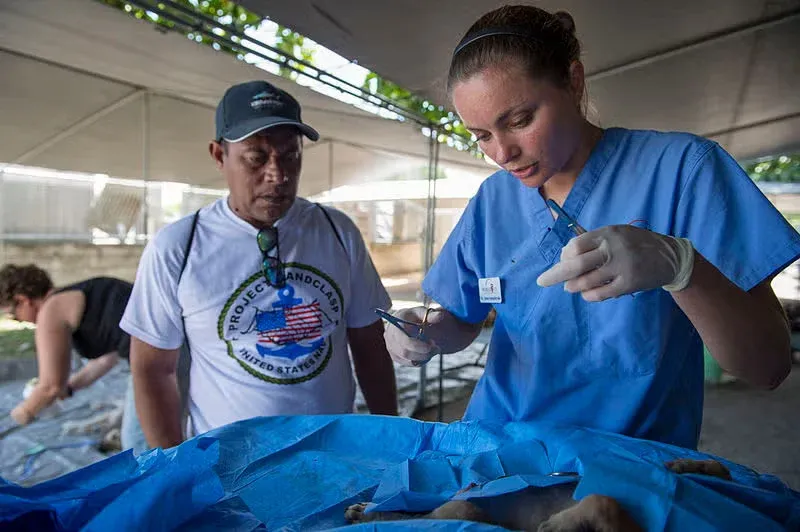
An increasingly popular method of stray cat population control is TNR (trap, neuter, return).
By U.S. Navy Photo by Mass Communication Specialist 3rd Class Samantha J. Webb/Released (idshub.net/image/980452) [Public domain], via W
Behavioral problems are the number one cause of owner surrenders to shelters.
Spaying and Neutering as a Solution
Many people are surprised at how many health and behavior problems can be resolved by spaying or neutering. The procedure is straightforward, relatively safe, and usually affordable. In low-income areas, financial assistance programs often help with the cost.
Shelter Policies
Many shelters and rescues now require animals to be sterilized before adoption, or they have adopters sign a contract agreeing to spay/neuter at their own vet. Shelters often tattoo animals afterward to indicate they've been sterilized, in case they become strays again.
TNR Programs
TNR (trap, neuter, return) is a growing method for controlling stray cat populations. Cats are trapped, taken to clinics or shelters for sterilization, and returned to their original location. Their ears are often notched to show they've been sterilized. Such programs help control stray numbers and ease the burden on local shelters and rescues.
How You Can Help
If you want your pet to live a long, healthy, happy life and want to reduce the number of homeless dogs and cats in your community, the first and perhaps easiest step is spaying and neutering. It truly might save a life. For more information, contact your local veterinary office.
Sources/Additional Reading
- ASPCA By spaying or neutering your pet, you'll help control the pet homelessness crisis, which results in millions of healthy dogs and cats being euthanized in the United States each year simply because there aren't enough homes to go around.
- American Humane Founded in 1877, American Humane is committed to ensuring the safety, welfare and well-being of animals.
- Low cost spay and neuter services | SpayUSA | Animal League North Shore Animal League America's SpayUSA is a nationwide referral network for affordable spay and neuter services for dogs and cats.
This article is accurate and true to the best of the author's knowledge. It is not meant to substitute for diagnosis, prognosis, treatment, prescription, or formal and individualized advice from a veterinary medical professional. Animals exhibiting signs and symptoms of distress should be seen by a veterinarian immediately.
© 2018 Liz Hardin