The Hidden Toll of Purebred Dogs: Health Problems Linked to Extreme Breeding
Harper Kelly
Understanding Inbreeding in Dogs
Dogs hold a special place in our hearts, and we all wish for them to enjoy long, healthy lives. Yet, contrary to this wish, many dogs are suffering from illnesses, and their average lifespans are shrinking over time because of genetic conditions passed down through generations. This piece will present some hard-to-face realities. The detrimental traits and conditions we'll cover include:
- Brachycephaly (short skull)
- Excessive skin
- Short legs
- Abnormal angulation
- Heavy bodies
- Sloping backs
- Abnormal tails
- Protruding eyes
- Exaggerated ears
The consequences of inbreeding our dogs
Conformation-Based Breeding and Its Impact
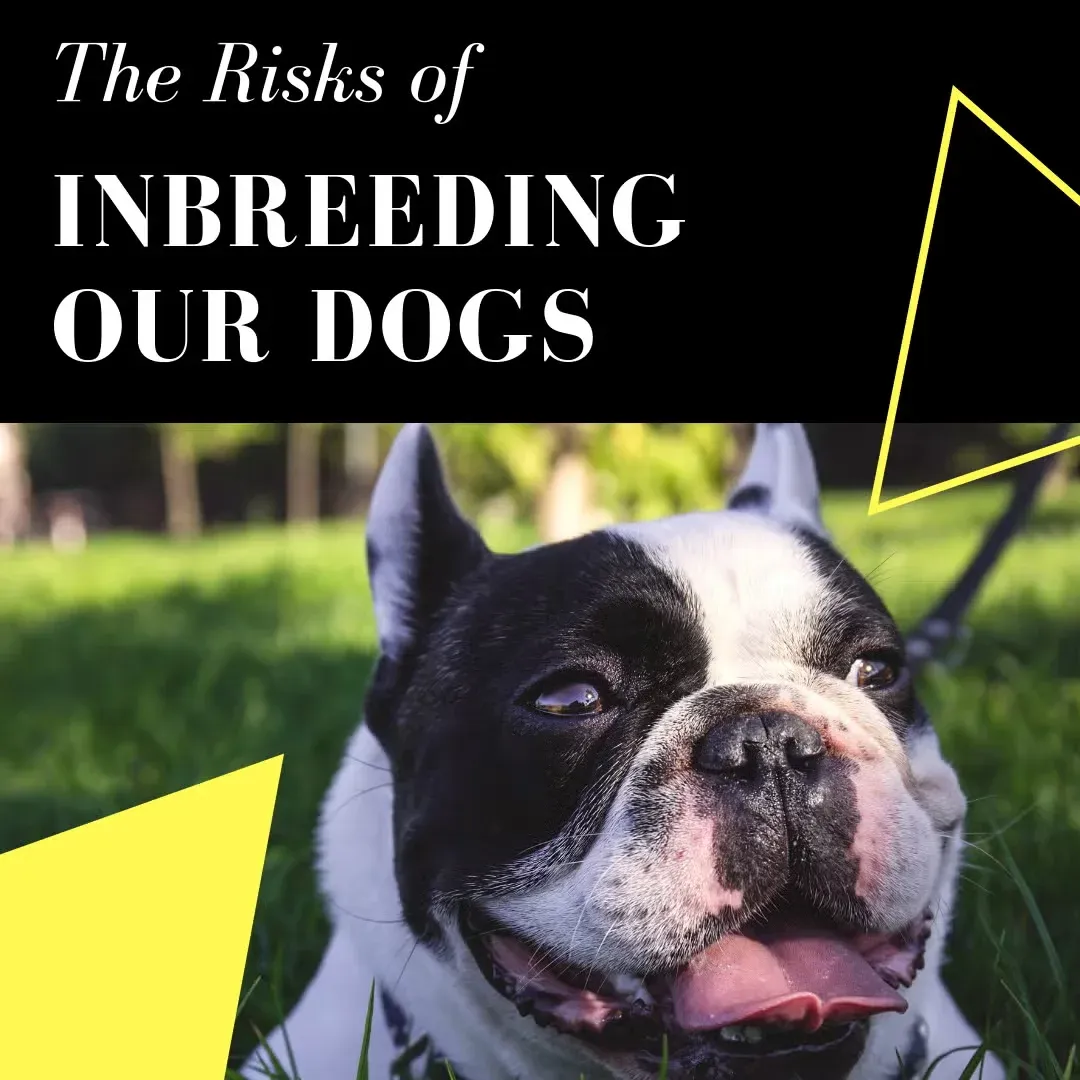
The decline in pet dog health has multiple causes, but the primary culprits are conformation-based breeding and closed gene pools. What does this entail? It means breeding dogs to meet a breed standard—a description of how each breed should look. Judges and breeders often drive this, pushing for exaggerated versions of otherwise benign traits to the point where they become harmful.
The Problem of Closed Studbooks
Beyond breeding within narrow aesthetic guidelines—judging dogs solely on appearance—this occurs within a closed gene pool. Once a breed's studbook is closed (a requirement for recognition by major kennel clubs), no new genetic material can be introduced.
Concentration of Harmful Genes
This has devastating consequences for canine health, as some breeds descend from fewer than a dozen founders (any two dogs globally can be as genetically similar as full siblings). Avoiding inbreeding becomes impossible because even if two dogs lack a common great-great-grandparent, they are nearly genetically identical.
Inbreeding amplifies deleterious mutations that all organisms carry. In natural breeding, these mutations would be diluted and removed from the gene pool. Instead, they accumulate and manifest as genetic disorders in later generations. This explains why certain breeds are prone to specific diseases. They all originate from a small number of dogs bred to close relatives, which concentrates harmful genes. Over time, this can also result in infertility.
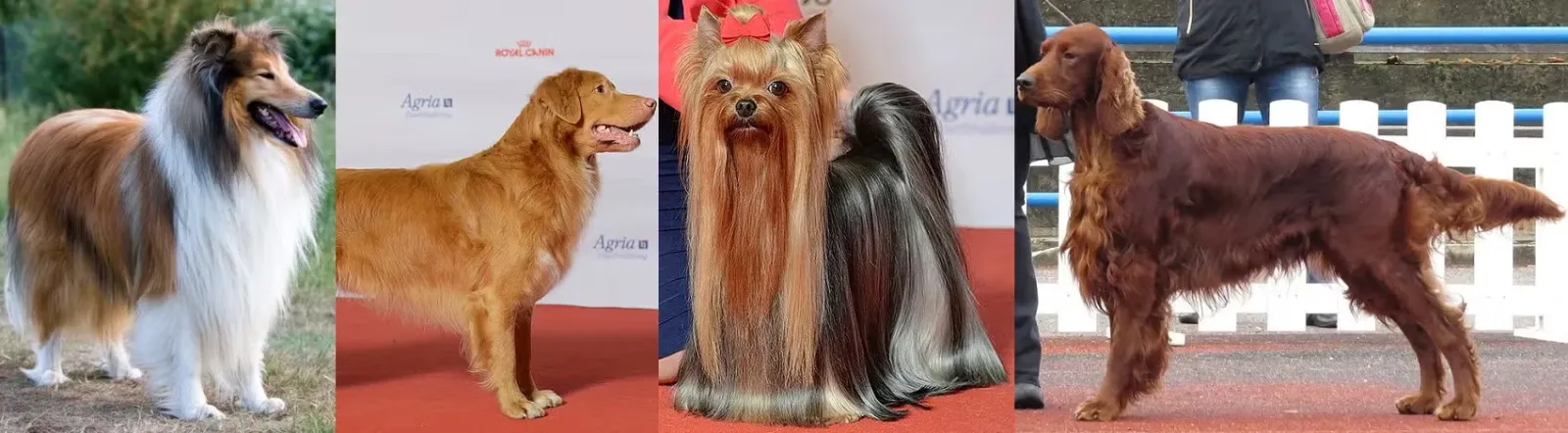
Four of the most inbred dog breeds in the world, all with an effective population size of 40 or less.
Effective Population Sizes and Bottlenecks
The 'effective population size' is a measure of how many genetically distinct individuals a population has. For instance, if the effective population size is 50, even with tens of thousands of dogs in the breed, their genetic diversity is so limited that it's equivalent to only 50 animals. This contrasts sharply with a healthy population free from inbreeding and bottlenecks.
Defining Population Bottleneck
A population bottleneck occurs when the breeding population is drastically reduced, allowing only a small fraction of the gene pool to pass on. World War II caused this in many breeds, bringing them close to extinction, and the strict breeding criteria for 'elite' dogs have had similarly harmful effects.
Effective Population Sizes of Common Breeds
Effective population size differs from foundation size, which is the number of animals all members descend from. Below is a list of popular breeds with effective population sizes under 100:
- Akita, American: 53.3
- Boxer: 80.9
- Chihuahua, short-haired: 81
- Cocker Spaniel, English: 49.1
- Collie, rough: 39.4
- English Bulldog: 67.9
- Golden Retriever: 61.3
- Irish Setter: 27.3
- Labrador Retriever: 81.7
- Mastiff: 70.5
- Miniature Pinscher: 54
- Pekingese: 61
- Pomeranian: 99.1
- Shetland Sheepdog: 77.6
- Shiba: 81.9
- Staffordshire Bull Terrier: 97.7
- Welsh Corgi Pembroke: 56.4
- Whippet: 56.4
- Yorkshire Terrier: 40.2
Consequently, these breeds are effectively critically endangered, regardless of their global numbers. Many require outcrossing with other breeds to survive or maintain health.
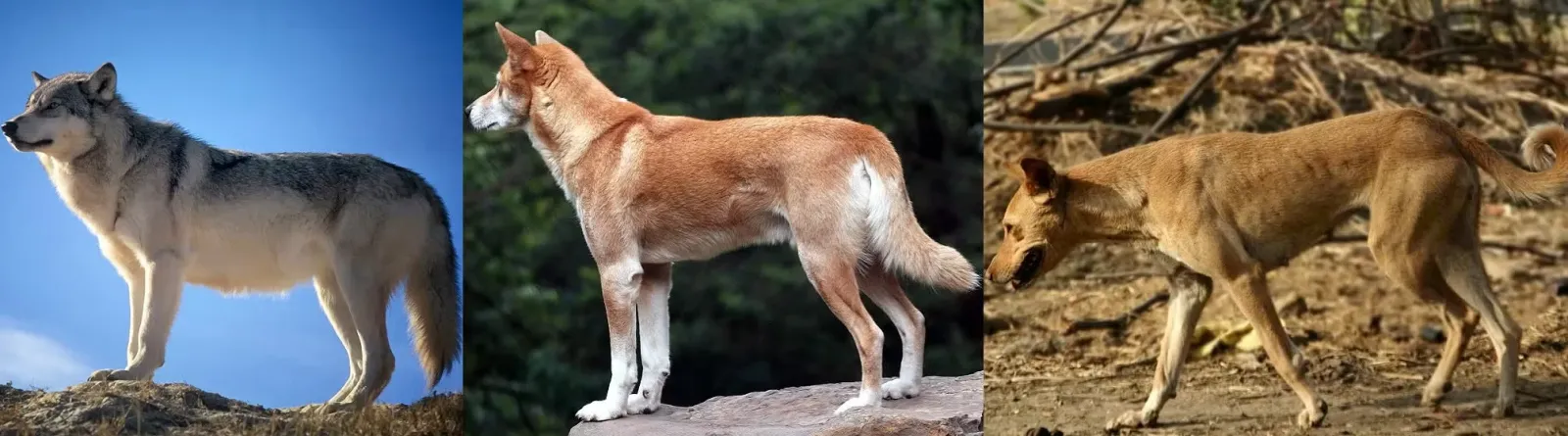
The Grey Wolf, Dingo and Indian Pariah Dog displaying the natural canine form.
Recognizing Poor Conformation
Anyone can learn to spot poor conformation in dogs resulting from inbreeding. To do so, we look to the dog's ancestor, the Grey Wolf, and wild canines. Dogs that have become feral and subject to natural selection, rather than being kept alive by humans, tend to revert to a form similar to wolves and coyotes. However, they retain some domestic traits, like the sickle-shaped tail.
Visual Signs of Inbreeding
Not all deviations from the natural form cause suffering—moderately floppy ears, a different coat, slightly shorter legs, a curled tail, or a mildly shorter face or moderate wrinkles might not be harmful. Moderation is crucial, as each trait can become harmful when taken to extremes.
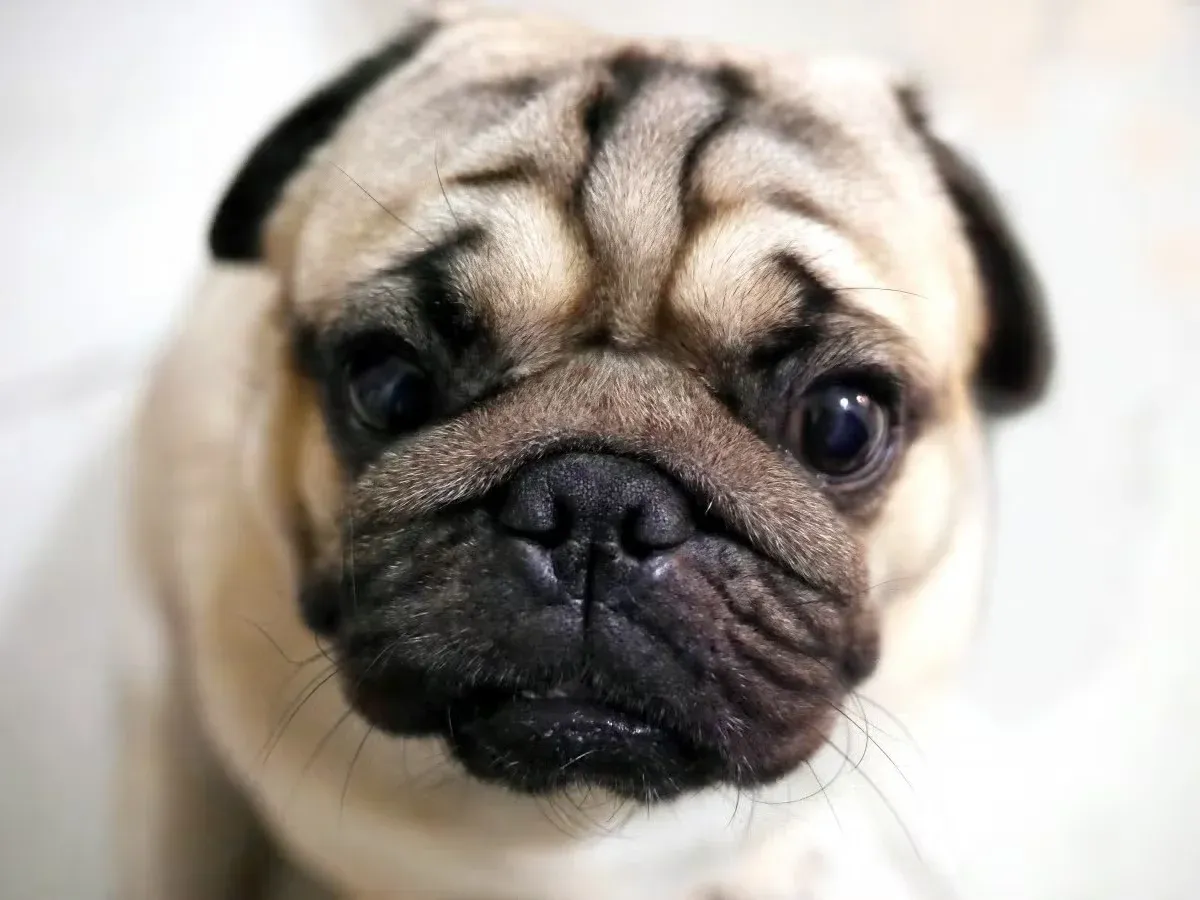
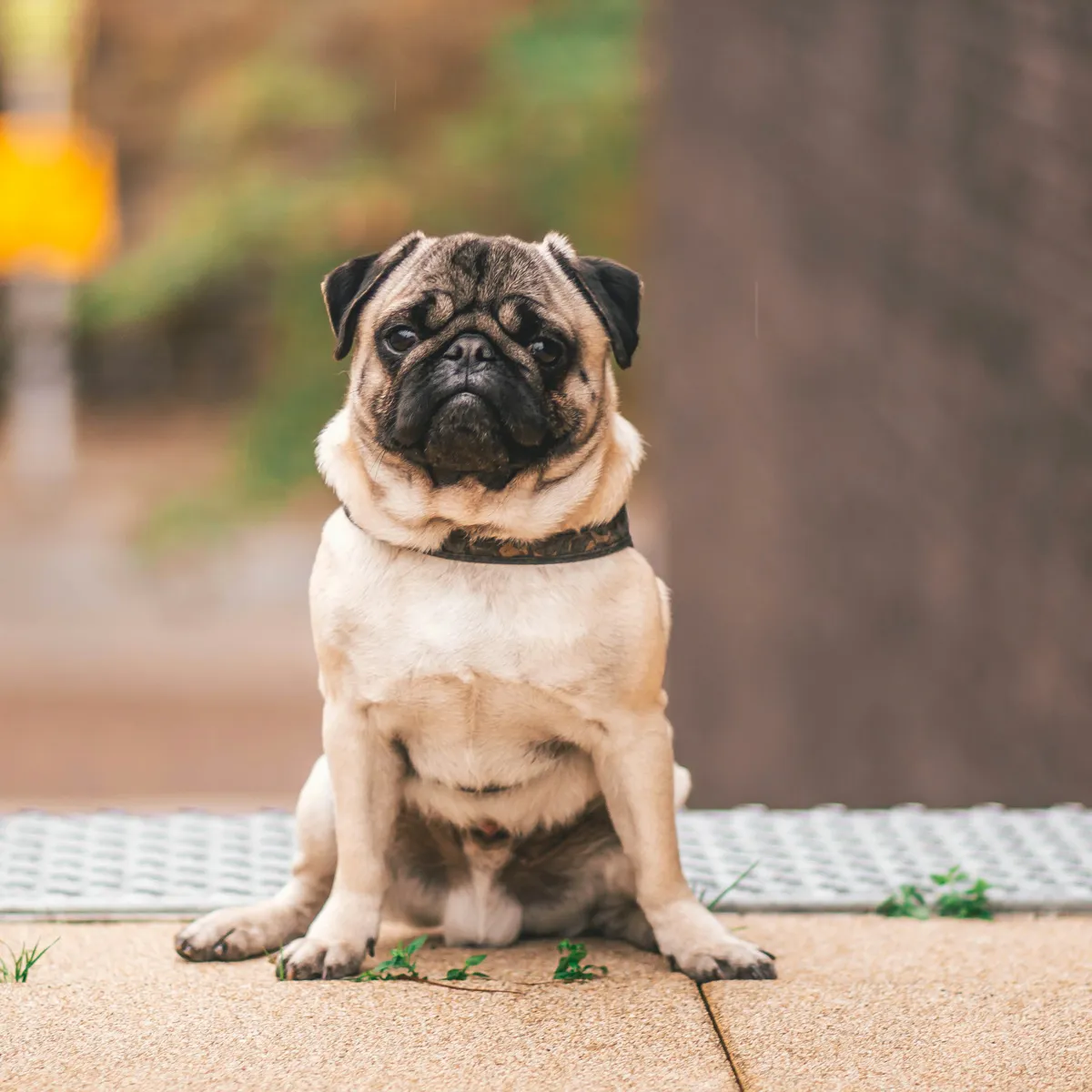
The Pug’s short skull causes many breathing issues.
Brachycephalic Breeds
The short face is the most frequently criticized extreme conformation in dogs due to the clear problems it causes. The correct term for a shortened skull is 'brachycephaly.'
Breeding for Appearance
The rationale for breeding short faces is twofold and somewhat ironic.
- First, there's the 'baby face' appeal. We desire dogs to look more human and infantile because it makes them cuter and triggers our nurturing instincts. This is why nearly all toy companion dogs have short faces and domed skulls to some degree.
- Second, it's to make dogs appear tough and intimidating. Large guard dogs are bred for thick, heavy, wide, and short faces, thought to look 'stronger.' In truth, no dog has a bite force stronger than the relatively slender wolf.
Health Problems in English and French Bulldogs
English and French Bulldogs are the only breeds affected by both factors. In Victorian times, they were bred to look 'mean' and 'tough.' Today, they've shifted from a reputation like pit bulls or Rottweilers to being seen as 'cute.'
It's important to note that brachycephaly shortens only the skull, not the soft tissue or teeth. Thus, the same breathing apparatus, soft tissue, and teeth must fit into a much smaller space, with disastrous outcomes.
Anyone considering buying such a dog should examine brachycephalic skulls, observe the crowded teeth in living dogs, and watch videos of them struggling to breathe, eat, and sleep.
Experiencing Brachycephalic Breathing
Try this quick self-experiment:
- Pinch your nostrils shut with your fingers.
- Try to breathe. You'll soon have to breathe through your mouth.
- Hear that rattling? That's what these dogs experience constantly.
- Now, attempt to run.
And that's only your nostrils. These dogs are deformed from the nostrils down to the chest. Dogs also cool down by breathing (humans cool by sweating). This is why 'brachy' breeds are at much higher risk of dying from heatstroke.
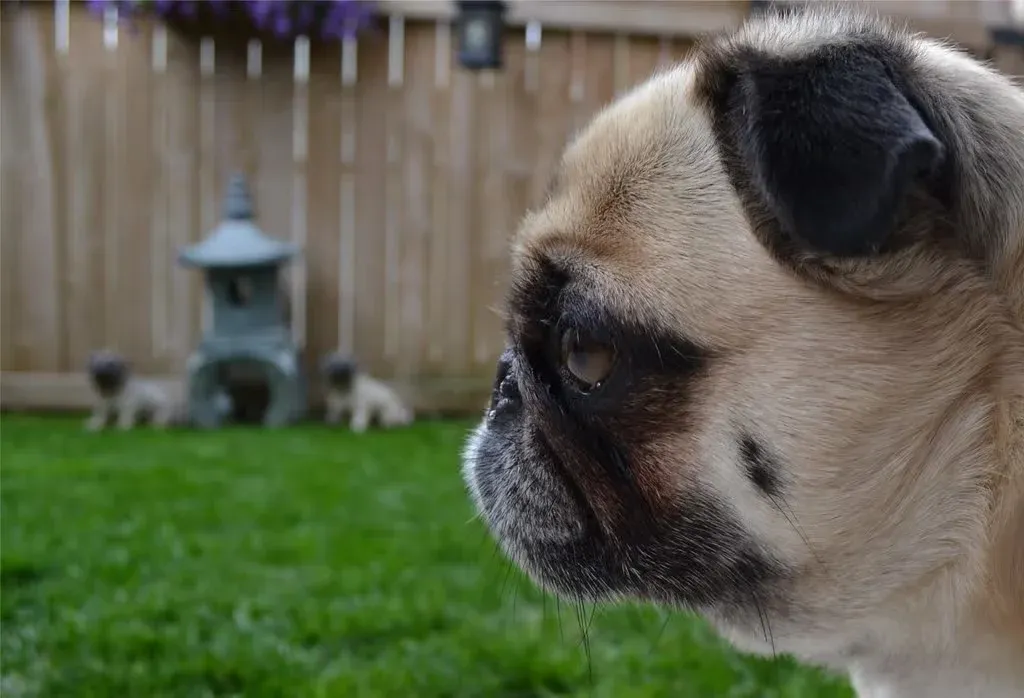
The empty space to the left shows where the rest of the dog’s face is supposed to be.
DaPuglet Pugs
Solving Brachycephalic Health Issues
How can we address this? Breeding dogs with longer noses, as they once had, is a start. While a 2 to 5-centimeter nose is better than none, even dogs with moderate muzzles, like Boxers or Cavalier King Charles Spaniels, can still have severe breathing problems.
Signs of distressed breathing include mouth breathing (at rest in comfortable temperatures), 'heaving' of the chest and head (from trying to inhale), and snoring or rattling sounds. Sadly, what appears as a 'happy smile' may actually indicate a dog struggling to breathe.
Extremely short faces can also hinder a dog's ability to communicate, and many dogs are put off or easily provoked by brachycephalic dogs. Brachys are forced to sniff other dogs very closely, which can make the other dog uncomfortable.
Breeds that may suffer from breathing problems due to skull shape include:
- English Bulldog (and offshoots like the Olde English Bulldogge)
- French Bulldog
- Pug
- Pekingese
- Japanese Chin
- King Charles/English Toy Spaniel
- Cavalier King Charles Spaniel
- Pomeranian
- Chihuahua
- Griffon Bruxellois/Belge
- Petit Brabançon
- Boxer
- American Bully
- American Bulldog (Johnson-type)
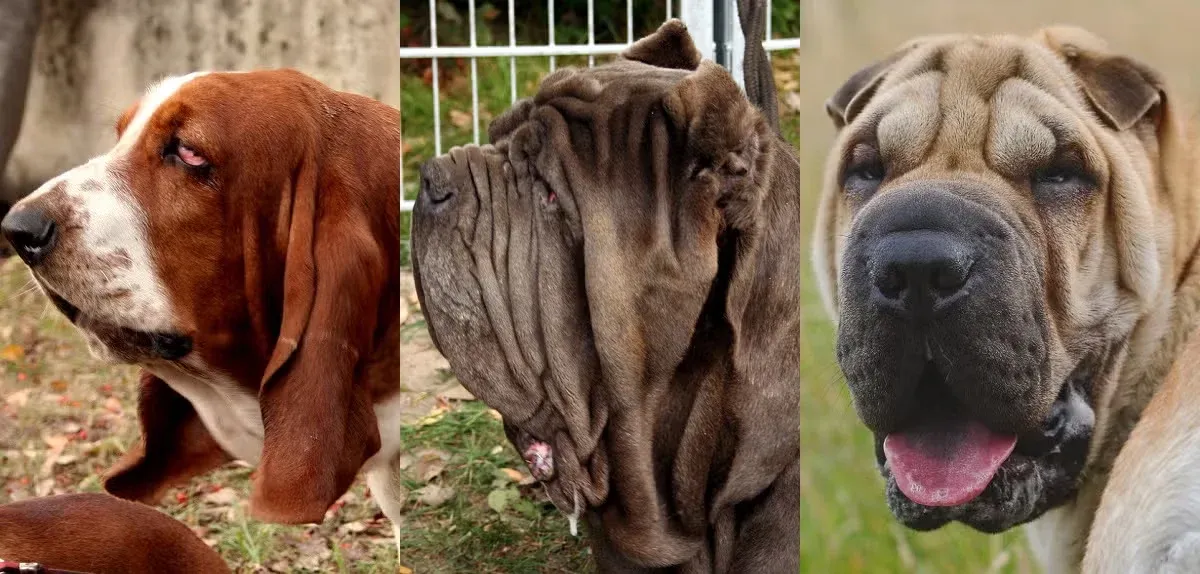
Different forms of extreme skin excess in the face.
Basset: Pleple2000, Neapolitan mastiff: Przykuta, Shar-Pei: Pxhere
Excessive Skin
Deep wrinkles that touch and form folds create environments for bacteria and fungi. These folds need regular cleaning, but dogs often dislike it as it can be uncomfortable. If the dog has short, sharp hairs, like a Shar-Pei, the hairs chafe the skin. Look closely at these wrinkly dogs—they frequently have red, irritated skin in the folds, especially visible in those with lighter coats and skin.
How comfortable is it for these dogs to live inside a bag of wrinkles? They can't complain, of course, as they don't know better. It's been shown repeatedly that brachycephalic dogs that undergo surgery to correct breeding-related issues experience significant improvements in quality of life. I wonder how removing excess skin and wrinkles might improve these breeds' lives?
Problems Caused by Excess Skin
Heavy facial wrinkling also worsens breathing problems or can even cause them in a dog with a normal skull by pushing the nostrils shut. Excessive facial skin that hangs rather than wrinkles contributes to drooping eyelids, which allow dirt and contaminants into the eye sockets and may obstruct vision.
Ectropion and Entropion
Skin can affect a dog's eyes in two ways: ectropion and entropion.
- Ectropion is when the eyelids turn outward, exposing the eye socket.
- Entropion is when the eyelids roll inward, causing hair to scrape the eyeball. This is especially common in breeds like the Shar-Pei and Chow Chow.
Lip Conformation Issues
Exaggerated lip conformation causes the lips to turn out, collect dust, and dry out. In the Neapolitan Mastiff, this even prevents the dog from opening its mouth to cool itself. Instead of panting with a fully exposed mouth and tongue, only a small 'window' remains for the tongue to protrude.
Communication Difficulties
Heavy facial skin also impairs a dog's ability to communicate, as they can no longer form most facial expressions. In the Shar-Pei, evidence suggests that the wrinkles themselves are linked to the devastating disease called Shar-Pei fever.
Breeds that may suffer from excessive skin include:
- Shar-Pei
- English Bulldog
- French Bulldog
- Pug
- English Mastiff
- Neapolitan Mastiff
- Dogue de Bordeaux/French Mastiff
- Chow Chow
- Basset Hound
- Bloodhound
- Great Dane
- Bracco Italiano
- Fila Brasileiro
- Korean Mastiff
- Spanish Mastiff
- Saint Bernard
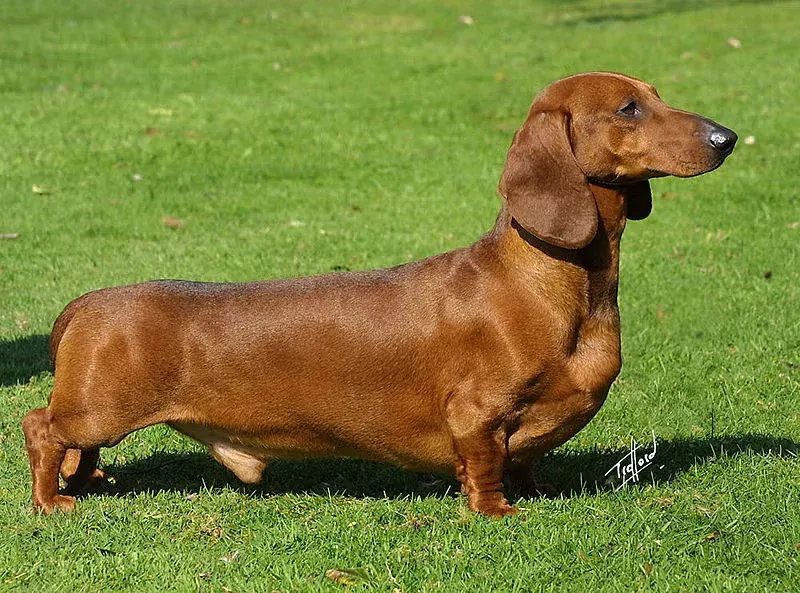
The Dachshund is prone to back issues.
Katemil94
Short Legs
Extremely short legs can lead to movement difficulties and painful back issues because the dog's proportions (length and height) are abnormal due to over-angulation, which can cause joint problems. They also place the dog so close to the ground that they can scrape their belly and genitals, which is especially problematic for hunting dogs.
Breeds that suffer from extremely short legs include:
- Dachshund
- Welsh Corgi
- Basset Hound
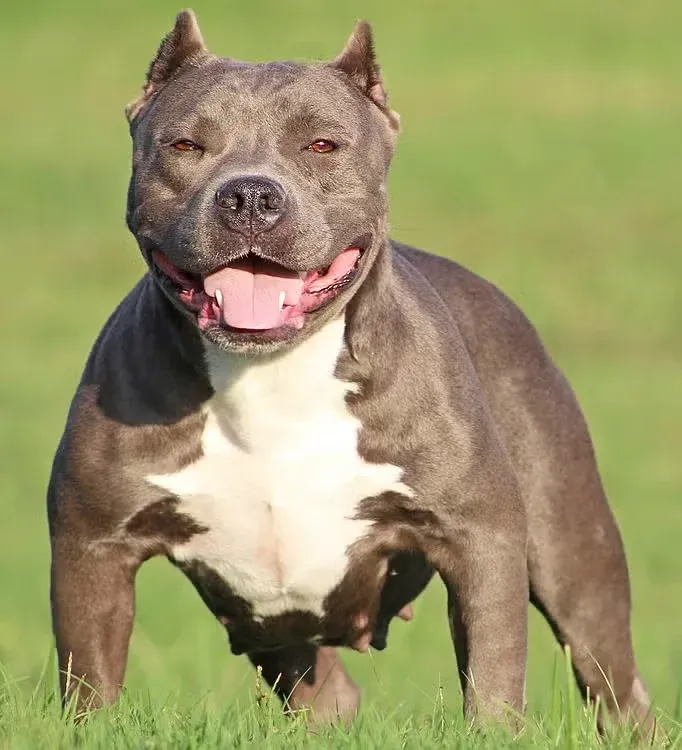
The American Bully are prone to abnormal angulation.
Rock City Kennels
Abnormal Angulation
Angulation refers to both front and hind legs. Hind legs can be too straight, common in mastiffs, bulldogs, and Asian Spitzes, or over-angulated, common in German Shepherds and show-bred Greyhounds (not other sighthounds).
German Shepherds
Modern German Shepherds arguably have the worst hindlimb angulation among dogs. (This is separate from hip or elbow dysplasia, an inherited condition.) People notice the backs of this breed but often overlook the hocks. Some show dogs practically walk on their pasterns like humans or bears. As with short legs, this can cause severe locomotion problems and pain later in life. Front legs can be affected by too steep an angle between the paw and leg, pushing most of the dog's weight down the wrist.
Bulldogs and American Bullies
Another severe form of abnormal angulation (besides a German Shepherd's hocks) is marked by extremely wide-set front legs. This is most common in English Bulldogs and American Bullies.
Some of these extreme breeds have begun to resemble reptilian proto-mammals like Moschops—so extreme is their conformation. These heavily built dogs cannot go through life without pain or move like a normal canine. The fact that they are also always extremely heavy only adds to the problem, as all that weight presses on their shoulders.
Breeds that may suffer from abnormal angulation include:
- German Shepherd
- Shar-Pei
- English Bulldog
- French Bulldog
- American Bully
- Pekingese
Note that these breeds are the worst offenders. Moderately abnormal angulation—legs being too straight or not straight enough—is common in many breeds.
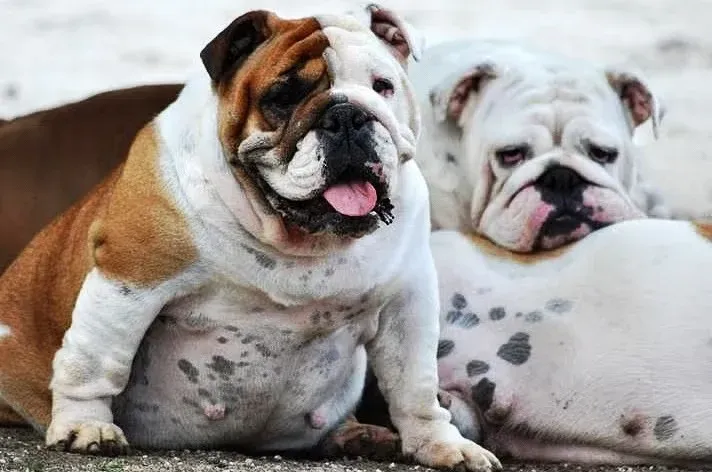
In addition to its extremely heavy build, this dog is obese.
Cristina Pessini
Heavy Bodies
An extremely heavy body limits a dog's ability to exercise and use its body normally. In some, like English and French Bulldogs, it often prevents swimming or mating without assistance. If the dog is also short from front to back, like these breeds, they may have trouble cleaning their rear.
Reduced Lifespan
Extremely large, heavy dogs also have shorter average lifespans. Their extreme size strains their hearts and other organs, giving them an average lifespan of 6–8 years instead of the normal 10–16 years.
Another factor is how the weight wears down their bones, forcing owners to euthanize when quality of life is no longer acceptable.
Breeds that may suffer from extremely heavy bodies include:
- English Bulldog
- French Bulldog
- American Bully
- Great Dane
- English Mastiff
- Bull Mastiff
- Dogue de Bordeaux/French Mastiff
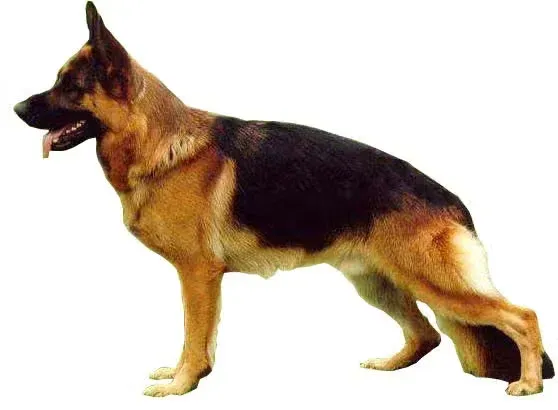
A German Shepherd with a sloping back.
Desaix83
Sloping Backs
This issue is almost exclusive to one breed. While some breeds like the Boxer and Dobermann have been idealized with a more 'triangular' silhouette in shows recently, none compare to the German Shepherd. Combined with often poor rear angulation, this puts some German Shepherds in wheelchairs or ends their lives early. This is a dog meant to be a superior herding, police, and military dog.
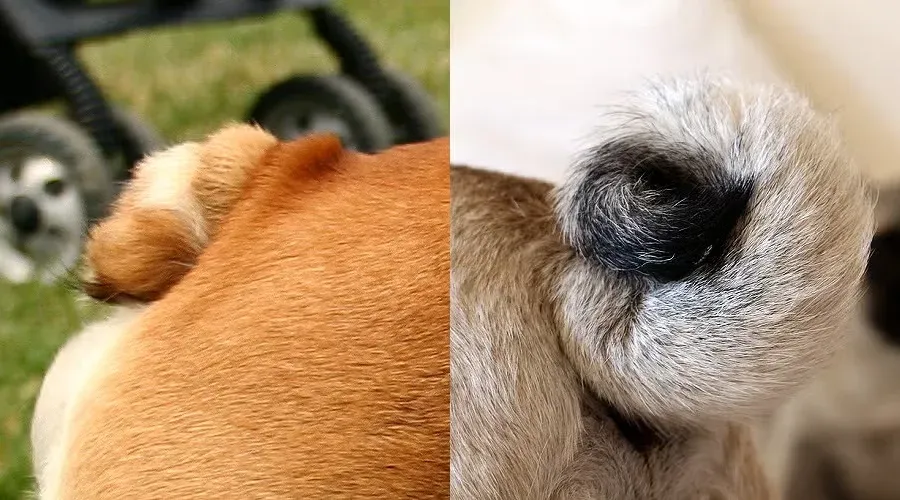
English Bulldog: Pleple2000, Pug: Alfonso Rivera
Abnormal Tails
Two tail forms can harm a dog's well-being: double curl tails and corkscrew tails.
Double Curl Tails
Double curl tails occur only in the Pug. The tail is so tightly curled that the mutation can affect other spine parts, causing kinks and curves in the back.
Corkscrew Tails
The corkscrew or inverted tail occurs only in English and French Bulldogs. It is so malformed and surrounded by excessive skin that it creates a 'pocket' where dead hair accumulates and bacteria and fungus thrive.
This lack of a normal tail also reduces the dog's ability to communicate properly.
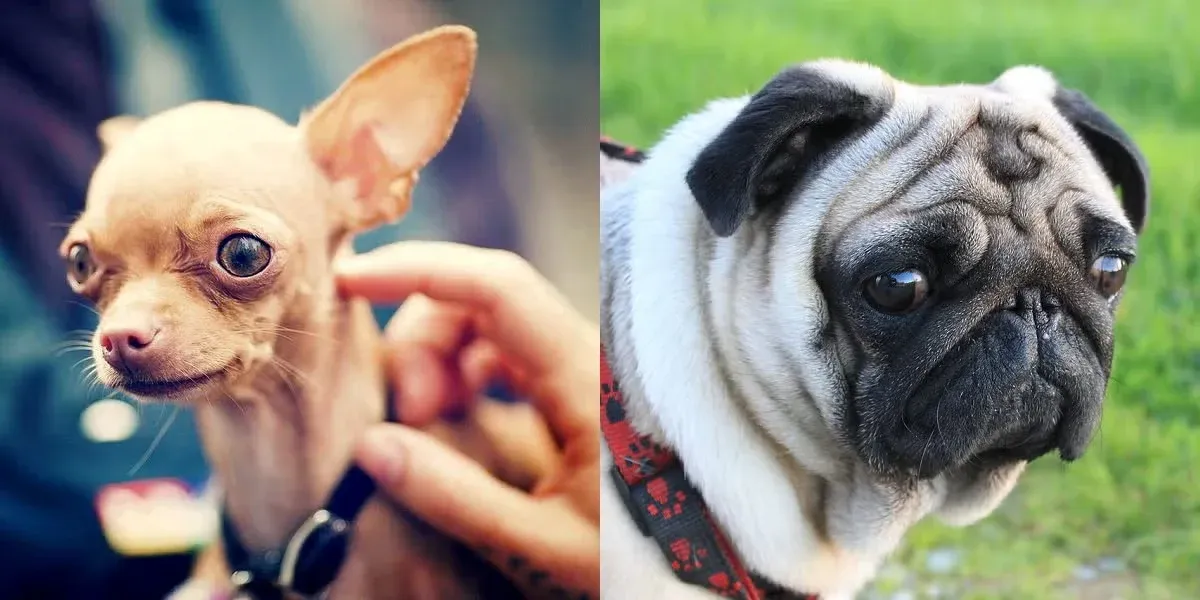
Several breeds demonstrate abnormal eye protrusion.
Chihuahua: Christopher Michel, Pug: Elodie
Protruding Eyes
The issue with protruding eyes is evident: it makes the dog's eyes vulnerable to injury, and in extreme cases, an eye can even pop out of the socket.
Especially problematic is when the eyes protrude more than the nose. Dogs' brains are wired to understand that their nose is about a decimeter in front of their eyes. So, when they put their nose on things, their eyes are highly vulnerable. Protruding eyes can also be so large that they prevent the dog from closing its eyes properly.
Breeds that may suffer from protruding eyes include:
- Pug
- Pekingese
- Boston Terrier
- Japanese Chin
- Chihuahua
- Pomeranian
- French Bulldog
- King Charles/English Toy Spaniel
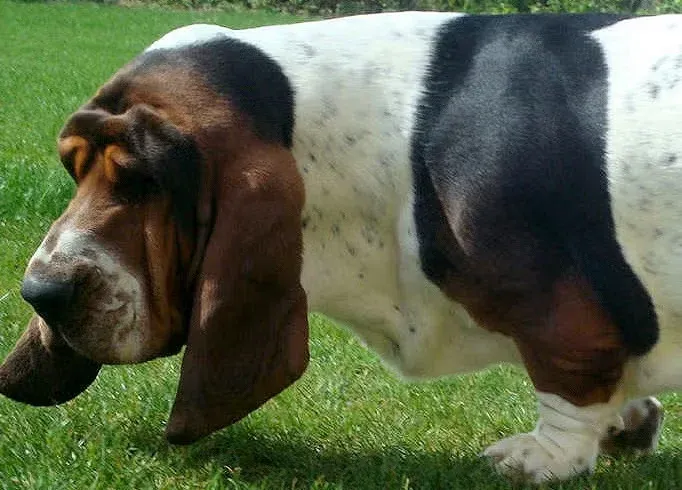
The Basset Hound—a dog so far removed from the canine form it is hard to recognize as its own species.
Public domain
Exaggerated Ears
I once counted dog breeds by drooping vs. prick ears, and drooping-eared dogs far outnumbered prick/normal ears. There is no reason to think that ears like those on terriers, bulldogs, and even retrievers harm the dog, though.
Extreme ears are rare and limited to dogs like the Basset Hound, Bloodhound, and Cocker Spaniel. These extremely long ears can trap humidity and heat inside the ear canal and cause infections. This is why keeping them clean is very important.
Note: Spaniel ears are normally not as long as Basset ears, but the extra hair helps 'compensate' for that.
Breeds that may suffer from exaggerated ears include:
- Basset Hound
- Bloodhound (and many more scent hounds)
- American Cocker Spaniel
- English Cocker Spaniel
- English Springer Spaniel
- Sussex Spaniel
- Field Spaniel
- Cavalier King Charles Spaniel
- King Charles/English Toy Spaniel
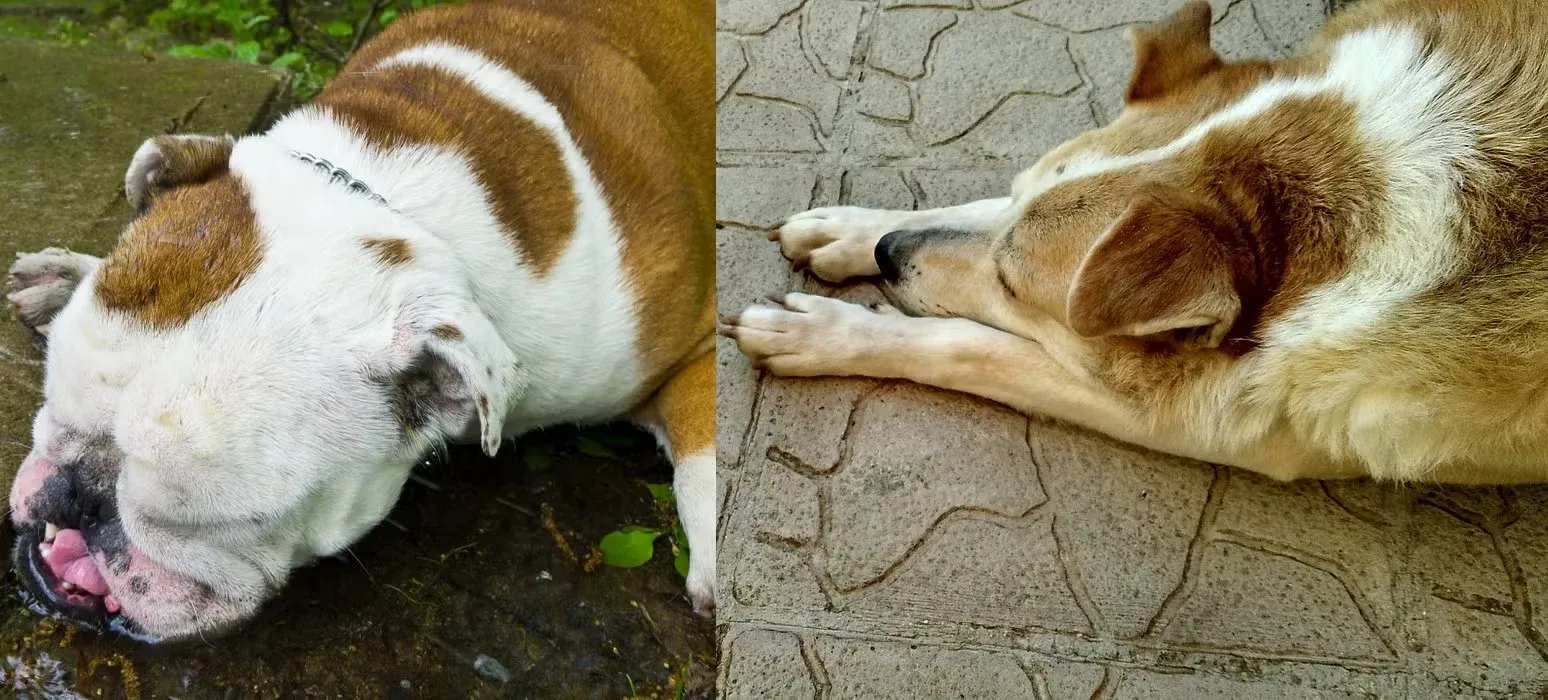
A brachycephalic breed with abnormal conformation compared to a dog with a normal skull shape.
Bulldog: Jim Pennucci, Stray: Pixabay
Why Change Is Needed
We know better now—150 years of molding dogs like clay into absurd shapes within gene pools tighter than a royal house is more than enough. We all love our dogs. We want them to live long lives, free from unnecessary discomfort and pain. There is an alternative!
I assure you that the healthier alternative is just as much fun to own as the 'cartoonish' dogs you perhaps first fell for. In fact, probably more fun, as you are far less likely to face heartbreak. Respect the canine for what it is—don't use it as your clay or plaything—and start improving the health of dogs today by making an informed choice before getting your next dog.