Service Dogs at Work: Why Their Vests Demand Respect
Charlie Lewis
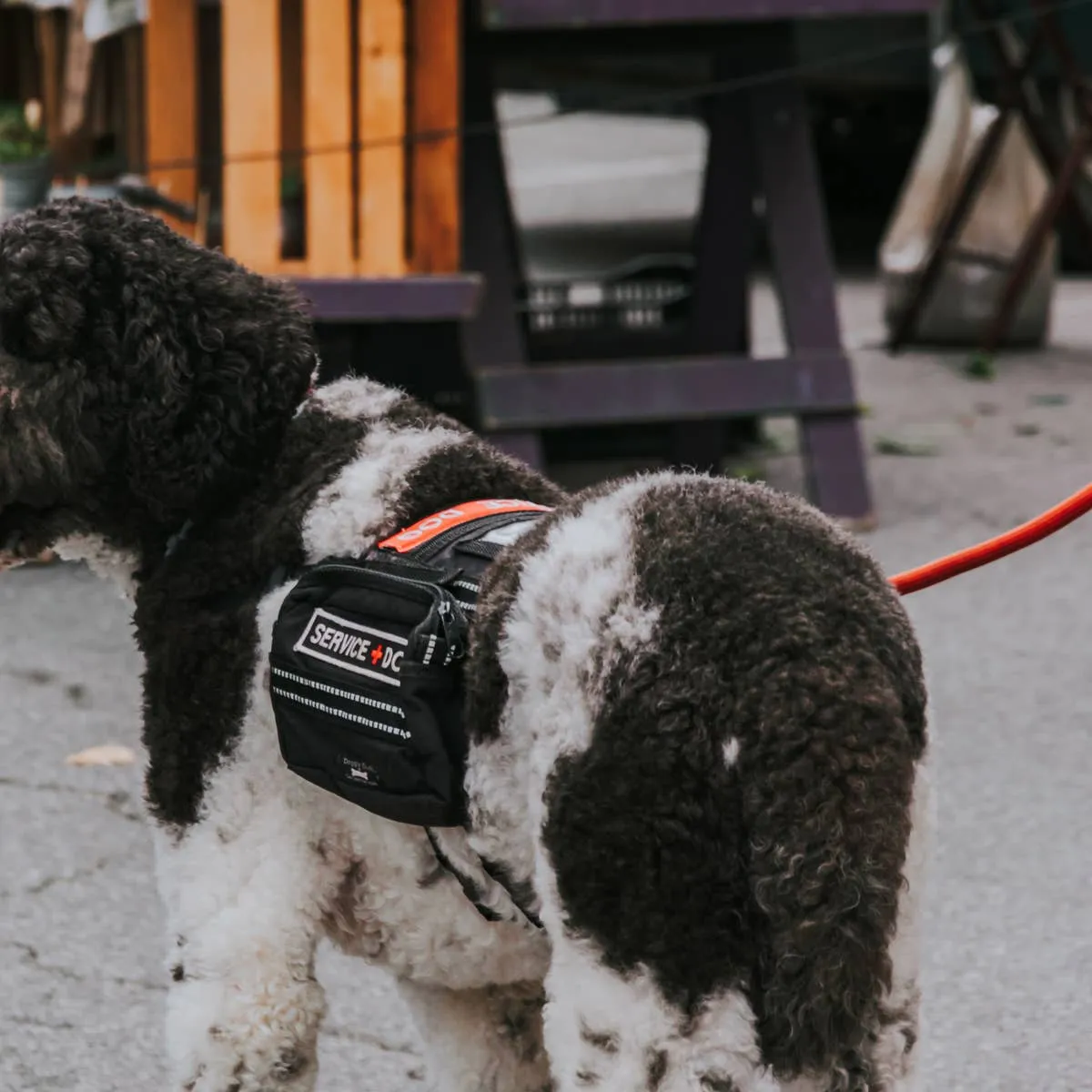
Why You Shouldn’t Pet a Service Dog
Many service dog handlers will tell you that their role is far from easy. The handler lives with a disability that the dog helps to manage, but bringing the dog everywhere is not the “fun” experience some people imagine. A service dog is not a pet that the handler simply feels guilty leaving at home; these dogs are highly trained to reduce disability symptoms or provide life-saving alerts.
So why resist the urge to pet the cute dog you pass in a store? Because doing so distracts the working dog and can put the handler in danger, and it also dismisses the seriousness of the handler’s disability. In short, a service dog is not a cuddly puppy waiting for attention—it is medical equipment that should not be interfered with.
Below are the reasons to keep your hands off service dogs.
Comments Service Dog Handlers Hear Frequently
- “I know I’m not supposed to pet, but … ”
- “You don’t look disabled.”
- “Who are you training this dog for?”
- (Kissy sounds) “Come here, little puppy!”
- “Is that a fake service dog?”

Kaiya, a seven-month-old service dog in training, keeps her focus on her handler.
How These Remarks Affect Handlers and Dogs
Words can wound deeply. As a service dog handler, I have come to dread the comments I might receive when I go out and worry about how I will handle them. The five statements above are ones I have personally heard, or have heard others mention, or both. Let’s examine the impact each can have on the handler and the working dog.
1. “I know I’m not supposed to pet, but … ”
There is no “but.” Service dogs are not to be petted—period. If you approach and pet a service dog, you are not only breaking the law but also distracting the dog, which could cause it to miss an alert and lead to an emergency. Yes, service dogs are adorable and their temperament makes them seem approachable, but please consider the danger you are putting the handler in and the distraction you create for the working dog.
2. “You don’t look disabled.”
And you don’t look like the doctor overseeing my care or the one who prescribed this dog to me. Some disabilities are invisible, but that does not make them any less disabling. It is also nobody else’s business why a handler has a service dog. Asking this is like asking someone how they ended up in a wheelchair or why they need an oxygen tank—such statements are invasive and rude.
3. “Who are you training this dog for?”
Again, this is invasive. It implies that the handler is not disabled or in need of a service dog. It is unfair to assume that because the dog is in training, the person with the dog is merely a trainer. While that may sometimes be true, it is still inappropriate to conclude this or even ask. Consider the question, “Who are you holding onto that cane for?”
4. (Kissy sounds) “Come here, little puppy.”
First, why would you try to call over someone else’s dog? Second, my dog is working and wears a vest to indicate that. Third and most importantly, you are putting yourself at risk—you don’t know the dog you are calling.
5. “Is that a fake service dog?”
This question hurts as much as a slap in the face. I spend hours a day working with my dog, running her through drills and other skills I’ve been taught. When I’m in public with my dog, I am always in control of her, and she is almost always on her best behavior (at seven months old!). When she acts out, I am the first person to remove the dog from the store; no one asks me to; I just do.
So, for you to come up to me and ask if my dog is a fake service dog is about as hurtful as it gets. Please keep in mind how defeated you’ve just made that service dog team feel. My service dog is not a unicorn; she really does exist, and she really does not give you any reason to believe she’s a fake service dog.
“When most of us talk to our dogs, we tend to forget they’re not people.”
— Julia Glass
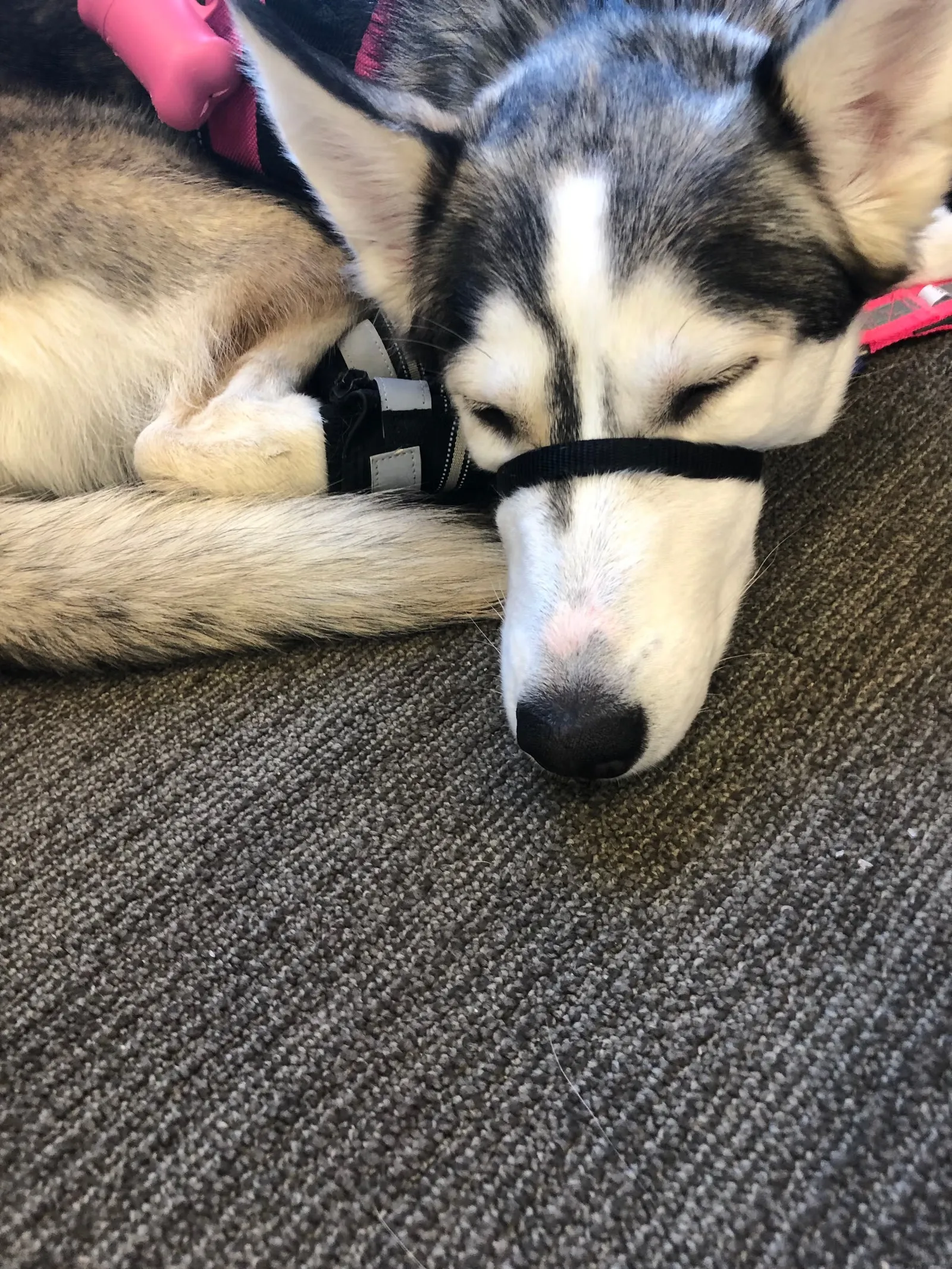
Even when a service dog appears to be sleeping at the handler’s feet, it remains on high alert and will respond as needed.
The Pros and Cons of Having a Service Dog
I have a service dog in training named Kaiya. She is a seven-month-old Siberian Husky with plenty of drive and plenty of sass. I am glad Kaiya and I are a team and would not trade our bond for anything. That said, not every day has been easy, and not every day will be.
The Pros of Having a Service Dog
- I can manage a variety of situations I would not otherwise be able to handle.
- There is peace of mind in knowing someone has your back.
- Kaiya has given me back a lot of independence I didn’t even realize I had lost.
- My disability symptoms are much more manageable, and I feel like I am taking action for my health.
- When there’s nothing else to smile about, she’s always doing something silly.
The Cons of Having a Service Dog
- Just like having any other pet, having a service dog is a HUGE responsibility.
- My bag is heavy—she has a lot of gear and needs I must carry with me (food bowl, bags, water bottle, leashes, etc.).
- Every time I go out in public, I am approached multiple times by people who want to tell me she’s cute or who accuse me of faking a disability because I do not appear disabled.
- Not everyone respects Kaiya’s vest, so I’m constantly afraid she will get hurt or distracted.
I love having Kaiya by my side, and I recognize her as a crucial part of my health; I just like to advocate for myself and my rights as well as Kaiya’s right to work without distraction or interference. Bringing my service dog everywhere is not the same as bringing my pet. For people who want to pet dogs, there are many opportunities to interact with therapy dogs who are absolutely ready for petting! Service dogs are meant only to assist their handler.
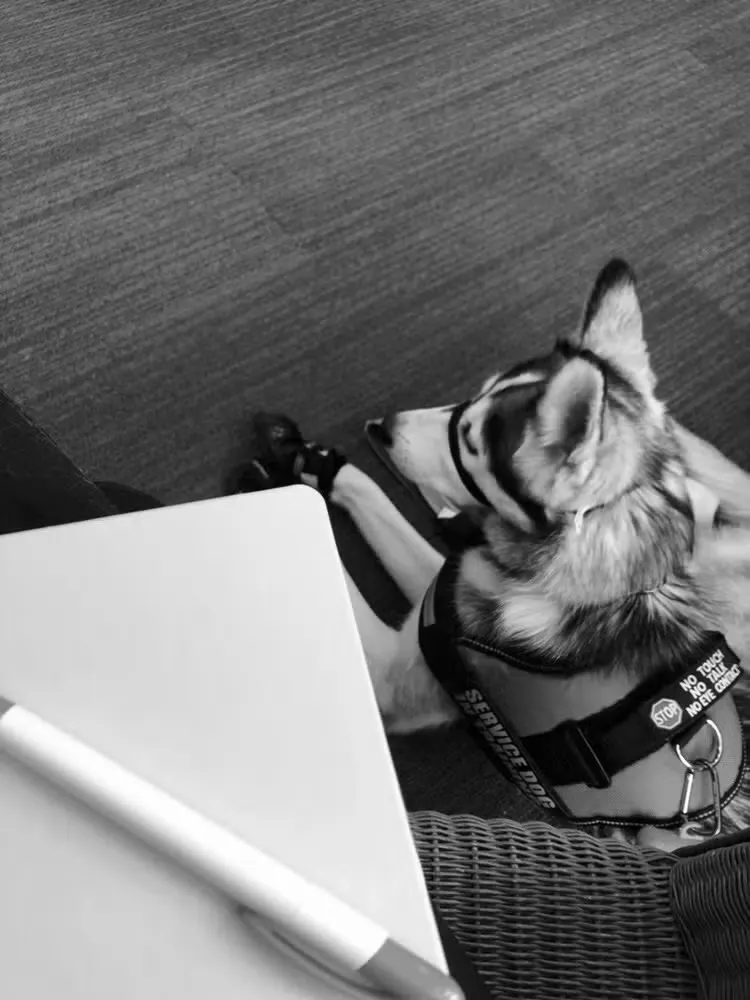
Service dogs are chosen because they love mental stimulation, have the drive to work hard, and have a heart big enough for two.
Respect the Vest
The vest shown above is an Industrial Puppy product. It is very high-quality and has the formal appearance that a handler may feel more comfortable having their dog wear in places like airports, hotels, courtrooms, etc. While there are no specifications as to what the vest must look like, this vest is quite functional as well.
Before diving into some of the features of this vest, I’d like to point one thing out—it is both disrespectful, dangerous, and illegal to falsely represent a dog as a service dog. If you think that having a service dog is something you would benefit from, please talk to your doctor or healthcare professional. Respect the vest.
Firstly, I love that this vest has a large buckle that is easy to attach under the dog’s belly and is very durable. The vest also has two large areas of velcro on either side and comes with two “Service Dog” patches; this makes it easy to identify your dog as a working dog.
The vest does have a handle on the back, which can help me feel grounded by being able to have my dog sit close and that tactile sensation of holding onto the handle on her back. Across the chest is a reflective strap making night walks feel a little safer, and finally—the vest itself is made from a breathable mesh interior and durable exterior. Overall, it’s a great product, and Kaiya loves wearing hers for work!