Letting Pups Nurse When Mom's Milk Supply Is Low: What to Know
Sage Howard
Is It Okay to Put Pups on the Teats When the Mother Dog's Milk Is Limited?
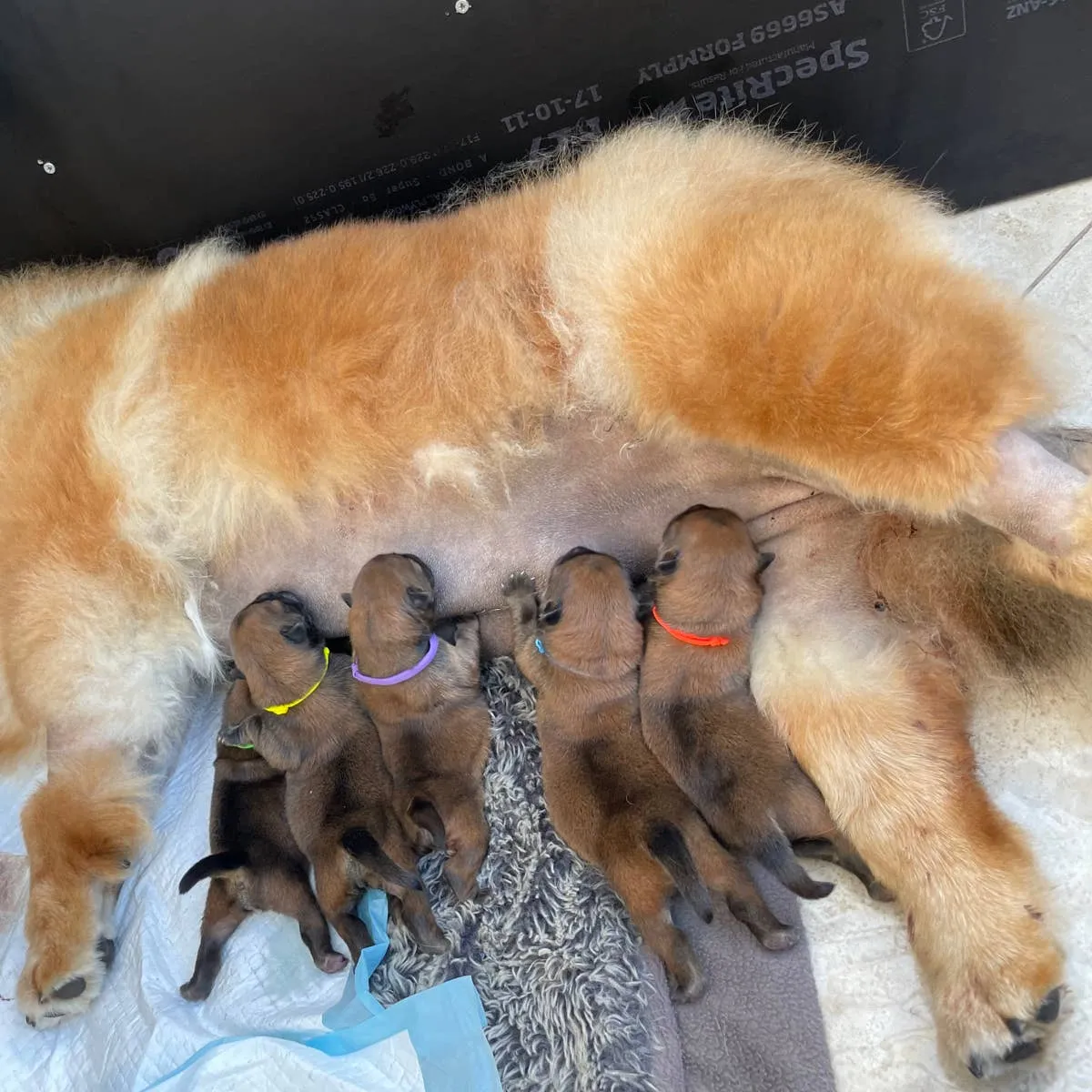
"My Chow Chow had to have an emergency c-section for our litter of 5 puppies. The vet told us that she had not produced milk, so for the past two days, we have been bottle-feeding. But today I put the puppies on the mum’s teats and they latched straight away. I then pressed on one of the teats and saw there was milk coming out. Bottle feeding every two hours is very hard, and I’m wondering if I can put the pups on the teats to feed instead." —Armanii
Why Nursing Still Matters for Dogs
Putting the pups on their mother is a sensible move. Even when her output falls short of what the whole litter needs, nursing brings benefits that go beyond calories.
- A mother's milk carries certain antibodies and micronutrients that milk replacers do not contain. Formulas may supply enough fat and protein to keep a pup alive, but nothing manufactured matches what the mother produces.
- Puppies that nurse learn to bond with their mother, and that early connection makes behavioral problems later in life less likely.
- You will not have to get up in the middle of the night to feed them. If a Chow pup wakes during the night and can curl up and take even a little milk, that pup will manage until the morning feed.
Will the Puppies Still Need Supplemental Feeding?
The real question is whether you will still have to supplement, and how to judge whether the pups are getting enough. The most reliable way is to weigh each puppy daily, or at least several times a week.
A puppy should put on roughly 10% of its body weight per day, so keep a small chart and note each pup's weight every morning when you check on them. Should a puppy fail to gain near that 10% daily, you will need to supplement feed at least two or three times a day. If twice a day is all you can manage, feed early in the morning and again in the evening, so the puppies go to sleep with full bellies.
Without an accurate scale, and if buying or borrowing one is not possible, there is a far less precise way to spot a pup that is not getting enough: simply watch them. Hungry puppies cry a great deal and should be separated from the mother and given supplemental feeding.
For large litters, I use a homemade coconut-water milk replacer as a supplement, though several reputable brands of puppy milk replacer are sold at Amazon, pet stores, or through your local veterinarian.
When Can the Puppies Start Eating Food?
Keep in mind that concerns about the mother's milk production only last under a month. Around 3 weeks of age, or by the end of that period, the puppies can begin eating gruel made at home and will need only a small number of calories from the mother.
Nursing and the Lesson of Bite Inhibition
The pups will still need to keep nursing for roughly 8 weeks, but by then the main reason is socialization. Once the puppies start nursing, their sharp little teeth irritate the sensitive skin on the mother's belly, and she snaps at them to signal that they should not bite down. To us it can look harsh, but she is teaching bite inhibition early, and dogs raised with their mother and properly socialized are less likely to bite a child or an adult caretaker at any point.
Should they do it anyway, they have learned not to clamp down hard and hurt the person. A weaned puppy can be taught bite inhibition, but you will never match what the mother accomplishes. Bite inhibition is an important part of puppy socialization, and the mother should not be scolded—she is teaching the puppy proper manners.
Ways to Encourage the Mother Dog's Milk Production
One point deserves emphasis: whether you choose the coconut water formula or a commercial puppy milk replacer, it should serve only as a supplement. There are steps you can take to help your dog make more milk for her litter, so even after an early c-section, do what you can and let her nurse as much as possible.
Best of luck with your new puppies!
This article is not meant to substitute for diagnosis, prognosis, treatment, prescription, or formal and individualized advice from your veterinarian. Animals exhibiting signs and symptoms of distress should be seen by a veterinarian immediately.