Post-Whelping Hydration Concerns: When a Mother Dog Won't Drink
Charlie Evans
Owner's Concern: Dog Refuses Water After Whelping, Vet Care Unaffordable
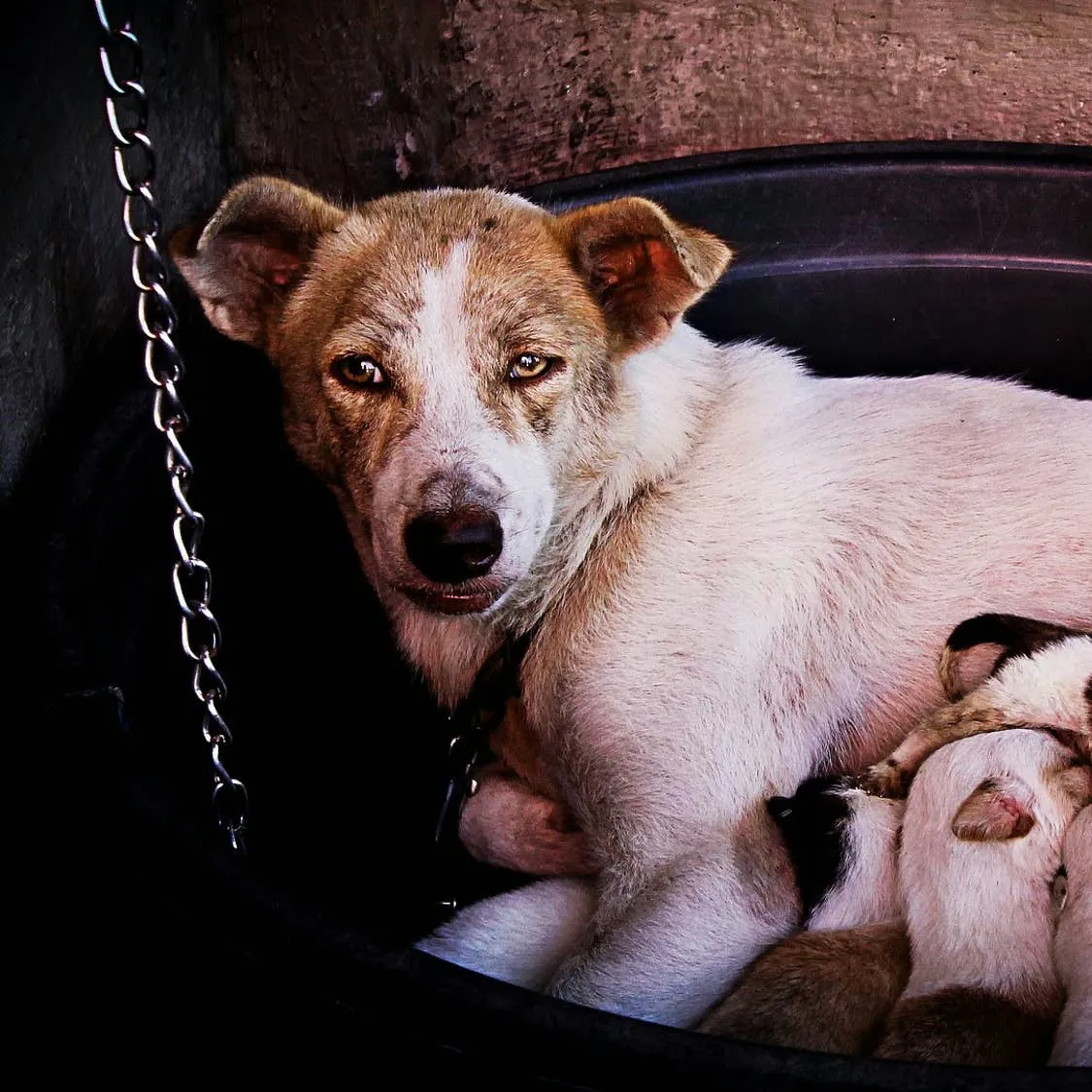
"My dog had 13 puppies, sadly 5 died. She had mange during her pregnancy but seemed to get better. I’m worried because she has been leaking a lot of thick, dark, greenish-brown discharge. I called the vet here, but I have no money, so they couldn’t see her and told me just to monitor her. If there is a dead puppy inside, what do I do without any vet help because they refused to see her without money?
Also, she’s been eating a little but refusing water—even milky water. I am just hoping she’s okay."—Steven
Assessing Whether the Mother Dog Is Getting Enough Fluids and Food
You said she isn't drinking, but you didn't mention how the surviving puppies are faring. If milk production is happening, then she must be taking in fluids. As long as she continues producing milk, the puppies aren't starving, and she's eating something, she might be okay.
Be sure she always has access to clean, fresh water, and consider offering warm—but not hot—chicken broth to encourage more drinking. This article on getting a dog to eat and drink offers additional strategies to increase her intake and support milk production for the litter.
Recognizing Potential Uterine Infection
The discharge could be within normal range, but it's also possible she has a uterine infection resulting from a retained placenta. (A dead puppy is another possibility, though far less probable.) Some post-birth discharge, known as lochia, is expected. Dogs with a uterine infection from a retained placenta typically show more signs than just refusing to drink.
One clue that an infection is present rather than normal discharge: infection tied to a retained placenta usually has a much stronger, rotting smell, similar to roadkill.
What Leads to a Uterine Infection After Whelping?
Factors that increase the likelihood of a uterine infection (1) include:
- A retained placenta
- A large litter
- Prolonged labor
- Requiring assistance during delivery
- Poor physical condition (You didn't describe her condition before whelping, but if she was underweight following the mange episode, that would raise the risk of uterine infection.)
How Can You Determine If It's an Infection?
Unfortunately, confirming a uterine infection without an exam is impossible, and sometimes even an exam isn't sufficient—bloodwork (a CBC) may be needed to check for infection, and a microscopic review of the discharge could be done to look for large numbers of bacteria.
If the cervix remains open, some dogs recover with just an injection that helps expel the retained placenta and any remaining uterine contents. Antibiotics may also be necessary for some dogs, but there's no way to know for certain.
Financial Constraints: Surrendering the Dog to a Shelter as an Option
This situation can't be managed at home. If you're unable to see your local veterinarian, consider contacting a local dog breeder. If you don't know one, try your local animal shelter and ask if anyone there can examine her. Raising puppies is costly, and shelters typically expect owners to have funds for emergencies. Policies vary, but some shelters will require you to surrender the dog before providing treatment.
Uterine Infections Need Medication
If you can't take her to your vet and don't want to surrender her to a shelter, I can't promise she'll survive. I suggest checking her body temperature.
If she has a fever, she has an infection of some kind, most likely from the retained placenta, and action is necessary. Dogs with a retained placenta or a dead puppy likely have an active infection, and if sepsis develops, she will die without medication.
If she has a fever, the discharge has a strong foul odor, she begins vomiting, or the puppies are weak and crying continuously, seek help immediately.
Sources
- Rosenberg LM, Marinoff J, Crouch EE, Valenzano DM, Peters-Kennedy J, Cheong SH, de Amorim MD. Uterine perforation secondary to metritis and placenta percreta in a postpartum bitch. Can Vet J. 2020 Jun;61(6):584-588. PMID: 32675809; PMCID: PMC7236632. i.nlm.nih.gov/pmc/articles/PMC7236632/
This article is not meant to substitute for diagnosis, prognosis, treatment, prescription, or formal and individualized advice from your veterinarian. Animals exhibiting signs and symptoms of distress should be seen by a veterinarian immediately.
© 2024 Mark dos Anjos, DVM