Dog's Crusty, Pink Nose: Could It Be Discoid Lupus?
Charlie Evans
Adrian's Concern: A Persistently Cracked and Discolored Nose
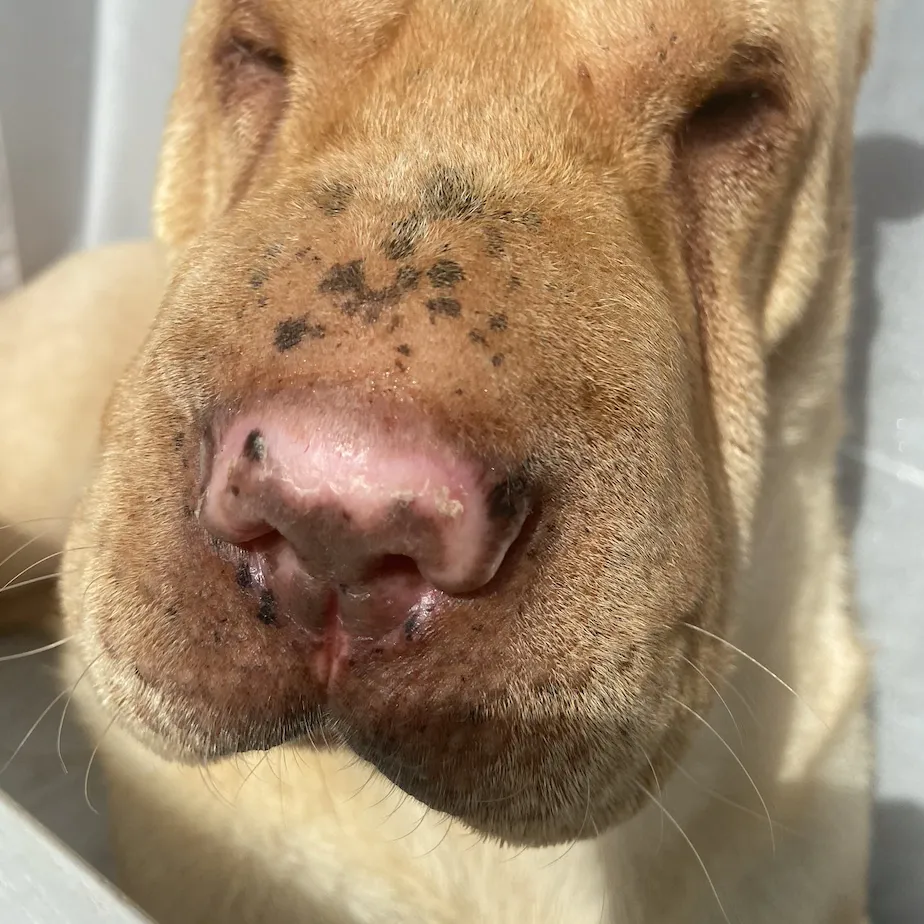
Adrian, a dog owner, reached out to Dr. Mark about his 3-year-old Shar-Pei. The dog's skin problems began a year ago with cracks, redness, and a burned appearance on her nose. Initially, Adrian thought it was sun-related because she has a pink nose and it was summer, but the issue continued into winter. Over time, black spots appeared on her head, starting from the nose. Two veterinarians were consulted: the first suggested marigold cream, which didn't help; aloe vera provided slight improvement. Later, a second vet prescribed Prednicortone for three weeks and recommended honey, which seemed to heal the cracks but didn't restore the nose's original appearance. The vet attributed the hyperpigmentation to sun exposure. Adrian also tried dog sunscreen. Despite these efforts, the nose still has issues, prompting him to ask if it could be a yeast infection and to share photos.
Featured Gallery
1 / 1
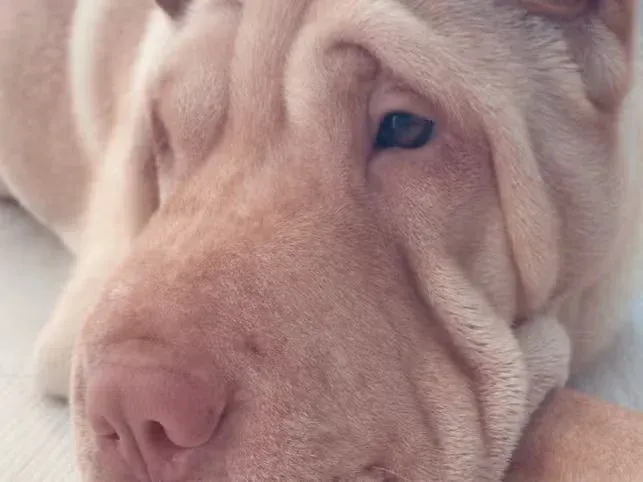
Normal nose before the problems started.
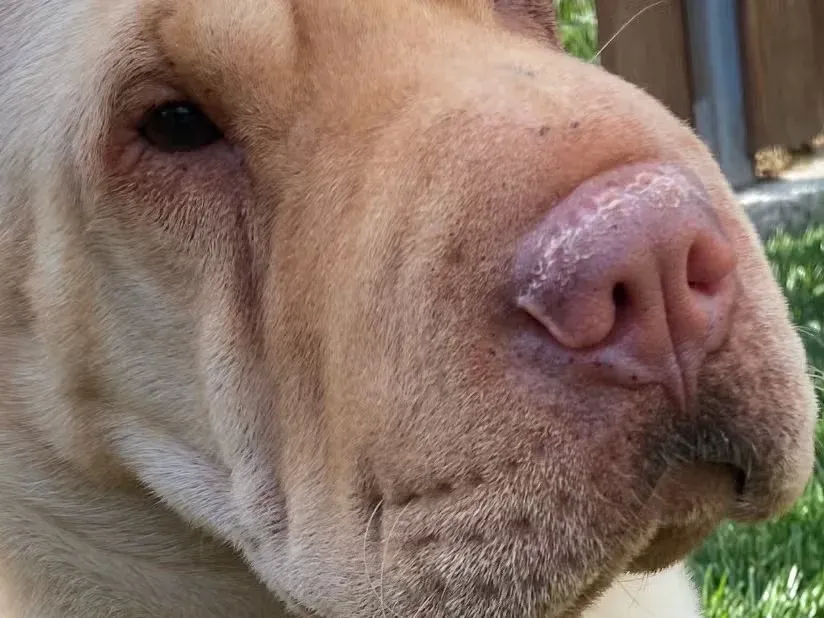
First signs of a problem with her nose. (Not much hyperpigmentation yet.)
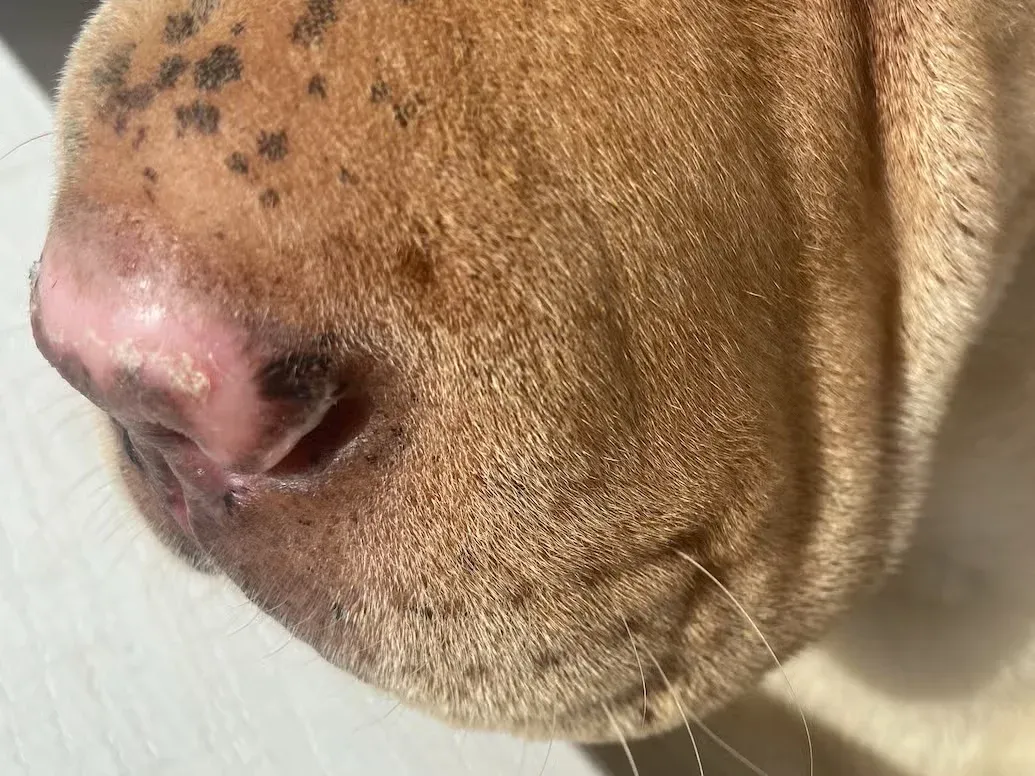
Her nose now.
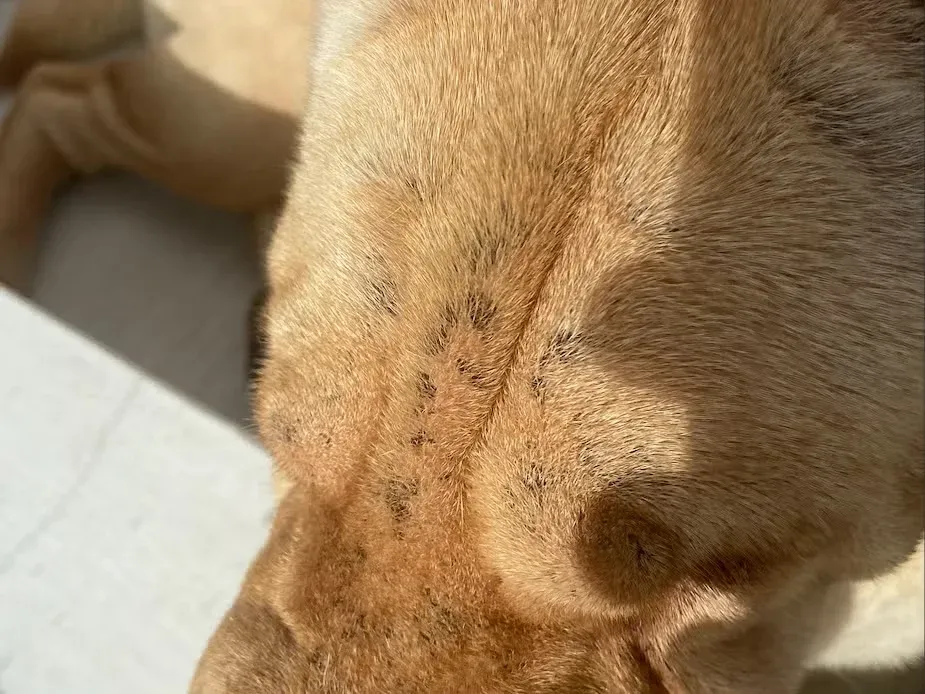
Hyperpigmentation continuing up her nose.
Diagnosis: Discoid Lupus Erythematosus (DLE)
After reviewing the photos and lab tests, Dr. Mark suggests that the dog likely has cutaneous lupus, specifically discoid lupus erythematosus (DLE). DLE is an autoimmune condition that can cause a crusty nose and is distinctive because it often leads to the loss of the nose's cobblestone pattern, unlike other diseases that may also cause crusting. To confirm the diagnosis, a biopsy under general anesthesia is necessary, as was done for this dog.
Biopsy Confirmation
The diagnosis of DLE was confirmed through a biopsy, which involves removing a tissue sample and sending it to a pathologist. This step is crucial for an accurate diagnosis.
Treatment Approaches for DLE in Dogs
Managing DLE is generally straightforward, with multiple options based on individual response. Treatment may include:
Topical Corticosteroid Cream
Many dogs improve with just a topical corticosteroid cream. It requires keeping the dog from licking it off for a few minutes, but it's not painful and is easier than administering pills. However, it may take months before the nose returns to normal.
Oral Steroids or Immune Suppressants
If the cream isn't effective, oral steroids or immune suppressants like cyclosporine may be needed.
Continued Sun Protection
Sun exposure worsens the condition, so lifelong sunscreen use is necessary. Keeping the dog indoors during peak sun hours is also advised. The improvement seen so far is likely due to prednisone and sunscreen.
Potential Complication: Squamous Cell Carcinoma
While DLE is treatable, it doesn't go away completely. Regular veterinary check-ups are important if flare-ups occur, as some dogs may develop squamous cell carcinoma in the nose after DLE. If you don't have a regular vet, consider consulting a veterinary dermatologist. If none are available locally, call around to find a veterinarian experienced in dermatology. Given the dog's youth, ongoing monitoring is essential.
Risk of Systemic Lupus
About 28% of dogs with DLE may develop systemic lupus, a serious condition requiring more aggressive treatment. While this may not happen, it's important to manage DLE and monitor for any changes.
Source
(1) Chong BF, Song J, Olsen NJ. Determining risk factors for developing systemic lupus erythematosus in patients with discoid lupus erythematosus. Br J Dermatol. 2012 Jan;166(1):29-35. i.nlm.nih.gov/21910708/
This article is not meant to substitute for diagnosis, prognosis, treatment, prescription, or formal and individualized advice from your veterinarian. Animals exhibiting signs and symptoms of distress should be seen by a veterinarian immediately.
© 2022 Mark dos Anjos, DVM
Sources
- Dog's Crusty, Pink Nose: Could It Be Discoid Lupus? — pethelpful