When a Fish Floats Sideways: Recognising and Addressing Swim Bladder Problems
Toby Howard
Could Your Fish Be Alive but Unwell?
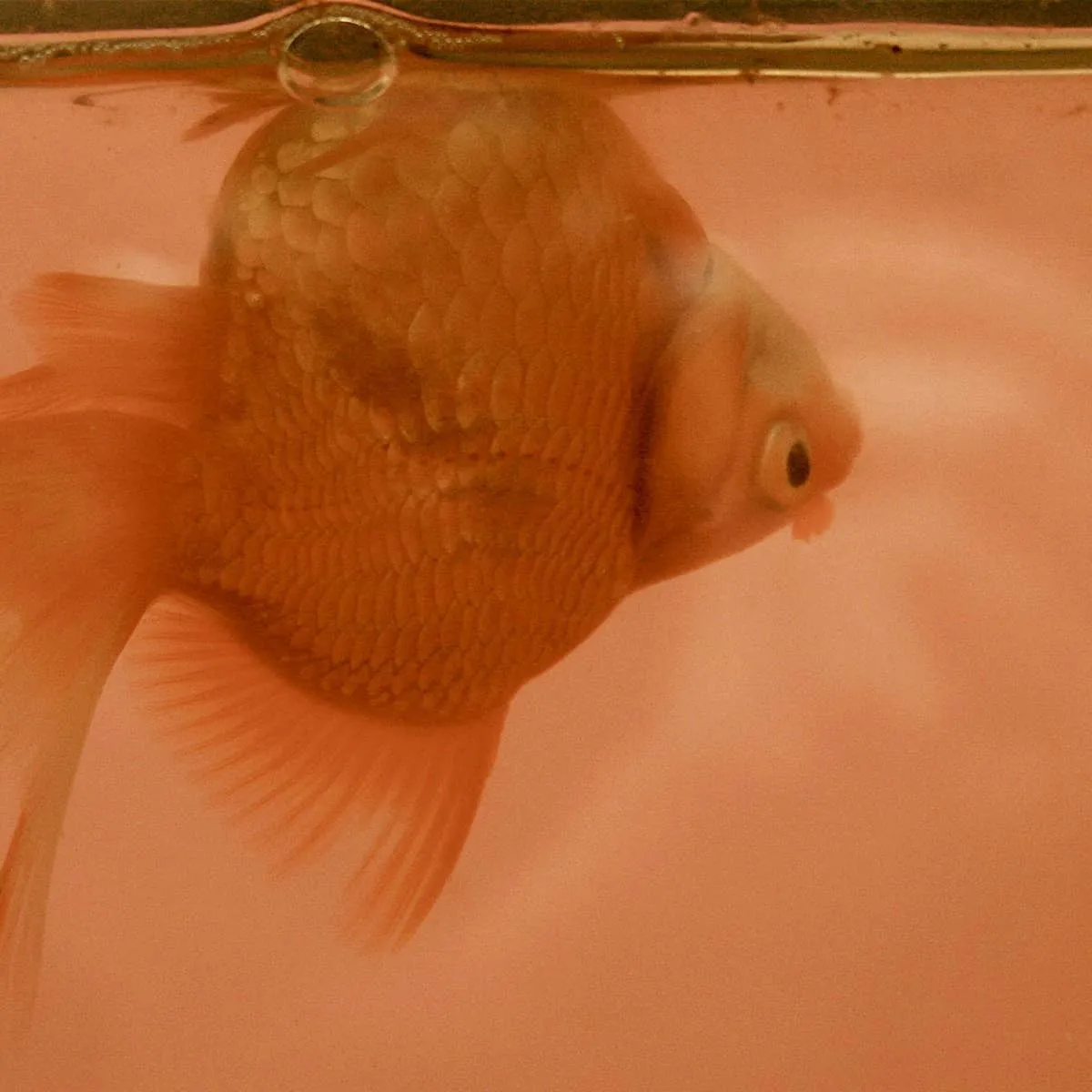
Seeing a goldfish drift at the water's surface, turned on its side or belly-up, often leads owners to conclude the worst. Many assume the fish has died and quickly remove it for a send-off in the toilet.
But that fish may still be alive. In a number of cases, the cause is a malfunction of the swim bladder, frequently triggered by giving the fish too much food.
What Exactly Is the Swim Bladder?
This gas-filled, flexible organ allows a fish to control its position in the water. When pressure decreases, the gas inside expands and helps the fish move upward; when the fish swims deeper, the gas compresses, assisting its descent.
While there is no shortage of warnings about overfeeding fish, plenty of owners don't realise how easily it happens. Overfeeding can bring on constipation, and that in turn may interfere with the swim bladder's function.
What You'll Find in This Article
- Recognising swim bladder disorder or disease
- Steps for treating swim bladder disease
- Ways to prevent swim bladder disease
An Important Caution
If your fish has swim bladder disease, do not attempt to puncture or "deflate" it.
Recognising Swim Bladder Disorder or Disease
Swim bladder issues may cause a fish to:
- Float at the surface
- Remain at the bottom of the tank
- Rest head-down on the tank floor
Treating Swim Bladder Disease
When a fish is found floating on its side, withholding food for two or three days frequently resolves the issue. This gives the fish's body time to recover from overeating and regain its normal orientation.
Another option is to feed crushed green peas, which can ease constipation and help the swim bladder function properly again. This should only be a short-term measure, not a permanent part of the diet.
Preventing Swim Bladder Disease
A few simple practices can lower the chance of your goldfish developing swim bladder disorder.
1. Check Your Water
Regular water testing and maintaining good water quality are among the most important preventive steps.
2. Provide a Fresh Diet
Instead of relying on flakes or pellets, a fresher diet may be helpful. Bloodworms, brine shrimp, and small amounts of vegetables can support your fish's health.
Since swallowing air may have contributed to the problem, pre-soaking the food before feeding can help avoid this in the future.
3. Perform Frequent Water Changes
Change the tank water regularly—the 50% per week guideline applies here—and avoid disturbing the gravel while doing so. Stirring the gravel can release bacteria and waste that would otherwise remain trapped.
4. Avoid Using Tap Water Directly
Never add water straight from the tap. Use a water conditioner and check the pH before putting it into the tank.
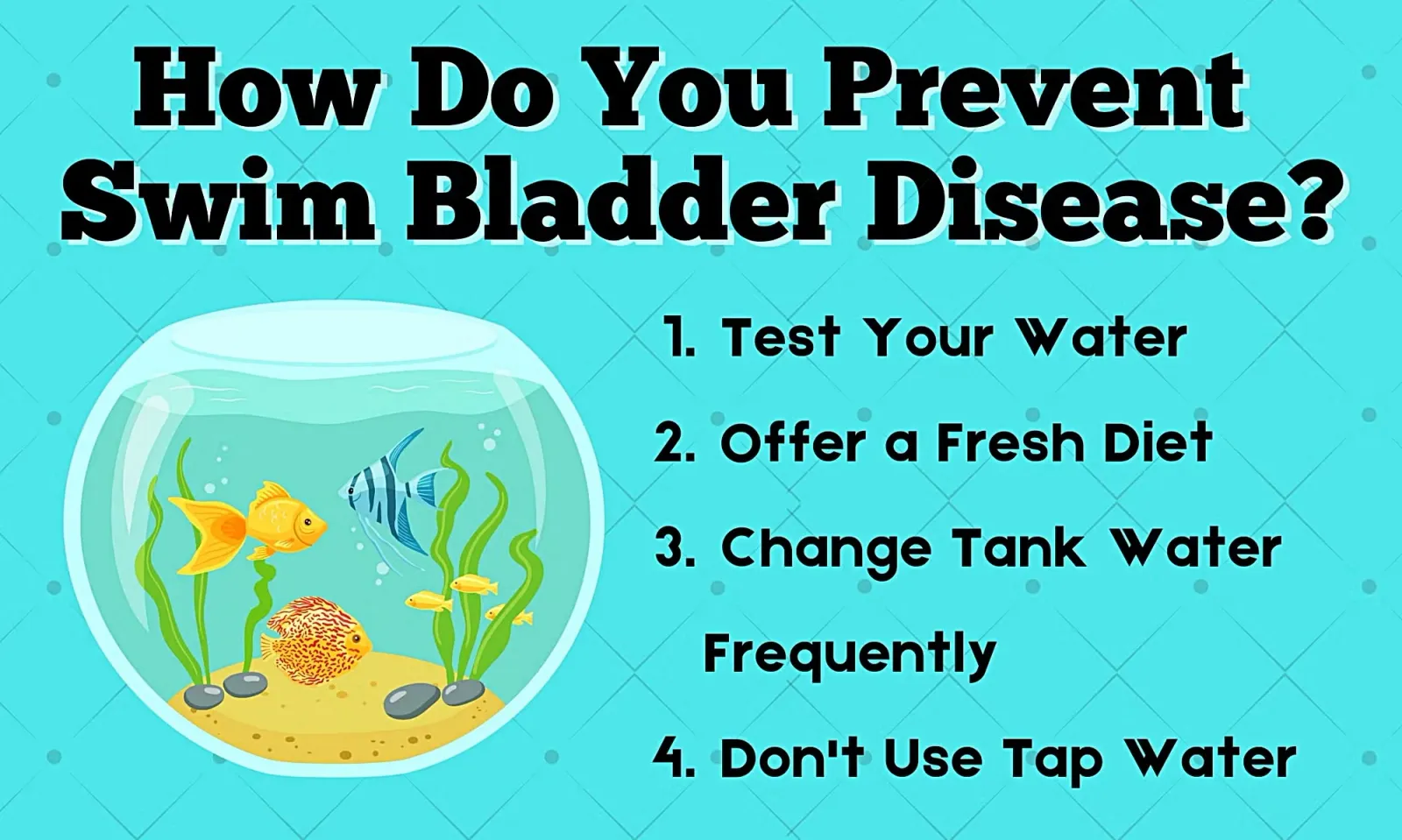
Here are four ways to prevent swim bladder disease in your fish.
Canva.com/PhotoScape
Keep Learning
This short article only covers the fundamentals of swim bladder disorder, with the aim of raising awareness among goldfish keepers and owners of other fish. If you think your fish may be affected, I encourage you to look into the topic further to find ways to resolve or prevent it. The resources listed below are a useful starting point.
Resources and Further Reading
- 3 Ways to Fix Swim Bladder Disease in Goldfish | wikiHow If your goldfish is swimming sideways or upside-down, it may have swim bladder disorder. Constipation, enlarged organs, or infection can all cause the swim bladder to stop functioning properly.
- Causes and Cures for Goldfish Swim Bladder Disorder | about goldfish Causes of Goldfish swim bladder disorder are poor quality food, water conditions, bacterial infection, genetics or old age, but usually, it’s poor diet.
- Fancy Goldfish and Swimbladder/Buoyancy Problems | INJAF We often see posts from people on forums who are worried that their goldfish has “swimbladder.”
- How to Treat Swim Bladder Disorder in Aquarium Fish | The Spruce Pets Swim bladder disorder refers to issues affecting the swim bladder, rather than a single disease. Affected fish will inappropriately float or sink.
- Swim Bladder Disorders in Fish | PetMD The fish swim bladder, or air bladder, is a significant organ that affects a fish’s ability to swim and stay buoyant. Learn here about some of the factors that can cause swim bladder disorders and how they are treated.
This article is accurate and true to the best of the author’s knowledge. It is not meant to substitute for diagnosis, prognosis, treatment, prescription, or formal and individualized advice from a veterinary medical professional. Animals exhibiting signs and symptoms of distress should be seen by a veterinarian immediately.
Comments
AaLa on July 03, 2020:
Thank you that was very infromative
Carla on May 17, 2020:
My guppies gorged themselves on fry after a large female gave birth and now ive noticed two that cant swim down from the top of the tank! What do i do???
Liam Swift on May 13, 2020:
I have checked all of my water and everything is clear, however 3 of my fish have already died and one is lying lifeless. I don’t think it was all because of a bladder problem and I don’t know what to do
Bryson Gooden on February 28, 2020:
I have 3 guppys and i think i flushed one of my fish that was still alive….. i woke up and he was inside the filter intake but didnt look hurt and i think he got hurt then got sucked in and i put him back and he just floated there on his side so he might have still been alive
Alex riachi on June 30, 2019:
I think my fish was not dead but I buried him before knowing this
Meena on June 08, 2019:
My fish was fine yesterday, eating and swimming around. (He looked a little tired last night but I don’t know) but I woke up this morning and now he is on his side on the bottom of the tank, I have many other fishes however he is the only affected.
Anissa on May 20, 2019:
My fish is lying on the bottom of the pot but is not breathing
I think I overfed him.
What should I do?
Riya on May 16, 2019:
My fish bowl brome down . so i put my fish in a big tub but its not transparent is it okay to put them tgere i will be getting an aquarium soon
Anna Shannon on April 11, 2019:
Thank you so much for this. i have got some baby fish in my pond and was so upset to see they were lying on their side. I want to do my best for them.
Bella on March 10, 2019:
My fish was fine yesterday, eating and swimming around. (He looked a little tired last night but I don’t know) but I woke up this morning and now he is on his side on the bottom of the tank, he is an only fish. Also, this morning I came into my room and my cat was on the desk so maybe she scared him.
I don’t think he is breathing but I can’t be sure. If he is stressed I’m afraid that if I try to wake him up or move him it will cause him to become even more stressed and die ( if he hasn’t already). I need help.
paige on February 25, 2019:
my fish is floating at the surface of my tank breathing and moving her find trying to swim. I think I may have over fed her. she has a bump on her side. what do I do
Ella on February 19, 2019:
My fish might live another day!
Paytc on May 05, 2018:
My goldfish is going upside down, laying on the rocks for 2 days and she is not dead yet because she is still swimming a little bit but he is going to the top and bottom of the tank// switching about every 3 minutes, and laying there. Is there anything I can do? At all? Do you happen to have any idea what the problem may be?
Dat goldfish lover on December 07, 2017:
Thank you! You might of just saved my goldfishes life!
Susan on October 26, 2017:
Our little gold fish from the school carnival is now five years old and seven inches long. How much should I feed him a day?
Jola on June 20, 2017:
My little brothers angel fish is floating on its side at they top of the tank but still swimming and trying (but most times failing) to eat
This has been for approx.4 days now
On the second day it was back to normal but by the next day it was it was afloat again pls help
My little brother is very very sad
Kelsey —- on December 23, 2016:
Hm… My poor Undyne is still having a problem. Is there anything else I can try?
superfreak on July 26, 2011:
BUT WHAT IF NOT FEEDING DOESN’T WORK AND HE ACTUALLY IS DEAD 🙁
Hope Alexander (author) on January 31, 2008:
Yes, pet stores and private people selling fish should really supply this basic informtion, and it is incredibly basic.
Rebecca Mikulin from Sheridan, Wyoming on January 31, 2008:
Great “basics” article! It’s sad how many goldfish are inadvertently abused due to misunderstandings about their space requirements, feeding, and common ailments. I also feed mine spirulina flakes regularly to help prevent SBD, not as easy to obtain as the peas but if you run into a fish that won’t eat something so different than what the pet store gave it it’s worth a try 😀
Hope Alexander (author) on January 30, 2008:
As a child I didn’t know either, which seems very silly, as this is a very common affliction amongst goldfish and other commonly kept pet fish. It seems very remiss of pet shops to sell fish without this sort of vital information. There are probably thousands, if not millions of fish killed every year needlessly because the owners had never heard of this problem.
Stephanie Marshall from Bend, Oregon on January 30, 2008:
Ah ha….. I see now. Thanks. I never knew.
Just Toyia from Tennessee on January 30, 2008:
I had a fish with this problem and nothing helped her except temporarily, but she lived for 2 years -I wrote about it here a few weeks ago-
iscover.hubpages.com/animals/TO-SWIM-WITH…
Raven King from Cabin Fever on January 30, 2008:
Oh, that’s why I never had much luck them. Thanks. 🙂