The Astonishing Value of Ornamental Koi: A History of the World’s Priciest Fish
Dakota Reed
From Food Ponds to Living Art
The koi, a fish that began as a simple food source, now ranks among the most valuable ornamental creatures on earth. The finest examples have commanded prices reaching $2.2 million. Each year, large sums are spent on a handful of top-tier specimens, while millions more are spent on more ordinary varieties. This long-lived fish continues to captivate enthusiasts worldwide.
To grasp the koi’s appeal, one must look to its past. The journey from a farm laborer’s meal to the palace ponds of emperors is remarkable. The vivid, patterned fish we admire today look nothing like their dull-colored ancestors, which were raised purely for consumption.
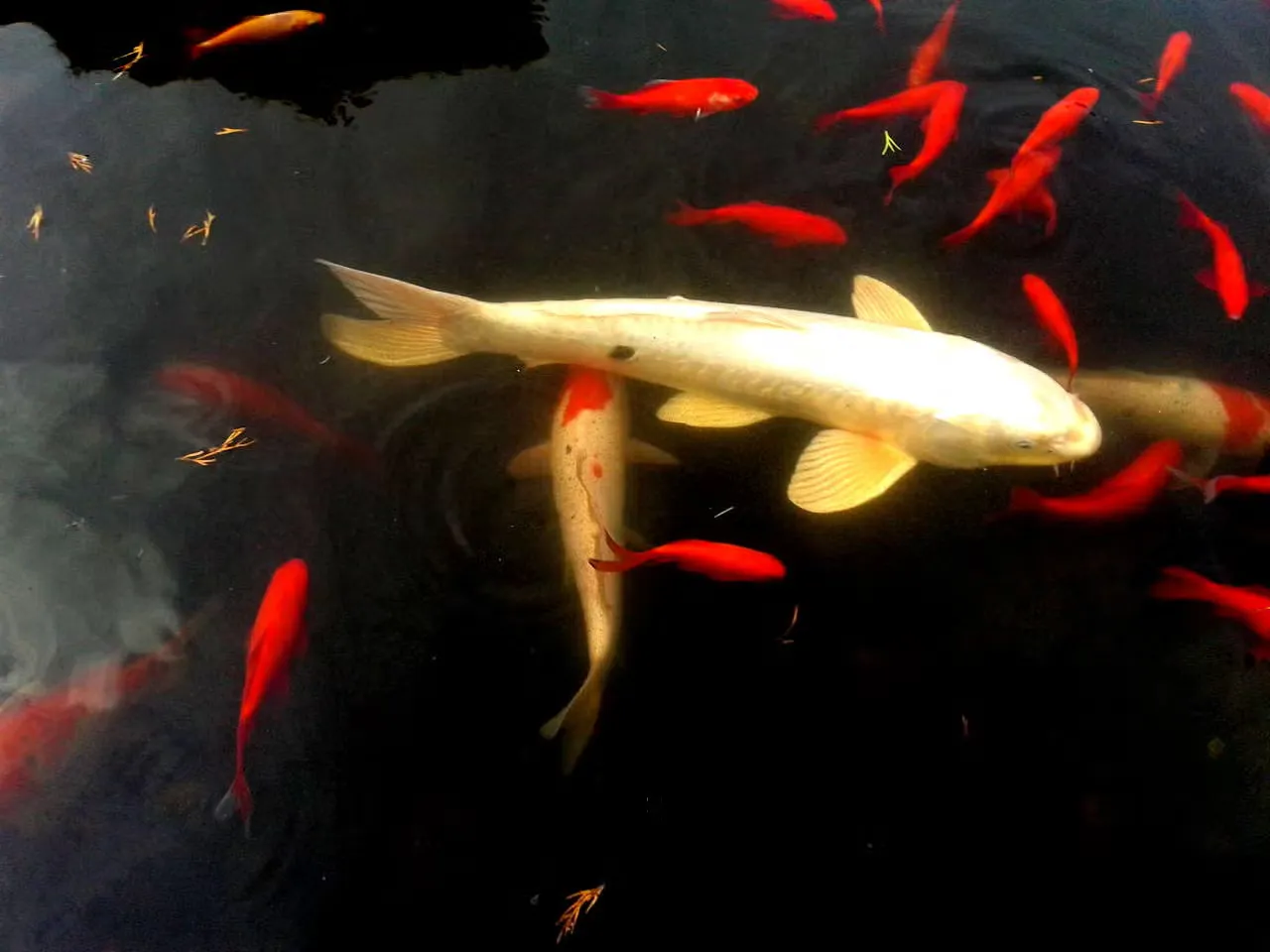
Koi are swimming jewels.
The Domestication of Carp
The precise origins of these striking creatures remain as unclear as the muddy waters their forebears inhabited.
Several carp species are native to Central Europe and Asia. One of these, Cyprinus carpio, originated around the Black, Caspian, and Aral seas. It spread west to Europe’s Danube River and east to East Asia, was domesticated in both regions, and eventually gave rise to the koi. Carp were bred in ponds for food at least 2,400 years ago in China and during the Roman Empire in Europe.
From Food Fish to Ornamental Fish
For centuries, domesticated carp served as a staple food for many people, including Europeans. The popularity of carp as a table dish in Europe declined around the 1830s, as new railway networks transformed the fishing industry. Ocean fish could now be delivered quickly and became popular in big cities. Changing tastes may also have contributed to carp’s decline as a food fish.
Theories on the Origin of Koi
It was once believed that Cyprinus carpio, the common carp, was a Chinese fish brought to Europe. However, in 1995, E. K. Balon demonstrated that the Danube has had an indigenous wild carp population since the retreat of the last glaciation in 12,000 BC.
Balon cites the ancient Roman author Ovid (43 BC to AD 17 or 18) regarding carp domestication. Cassiodorus (AD 490–585) confirmed that carp were served at King Theodorus’s court in Italy:
“From the Danube come Carp and from the Rhine Herring. To provide a variety of flavours, it is necessary to have many fish from many countries. A king’s reign should be such as to indicate that he possesses everything.”
(Source: The Early History of the Carp and its Economic Significance in England, by carp fisherman Christopher Currie.)
In the Far East, carp also attracted royal patrons. The Japanese historical record Nihon-Shoki states that Emperor Keikou kept ornamental carp in his palace pond as of AD 94, and Emperor Suiko did the same in AD 620. These may have been another carp species, such as the one that became the goldfish.
The decorative carp known as koi (in Japanese, nishikogoi) were first bred for their color in the Niigata prefecture of Japan in the 1820s. They contain DNA from the East Asian subspecies of Cyprinus carpio and, in at least some cases, from the western subspecies as well; much hybridization has occurred. When they were exhibited at a fair in Tokyo in 1914, they created a sensation that spread worldwide.
The highly colored ornamental specimens bear little resemblance to wild varieties. These are not ordinary pets like a dog; they are sources of great wealth, prestige, and pride.
Koi Varieties
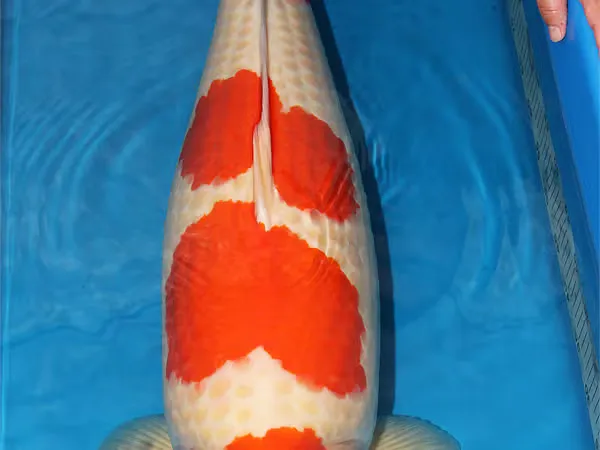
Kohaku KoiQuestion via Flickr ((CC BY-SA 2.0)
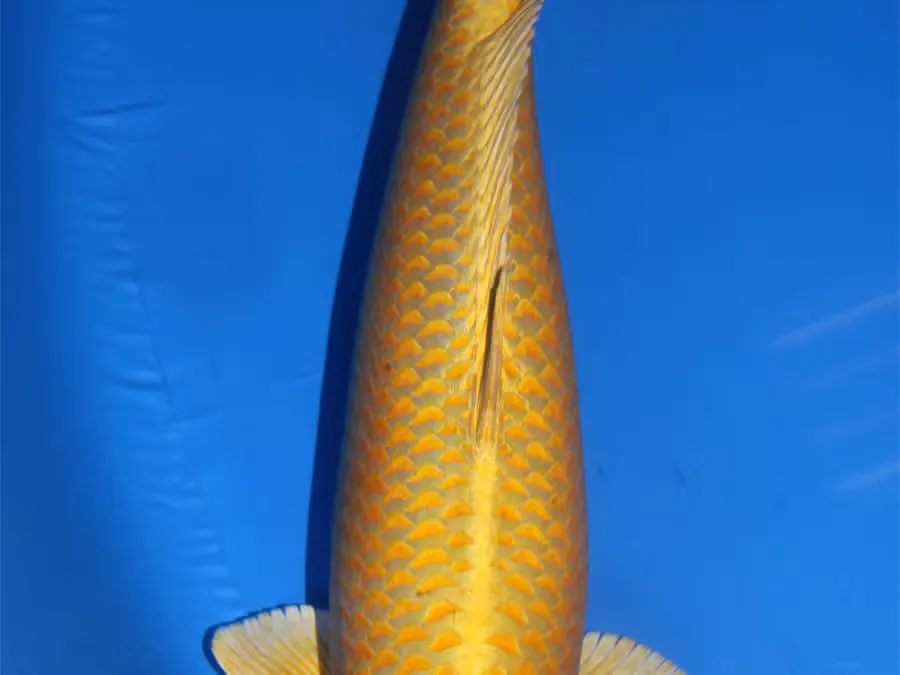
Ogon KoiQuestion via Flickr ((CC BY-SA 2.0)
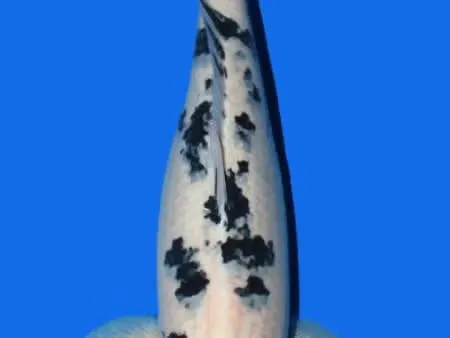
Bekkko KoiQuestion via Flickr ((CC BY-SA 2.0)
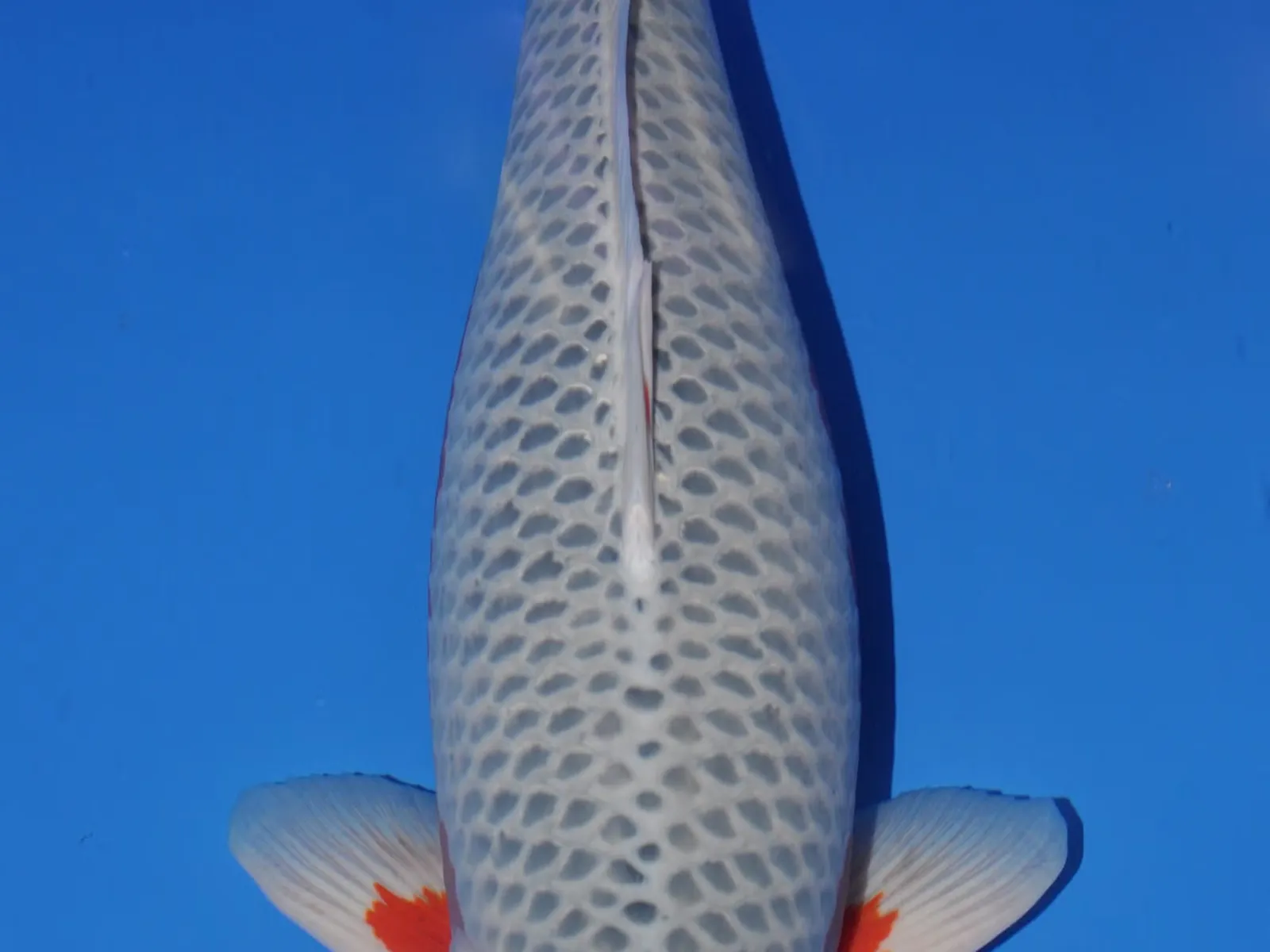
Asagi KoiQuestion via Flickr ((CC BY-SA 2.0)
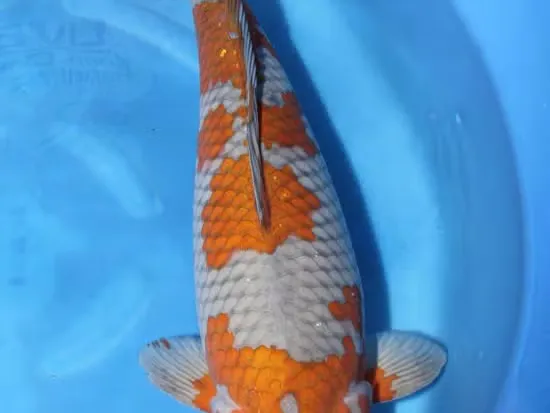
Ochiba KoiQuestion via Flickr ((CC BY-SA 2.0)
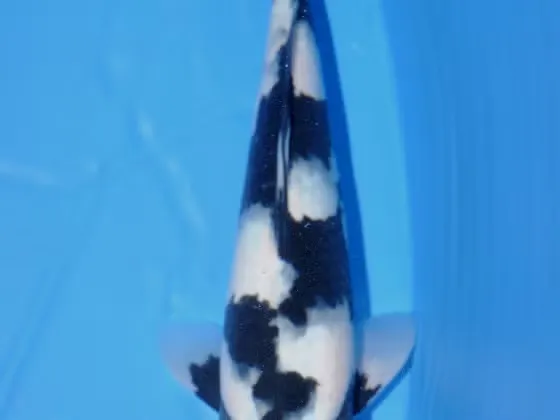
Utsuri KoiQuestion via Flickr ((CC BY-SA 2.0)
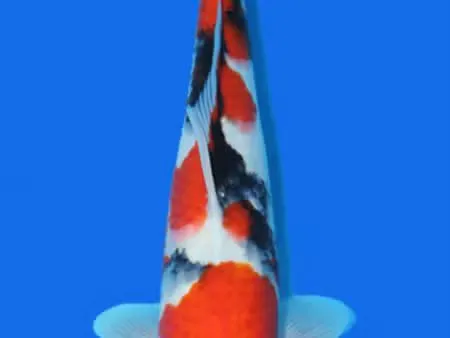
Showa KoiQuestion via Flickr ((CC BY-SA 2.0)
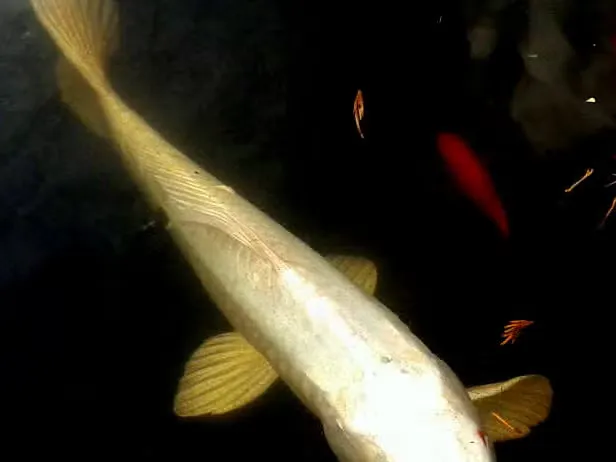
White koi, sometimes called ghost koi
Why Are Koi So Expensive?
Richard Tan, president of the Singapore Koi Club and chairman of the organizing committee for the First Asia Cup Koi Show in May 2008, notes that the most expensive koi ever sold went to Japanese companies during the booming 1980s for roughly 50 million to 100 million yen each—equivalent to $500,000 to $1,000,000 at the time.
Adjusted for inflation, that sum would exceed $2.2 million in today’s dollars for a single exceptional fish.
The Rarity of Competition-Quality Fish
Only a few koi ever reach this level of bidding. Tan explains that out of 500,000 koi bred annually, just 50 are selected for competition when they reach two years of age. The remaining koi are sold to hobbyists at more ordinary prices.
Owning the most expensive koi is, of course, a major status symbol—comparable to owning a garage full of Ferraris or Rolls-Royces. Yet this is a living creature, alive and exquisite to behold. Tan calls it “living art.”
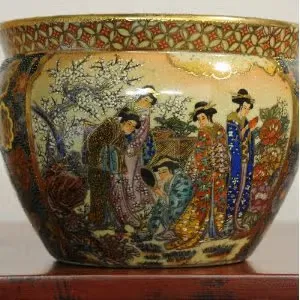
Fish Bowl (AD 379)
Displaying the “Living Art” of Koi
The brightly colored specimens we see today were created through selective breeding. Their patterns were partly shaped by how the fish were displayed; they were designed to be viewed from above.
In both China and Japan, large earthenware jars were crafted to show off the fish (there was no technology then for manufacturing large glass bowls). Consequently, the fish that looked most pleasing from above were used for breeding. Those that were less attractive, one supposes, ended their days on another piece of china—a dinner plate.
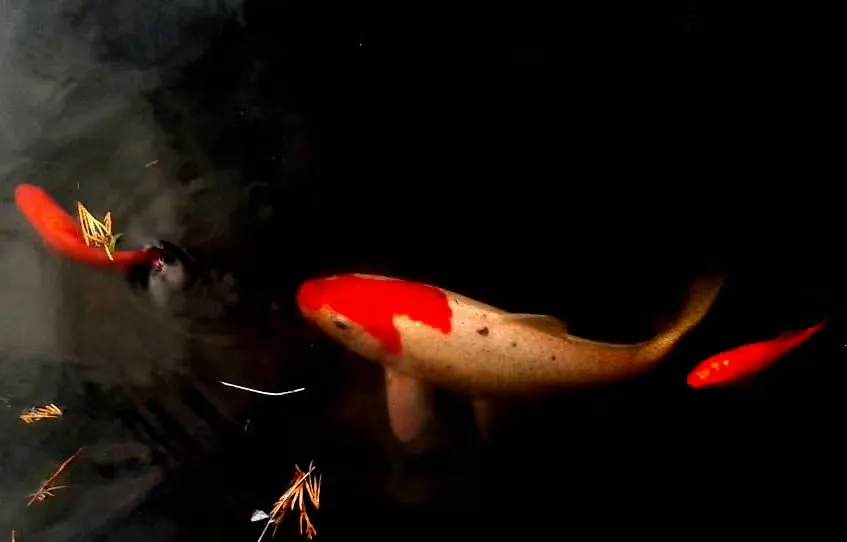
Beautiful, tranquil swimming koi.
How Long Do Koi Live?
Koi can live for many years. Though the average specimen in captivity might live 25 or 35 years, an old koi named Hanako, from Mino province in Japan, was shown to be over 215 years old based on analysis of her scales, and other 100+ year old fish are known from the same pond. Koi, like wild carp, can grow to 36 inches or more under perfect conditions.
Featured Gallery
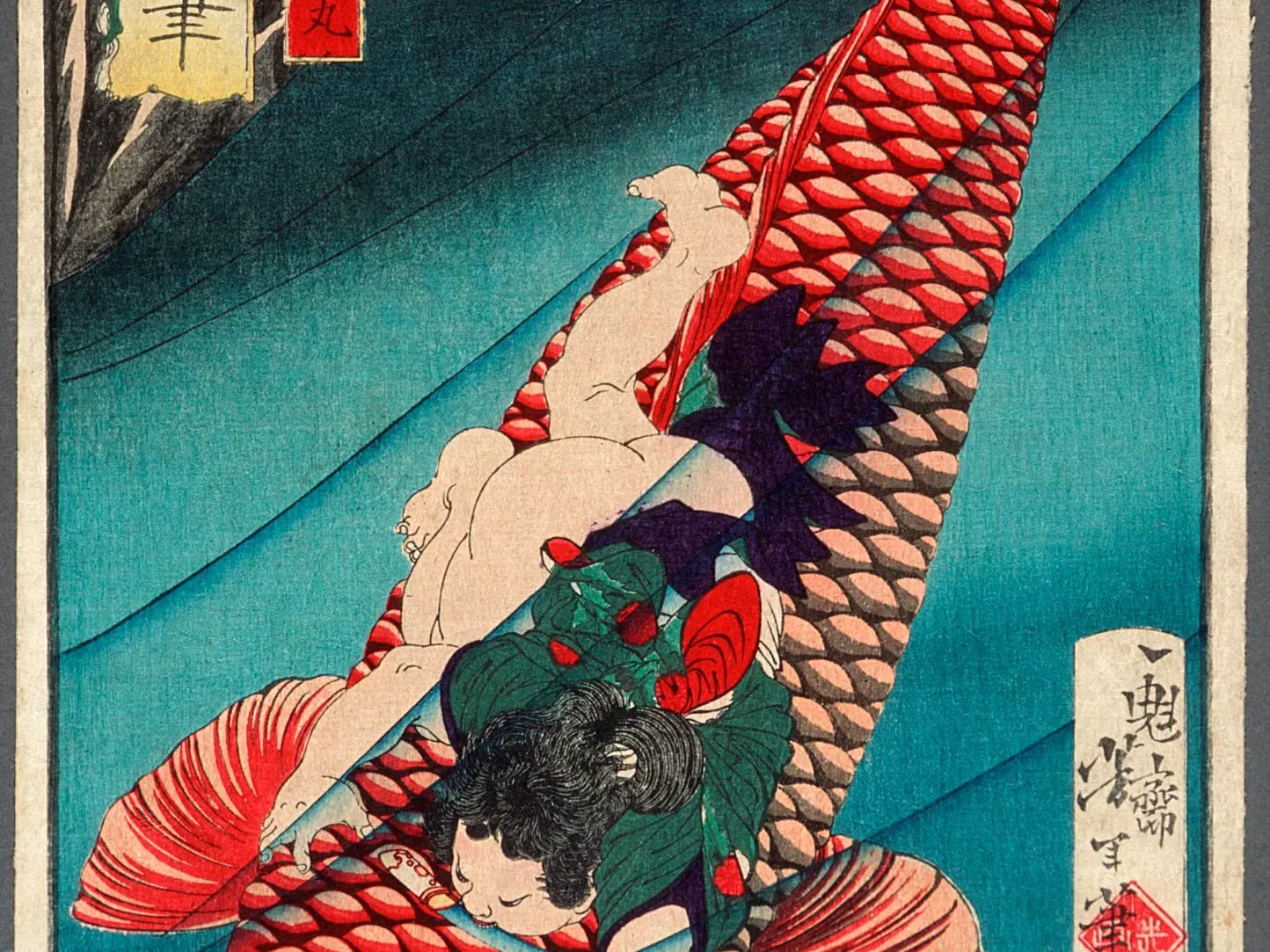
“Saito Oniwakamaru on a Carp.” A legendary hero rides a giant monster carp. By Tsukioka Yoshitoshi (Japan, 1839-1892) Public domain, via Wikimedia Commons
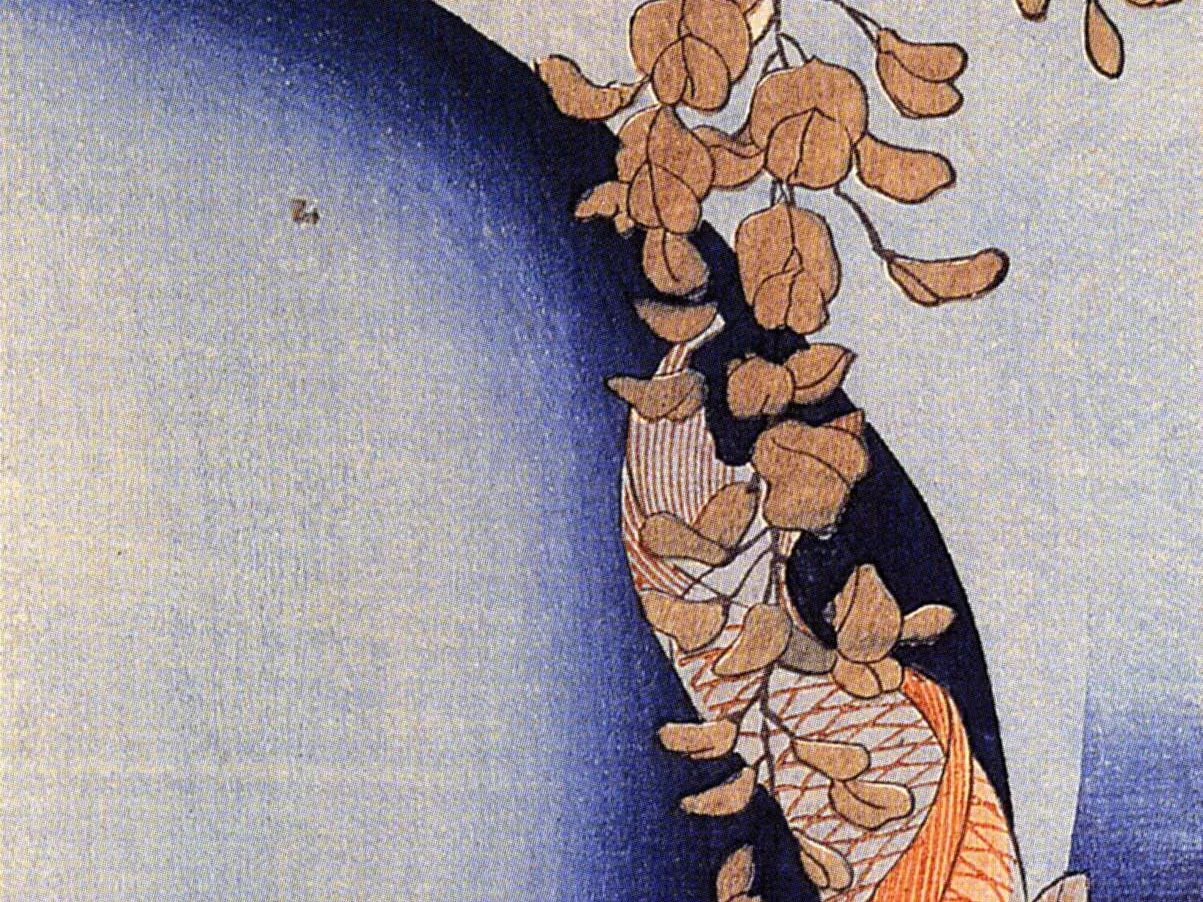
Utagawa Kuniyoshi (1797-1861), “Red Carp Under Wisteria.” LACMA, Public domain, via Wikimedia commons

Koi back tattoo in progress mytat2_s via Flickr (CC BY 2.0)
Koi in Japanese and World Culture
Images of the koi carp permeate Japanese culture. Their symbolism of long life and prosperity is highly appealing, and their slow, peaceful movement inspires tranquility.
With the opening of Japan to the world in the mid-1850s, this cultural influence was exported, along with cars and electronics.
Today, images of koi carp appear almost everywhere, from decorative designs for homes to body art. In fact, Europe is now a significant importer of koi.
There are places where you can eat koi carp. These will be fish that have been rejected for breeding purposes. If you want to taste regular old-style carp, you will probably find their brownish-golden cousins swimming in a lake near you.
But this ancient, long-lived ornamental fish is far more valuable as living art.
Featured Gallery
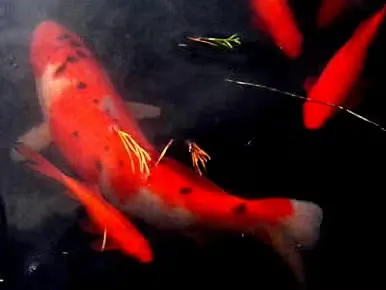
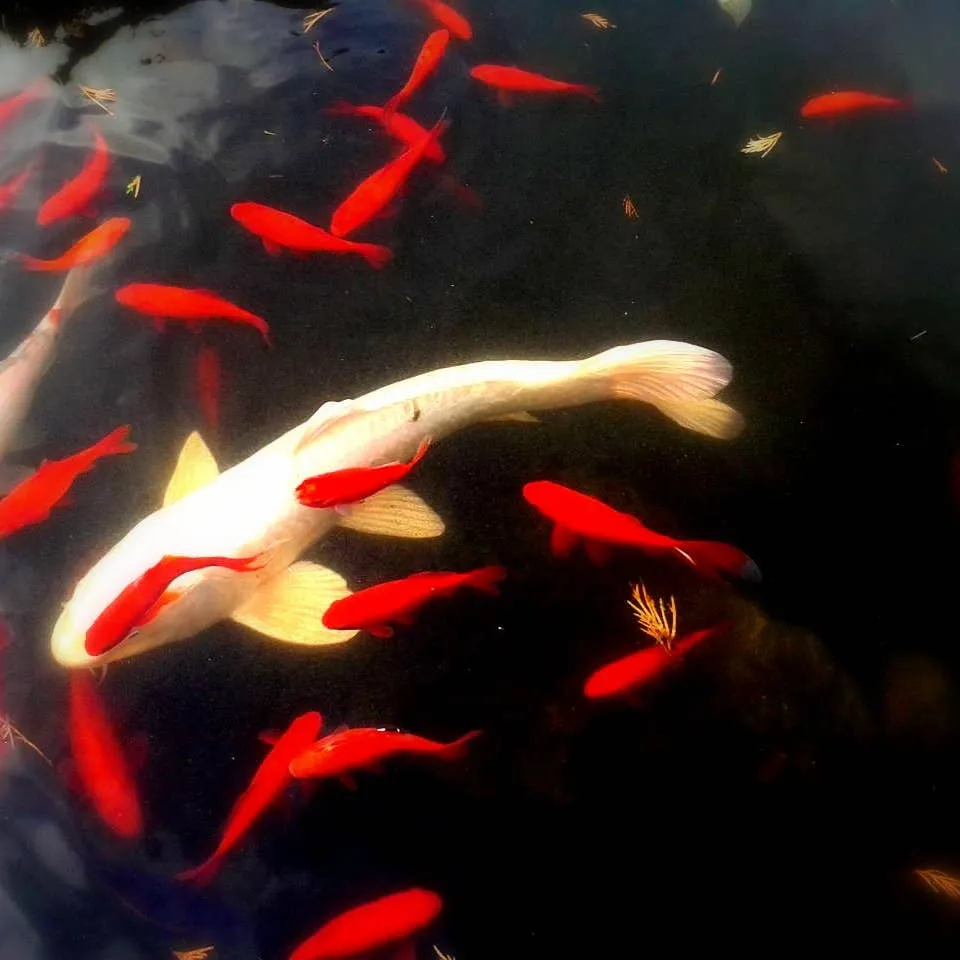
Enjoy these tranquil, beautiful images as your own personal koi pond.
An assortment of fish in the pond.
Questions & Answers
Question: How do I know if I have expensive Koi?
Answer: Check the color pattern against the most expensive varieties and find a local aquatic shop that can give you some idea of local prices.
Question: Do you recommend buying Koi online and how are they shipped?
Answer: I’m inclined to suggest that you should buy in person from a reputable source.
Question: What kind of pond is best for long living Koi?
Answer: Although Koi can live in muddy ponds for best results keep the pond well aerated and free from contaminants.