Why Gooseberry Shrubs Pose a Hidden Risk to Geese and Other Animals
Alex Ward
Warning Signs of Gooseberry Poisoning in Geese
- Lethargy or lack of energy
- Unsteady, staggering walk
- Reduced appetite
- Excessive thirst or refusing to drink at all
- Foul-smelling, watery diarrhea that may include partly digested leaves
- Grinding of the beak
- Wings hanging down
- Fast heart rate
- Legs (or comb) turning darker
- Red, bloodshot eyes
- Dehydration (pinched skin stays tented)
- Head hanging low toward the ground
When to Seek Veterinary Help
This article is intended as general information. Always consult a professional for any medical signs or concerns. Not every symptom listed above will necessarily appear, and this list is not a complete catalog of all possible indicators of hydrogen cyanide poisoning.
Gooseberry Plants and Their Link to Cyanide
Most people, upon hearing the word cyanide, might picture a classic crime story in which a villainous scientist mixes a white powder to poison someone. What is often forgotten is that cyanide also exists in nature as hydrogen cyanide (hydrocyanic acid), or HCN. In concentrated amounts it is lethal, killing quickly. But when consumed or given in small doses over an extended period, its effects can be mistaken for other illnesses. You may have heard that apple seeds contain cyanide—though a person would need to eat a great many seeds to be poisoned. In nature, cyanide serves as a defense that protects plants from being eaten by herbivores.
Many plants contain hydrogen cyanide as a defense against herbivory; however, finding documented cases of poisoning from a specific plant can require digging through research archives, especially when those cases are poorly recorded or rare. It is in such situations—and with common plants like the gooseberry, which belongs to the currant family—that mistakes can happen, even among the most careful gardeners or pet and livestock owners.
We might believe we have done our due diligence by consulting books on toxic plants, asking experts who have experience with the plants or animals we want to bring together, or getting an answer from the horticulturist or retailer who supplies our plants. We might be internet-savvy and make a checklist of all the plants we have acquired for landscaping, ensuring they are safe for our pets or other family members. We might even read about how these plants are farmed and how livestock or pets are grazed among the crops or kept in the same environments where the plants grow. Confirmations from a combination of sources might put our minds at ease, leading us to dig holes, plant shrubs, and landscape our aviaries, duck pens, farms, and playgrounds.
Matters are further complicated because gooseberry bushes produce edible fruit. We can think of many plants that are partly edible: potatoes and tomatoes have edible fruits but poisonous leaves; rhubarb has poisonous leaves and edible stalks, and so on. We have heard about the dangers of these garden favorites, but there are other poisonous plants we may not know about, even if we grew up on a farm or have been around them all our lives. Perhaps these plants have grown in our gardens or chicken yards. Given the right circumstances, though, some plants can be deadly.
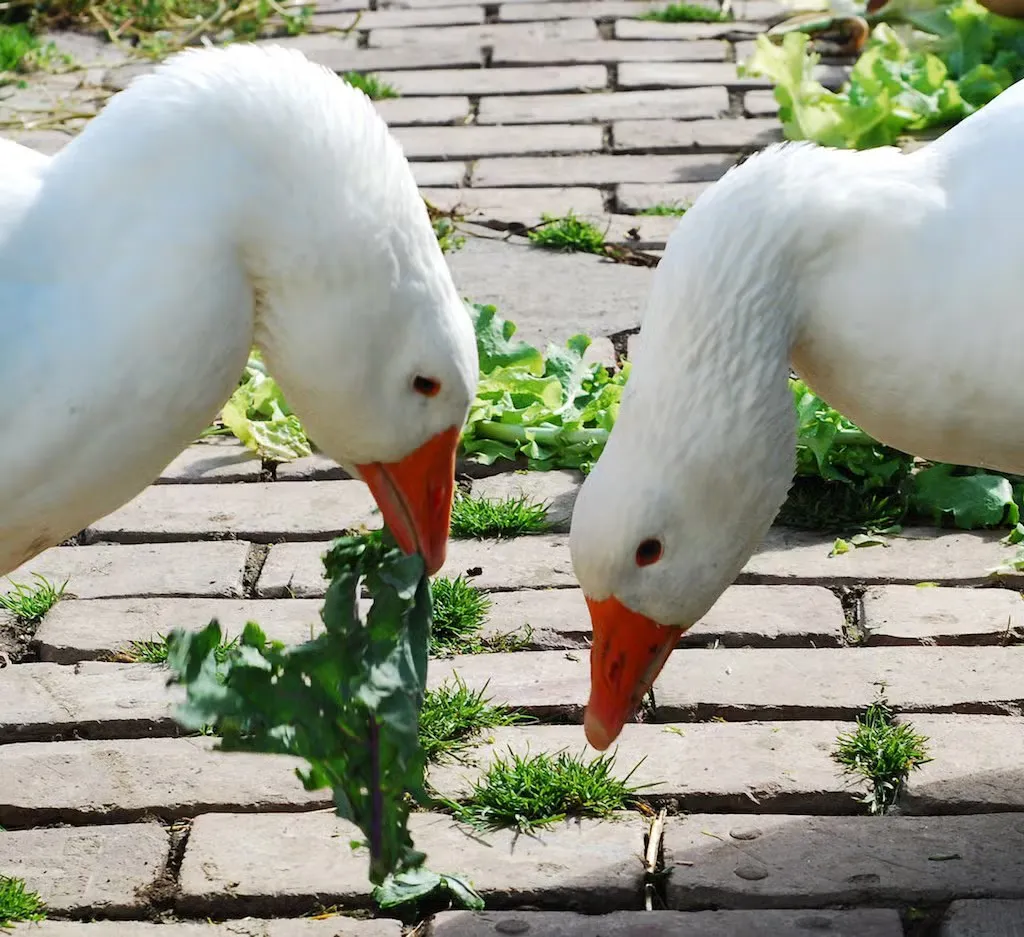
Lucy and Wee-Woo enjoy organic greens from a local CSA.
The Toxic Nature of the Gooseberry Bush
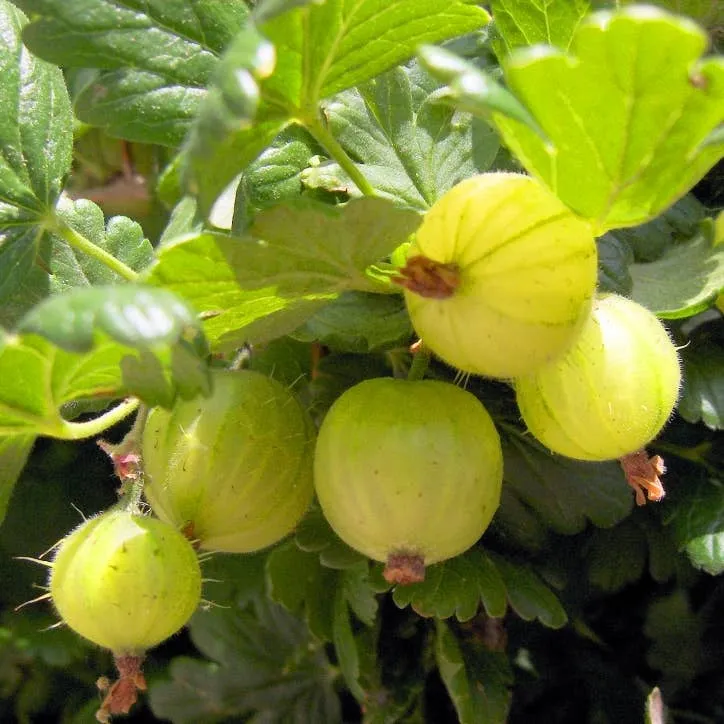
When researching gooseberries, you may find abundant information about them being an excellent source of vitamin C, or about the pies and jams you can make from the berries; you may read that the plant has been known through the ages for its medicinal properties. Some websites mention little more than that it is “edible.” After visiting site after site, it is easy to conclude that the plant is a good addition to any garden, livestock area, or pet area. In fact, as of the date this article was written, the popular go-to website Wikipedia mentions nothing about gooseberry bush toxicity.
Further confusion may arise from the gooseberry’s name. How fitting that the plant is named after the goose, you might think. In-depth research reveals that the gooseberry’s name has nothing to do with geese, but is actually connected, according to Wikipedia, to the Middle High German word kruscurl, crisped) and the Latin word grossularia.
If you use the chemical hydrogen cyanide as a search term together with gooseberry, then you will find information at Plants for a Future about the toxicity of Ribes uva-crispa, or the gooseberry bush. Although there is a bright yellow caution symbol containing an exclamation point in the “Known Hazards” box, a number of benefits are listed before, at last, in one small sentence it states that “In excess, however, it can cause respiratory failure and even death.” On the same page, it is listed below that both the plant’s leaves and berries are edible, with the young, tender leaves mentioned as salad worthy. Furthermore, the plant is given a five out of five edibility rating.
Another site, The Tortoise Table, geared toward pet tortoises, takes a more conservative approach, stating that “The fresh young leaves of most Ribes species are said to contain small amounts of hydrogen cyanide and have the potential to cause serious problems if eaten in quantity” and recommends erring on the safe side and not feeding them to reptiles. But for this information to come up, one would need to be searching for “foods toxic or potentially toxic to tortoises.”
But what about other pets, or even humans?
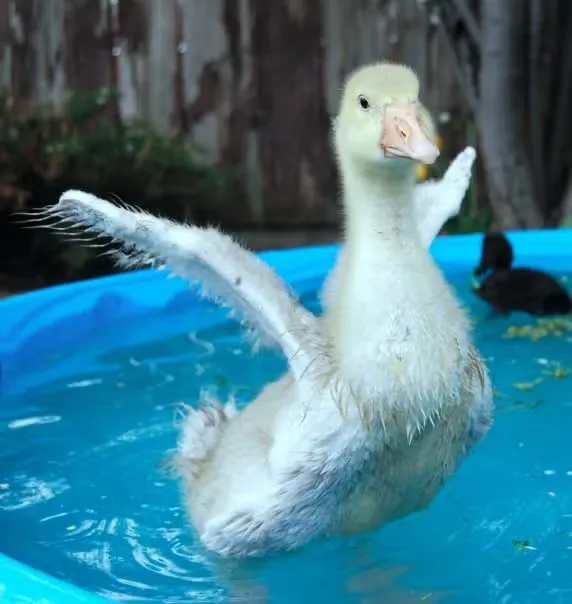
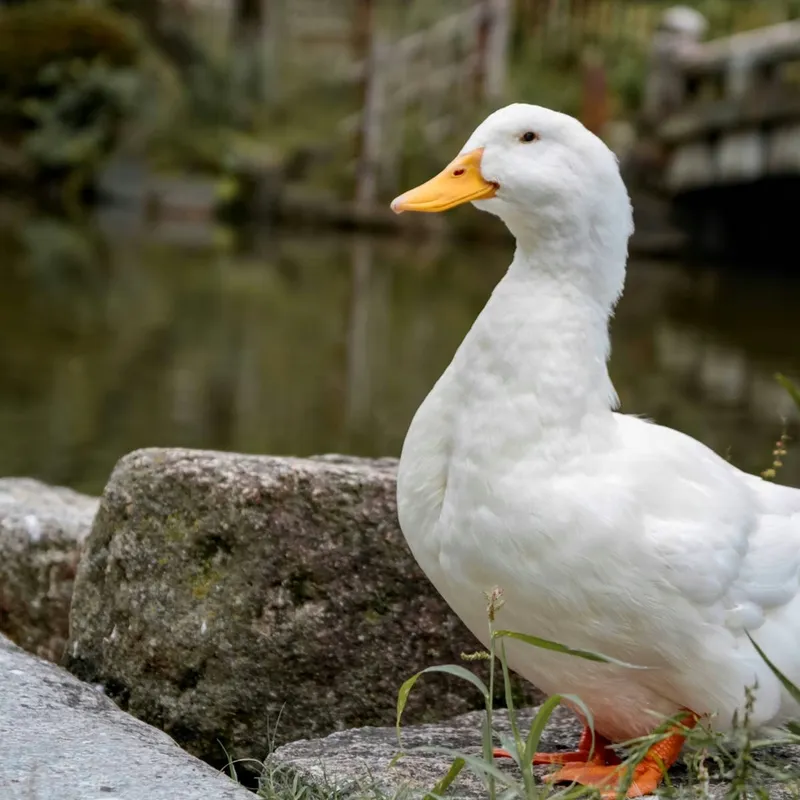
Lucy is an Embden/Toulouse gosling.
A Personal Account
A few days ago my beloved four-year-old imprinted goose, Lucy, died from hydrogen cyanide poisoning after consuming a serving of “young, tender leaves” from a gooseberry bush that had been planted in her yard last spring. At the time the bush was added, I felt confident I had researched the plant thoroughly and found it to be safe. How did I miss the fact that the leaves of this plant contain cyanide? I must not have seen, in all the reading I had done online, anything about the plant being toxic to pets or humans. Still, I’ve been hard on myself, downright ashamed, actually. I feel as if I’ve poisoned my child. Friends reassure me that I couldn’t have known, that I have always had the best intentions and given my birds the best care possible.
And yet, I gave my pets access to cyanide. In realizing how easy it would be for someone else to fall victim to this terrible circumstance, I’ve written this article. If I had had access to the information in this article before, would I have planted a gooseberry bush in the aviary? No way! Like most loving pet keepers, I’ve spent countless hours and thousands of dollars caring for my animals. So when a mistake is made–and we all know this, though it is difficult during times of grief to correct negative self-talk—we tend to ask a million why questions, even when we know nothing that we can possibly do will bring our loved ones back.
While I do not think Lucy’s death was anything but horrifying and unnecessary, it has brought the toxicity of gooseberry plants to the forefront so that I, as a writer and animal lover, may spread invaluable news that I hope will prolong many lives and prevent thousands of grief-stricken hours from darkening the days of other animal lovers all over the world.
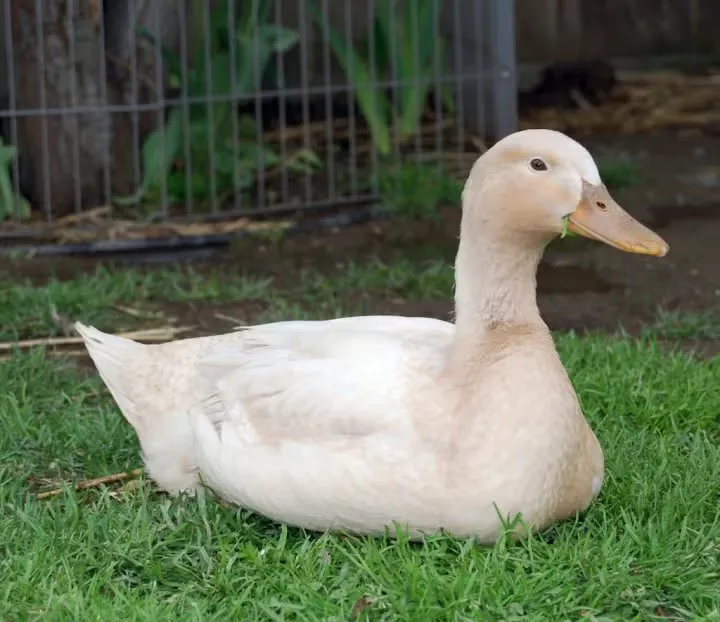
Dali, a Buff Orpington duck, enjoys a lush, spring afternoon.
Choose Plants That Are Safe for Pets
Missing a crucial detail—no matter how hard to find—and losing a pet because of what feels like your own carelessness is a humbling and shameful experience. No matter how harshly we judge ourselves, we make mistakes. There are many variables, and many are beyond our control. Fences fail. Other people move things around. So-called experts give us incorrect information. We forget, misplace, and mix up. We are often busy juggling several tasks at once. Still, when an accident happens, many of us feel directly responsible, yet all we can do is inform others and learn from our sorrowful mistakes so that we may carry on with extra care.
Lucy was loved. She died young and unnecessarily. Despite this terrible experience, it is my hope that this article is found by other proactive animal lovers, if not to prevent gooseberry poisoning, to remind us all how careful we must be and that it is better to be on the safe side and skip those gooseberry jams and pies, or whatever the case may be, and stick with well-known, pet-safe plants.
This article is accurate and true to the best of the author’s knowledge. It is not meant to substitute for diagnosis, prognosis, treatment, prescription, or formal and individualized advice from a veterinary medical professional. Animals exhibiting signs and symptoms of distress should be seen by a veterinarian immediately.