Budget-Friendly Approaches to Building an Aquarium System
Harper Kelly
Ways to Cut Costs When Building an Aquarium
Anyone who keeps fish knows that putting together an aquarium is not cheap. When you add up the tank, the ornaments, the substrate, the stand, the filter, the heater, and the lights, the total frequently exceeds the price of the livestock by more than tenfold—and in many instances, closer to twentyfold. Fortunately, there are strategies for bringing down the expense of getting an aquarium up and running.
Discover some ideas for cheap aquarium setups.
Eric Gillingham, CC BY 2.0, via Flickr (adapted from original)
1. Rubbermaid Stock Tanks
Advantage: Low Cost
For those keeping aquatic turtles, many reptile hobbyists bypass pricey glass tanks and opt for a Rubbermaid stock tank. A juvenile turtle can do well in a 10- to 20-gallon aquarium, but as it grows, a larger enclosure becomes necessary. Instead of spending a large sum on a 75- to 100-gallon tank—and an equally costly stand—turtle keepers can use plastic tubs that serve the purpose adequately.
Drawback: Limited Viewing
The main trade-off with a Rubbermaid stock tank versus a glass aquarium is how much you can see inside. The plastic option is less attractive and must sit on a smooth, water-resistant surface. While such tubs work well for turtles or other exotic animals needing substantial water volume, small fish are better suited to glass tanks in my view. If fish develop health issues that show externally—like cotton-mouth or torn fins—you can only spot them from above, making diagnosis difficult. Even a clear plastic tub does not offer the clarity of glass.
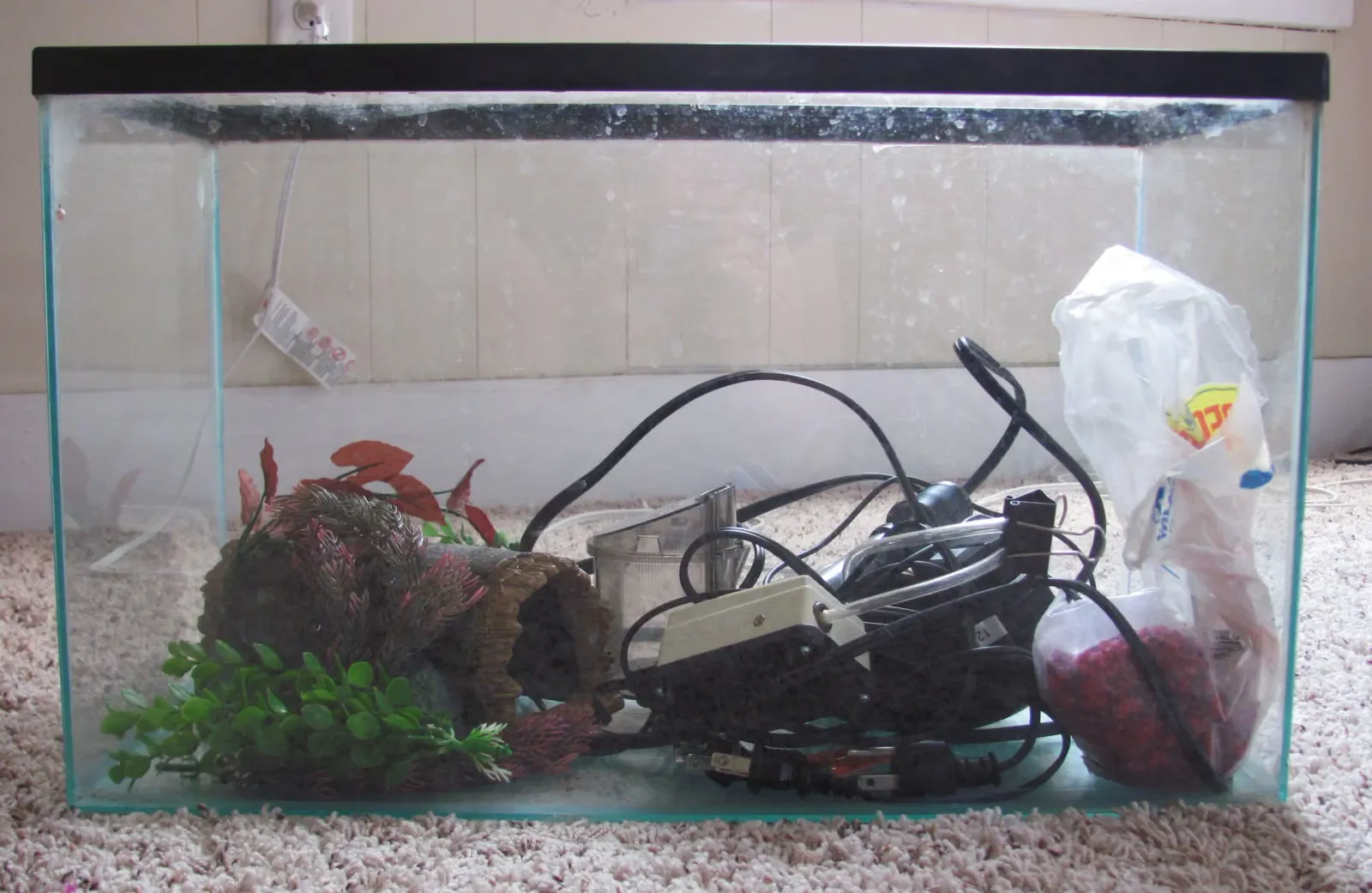
Consider what elements you want in your tank.
2. Craigslist (Large Tanks and Extras)
Advantage: Inexpensive and Often Includes Extras
Craigslist is an excellent resource for finding low-cost aquariums, particularly large ones in the 50- to 100-gallon range. The best aspect is that sellers frequently throw in additional equipment that goes with the tank, such as the stand, gravel, filters, heaters, decorations, fish medication, and food. In some cases, they even include the fish if you want them. So for large aquariums, Craigslist is a solid option.
Drawback: Need to Check for Damage
Before handing over money, carefully examine the tank for any cracks or other damage.
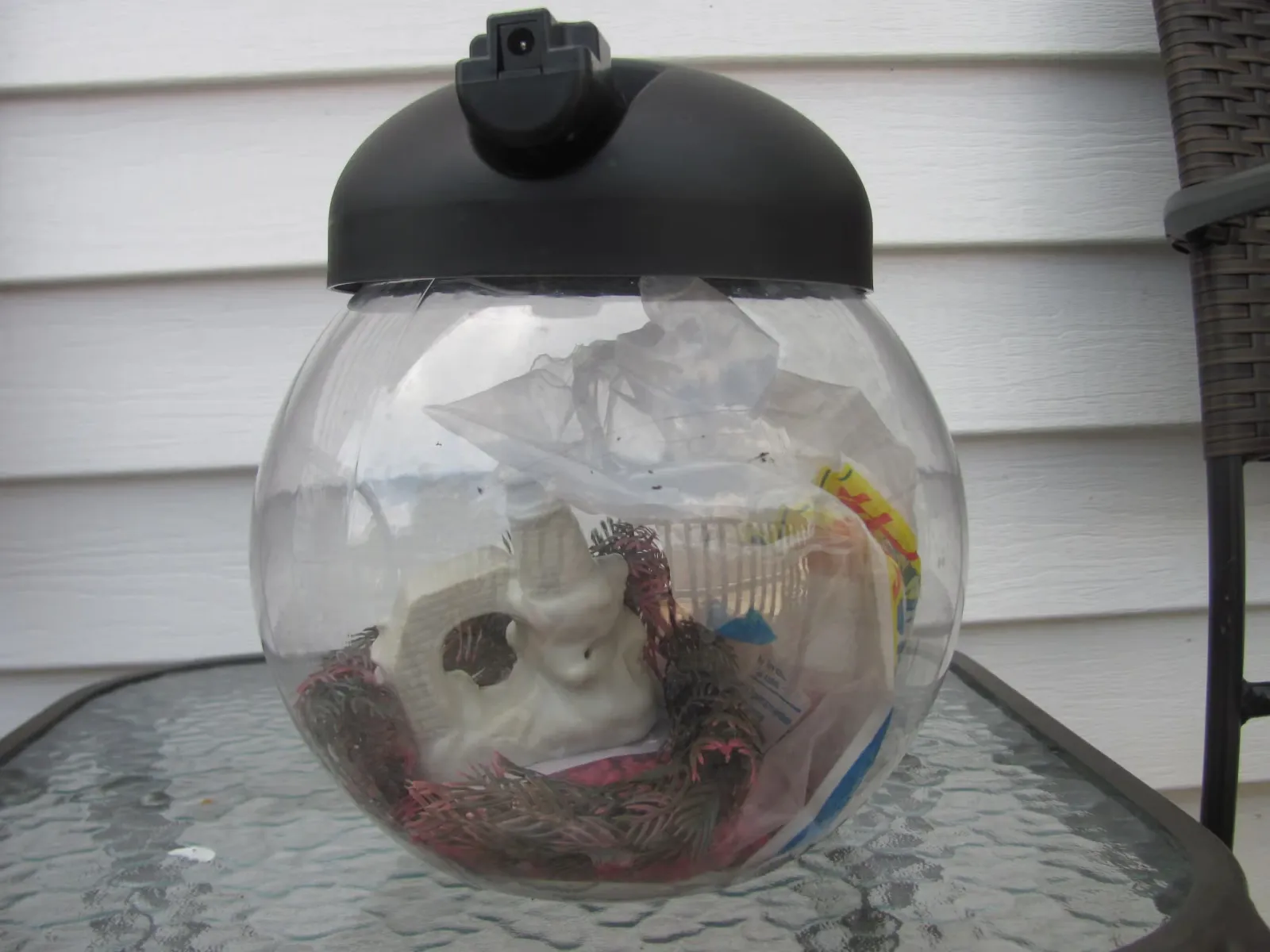
You can strike an excellent deal at garage sales.
3. Garage Sales (Small Tanks and Decorations)
Advantage: Wide Selection
I am a garage sale enthusiast. Out of every ten sales I visit, at least one has aquarium-related items. The tanks are typically fish bowls up to 10-gallon sizes, though now and then a larger tank and stand appear. Bowls and tanks often come with a bag of gravel, some decorations, and/or LED lights. With luck, you might also find filters and heaters.
Drawback: Items Need Testing
There is a chance of purchasing defective products, so test filters, heaters, and other electrical equipment before putting them in the tank.
4. Modifying or Reusing Old Decorations
This may be obvious, but if you have decorations stored in your attic or basement, dig them out (pun intended) and use them again for a new aquarium. The only reason to avoid this is if you believe the decoration could harm your animals. For instance, Betta fish can injure their fins and scales on plastic plants, so silk or live plants are preferable.
Do-It-Yourself Adjustments
Perhaps the decoration you have is too big for the setup, or it has sharp edges that could hurt your fish. Rather than buying new décor—if you own the necessary tools—you can modify what you already have to fit your needs.
For example, I once bought a decoration at a garage sale for my Betta, but the edges around its openings were sharp, so I used a Dremel tool to smooth them. I also had a turtle that outgrew the entrance to its cave, so I used an electric saw to enlarge the opening. Some trial and error is required to figure out what works.
I also had a large log decoration with many silk plants attached. I only wanted the silk plants for my Betta's 5-gallon tank, so I simply pulled them off and placed them in the gravel.
Using Items in New Ways
You can also repurpose aquarium items for purposes they were not originally intended for. Box filters (corner filters) not only clean the water but often provide a hiding spot behind or beneath them, giving small animals a greater sense of security. I also use a reptile hammock in my 5-gallon Betta tank to create shade and shallow water where he likes to rest. Floating shelves designed for turtles can also offer shade over certain areas and help reduce strong surface currents if your animal dislikes them.
Featured Gallery
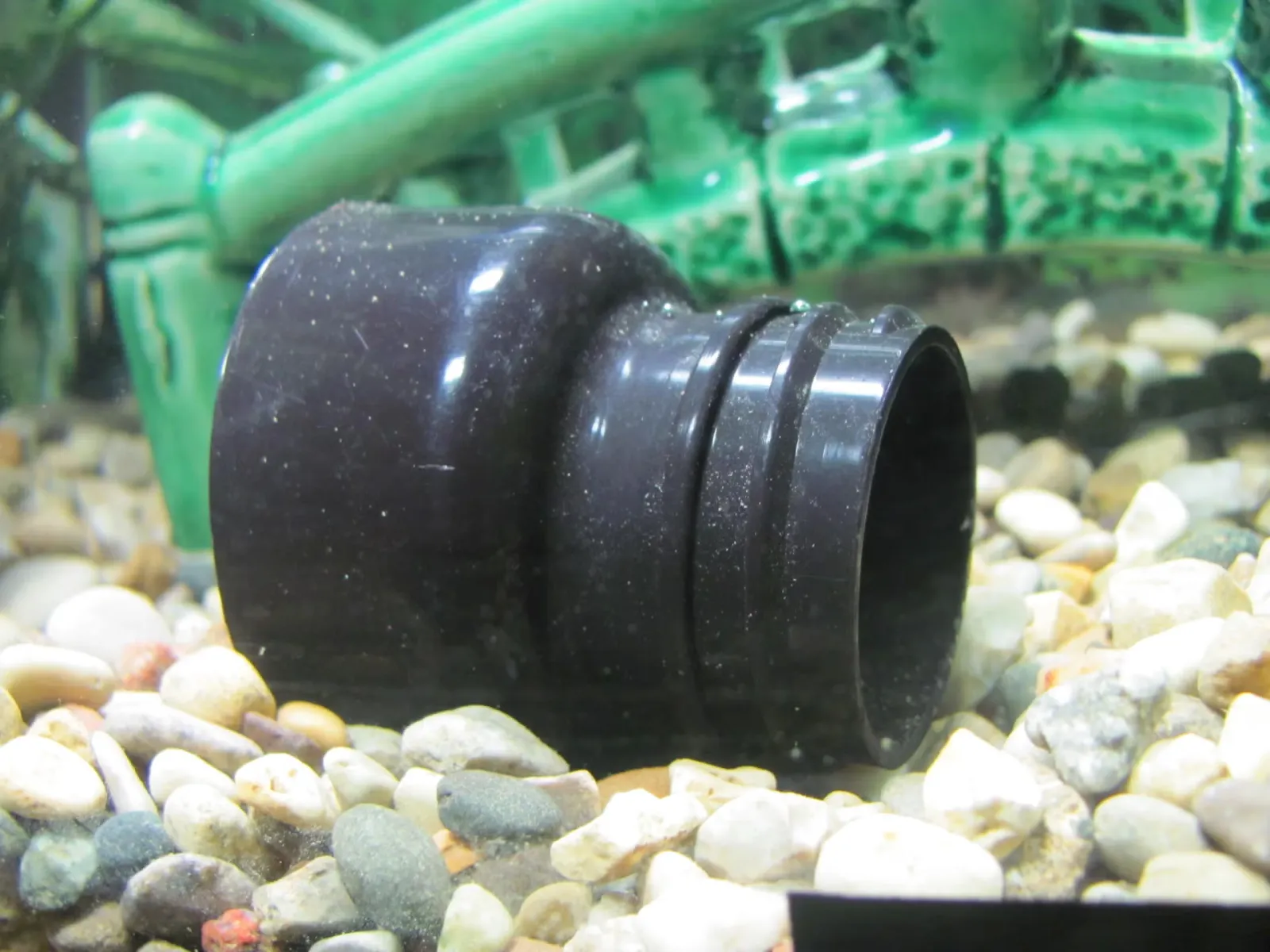
Half of plastic vitamin bottle used as a cave.
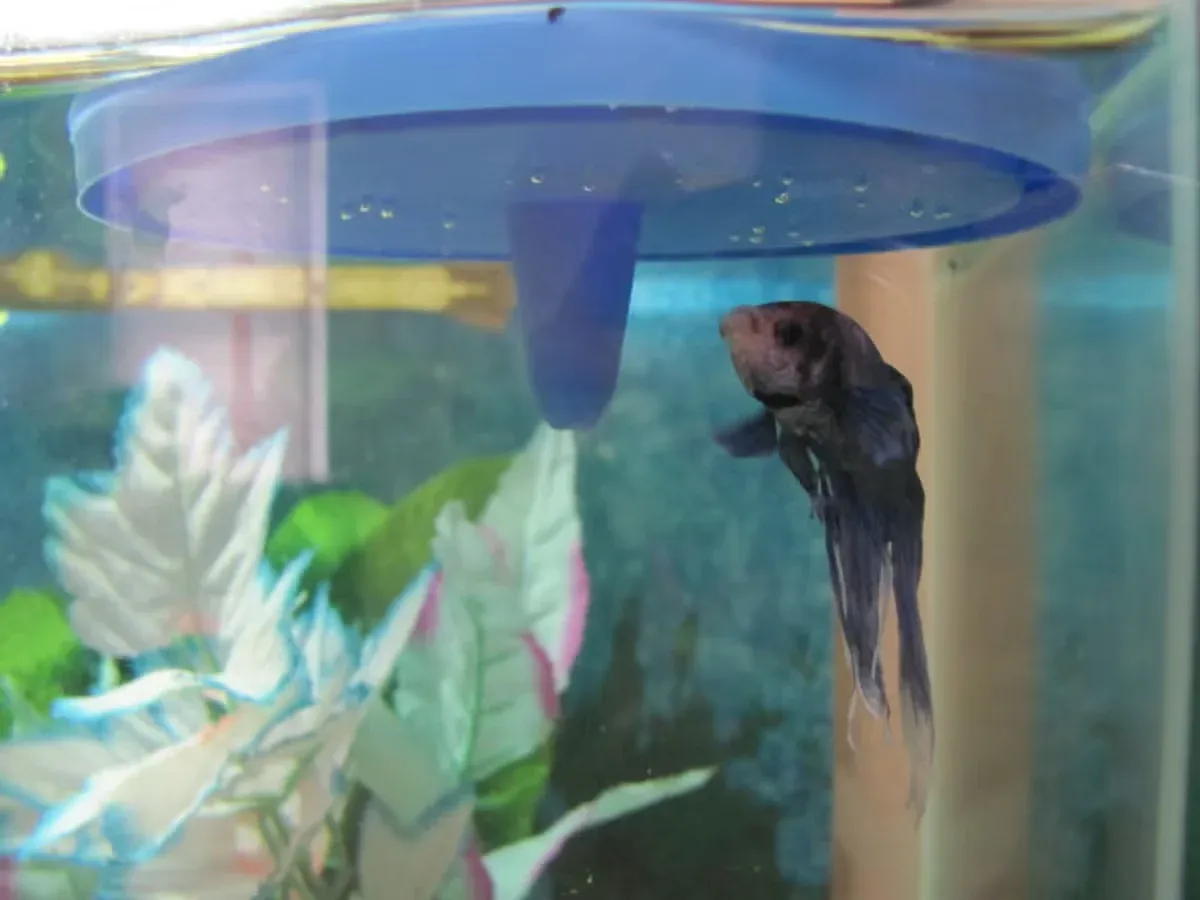
Betta lid used as an artificial lily pad; adds security and is a great place for Bettas to build bubble nests.
5. Repurposing Plastic or Ceramic Items (Human-Safe)
Certain items not made for aquariums can serve as interesting and useful decorations. However, exercise caution when adding anything to your tank. Some people put rocks from their yard—or a raw seashell—into an aquarium assuming they are safe because they are natural. Seashells can raise water hardness to hazardous levels, and some rocks, however thoroughly washed, may contain high concentrations of man-made chemicals or dangerous minerals. Take the time to determine where such items originate.
Watch for Chemical Leaching
Some plastic and ceramic objects can also harm your animals. For instance, people sometimes mistakenly place ceramic flower pots in the water, unaware that certain ceramics contain dangerous chemicals that do not affect soil or plants but will affect the water and its inhabitants. One reliable way to determine if a ceramic or plastic item is aquarium-safe is this simple guideline: If it is safe for humans (or pets) to eat off of, then it is safe for aquatic animals.
A Safety Rule
If it is safe for humans (or pets) to eat off of, then it is likely safe for aquatic animals.
Examples of Safe Products
Safe items include plastic or ceramic coffee mugs, glasses, plates, and medicine bottles. Manufacturers would not use dangerous chemicals in these products. So if you wish to add unconventional houseware to your tank, just verify that it is safe for humans and pets. I would avoid anything made of metal, even if it is human-safe. Also, I have never heard of non-restaurant-grade glass causing problems for fish; just ensure there are no sharp edges on the glass.
Make sure there are no stickers on any of these items and that all glue has been scraped off completely. This applies to any item you place in your tank, whether from a garage sale or a pet store: Always clean the items thoroughly before putting them in the tank.
Clean Items Thoroughly
Always clean the items thoroughly before placing them in the tank.
6. Inexpensive Gravel and Sand for Large Aquariums
An aquarium does not require gravel or sand, but it can enhance the appearance, provide a more natural environment for animals, and offer a place for beneficial bacteria, so most aquarists use substrate. Aquarium gravel is not particularly expensive to begin with, but buying in bulk offers a cheaper alternative:
- Pea gravel is commonly used in landscaping but is safe for aquariums. Stores like Menards and Lowe's carry pea gravel; when you compare weight to cost, you get more for your money than at pet stores. So if you want a natural-looking setup, pea gravel is a good choice; it has earth tones mixing off-white, brown, and grey pebbles.
- Aquarium sand costs a bit more than gravel. Pool filter sand is pale and looks natural in aquariums. Like pea gravel, these sands are sold in bulk and are much cheaper than those marketed for aquariums.
A Note About Calcium
The only drawback to both alternatives is that they are dirty and require extensive rinsing before being placed in the tank. Also, pea gravel may contain calcium. The amount could be very low, high, or nonexistent. So if a pH increase is a concern, check the brand's information before purchasing.
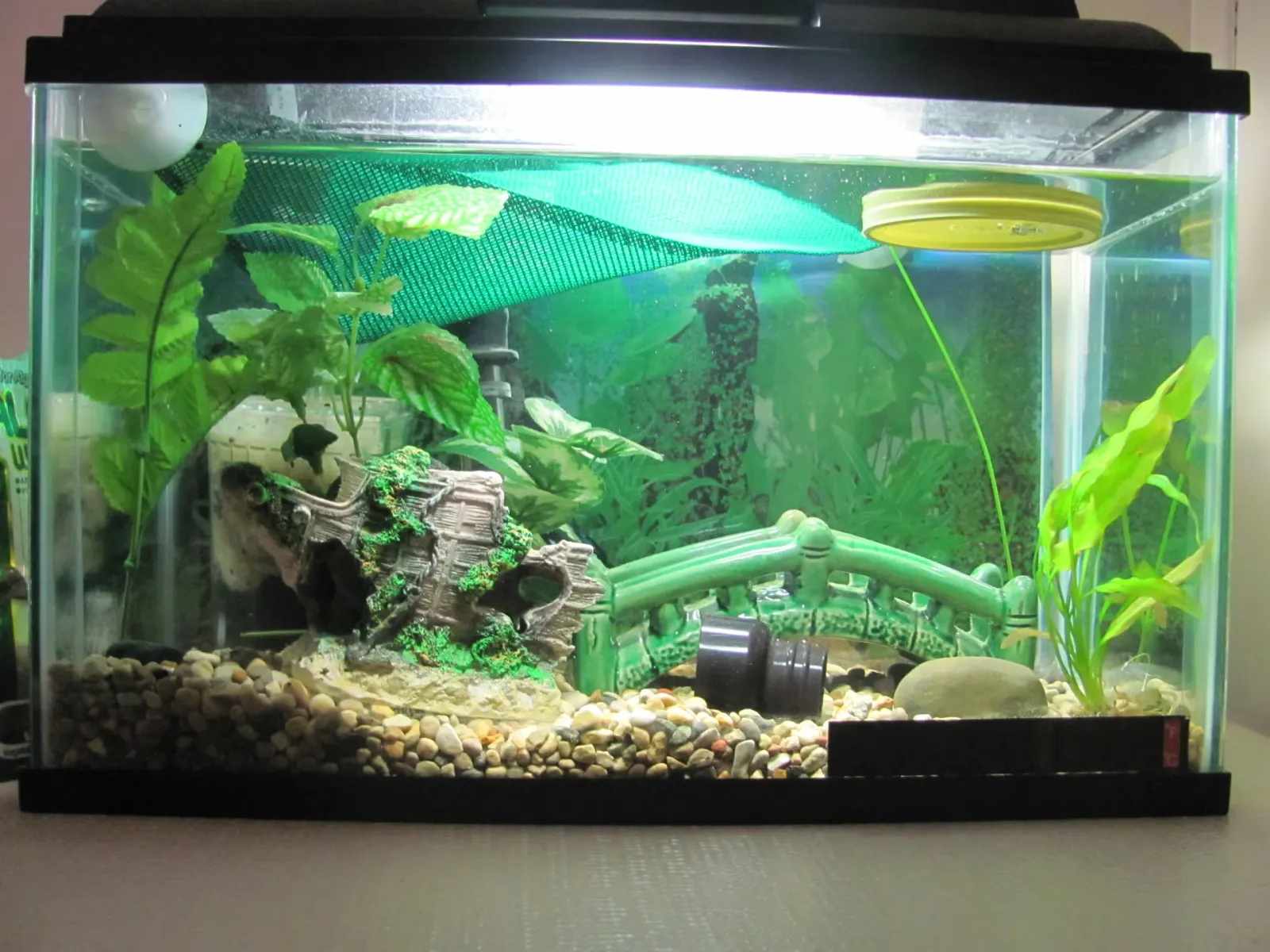
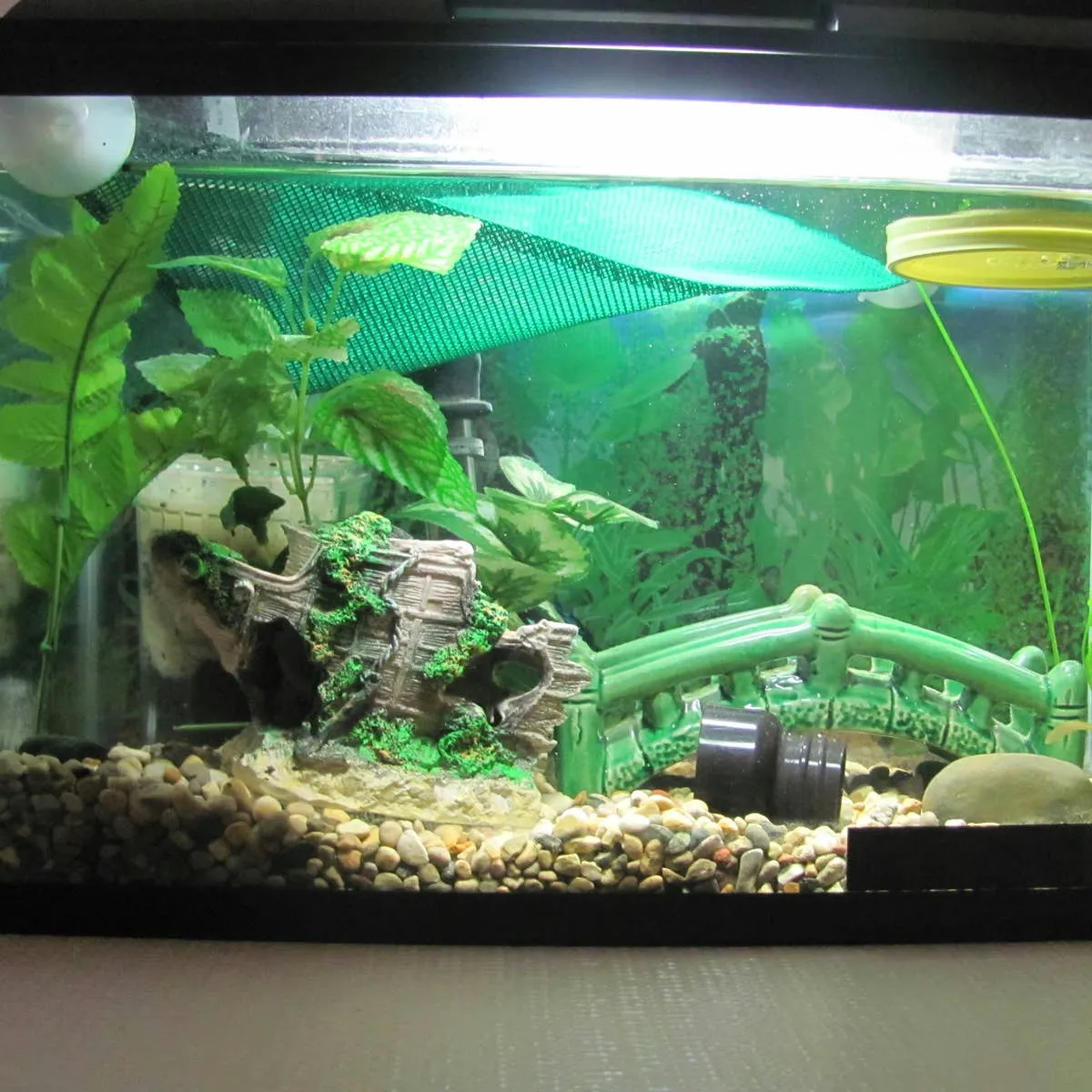
Printed out background, reptile hammock, pea gravel, shipwreck décor bought at garage sale, silk plants that had been part of bigger décor, and marimo moss ball lid.
7. DIY Aquarium Backgrounds
I find it odd that pet stores still sell aquarium backgrounds (at least for small tanks) when all you need is Google Images and a printer to make your own. I use several sheets of stock paper (or regular paper taped to poster paper) and place them behind the aquarium, either taped or propped up by an object behind it. It looks fine to me.
Featured Gallery
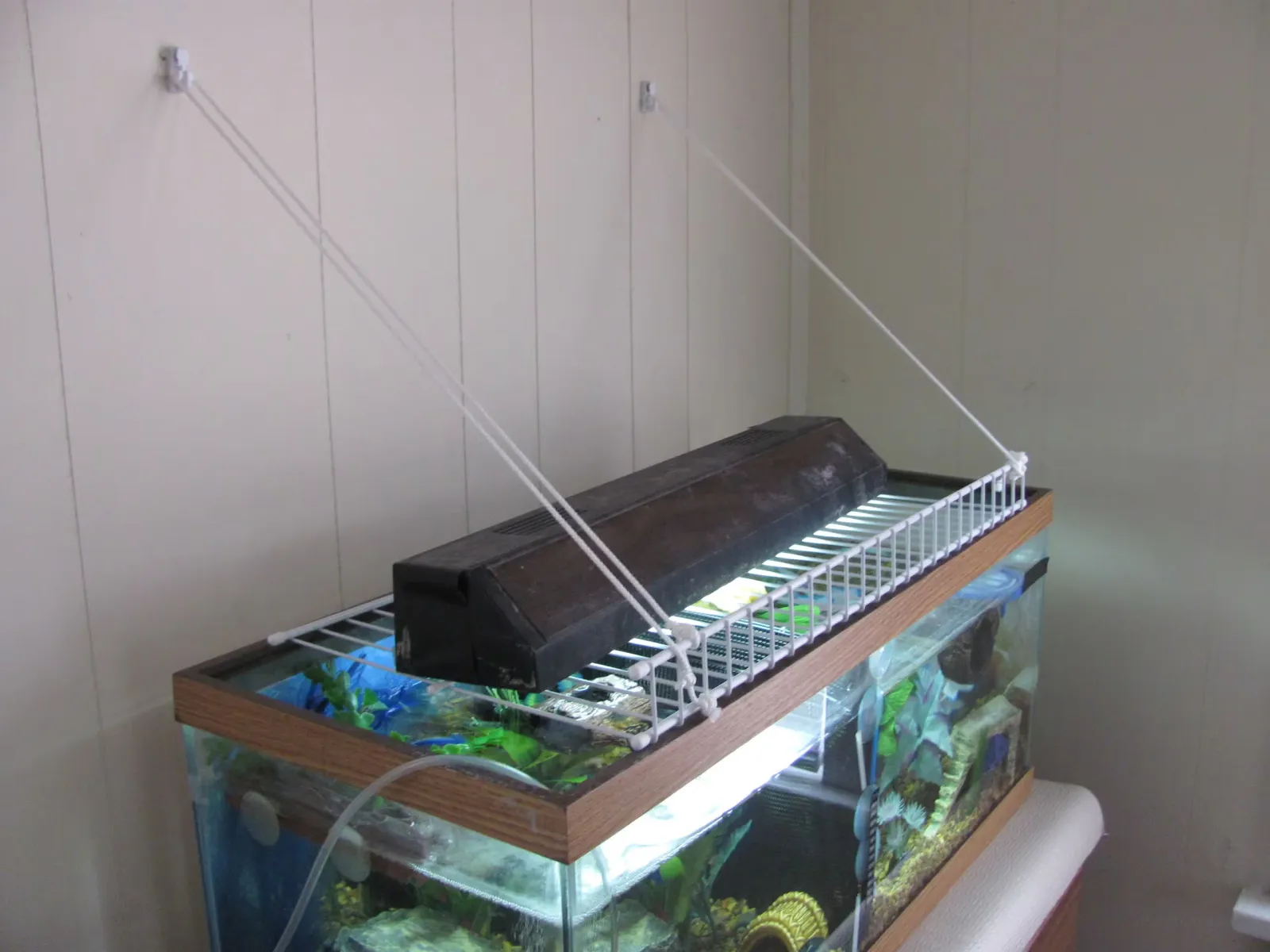
A cheap Menards wire shelf with an added nylon string to keep it in place.
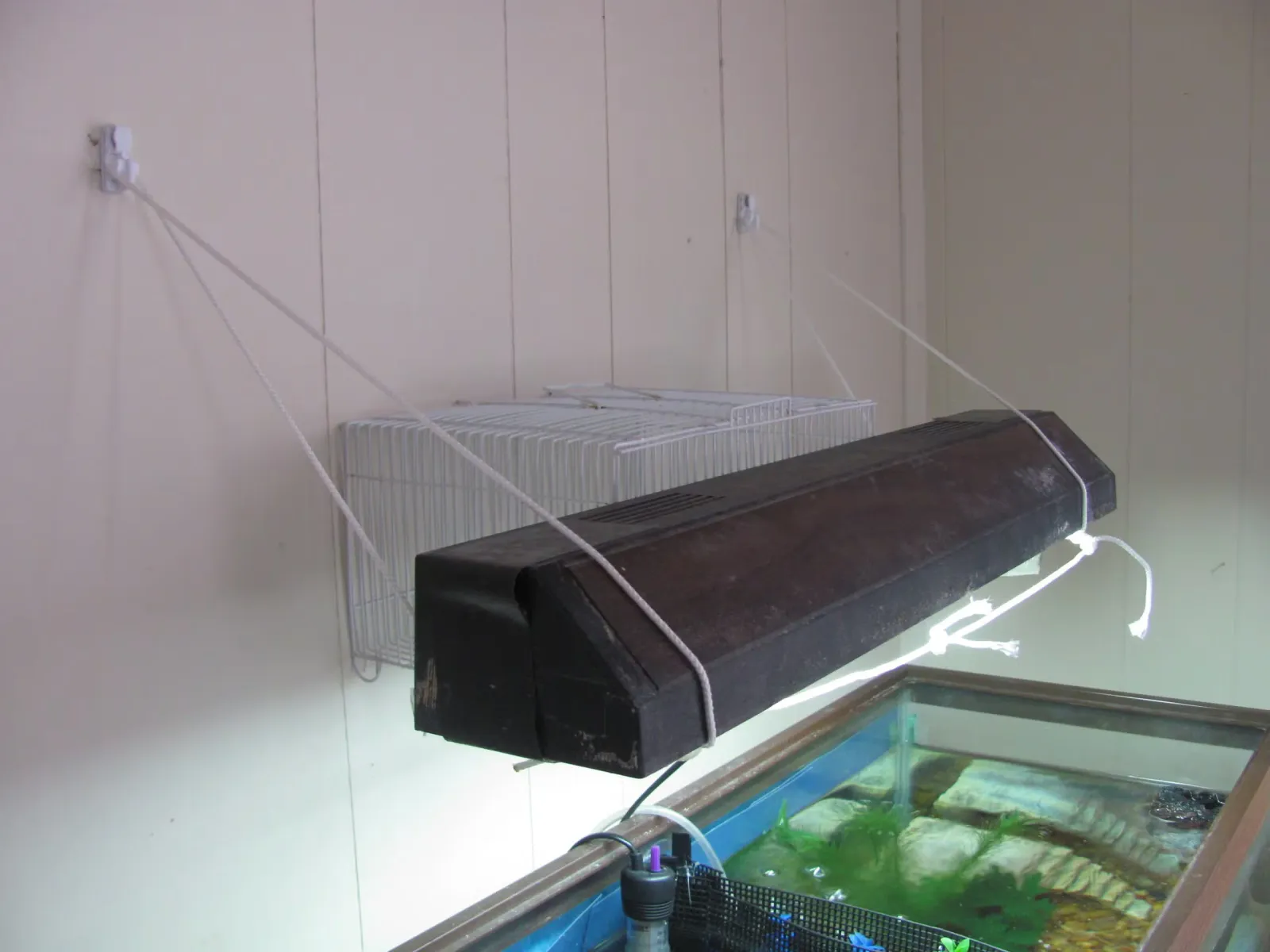
Another creative alternative by using nylon string, screws with plastic holders, and a light item to prop behind it. Make sure everything is tied and screwed tight, or it will be a disaster.
8. DIY Light Holders
You may already have the light bulb and fixture, but do you need a hood? A hood mainly serves two purposes: to hold the light above the aquarium and to prevent animals from jumping out. Let's assume you only need a way to keep the light over the tank. The cost of a hood depends on the brand. A 20-gallon-tall hood can be $24, while a 10-gallon hood from another brand is $40. Here is how to avoid buying a hood:
Use a Screen
There are many creative ways to position lights above an aquarium. If you have any type of screen designed for aquariums, simply place the light fixture on top of it (it will also prevent animals from jumping out, if that is a concern).
Use Long Flat-Surfaced Items
Long, flat objects can be laid across the aquarium to support the fixture; for years I used two long wooden blocks to hold mine (but you must replace them after a while).
Use Metal Wire
For a large (and particularly long) aquarium, you do not necessarily need to buy a very long hood. Menards and Lowe's sell inexpensive, painted metal wire shelves that can be placed over an aquarium. Either use it as an actual shelf above the tank (as I had to do) or set it on top of the aquarium. If it barely stays in place on top, you need to secure it (I used nylon string and the screws that came with the shelf).
The shelf I purchased cost only $8, compared to paying $30 or more. The only downside: If it comes into contact with water (via an airstone), it will develop small rust spots over time. It would be better to place it higher or find ways to protect the area from moisture (such as coating it with liquid rubber available at any hardware store).
Leave the Water Level Lower
If you are worried about animals escaping the aquarium, just keep the water level lower or make your own screen using plastic mesh from a hardware store. Without a solid cover, water will evaporate, so simply add dechlorinated water periodically. In fact, the constantly dropping water level reminds me how long it has been since a water change, so I find it helpful.
Use a Desk Lamp With an Aquarium Bulb
For a small aquarium or a bowl, a cheap table lamp (with an aquarium bulb) will work as a light holder. Since lowering the water in small tanks reduces space for your animals, buy inexpensive plastic mesh screens from Michael's (60 cents each) and place one over the opening.
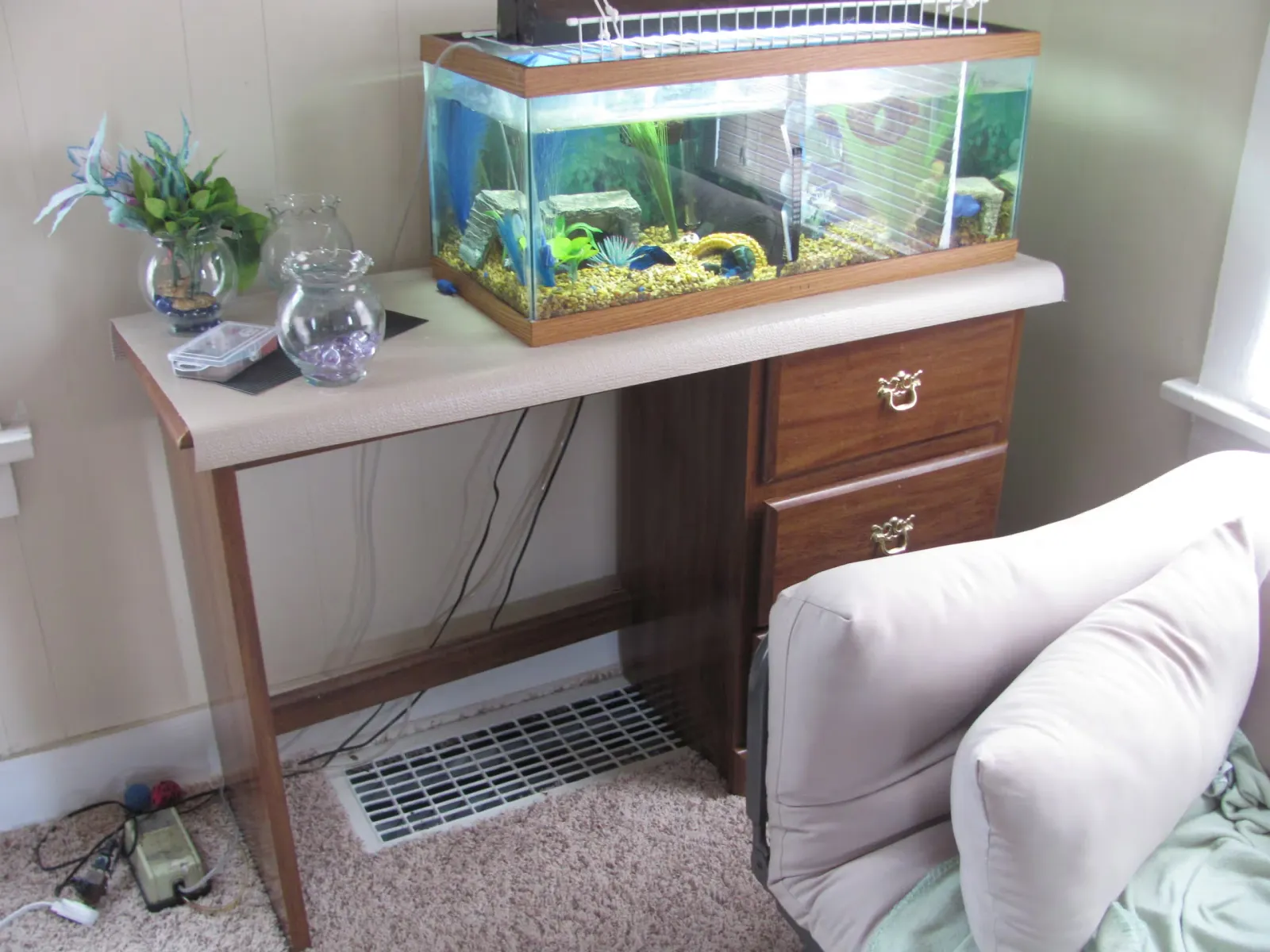
A 20-gallon tank. Notice how the tank is on the side with the drawers where there is more support than on the left.
9. Aquarium Stands (Small to Medium)
Finally, aquarium stands can be costly at pet stores. Small stands are only necessary if you lack furniture at home with enough space for a tank. Anything up to a 10-gallon can sit on a small dresser or end table and hold up fine. Anything larger needs to be placed on something sturdier, like a decent-sized desk or a long dresser.
It is important to remember that not all desks are equal; even two desks made of the same material and weight may not support the same tank due to their designs. For 20 gallons, I recommend wooden furniture with drawers, so that multiple wooden walls provide support. The more support, the better. Anything above 20 gallons is risky; most furniture will not support 340 pounds (equivalent to a 30-gallon tank). Large metal desks are safer bets, but there is a big difference between steel and aluminum legs. In fact, for 20 gallons and up, I would not set an aquarium on anything with legs but no walls (as walls give more support).
For a 50-gallon tank or larger, you will likely need to buy an aquarium stand. Again, Craigslist often has large stands for cheap, but their tanks are usually bundled with them. As for furniture in general, the best prices can be found at local thrift shops (Goodwill, Salvation Army), Craigslist, and garage sales.
Share Your Ideas
I hope you find these suggestions useful. Share your experiences below and be sure to leave creative ideas and tips for saving money on aquarium setups. The more ideas the better.
© 2013 Marie K Bloch