A Practical Guide to Encouraging Speech in Budgerigars
Toby Howard
Helping Your Budgie Develop Speech
Budgerigars, often called parakeets, differ from one another in character and ability just as people do, yet many are capable of acquiring a handful of short phrases. Teaching them to talk can be a challenge, but the following tips are based on my own experience and may be useful.
Approaches to Encourage Talking
- Acquire your budgie at a young age.
- Keep a single bird. When two are kept together, they tend to form a bond with each other rather than with you. If you are away frequently, a second bird can ease your pet's solitude, but it is unlikely to interact with you verbally.
- Establish a connection early by letting the bird step onto your hand and then your shoulder.
- Use the same phrases repeatedly.
- Avoid recordings unless your only goal is to hear sounds, not to foster understanding. A bird that knows what it is saying is far more engaging than one that merely mimics without comprehension.
- Link words to specific situations. My bird Marilyn responded to cues. She would pace along her perch and announce, “Wanna come out!” when she wanted to leave her cage. She would ask, “Are you hungry?” when her food dish was empty. She would recite phrases to her reflection (“Zippity doo daaaa, sexy bird!”) and became particularly noisy in the morning (she reacted to robins and whippoorwills).
- A final point: if you want a sociable bird to show others, never use foul language around it. EVER.
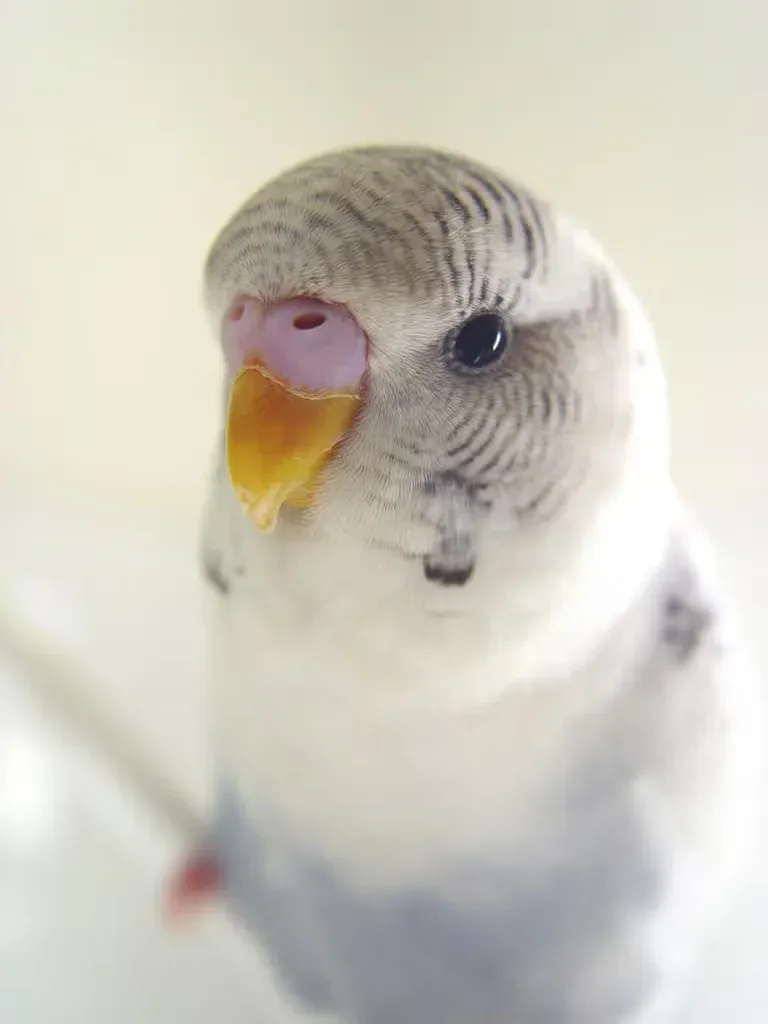
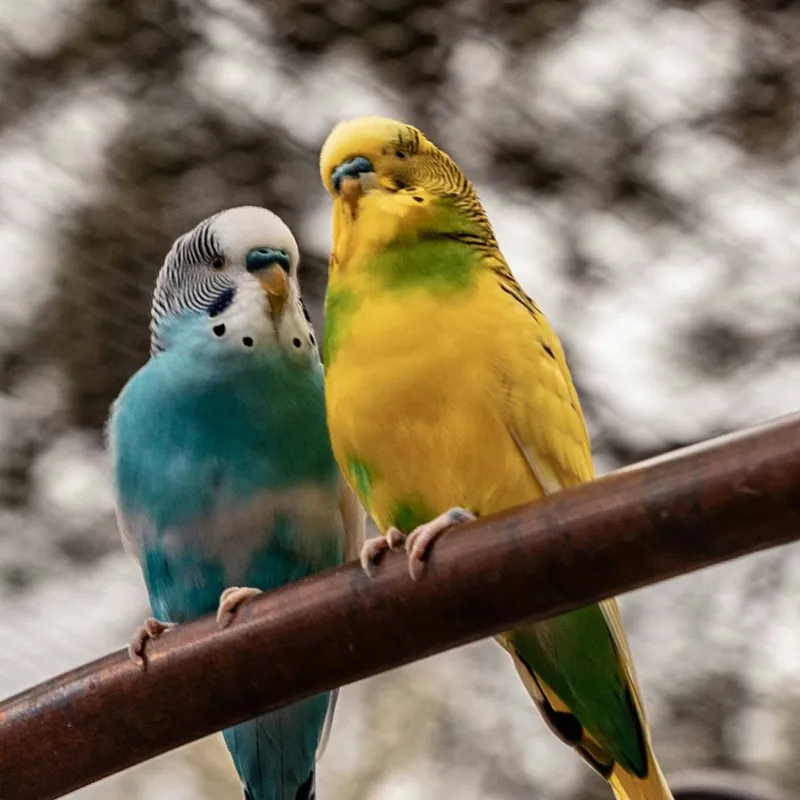
“Pretty bird! Pretty bird!” Use a lot of repetition to train your parakeet to speak.
Personal Experiences with Baby and Marilyn
From my perspective, budgies make the finest avian companions for a household. Training a pet to talk comes down to character, relationship, and repetition.
Baby's First Utterance: “Meow”
I got my first budgie as a Christmas present at age 17. He was just old enough to be independent, so he bonded quickly and picked up his first word fast: meow. I also had a cat that wanted to “bond” with my bird. That is why I suspended his cage from the ceiling—to prevent the cat from “bonding.”
The cat would therefore sit beneath the cage or just outside the window and meow for hours on end. She would stay there whether or not I filled her bowl. She would remain despite being shooed away many times each day. She would simply sit and “meow.” I had to shut her in the bathroom whenever I took Baby out of his cage. I would repeat phrases and hold him against my cheek. I would carry him on my shoulder and talk to him.
“Hello, Baby!” I would say again and again.
“Meow,” came the reply.
“Want a treat!” I would offer, holding a slice of apple before him.
“Meow.”
He learned to meow in one week. It took another five weeks for him to say, “Hello Baby!” Why? My cat was a better teacher than I was, I suppose.
Within a year, Baby fell victim to a pet sitter who had no idea what she was doing. I must accept some responsibility, as I should not have entrusted his care to someone without experience or comfort with birds.
Marilyn's Extensive Repertoire
It was seven more years before I felt ready to bring home another bird. We had believed “she” was a “he,” and had intentionally chosen a male because we had heard only males would talk. But this budgie turned out to be a young female, and—fortunately—what we had heard was incorrect.
I brought her home in a small box and placed her straight into the large cage my husband had assembled for her. By then we had three young children, and we all helped bond with her and teach her to speak. Naturally, the first phrase Marilyn (then called “Merlin”) produced came from my husband: “Sexy bird!” she would announce, followed by kissing sounds.
Years later, our budgie had a vast vocabulary, and not every word she learned came from our attempts to teach her. She would surprise us at least once a week with a new phrase.
“The timer went off!” she would call when the oven buzzed.
“Take a shower and brush your teeth!” she would remind the children when they came downstairs in the morning.
“Excuse me!” she would shout when someone burped.
She was fond of people who feared birds. We left her cage open most of the time, and when visitors arrived unexpectedly, she absolutely refused to go inside. She would perch on heads and declare her affection instead, and the more frightened they were, the more she adored them.
This article is accurate and true to the best of the author’s knowledge. It is not meant to substitute for diagnosis, prognosis, treatment, prescription, or formal and individualized advice from a veterinary medical professional. Animals exhibiting signs and symptoms of distress should be seen by a veterinarian immediately.