A Complete Guide to Selecting, Maintaining, and Teaching Your Parakeet
Parker Murphy
Background on Parakeets
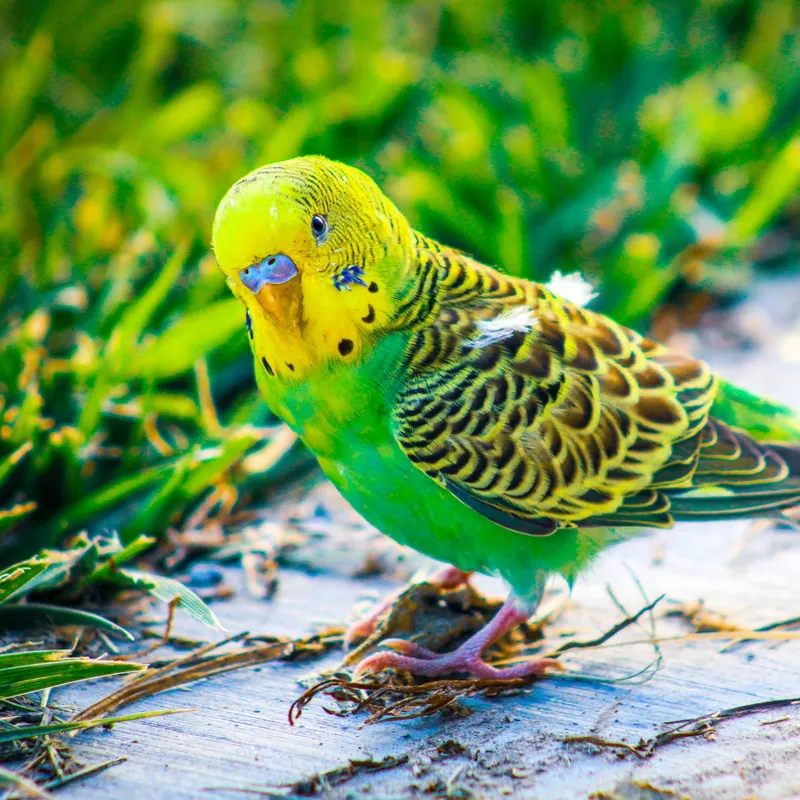
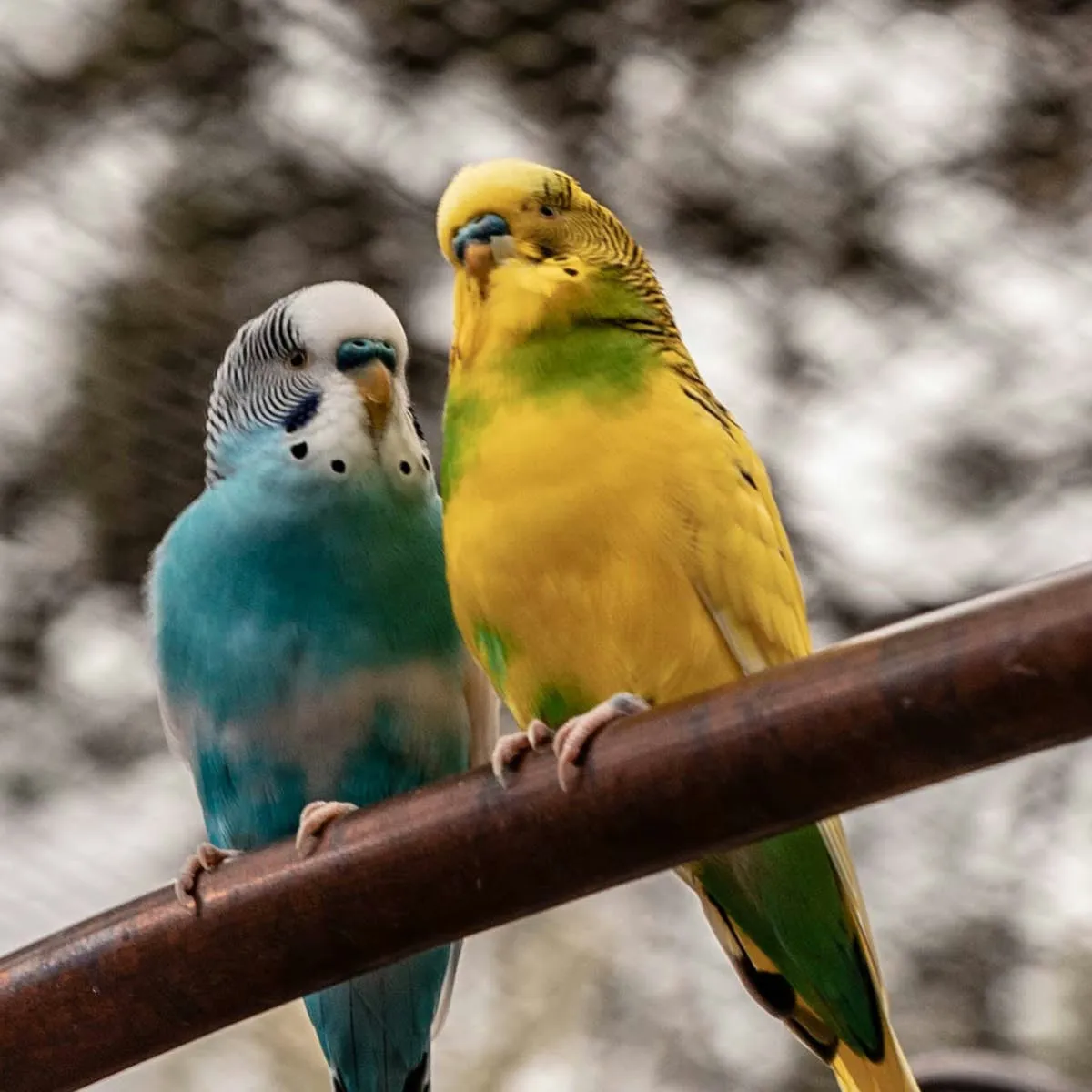
The name "parakeet" translates to "little parrot." These birds are native to Australia. Initially, they appeared in just one dull, dark green color. Through selective breeding, however, parakeets now come in a wide array of colors.
Options include blue, green, or bicolored birds such as yellow and green or white and blue. There are also solid yellow parakeets and pastel shades. I once owned a light green bird that the pet store labeled "sea foam" color.
When exported to England, they were known as budgerigars or "budgies" for short. They became very popular in the United States during the 1950s and 1960s and were sometimes called budgies, but that term has fallen out of favor, and today they are universally called parakeets.
Choosing and Bringing Home Your Parakeet
Start by selecting a clever bird. Pet shops often house many parakeets in a large cage. Some may be pecking at each other, while others flutter about. You need to observe for a while, find a color you like, and then watch how that bird interacts with its companions.
Determining Sex
Male parakeets have a blue cere—the area above the beak containing two nostrils. Females have a whitish or beige cere. Very young birds have pink ceres. Some people think only males can learn to talk. That's not true. My best talker was a female named Angel.
Signs of a Healthy, Calm Bird
A healthy bird has wings that cross over its back and nice pink feet. Healthy birds do not have overgrown or misshapen beaks.
Wait until the bird you like reaches the end of the perch, then approach and speak softly. If it seems interested, that's a good sign. If you slowly extend a finger to the end of the perch and it panics, that's not a good sign. You want a parakeet with steady nerves.
Ongoing Care for Your Parakeet
After bringing your new pet home, you'll need all the equipment to keep it happy and healthy.
Cages and Perches
A spacious cage is necessary, along with enough perches for hopping and climbing. Perches should be wooden because plastic ones can become cold under the bird's feet. It's crucial to position the cage away from drafts.
Cage Safety
If you have a cat, you can still keep a parakeet, but the bird must be in a cage with bars closely spaced on all sides and the top so the cat cannot reach a paw inside.
The cage should also sit on a stable table and must not hang from a hook or be unstable in any way; otherwise, the cat may jump onto it. Parakeets sometimes escape their cage by accident, and with a cat in the house, that could spell disaster for the bird. There might be a tragedy.
Lining the Cage Bottom
You'll need to line the cage bottom with sturdy paper. You can use a paper grocery bag cut to size. Pet shops sell pre-cut liners with gravel already attached.
Gravel is also important for the bird's health and digestion. You can buy a box of gravel and sprinkle it on homemade liners. Regardless of what you use, change the liner weekly. Avoid paper towels because most parakeets will shred them, creating a mess.
Food and Treats
Parakeets enjoy a variety of foods and treats. You can buy parakeet seed, a specific mix suited to them. They should have a cuttlebone and a keetcake for minerals and digestion. Most birds like a millet spray hanging in the cage.
Remember, parakeets are constant nibblers, so check their food daily and ensure fresh water. You can also offer fruits and vegetables of almost any kind. You can cook frozen mixed veggies, drain them, and place some in a small feeder.
Molting
Parakeets molt, and you'll find wing feathers and occasionally a tail feather. Usually, a tail feather grows quite long under the existing tail before the old one sheds.
Parakeets groom frequently. They run their beak along the length of wing feathers and search for loose feathers. After this routine, they shake vigorously, and a tiny white feather may float in the air.
How They Sleep
Parakeets have a peculiar sleep habit. They often go to their swing and swing for a while before sleeping. When ready, they stand on one leg and lock it in place—I don't know how they do it, but they do. Then they lift the other leg close to their body, twist their head around, and tuck it under a wing. Amazingly, they stay secure and don't fall off the perch.
A parakeet will learn that when you get its cage cover, it's time to fly back to the cage and get on the swing for bed. Parakeets do like their cages covered at night. Make sure the cage is free from drafts.
Spotting Illness in a Parakeet
A sick parakeet will be puffed up and not sleek. Their wings won't cross in the back but may hang down. Droppings will be watery and not the normal round, white ones with a dot in the middle. Unfortunately, sick parakeets rarely recover, though you can take it to an avian vet to see if anything can be done.
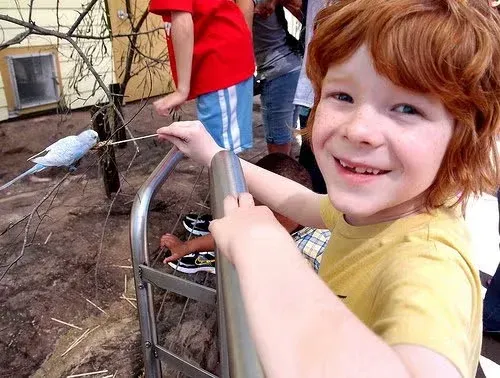
Children love parakeets.
Olaf
Training Your Parakeet
If you want to train your parakeet to sit on your finger and play with toys outside the cage, it's important to have a single bird. Two birds are not interested in anyone else, but if you don't plan to spend much time with your pet, it's better to get two so they can keep each other company.
With a single bird, you can hang a mirror in the cage as they like to coo and kiss at it. It's amusing to watch a bird interact with its reflection. They sometimes go into a trance where head feathers stick out, the whites of their eyes show, and they keep bobbing their head up and down while making strange sounds at the mirror.
Getting Your Bird Comfortable on Your Finger
The first step is to get your parakeet used to your finger. Slowly approach the bird inside its cage with your forefinger until you can place it just under its breast. Push up gently, and the bird will eventually step onto your finger.
Flying
A trained bird will enjoy sitting on your shoulder and flying around the room freely. When you first let your parakeet out, it will likely fly into a window. Usually, it does this only once, then flies to the windowsill. I once had a parakeet that kept flying into the window until it knocked itself silly, and I just let it stay in its cage.
Using a "Training Stick"
My dad made a "training stick" from two dowels. One was about two and a half to three feet long, and the other, about three inches wide, was glued to one end. When the bird was high on curtains or elsewhere, I'd use this to get the bird to hop on and bring it down to the table or back to its cage.
Toy Training
Parakeets soon learn which toys are theirs. They like a weighted toy bird they can peck and knock down, and it pops right back up. My birds liked a circular ladder they could climb and ring a bell at the top. I also had a toy Ferris wheel that the bird could spin with its beak.
I used a wooden matchbox cardboard slide cover to make a tunnel just the right size for the bird to go in and out. Be creative with your parakeet's toys. You might find something new at the pet shop or make something yourself for it to enjoy. Just be careful that nothing could harm the bird.
Teaching Your Bird to Speak
You must repeat the words you want your parakeet to learn. Simple words like "Pretty bird," "Watcha doin'," "Hi, birdy," and the like are probably easier to learn. They will say these words in a different order all day long while making parakeet chirping sounds.
With Proper Care, Your Parakeet Can Bring You Years of Joy
If you keep its diet well balanced and give it fresh water every day, let the bird get exercise and rest, your parakeet should live a number of years and bring you a great deal of entertainment.
This article is accurate and true to the best of the author's knowledge. It is not meant to substitute for diagnosis, prognosis, treatment, prescription, or formal and individualized advice from a veterinary medical professional. Animals exhibiting signs and symptoms of distress should be seen by a veterinarian immediately.