Java Doves as Companion Birds: A Comprehensive Care Guide
Harper Kelly
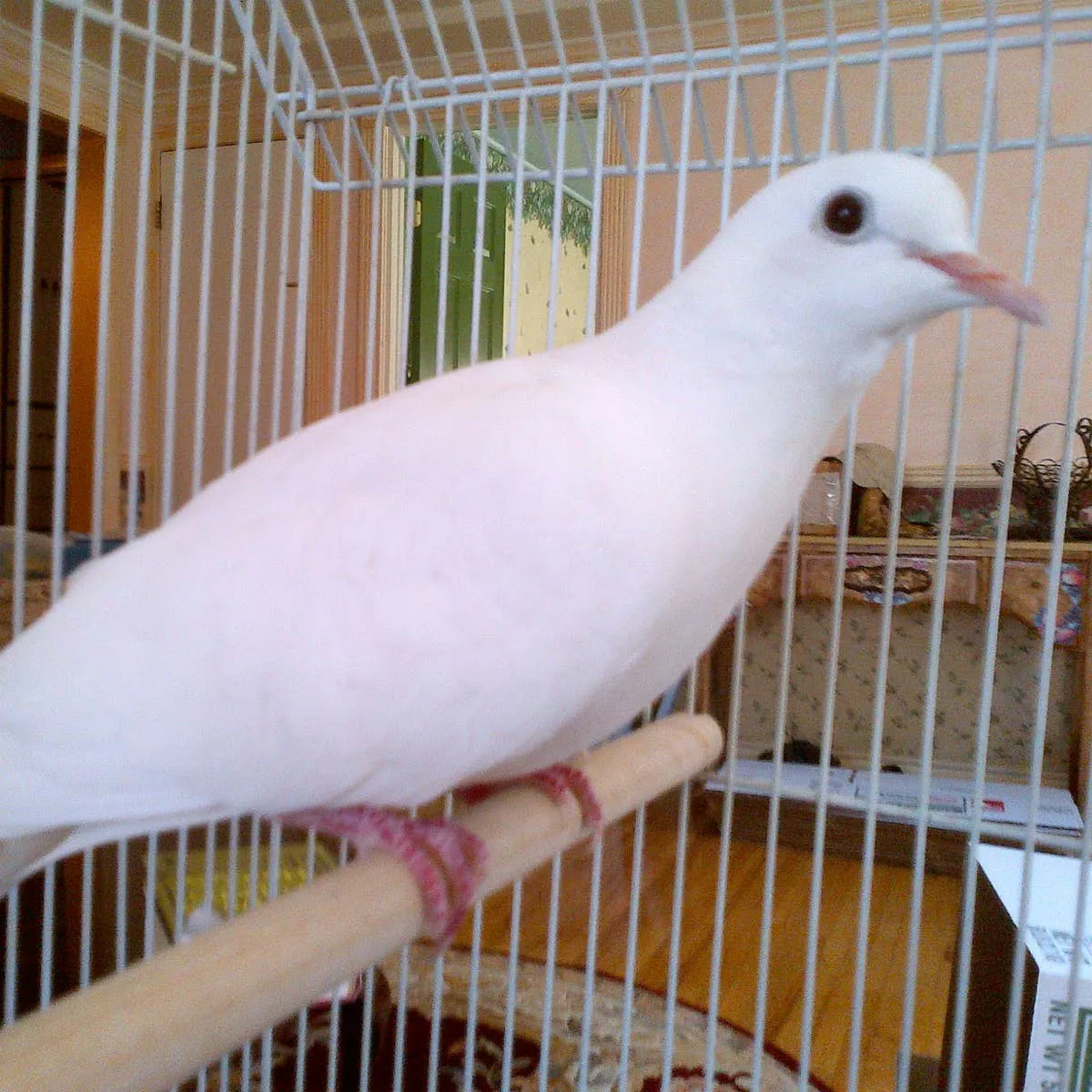
Why Java Doves Are a Joy to Keep
For someone who has never kept a bird before, Java doves can be an ideal choice. They have a pleasing appearance, tolerate handling, and will sit calmly on a hand or shoulder. Their soft cooing is both calming and able to spark reflection.
Amusing Sounds and Antics
One of their most endearing traits is a laughing vocalization that brings smiles to people of any age. New owners might find this laugh puzzling because it doesn't seem tied to any particular trigger. It appears to function as a way for the bird to announce its presence to other doves or to humans.
When preening or searching the ground for bits of food, their movements can look quite funny. Their heads bob in a slightly stiff, mechanical way, which some observers compare to a quirky robot.
Diet and Daily Upkeep
Feeding these birds is not complicated because they accept a range of seeds and grains. They can also be offered small bits of fruit, vegetables, and hard-boiled egg, and they may nibble on sprouts or other safe greens. Beyond providing fresh water—which they often soil with droppings—and giving them attention, they need very little day-to-day care.
Featured Gallery
1 / 1
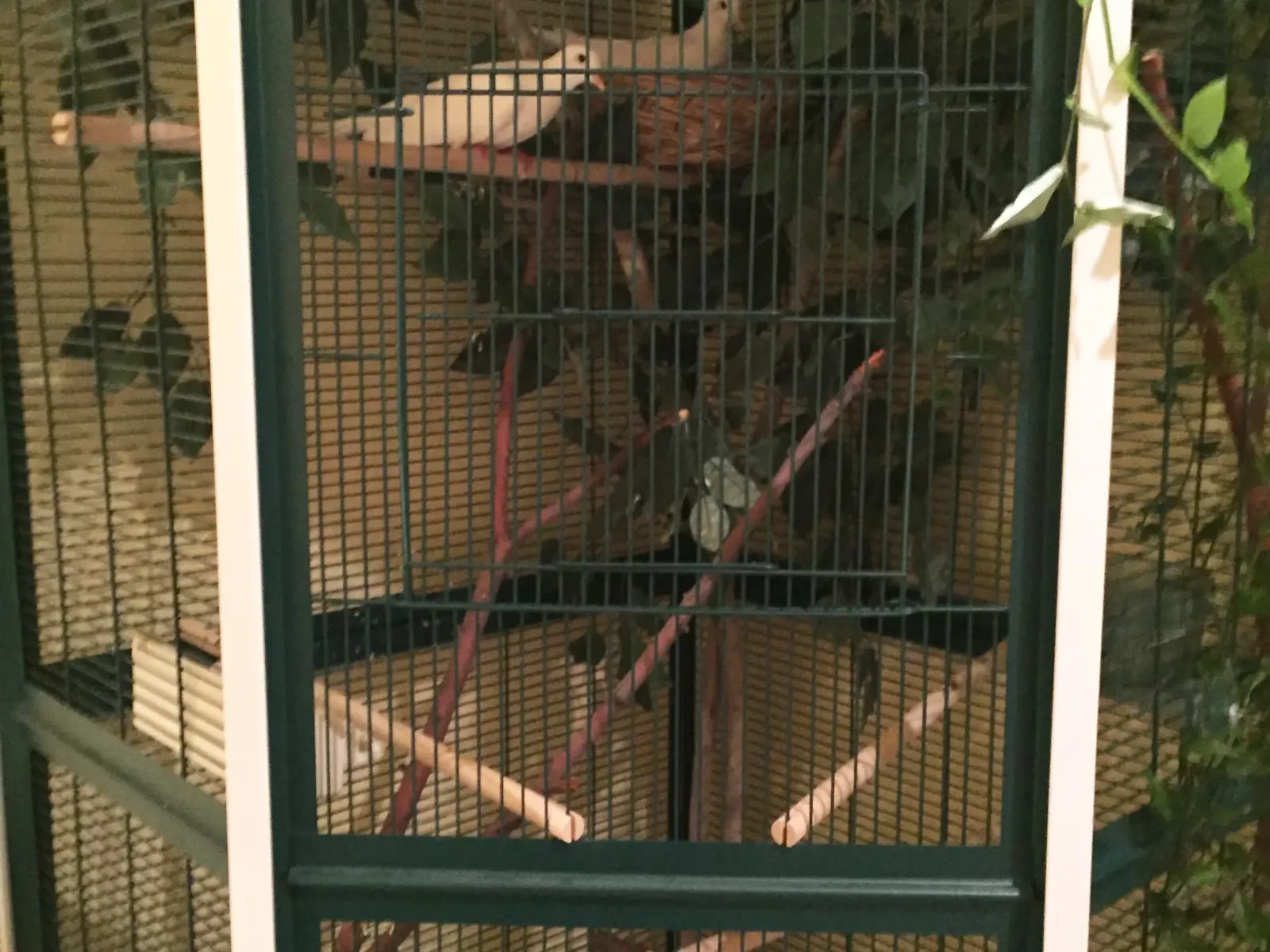
This is a very large corner cage for mated pairs.
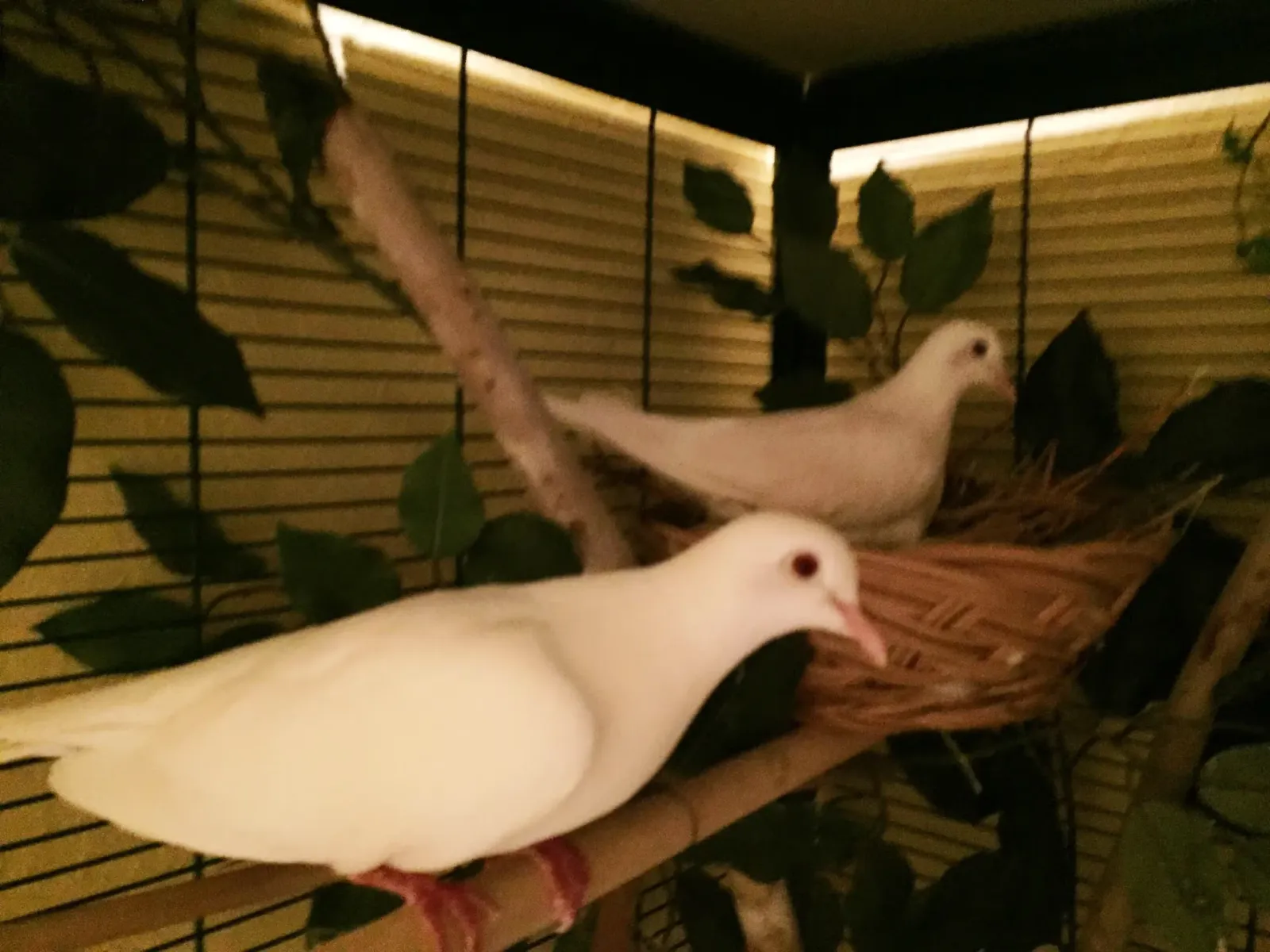
Large cages provide shade for your birds.
Setting Up an Indoor Home
Indoor cages suit Java doves well as long as the enclosure gives them sufficient space to open their wings and move about. They typically spend most of their time sitting on a fixed perch, such as a branch or wooden dowel. One bird can be comfortable in a cage measuring roughly 18 inches in each dimension, while a pair needs at least 24 inches per side.
Dedicated keepers often provide much larger enclosures so that breeding pairs have a richer, more natural setting. These cages may reach six feet in height or more and take up considerable floor space, but they make it possible for mated pairs to live together.
Supervised Time Outside the Cage
Although doves can live in cages, they benefit from supervised out-of-cage time. This gives them a chance to exercise their wings, explore high spots like curtain rods, or peck at the carpet. One important caution: make sure they cannot get outside. Domesticated doves lack the skills to find food in the wild, cannot join wild flocks, and would likely be caught by a predator quickly.
Java doves appreciate a wide horizontal space for flying. After a brief, noisy flight, they will soon settle on a comfortable perch to rest. Scattering a little seed on the floor can encourage foraging, which is intriguing to watch and can hold the attention of even young children for a long time.
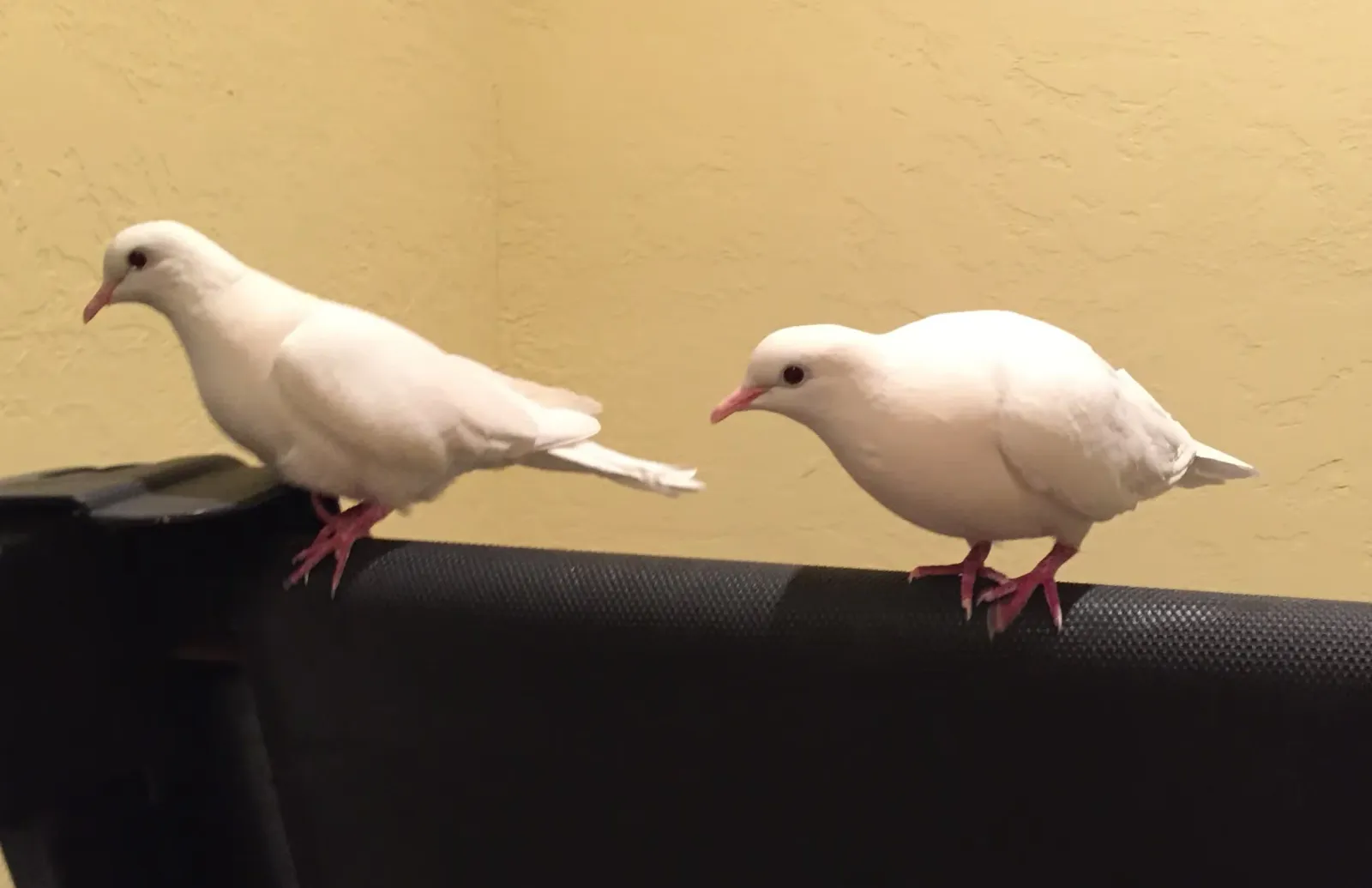
Enjoying some “free time”
Cage Setup and Care Advice
These suggestions can help you save time and money when housing Java doves:
- Java doves enjoy perching; natural wood dowels or branches work well, and you will notice they spend most of their time on a perch.
- Skip cage toys, bells, and bright objects—your Java dove will pay them no attention.
- If the cage can hold several types of perches, provide them.
- A cage with a mesh floor and a pull-out tray is essential.
- Seed dishes can be attached to the sides, or seed can be spread on a paper plate placed on the cage floor away from the bars to reduce contamination from droppings.
- A water container is a necessary part of the cage. Java doves drink little, but when they do, they dip their beaks deeply, so choose a basin that suits this behavior. Alternatively, a heavy bowl on the cage floor works if it won't tip when the bird perches on the rim.
- Change the water every day.
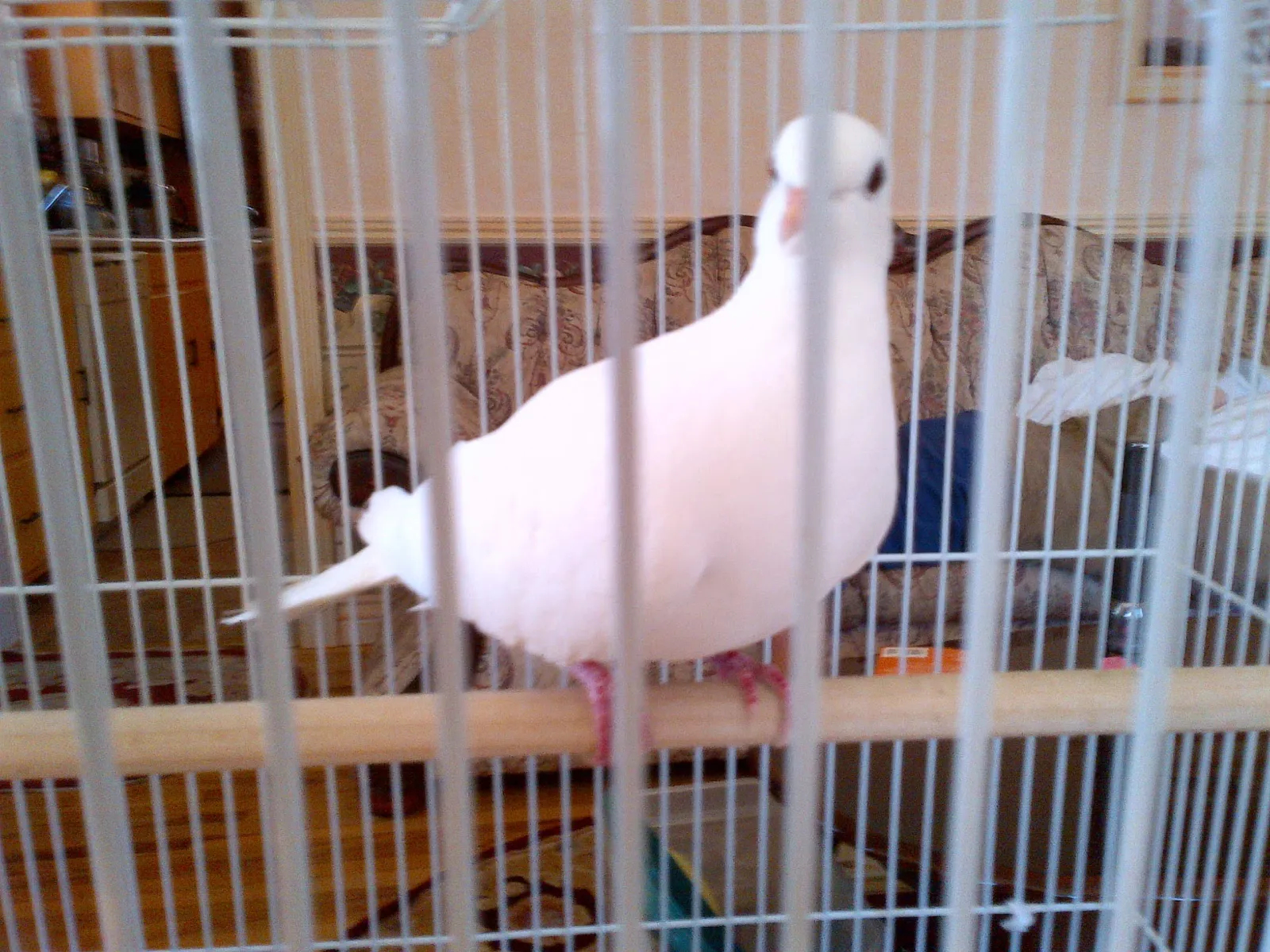
This is a curious pet Java dove.
Where to Place the Cage
Choose a warm, dry spot for the cage, but keep it out of direct sunlight. Because doves are small, direct sun can raise their body temperature quickly and lead to death. Cold drafts should also be avoided for the same reason.
Java doves generally do best when the temperature stays between 65°F and 75°F. Watching your bird is the best way to judge whether the temperature is right. A chilled dove will puff up its feathers and look like a cute white ball, but this is actually a way to retain heat. An overheated dove will hold its wings away from its body, drink more than usual, and may pant softly.
New owners should check the bird and its surroundings several times a day because the sun moves and indoor temperatures can shift. At night, a sleeping dove will fluff up, and this should not be mistaken for cold. Once you have established a suitable temperature, if your bird fluffs up for long periods during the day, it may be a sign of illness.
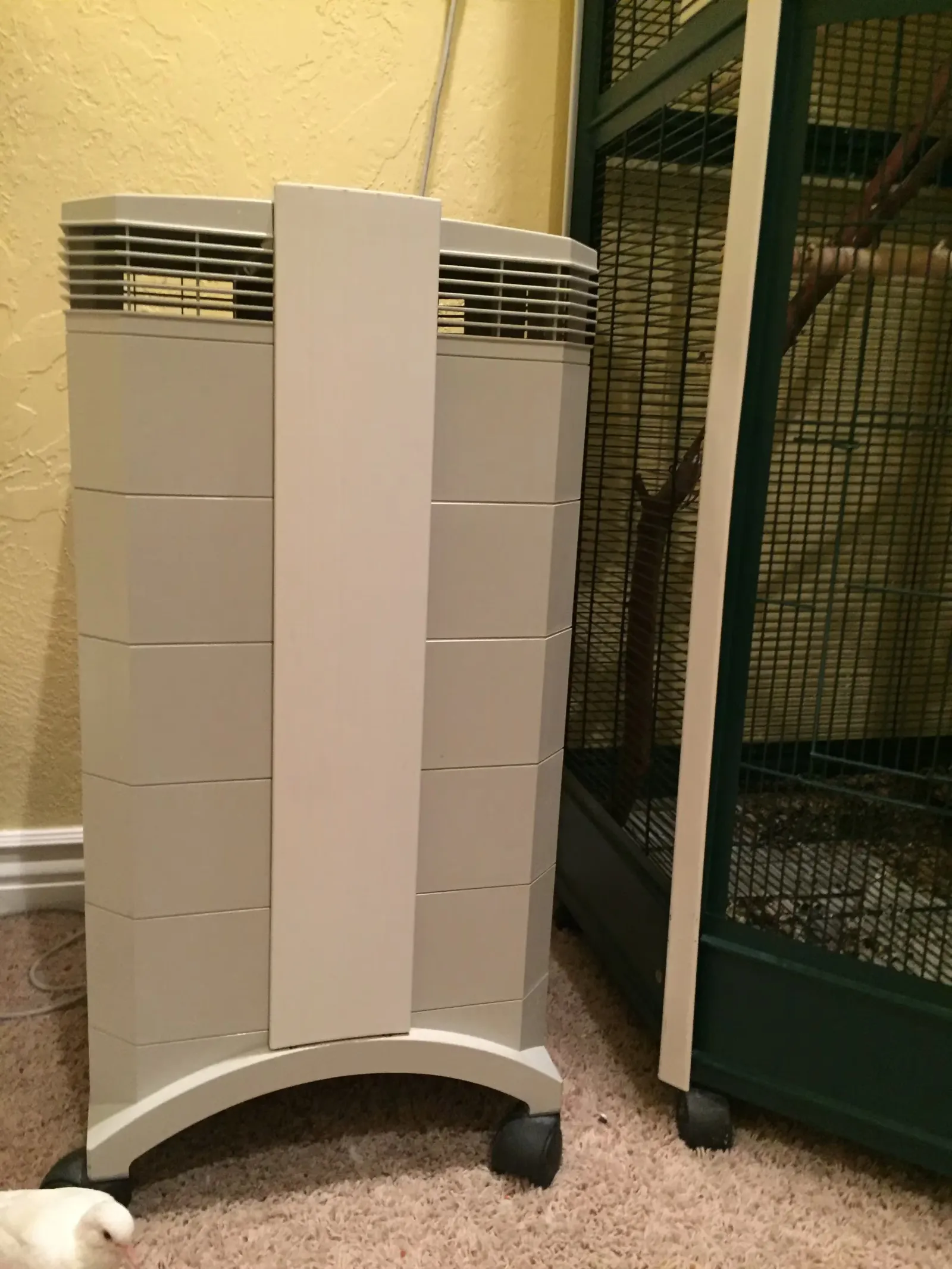
IQ Air brand air cleaner
Maintaining Cleanliness
Like most birds, Java doves eliminate waste whenever and wherever they choose, so if you let them fly free, be ready to spot-clean behind them. Their cages require regular cleaning because they are messy eaters, produce a large amount of droppings, and often shed small feathers and heavy dander.
If you plan to keep Java doves, it is wise to invest in an air purifier and a vacuum with a HEPA or pet filter. My own flock ranges from 2–3 birds in winter up to 12–15, and I use a very large IQ Air Health-Pro Plus in their room; it runs constantly.
Once a week, clean everything: cages, walls, windows, and floors. Java doves use their beaks to sift through seed cups, scattering unwanted seeds across the cage bottom. It is a good idea to take the bottom pan outside and leave those seeds for wild birds, especially in winter. Also in winter, a portable cool-mist humidifier helps reduce dust from dander and provides essential moisture for newborn birds.
Featured Gallery
1 / 1
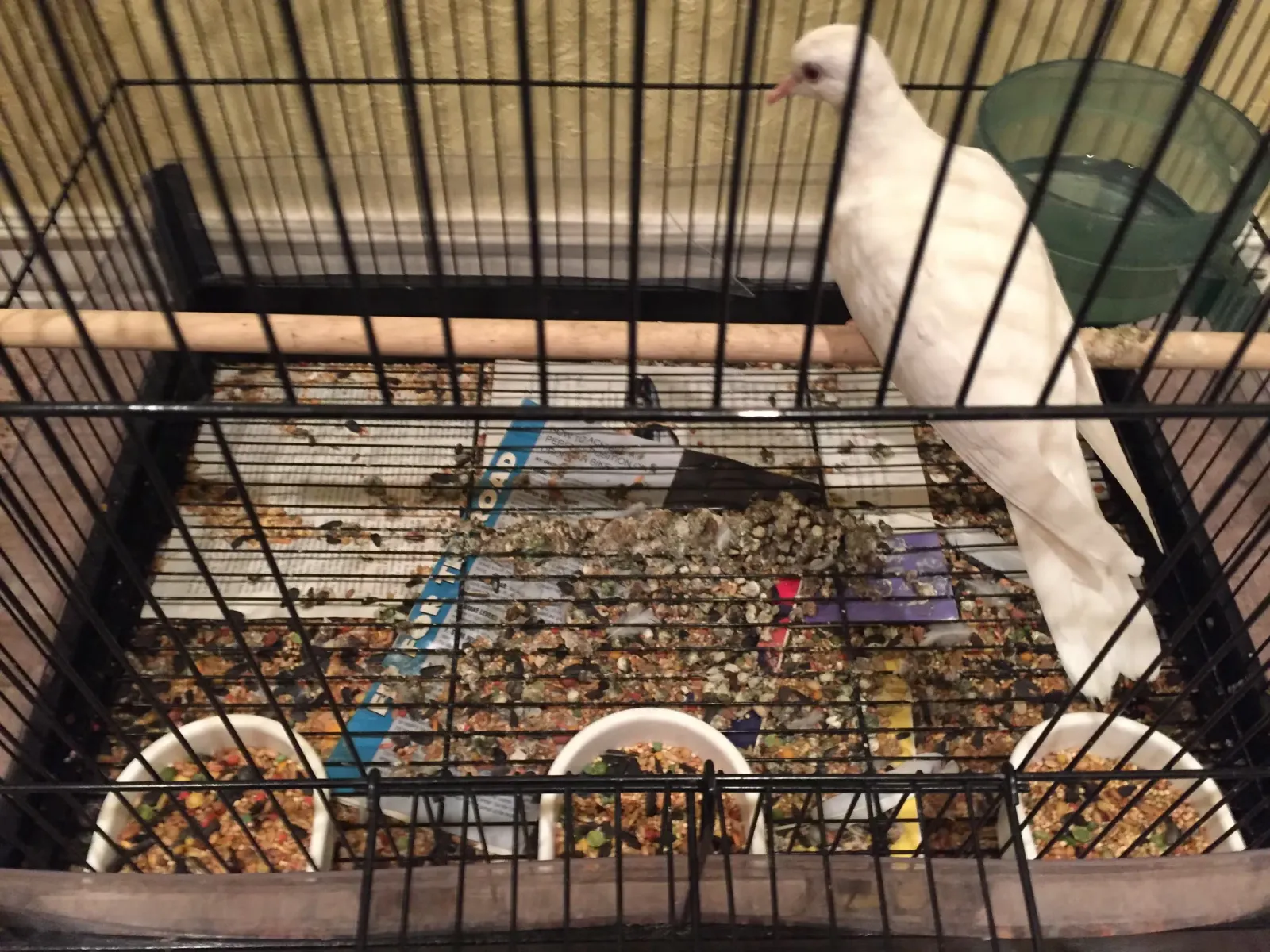
This is a cage with a single Java dove after one week.
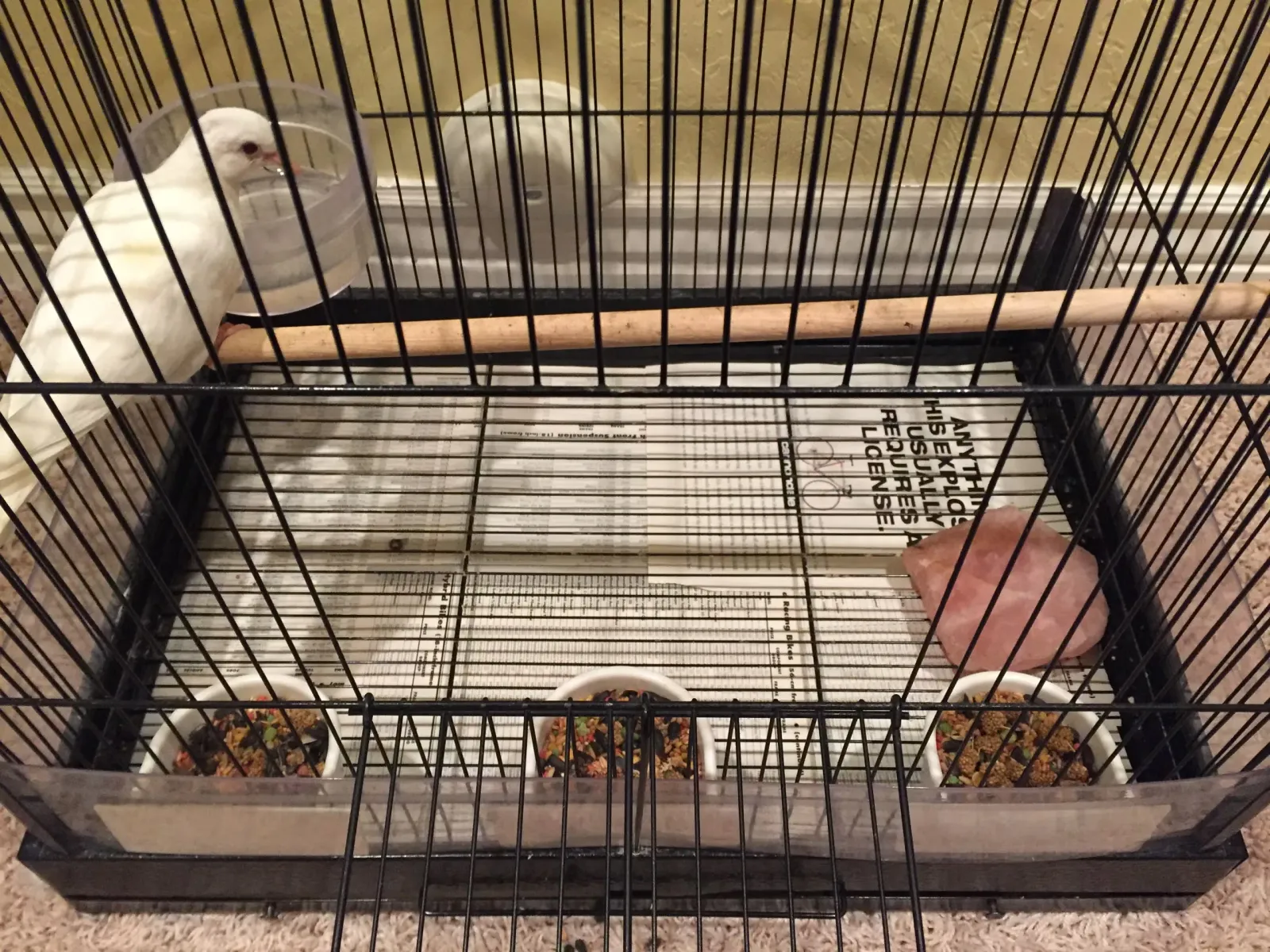
From dirty to clean … until next week
Building a Bond With Your Dove
Determining the sex of a young Java dove is quite difficult unless they are kept in a group. A single bird often does very well and may bond with its owner instead of another bird. It will perch on your head or shoulder and remain there for long periods as a way of connecting with you.
Handle your bird gently, but be careful because they are faster and stronger than their small size suggests. At some point, you will likely find yourself chasing a new bird around the room as it avoids being caught.
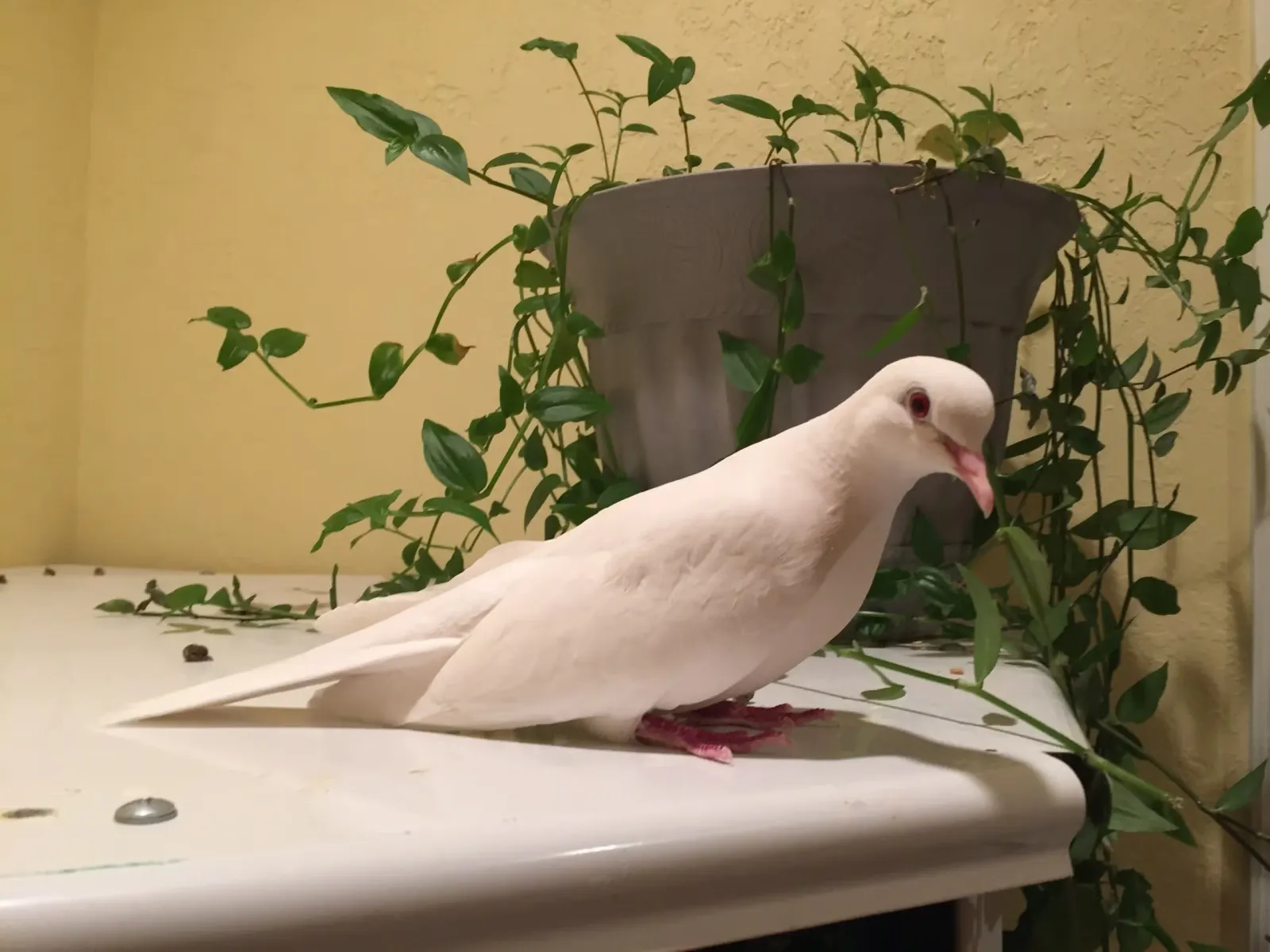
This Java dove has been avoiding his bath.
Bathing Your Dove
Doves like to bathe, and encouraging this behavior helps reduce dander and dust. Use a large glass Corning Ware casserole dish or a similar bowl and fill it with hot water to a depth of 2 to 3 inches. Java doves have an internal body temperature of about 104°F and prefer a hot bath; lukewarm water will actually chill them. Do not assume they want cool water just because it is summer.
If the cage has room, place the bath bowl inside. Otherwise, during free time, put a dry towel on the floor and set the bowl on it. Your dove will splash a little, so the towel protects the floor. At first, you may need to start the bathing routine, and you must do so very gently to avoid hurting the dove. Some owners suggest using very mild soap; others prefer plain warm water, as would be found in nature.
Many online tutorials can show you how to bathe a bird safely and effectively. Bathe them early in the day so they can dry before dark, and never rub against the natural direction of the feathers.
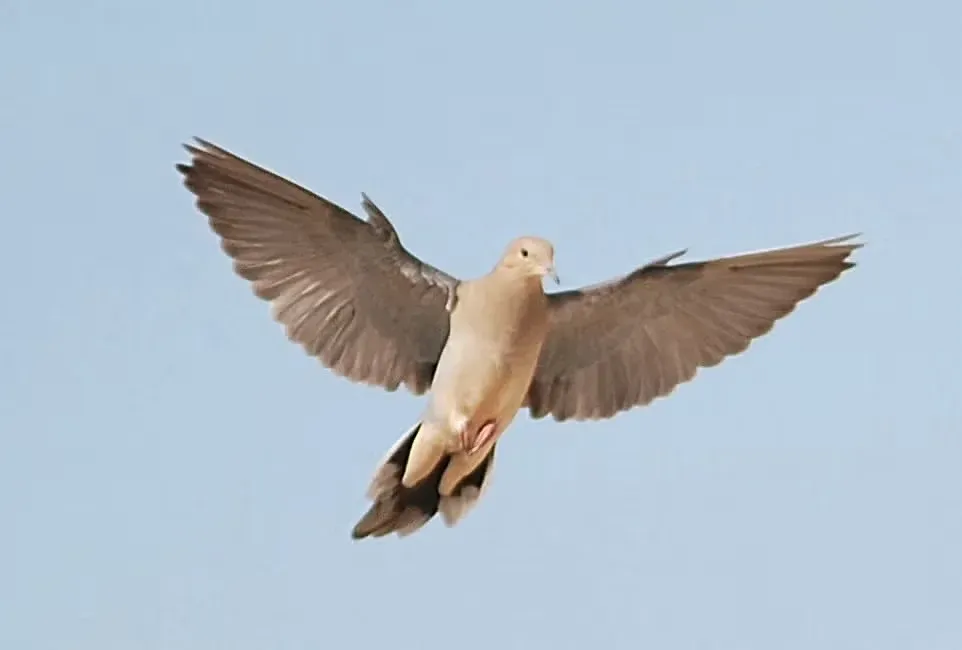
This is a dove in the wild.
Facts About Doves in the Wild
The dove is a slender, graceful bird found almost everywhere in North America. It is recognized for its melodic cooing, its soft fluttering flight, and its enduring symbolic uses. Doves are among the most common birds in the US and are considered a leading game bird, even though they can fly at speeds up to 55 miles per hour. They are monogamous, live fairly long lives, and breed prolifically, producing multiple offspring each year.
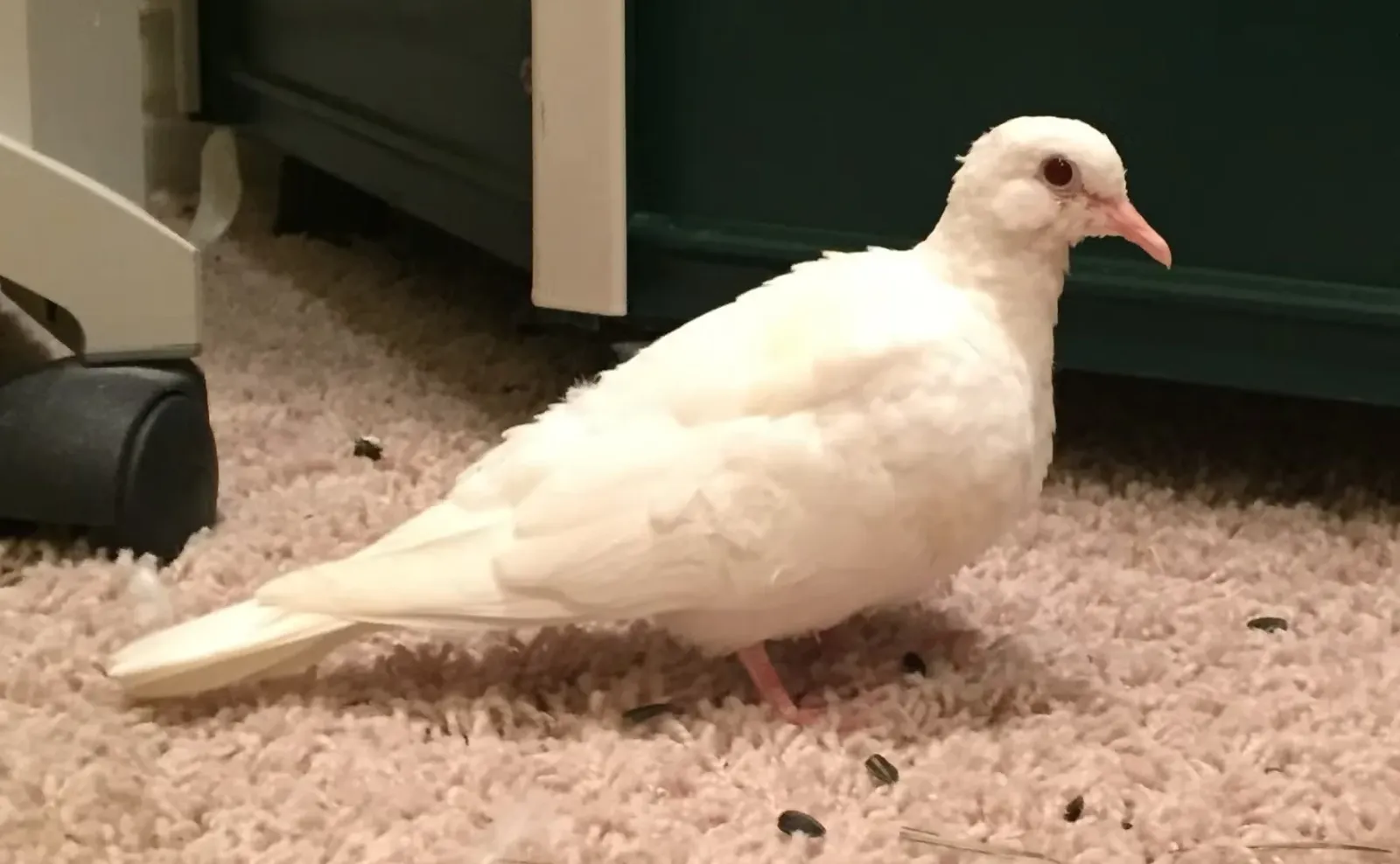
This is a Java dove at six weeks old.
Dove or Pigeon?
Many people confuse doves and pigeons because they look alike; they belong to the same family but differ in size and weight, with the pigeon being larger. Nationwide, there are over 300 species of doves and pigeons combined, and about fifteen dove species are common enough to be considered abundant.
The most frequently seen wild dove is the graceful mourning dove (also called the turtle dove), often spotted on an electrical wire or brought home from a hunt. Most doves or pigeons are too large to be suitable indoor pets, though some keepers with outdoor coops will house larger birds. The diamond dove, the smallest species, and the ringneck dove are the usual choices for pets and can be found in pet stores nationwide.
The Java dove, though not technically a separate species, also makes a wonderful pet. Java doves are completely white due to a mutation in the ringneck dove. There are also white doves that are albino, with red or pink eyes, but these are less common.
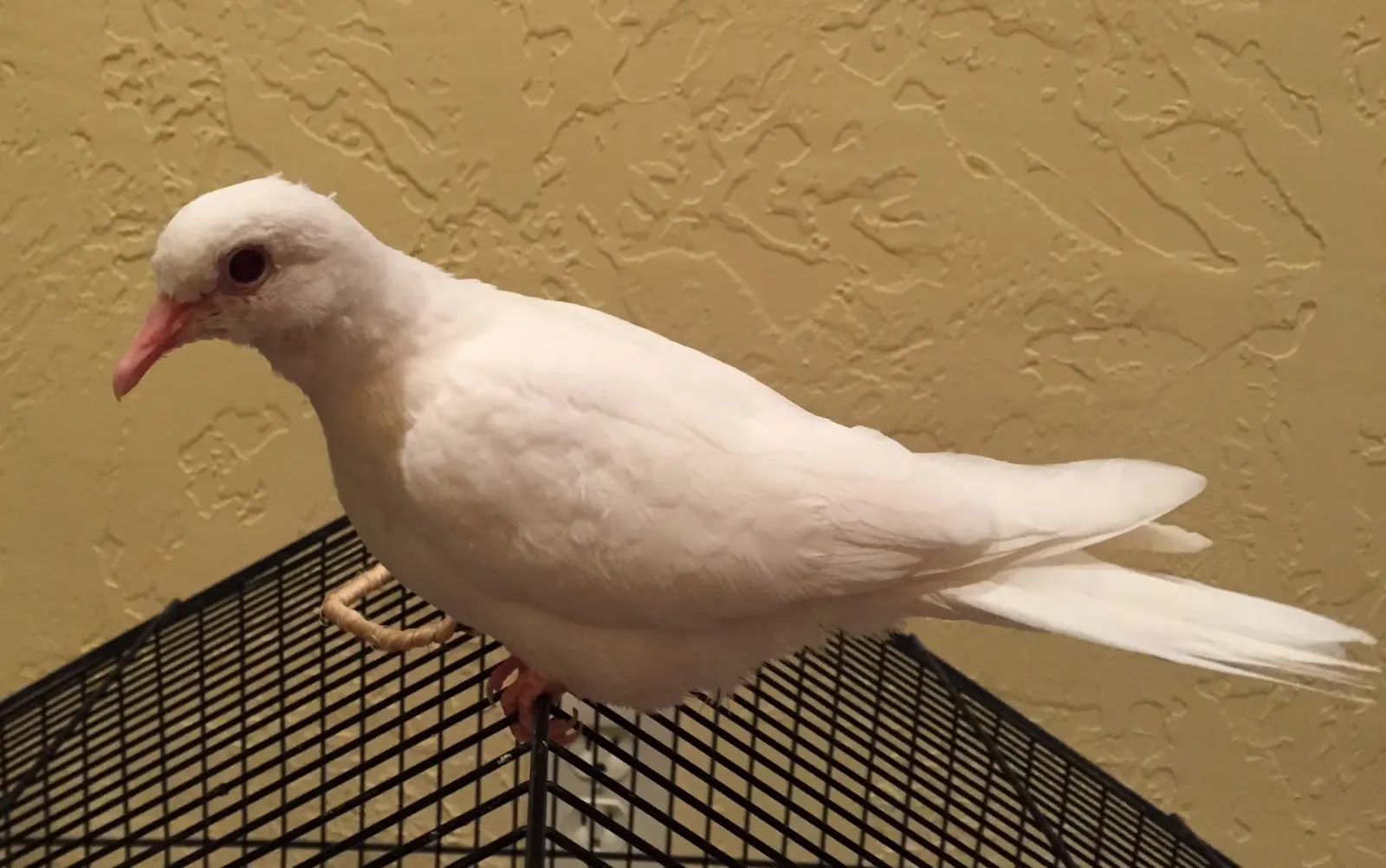
This is a Java dove at about 3 months old.
Java Doves in Magic Shows
Java doves, also known as sacred doves and love doves, hold a special place both historically and practically beyond pet ownership. The Java dove is intelligent and can learn simple tricks with some effort; it does not mind being held still, nor does it panic in dark, confined spaces. Because of these traits, magicians worldwide prefer them, wrapping them in handkerchiefs or hiding them in top hats to amaze audiences.
Some magicians use them as distractions, others as props, and the most inventive incorporate them into the act. Their white color draws the audience's attention, their mannerisms are likely to get a few laughs, and they are easy to maintain.
Magic, Weddings, and Symbolism
Modern magicians did not create the fame of white doves; that comes from the visibility these birds have had over time and their status as the most historically described dove, dating back to the story of Noah and the great flood. Today the Java dove is used as a symbol of world peace, a sacred religious symbol, and one of the many iconic symbols of love and romance.
Doves appear symbolically as messengers and symbols of hope in Judaism, Christianity, and Pagan religions. Doves have appeared at the Olympic Games, weddings, peace protests, ancient and modern artworks, and sculptures.
Releasing white doves at weddings is very popular; however, it is really not recommended today. White homing pigeons are substituted because they are strong flyers and their homing instinct helps them return to safety after release. A white dove is a small bird and does not have the strong instincts of the pigeon; it will often fly a short distance before landing and many times becomes lost or killed by a predator or other hazard. Being pure white makes them an easy target.

Java doves love to sit on your head.
Years of Companionship With Java Doves
Keeping Java doves as pets exposes the owner to many aspects of avian life and will certainly change their life for the better. A Java dove can live up to twenty years, and during that time it may get sick, mate, produce offspring, and even escape—all situations that require direct owner involvement. Despite a few difficult moments, the good times far outweigh them.
Java doves can provide your whole family with many years of companionship and enjoyment, and you may find that you want to add more birds to your flock or breed the ones you have. I will cover mating and care for newly hatched birds in a future article.
This article is accurate and true to the best of the author’s knowledge. It is not meant to substitute for diagnosis, prognosis, treatment, prescription, or formal and individualized advice from a veterinary medical professional. Animals exhibiting signs and symptoms of distress should be seen by a veterinarian immediately.
Questions & Answers
Question: Can you keep Java doves outside in an aviary?
Answer: For short periods, yes. As a living environment, no, Java doves are very temperature sensitive and being in direct sunlight will dehydrate them to literally dying in just a few hours
Question: What’s the right temperature for caged doves?
Answer: 72 degrees – if your bird has a fluffy look it’s too cold, conversely, if it’s holding wings spread, it’s too warm.
Question: It sounds like the doves don’t need to go outside at all? I’m contemplating whether I should take mine outside for a little sun and fresh air or not (with a harness or carrier, of course) It might not be necessary, as I work from home, he stays out of his cage most of the day and only go in at night. Perhaps, that is enough free time without the need to go outside? I just want to give mine a chance to sunbathe better on my porch or perhaps in the yard.
Answer: Occasionally I take mine outside (in an enclosure with shaded areas of course) but only under strict supervision. It may feel natural to want to put your birds in the sun, but it’s unhealthy and can be fatal. Doves can dehydrate very quickly, and I’ve seen them fall off of their perch and die from excessive heat. Make certain you stay with the bird and watch for signs of issues. On the flip side, cooler temperatures aren’t great either. If it’s colder outside than 60 degrees, keep them inside.
© 2016 Ralph Schwartz