Recognizing and Managing Jaundice in Dogs: A Home Care Guide
Elliot Campbell

Understanding What Jaundice Means for Your Dog
When a dog's skin or the whites of their eyes take on a yellow tint, it's a red flag that demands prompt attention. This yellow discoloration, known medically as icterus or jaundice, isn't a disease in itself but rather an indicator of an underlying medical issue. Jaundice can stem from liver problems, bile duct blockage, or blood disorders, and before any home management can begin, you need a veterinarian to identify the root cause. The following guide addresses common questions and offers practical advice for caring for a dog with jaundice.
Jaundice in Dogs: A Comprehensive Overview
- Signs of Jaundice in Dogs
- Breeds Genetically Prone to Jaundice
- Underlying Diseases That Trigger Jaundice
- How Veterinarians Diagnose Jaundice
- Medical Treatments for Jaundice
- Home Care Strategies for Jaundice
- Dietary Recommendations for Dogs With Jaundice
- Long-Term Outlook for Dogs With Jaundice
- What to Do When Veterinary Care Is Unavailable
1. Signs of Jaundice in Dogs
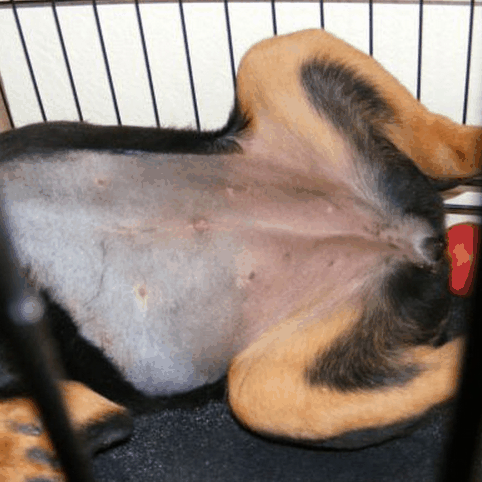
Yellowing of the eye whites is often the first visible clue, and the mucous membranes inside the mouth may also appear yellow, though this can be harder to spot if the gums are naturally dark. Dogs whose jaundice results from liver disease or obstruction typically show additional symptoms as well.
Indicators of Liver Disease and Obstruction
- Reduced appetite and weight loss
- Lethargy
- Abdominal swelling and discomfort
- Increased urination with orange-colored urine
- Pale stool when an obstruction is present
Advanced-Stage Signs
- Bleeding episodes (the liver can't produce certain clotting factors)
- Fluid accumulation in the abdomen
- Neurological symptoms (toxins build up in the blood because the liver can't filter them)
Signs From Red Blood Cell Destruction
- Loss of appetite
- Weakness
- Vomiting
- Pale gums (which jaundice may obscure)
- Fast, shallow breathing
- Reluctance to exercise
- Orange urine
- Pica (eating non-food items like sand)
2. Dog Breeds Genetically Prone to Jaundice
While any dog can develop jaundice as a consequence of infections or certain cancers, several breeds carry inherited conditions that raise their risk:
- Alaskan Malamute (stomatocytosis)
- Basenji (pyruvate kinase deficiency)
- Beagle (pyruvate kinase deficiency)
- Bedlington Terrier (copper-associated chronic hepatitis)
- Bichon Frisé (immune-mediated hemolytic anemia or IMHA; portosystemic shunt)
- Chihuahua (copper-associated chronic hepatitis)
- Cocker Spaniels (copper-associated chronic hepatitis, IMHA)
- Dalmatian (copper-associated chronic hepatitis)
- Dobermans (copper-associated chronic hepatitis)
- Finnish Spitz (IMHA)
- Irish Setter (IMHA)
- Labrador Retrievers (copper-associated chronic hepatitis)
- Miniature Pinscher (IMHA)
- Old English sheepdog (IMHA)
- Poodle (IMHA)
- Scottish Terrier (vacuolar hepatopathy)
- Shar-Pei (hepatic amyloidosis)
- Shetland Sheepdog (gallbladder mucocele)
- Skye Terriers (copper-associated hepatitis)
- Springer Spaniel (phosphofructokinase deficiency)
- West Highland White Terrier (copper-associated hepatitis)
3. Underlying Diseases That Trigger Jaundice
When liver disease or obstruction is the cause:
- Liver cancer
- Leptospirosis and other infections (bacterial, viral, and fungal)
- Pancreatitis
- Poisoning (including intentional drugs like phenobarbital for epilepsy, acetaminophen, and many others)
- Inherited conditions (e.g. copper-associated)
- Idiopathic hepatitis (no known cause)
- Severe trauma (like being hit by a car)
When red blood cell destruction is the cause:
- Immune-mediated hemolytic anemia (IMHA), either inherited or from systemic lupus
- IMHA secondary to cancer, vaccinations, drugs, and some infections
- Hypophosphatemia (low blood phosphorus)
- Microangiopathic hemolysis (e.g. heartworm, DIC)
- Onion, zinc, lead, and other toxicities
- Infection (leptospirosis, Ehrlichia, babesiosis, and others)
- Cancer (lymphoma and some other cancers that affect the blood)
- Inherited blood deficiencies (prominent in Basenjis, Beagles, English Springer Spaniels, and Alaskan Malamutes)
- Incompatible blood transfusion
4. How Veterinarians Diagnose Jaundice
Clinical signs can guide a veterinarian, but determining the exact cause of jaundice requires testing. These diagnostic tools are commonly used:
- Complete Blood Count (CBC): Often the first step. A blood draw reveals the severity of icterus, and the CBC immediately indicates whether liver disease or blood cell destruction is responsible.
- Chemistry Panel: If the CBC is normal, blood chemistry is evaluated to check liver enzymes. Enzyme ratios can sometimes reveal whether the liver is inflamed or blocked.
- X-Rays of the Abdomen and Chest: Tumors may be visible on a radiograph if cancer is present.
- Ultrasound: Results depend heavily on the operator's skill, but this imaging lets the vet examine the pancreas and gall bladder. If abdominal fluid is present, ultrasound can guide a tap to collect a sample for analysis.
- Biopsy: A needle may be inserted into the liver to collect cells for microscopic examination. If that yields insufficient information, a surgical biopsy under anesthesia might be recommended. This procedure provides valuable diagnostic information but carries some risk, so not all dogs undergo it. Your vet may also suggest a follow-up liver biopsy to assess how your dog is responding to treatment. Though it may seem invasive, it's the best way to determine if the current approach is working.
- Miscellaneous Tests: Sometimes standard tests don't provide enough detail. Your vet might suggest clotting time tests, blood cultures to check for infection, or serum titers to identify an infectious cause.
5. Medical Treatments for Jaundice
Red Blood Cell Destruction
When jaundice results from red blood cell destruction, the vet's first priority is treating the primary disease. If ehrlichiosis is the cause, for example, an antibiotic effective against this tick-borne disease will be prescribed. Additional treatments are given based on your dog's clinical condition.
Chronic Liver Disease
For chronic liver disease caused by cancer, the cancer itself must be addressed before your dog has any chance of survival. Dogs with obstructive liver disease need an accurate diagnosis and treatment of the blockage.
In chronic liver disease cases, your vet will treat the main problem and may add treatments to lower zinc levels, reduce fiber buildup, halt further inflammation, and improve your dog's comfort. Antioxidants discussed in the home care section will be part of the plan, along with others that can only be given by injection (e.g. antibiotics for sepsis, diuretics for fluid buildup, prednisone to control inflammation, and others).
Copper buildup may also be addressed. The metal can be converted into a form that the body can remove (chelated), or a medication like zinc may be given to reduce copper's toxic effects.
You can provide effective care for your dog at home.
JC Gellidon
6. Home Care Strategies
In addition to treating the primary disease diagnosed by your veterinarian, you can give antioxidants to protect the liver. Free radicals (from excess copper, drug injury—e.g., phenobarbital, and similar) have been shown to cause serious injuries in dogs with liver disease. Antioxidants prevent injury from free radicals and are something you can provide for your dog at home. Antioxidants like milk thistle have mostly been used in alternative medicine but are now used by conventional veterinarians.
Milk Thistle
This plant contains about 60–80% silymarin, a powerful antioxidant, and anti-inflammatory that improves liver function, so holistic veterinarians have been using it for a long time. It has been used by humans with liver disease for over 2000 years, but experiments proving its effectiveness have only been done with the injectable solution. The exact dose is still debatable, but responses have been reported using doses from 20 to 50 mg per kilogram. (In the chart below, I am recommending 50 mg for each pound, but if your dog's condition is severe, your vet may want to try a higher dose.) A toxic dose has never been accurately reported, but if your dog is very sick, a smaller dose might be a good idea.
Vitamin E
Another antioxidant you might consider is alpha-tocopherol. Its antioxidant properties protect cell membranes and may also potentially protect the liver. The maximum dose I have seen used is 400 IU, but some literature recommends more when certain diseases are diagnosed. (The natural form, d-alpha-tocopherol, is better than the artificial form since it is more bioactive.) I do not know of any research into higher doses for larger dogs.
S-Adenosyl Methionine (SAM-e)
This antioxidant occurs naturally in your dog but will help a dog with liver disease since it breaks down to form glutathione, a product that aids metabolism, prevents liver injury (stress oxidation), and even protects red blood cells; it is especially helpful for dogs with inflammatory, toxic, and metabolic diseases. It can be tricky to treat tiny dogs since the capsules are coated and not meant to be split or crushed. If you need to give your dog SAM-e, try to find pills as close to his or her recommended daily dose as possible.
Caution With Drugs: A Word to the Wise
These drugs have only recently been accepted by conventional veterinarians but have been used by holistic practitioners for a long time. Some veterinarians will still not accept them. Keep this in mind but discuss your options with your overseeing veterinarian before introducing a new supplement or remedy into your dog's diet. Some doses mentioned below are still controversial.
| Weight | Milk Thistle | Vitamin E | SAM-e |
|---|---|---|---|
| 10 pounds |
|
500 mg
|
100 IU
|
100 mg
| |
20 pounds
|
1000 mg
|
150 IU
|
200 mg
| |
30 pounds
|
1500 mg
|
200 IU
|
300 mg
| |
40 pounds
|
2000 mg
|
250 IU
|
400 mg
| |
50 pounds
|
2500 mg
|
300 IU
|
500 mg
| |
100 pounds
|
5000 mg
|
400 IU
|
1000 mg
|
(These doses are still controversial.)
Zinc
If your dog has been diagnosed with a liver disease associated with copper buildup, zinc is one of the best methods of treatment. Although zinc also protects the liver in some other ways and is available in many combination drugs (like with milk thistle), I do not think it should be used unless your dog has been diagnosed by a veterinarian. It often causes vomiting as a side effect and the dose must be weaned down when it becomes effective to prevent the dog from being poisoned by the zinc.
Other Possible Home Remedies
- B-Complex Vitamins: Dogs may be deficient in the B vitamins (like B6 and B12). It is a good idea to give this supplement with the antioxidants.
- Turmeric: This is an Ayurvedic treatment and has been shown in studies to work as an antioxidant and anti-inflammatory. Unfortunately, some studies have shown that this compound can make liver issues worse. The dose recommendations vary a lot, but about a teaspoon for a large dog is the average recommendation.
- Artichoke: Leaves from this plant may help with liver metabolism. It is available in some "liver cure" pills when mixed with milk thistle and zinc.
- Dandelion: Another herb that may help liver function, dandelion leaf is known to suppress fat accumulation in the liver.
- Miscellaneous: Carnitine, methionine, and natrium sulphate have also been recommended by some practitioners.
7. Dietary Recommendations for Dogs With Jaundice
Dietary changes won't cure your dog, but in some cases they can support recovery. The "liver diet" aims to keep your dog strong through illness while minimizing stress on the liver. At home, offer small meals about five times daily and follow these guidelines:
- Protein: Lean chicken is a good choice because it's low in copper. Eggs are excellent, and fish is fine too. Cottage cheese and yogurt work as protein sources as long as they have no added salt. Avoid fatty meat, organs (beef liver, kidneys, etc.), pork, duck, or salmon.
- Fiber: Soluble fiber sources like oatmeal help remove ammonia from your dog's system, easing the liver's workload. My dogs also enjoy pumpkin, another good fiber source. To encourage eating, blend it with the protein.
- Fish Oil: Add a dose of fish oil or salmon oil to meals. These oils are rich in omega-3 fatty acids and can help reduce inflammation within the liver.
- Coconut Oil: This oil provides fat as medium-chain triglycerides and can spare the liver some processing work. Coconut oil may also offer antibacterial and antiviral effects that help your dog. For best results, I always recommend virgin cold-pressed coconut oil. (Offer about one tablespoon of virgin coconut oil each day for a medium-sized dog.)
- Fruit: Papaya is palatable and provides extra calories without stressing the liver. If your dog hasn't eaten this fruit before, hand-feed it to make sure they like the taste.
Sample Diet for a Dog With Jaundice
I usually recommend that the client make up food at least twice a week. Figure out approximately how much you will need based on your dog's weight. Make the diet a little different every time so that your dog will stay interested. An example of a typical diet mixed up in a blender might be:
- 2 eggs
- 2 chicken breasts
- Cottage cheese to fill up the blender to about halfway (if the blender is 1.8 liters, fill it up to almost 900 milliliters)
- Oatmeal (fill the blender to about 1.4 liters)
- Papaya (about 1/2 of a small fruit)
- Pumpkin, cooked (fill the blender up to 1.8 liters)
- Add the correct amount of salmon oil based on how many days your dog will be eating this diet (based on his/her weight)
- Blend this mixture up and feed your dog the correct amount about five times per day. Do NOT add salt.
How Much to Feed Your Dog
Dogs need to eat at least 2% of their body weight each day to stay healthy. The amount you feed each day is based on his or her healthy weight. So, if your dog was 20 pounds before getting sick, give them about 6 or 7 ounces. (You can weigh out the correct number of tablespoons on your kitchen scale and from then on you will know to give that number of tablespoons per days of feeding.)
Monitor your dog's weight as often as possible, and if your dog is not maintaining or gaining weight, or if they are hungry even after being fed, you need to increase the serving size a little. Try giving a few ounces more and then see how your dog responds.
What About Consulting a Veterinary Nutritionist?
If someone tells you that you are not a veterinary nutritionist and you cannot make up your dog's meal at home, they are wrong. You are not trying to make up a diet that meets AAFCO standards and provides 100% of your dog's daily requirements in every meal. You can provide your sick dog with a much better and healthier meal than he or she can get in any canned food.
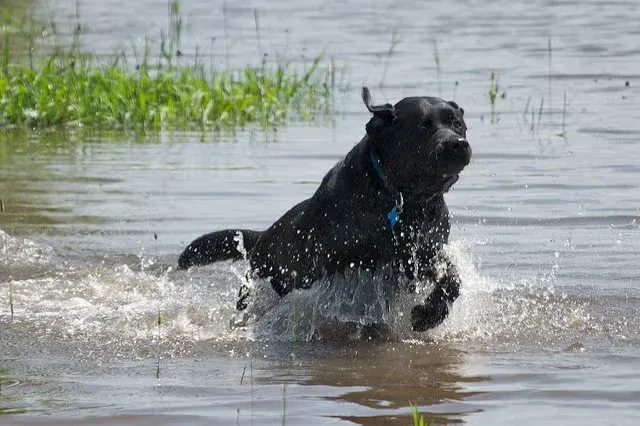
After treatment for jaundice, many dogs can return to a normal life.
cc-by pmarkham3829198382
8. Long-Term Outlook for Dogs With Jaundice
When jaundice is secondary to red blood cell destruction, the prognosis is usually good if the primary disease can be managed. With a condition like IMHA, however, about one-third of dogs do succumb to the disease. When your dog lasts past the first few weeks, there are a lot of long-term therapies that can be tried and their chance of survival is much better.
With liver problems, the prognosis varies even more. Some diseases are treatable, but when a dog has liver cancer or severe chronic hepatitis, all you can do is make them feel more comfortable. Also, with any disease, the stage to which the damage has progressed is significant. By the time many people take their dogs to the vet, there may be severe signs of chronic liver failure, and the chances of pulling through are poor. Dogs may only live a few months, and with most treatments, the most you should hope for is several years.
In humans, chronic hepatitis would be treated with a liver transplant. Without a functioning liver, treatment can make your dog feel better, but he or she may not live long.
9. What to Do When Veterinary Care Is Unavailable
Some dog owners have access to the internet but not a vet. These people might be in remote locations with satellite hookups and have no way to take their dog to a vet in the nearest urban area. If you are not in an isolated area and just want to save money on an exam and lab tests, I will tell you that it will not usually work. Most dogs that are treated without a diagnosis are going to die.
If you cannot take your dog to the vet, however, the only way to treat them is "shotgun" style. Go through the clinical symptoms above and see if your dog is showing any specific disease. If not, treat them with an anti-inflammatory, an antibiotic that is usually effective against tick-borne diseases, the antioxidants listed above, and a diet that limits stress on the liver.
Anti-inflammatories and antibiotics are available at feed stores in some countries. The antioxidants you use should be milk thistle (dose recommendations vary, but 100 mg/kg seems like a common recommendation), vitamin E (which can be given at up to 15 IU for each kilogram of the dog's weight every day), and S-adenosylmethionine or SAM-e (about 20 mg/kg per day).
Important
If your dog has been poisoned, has a ruptured gall bladder, or has cancer, these treatments will not be effective.
Resources
- Etienne Côté DVM. Icterus, Clinical Veterinary Advisor, Dogs and Cats, 2nd Edition. Elsevier, 2011.
- Jean-Michel Vandeweerd, Carole Cambier, Pascal Gustin. Nutraceuticals for Canine Liver Disease: Assessing the Evidence. Veterinary Clin Small Anim 43 (2013), 1171–1179.
- Kern, Zachary. Immune-mediated hemolytic anemia: Treating cats and dogs with a complex disease. 2019.
- Norton RD, Lenox CE, Manino P, Vulgamott JC. Nutritional Considerations for Dogs and Cats with Liver Disease. Journal of the American Animal Hospital Association, 2016 Jan-Feb; 52.
- Sechi, S., Fiore, F., Chiavolelli, F., Dimauro, C., Nudda, A., & Cocco, R. Oxidative stress and food supplementation with antioxidants in therapy dogs. Canadian journal of veterinary research, (2017) 81(3), 206–216.
- Swann JW, Skelly BJ. Systematic review of prognostic factors for mortality in dogs with immune-mediated hemolytic anemia. Journal of Veterinary Internal Medicine 2015; 29:7–13.
- Tams, TR,. Management of liver disease in dogs and cats. Modern Veterinary Practice, 1984, January. 65:19–22.
- Webster CRL. History, clinical signs, and physical findings in hepatobiliary disease. Ettinger SJ, Feldman EC, editors: Textbook of veterinary internal medicine, 7th edition, St Louis, 2010, Saunders Elsevier, pp 1612–1626.
This article is accurate and true to the best of the author's knowledge. It is not meant to substitute for diagnosis, prognosis, treatment, prescription, or formal and individualized advice from a veterinary medical professional. Animals exhibiting signs and symptoms of distress should be seen by a veterinarian immediately.