Caring for a Dog That Has Lost Its Sight: A Personal Guide
Sage Bennett
Understanding Blindness in Dogs
Hearing a veterinarian say "Your dog is blind" and "There is nothing anyone can do" is deeply unsettling. I was left with countless unanswered questions and a vague sense that we were being prepared for the possibility of euthanizing our dog simply because he could no longer see. At that point, I was exhausted, overwhelmed, and completely at a loss, and my dog had gone completely blind. There was no resource to turn to and no one to talk with about it.
You Are Not Alone in the Dark Anymore
I am writing this to recount my own experience of caring for a dog that lost his sight after many healthy years, and to offer assistance to anyone facing a similar challenge.
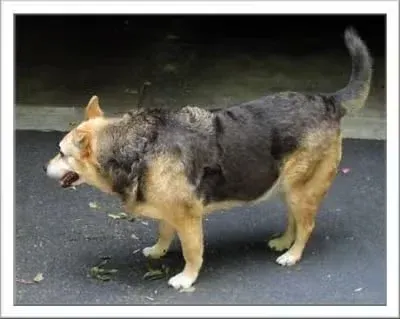
Hind sight is blind.
Tonie Cook
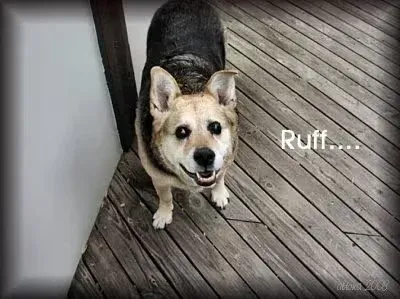
Blind dog’s ruff
Indicators That a Dog Is Losing Its Vision
Sometimes the changes happen gradually enough that you miss the bigger picture. Here are some behaviors our pet displayed as his eyesight deteriorated.
- Are there subtle shifts in your dog's behavior? For instance, our dog began walking near the house and along the fence line rather than taking his usual routes through the yard.
- Does your dog suddenly cling to you after years of independence? Our dog started showing separation anxiety as his vision declined. Once he was fully blind, he would whine or cry until our car left the driveway, and he would remain on his bed until we came back.
- Has your dog's eating pattern changed dramatically? He may eat a full bowl and still want more. Our dog had always been lean, but after a back injury and as his sight faded, he ate as if he feared he would not find another meal.
- Does your pet walk so close to walls that it leaves marks? You might notice lick marks or wet nose smudges appearing randomly around the house. Our dog was creating new routes indoors and leaving his scent by bumping his nose against the walls.
- Is your dog playing unusual games? Ours practiced navigating a complex path: down ground-floor stairs, down basement stairs, knocking at the basement door, through the garage via a dog door, around the driveway, up stairs to the deck, and knocking on the sliding glass door. One night he did this at least ten times. We did not realize he was memorizing his route.
- Has your pet become overly protective for no clear reason? When friends visited, our normally social dog would stand between me and the person speaking, barking until they stopped talking or left the room. He would not leave my side until the guests departed.
- Is your dog bumping into things more often? He may collide with cupboards, walls, or furniture that he previously avoided. It might seem minor, like anyone not paying attention, but it can signal vision loss.
- Do your dog's eyes reflect light differently in photos? Instead of the usual red-eye, you might see a green reflection. Looking back at old photos, we noticed green lights in our dog's eyes two years before he went blind. We did not know it was a clue.
- Does your dog have a pre-existing degenerative eye condition? Regular vet check-ups can help determine the severity of vision loss. If there is a degenerative condition, certain medications may be a factor. After our dog went blind, a friend asked if he had been on prednisone. Her mother had been on prednisone for years for severe arthritis, and the drug worsens blindness in many people with macular degeneration. We asked our dog's eye doctor, who confirmed the possibility. The vet said our dog might have had SARDS, with vision declining over time, but the medication could have accelerated the problem. I also researched the medication online.
Our Story: The Beginning
One day in the backyard, our dog heard something and bolted up the driveway. My husband and I were stunned when he ignored the "stop" command and ran headfirst into the back of our car. He hit the bumper hard enough to knock himself into a frightened sit-stay. We took him to the vet's office and the animal hospital immediately, where we were told he was completely blind.
Just a few weeks earlier, the vet had said his vision was blurry. We could not believe he had lost all sight in such a short time, and we had no idea it would progress that quickly.
The specialist ruled out a stroke and said that apart from old age and total blindness, our arthritic 9-year-old dog was doing as well as could be expected.
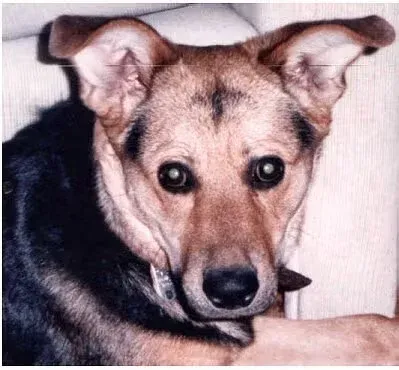
My dog’s eyes reflect green in flash photography.
How to Help Your Blind Dog
Here are some of the things I learned that helped us care for our dog after he lost his eyesight, including new commands and simple home adjustments.
1. Stay Calm
Your pet senses your emotions, blind or not. Seeing our dog so depressed broke my heart, and as long as he sensed my sadness, he stayed down. I tried to keep his spirits up by sticking to our daily routines. No overindulgence, just compassion and support. This helped him become more confident in us and less anxious about food, and his eating habits returned to normal. To ease separation anxiety, before leaving the house we would place one of our dirty t-shirts on his bed for comfort.
2. Teach New Commands
Anyone who says an old dog can't learn new tricks never met ours. He learned many new commands. The most crucial was "stop." I cannot emphasize this enough: if your dog is blind and still fearless, make sure he learns "stop."
Our dog thought he could see with his nose and ears, and if they picked up something, he would take off. Once he learned "stop," he stopped on command, knowing it was for his own good.
3. Teach Stair Navigation
Our dog was good about signaling when he wanted in or out and never had an accident. But with stairs, going in and out became tricky, and at 55 pounds he was too heavy for me to carry. So I taught him "step up" and "step down" and took every step with him until he was confident enough to navigate on his own.
4. Mark Transitions
One of the most helpful things I did was mark the end of the first step down so he knew where the drop-off was and wouldn't walk off and break a leg. I used duct tape on one stair top and different rugs on others.
Wherever there was a first step, I rubbed his paw along the two surfaces so he could feel how far he had before his toes hung over the edge. I made each stair top a different texture so he could better perceive where the stair edge began and ended and which room he was in.
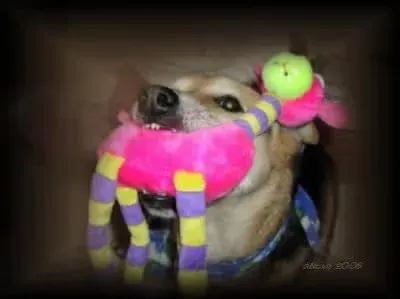
Blind dogs like to play.
How to Play With a Blind Dog
Nature compensates for loss. Just because the dog was old did not mean he didn't enjoy fun and attention. His hearing and sense of smell were remarkable. My husband missed his friend trotting around the yard and playing fetch, so to give the dog a sense of accomplishment, they practiced fetching a stick in the driveway.
My husband would tap the stick on the driveway and toss it so it clattered enough times for the dog to follow. When the dog figured out he could bring the stick back, he got a dog grin from ear to ear, knowing he would get praise and affection.
How to Walk With Your Visually Impaired Dog
My husband began getting the dog's attention by snapping his fingers. We thought this might help him follow us on walks. The snap was not loud but a consistent, soft sound the dog could track.
This worked especially well during the dog's tenth birthday party. With over a hundred people laughing, talking, singing, and making noise, plus loud music, dropped food, and unfamiliar smells, the dog followed the click of my fingers everywhere.
"Step Up" and "Step Down"
Also, when walking your dog up and down the street, always help him navigate curbs with the "stop," "step up," and "step down" commands. You and I take curbs for granted, but not knowing there is a step off could be painful for the pet.
How to Help a Blind Dog Find His Way
Years before our dog went blind, my husband inlaid a two-brick border around our back yard to separate the grass from the flower beds. Our blind dog used that brick border as a path around the yard. We have a little water fountain the dog liked to drink from. Before he went blind, I had ripped out all the mint around the fountain. That spring, I replanted peppermint by the fountain so he would know where to find it. I planted other safe things around the yard to help him find his way by smell.
In winter, we had deep snow, and the poor dog couldn't smell anything, but he found his way to the door by following the outer wall of the house until he could smell the door. My husband used the snowblower to recreate his summer paths to help him get around easier. I placed a dryer sheet under the rug by the back door so he would know which door he was at.
How to Create a Safe House and a Safe Yard
The importance of a safe house and yard cannot be overlooked. Smells, paths, and sounds are not everything. Any place we take for granted as safe can be dangerous for a blind dog (and for blind people, too).
We learned this the hard way. Our dog loved chipmunks. He would chase them, dig for their tunnels, and go to great lengths to get them. One afternoon he came into the house with a swollen eye. We took him to the specialist and were told he had a scratched cornea. She showed us how to detect eye damage and treat it with medication. She said he probably ran into a tree or bush in the yard.
With that knowledge, we pruned or removed anything at the dog's eye height that could be dangerous along his walking areas. This applies indoors as well.
Safety Tips: Indoors and Outdoors
The most important thing you can do as an owner of a blind dog is to make sure their environment is safe.
- In the Yard: Prune or move items that are at the dog's eye height.
- In the Home: Eliminate, move, or remove all sharp, hard, or edgy items protruding at the dog's eye height in and around the house.
Don't Forget These Tips
- Remember your pet's care.
- Be calm, confident, and composed.
- Make new commands simple.
- Communicate with comfort.
- Maintain the pet's paths.
- Navigate with safety.
- When in doubt, check with the vet.
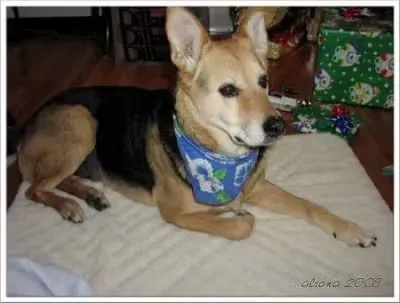
My blind best friend.
Helping Others Understand Blind Dogs
A special note: When a dog is blind, often other people do not know their condition and approach your dog to pet or socialize. More often than not, the dog recoils, snarls, or retreats in fear from the new scent, foreign hand, or abrupt approach from a friend or stranger.
When taking your pet for a walk in public, it is always a good idea for you or your pet to wear a sign to let others know that your friend is blind and anyone who approaches should be calm and cautious.
This article is a recipient of The WhippitTalk Purple Paw Award, and proudly supports the SCF and ASPCA.
Connecting With a Community
- Blind Dog Rescue Alliance A rescue group for blind and visually impaired dogs.
- Blind Dogs.net – Where dogs see with their heart! Offering support and information, a site that helps dog owners who are adjusting to life with a newly blind dog or a dog that is slowly losing its sight.
This article is accurate and true to the best of the author's knowledge. It is not meant to substitute for diagnosis, prognosis, treatment, prescription, or formal and individualized advice from a veterinary medical professional. Animals exhibiting signs and symptoms of distress should be seen by a veterinarian immediately.
Questions & Answers
Question: How can I stop my two dogs who are both deaf and blind from howling when I leave the house?
Answer: A sheet, blanket, or article of clothing that has the scent of your pet's loved one in or near his bed may be of some help. The best thing I could do to comfort my dog when he went blind and my husband and I had to leave for work was placing one of our dirty t-shirts in his bed. In this way, he had our scent close to him and kept him calmer. I hope this method helps your dogs, too.
© 2007 Tonie Cook