Post-Surgery Urination Problems in Dogs: When to Worry and How to Help
Taylor Mitchell
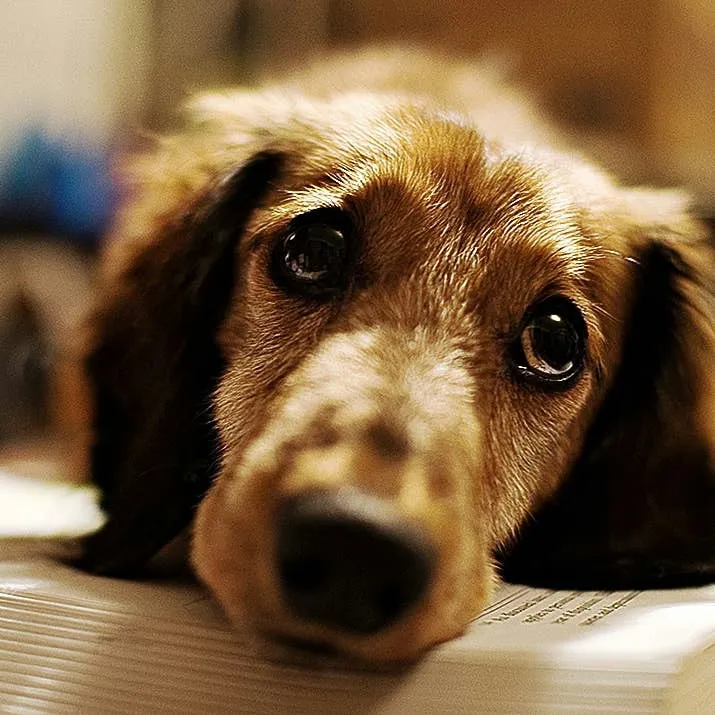
When Your Dog Doesn't Urinate After an Operation
Bringing a dog home after surgery often comes with a period of adjustment, and a lack of urination is one of the more frequent issues owners notice. The underlying reasons can differ based on what kind of procedure was performed.
Among the most typical explanations for a dog not peeing following surgery, spaying, or neutering are lower water consumption and soreness or sensitivity around the groin. A dog recovering from an orthopedic operation or any procedure that limits movement may also hold off on urinating. If painkillers or sedatives are part of the recovery plan, a dog might need help getting up and going outside on a regular schedule.
The discharge instructions from your veterinarian typically cover the kinds of changes you might see. Every dog responds to surgery in its own way and shows pain differently. Even a dog that has had the same operation before may react differently the next time.
In This Article
- 4 Reasons Your Dog Won't Pee After Surgery
- What to Do if Your Dog Is Not Peeing After Surgery
- How Often Should Dogs Pee?
- How to Encourage a Dog to Urinate After Surgery
- What to Do if Your Dog Won't Pee With a Cone On
- Urinary Tract Issues and UTI Symptoms in Dogs
- What if Your Injured Pet Won't Pee?
- Resources and Further Reading
Note: When in doubt, always communicate your concerns to your dog's overseeing veterinarian.
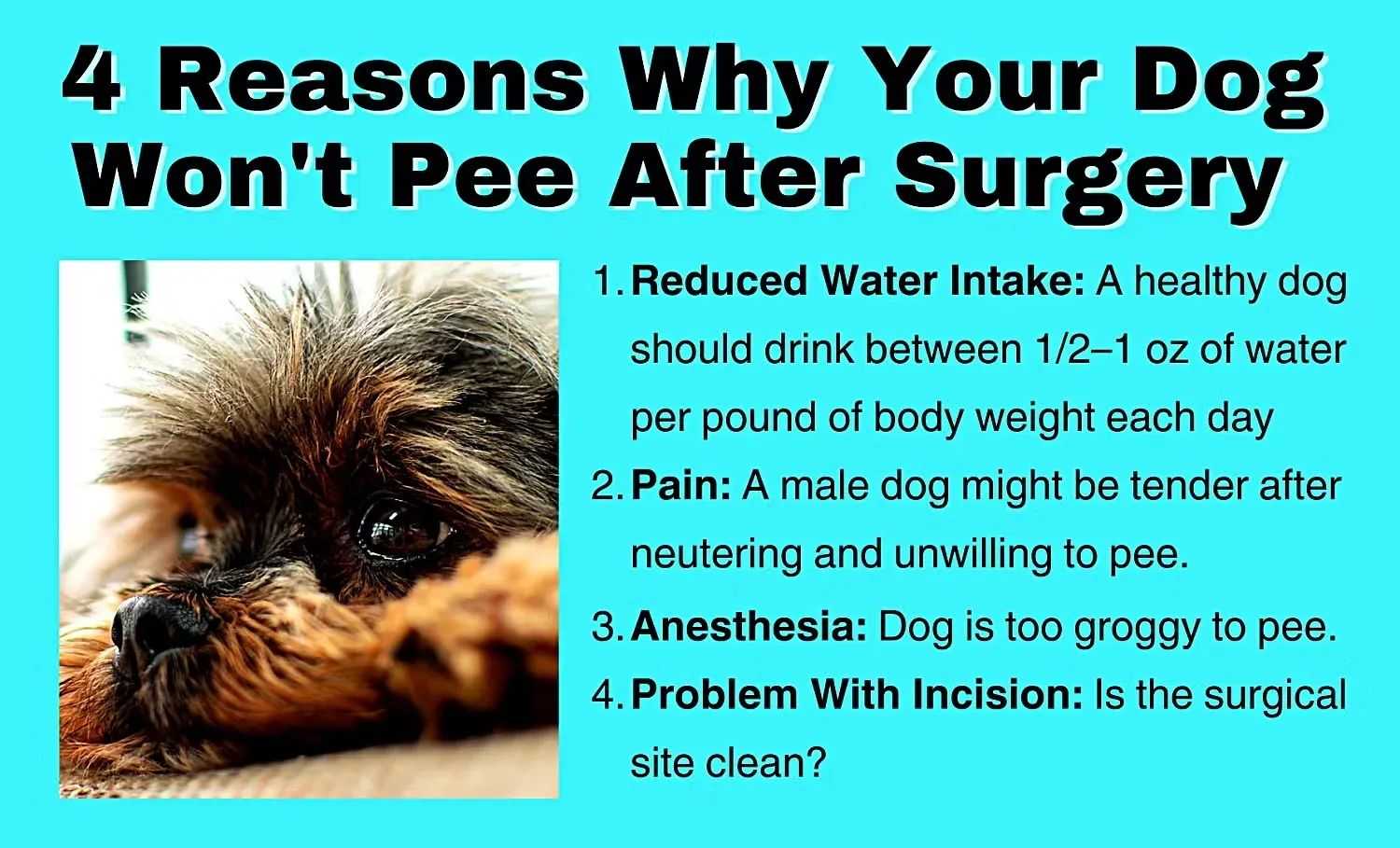
Here are four reasons dogs won’t pee after surgery.
Canva.com/PhotoScape
Four Possible Causes of Post-Surgical Urination Problems
Before becoming overly worried that your dog hasn't peed after surgery, first rule out the possibility that they relieved themselves somewhere unexpected. Inspect the crate, bedding, and other spots for any dampness.
If you find no evidence of urination, there is likely a specific reason your dog is avoiding the bathroom. As you try to encourage your dog to pee, consider these potential explanations for the lack of urination.
1. Lower Water Consumption
How much has your dog been drinking? It's common for dogs to show little interest in water after an operation. Drinking less naturally leads to producing less urine. Some dogs receive IV fluids during surgery to stay hydrated. This usually means more fluid output afterward, but it can sometimes make them less inclined to drink water once they're home.
Dr. Karen Becker notes that a healthy dog should generally consume between 1/2 and 1 ounce of water per pound of body weight daily. The actual amount can differ based on your dog's age, any existing health issues, and what recovery requires.
2. Discomfort and Pain
Is your dog hurting? The type of surgery your dog had can affect how mobile they are and how much pain they feel. Dogs that underwent orthopedic procedures, such as repair of a torn cruciate ligament, may struggle to bear weight on a hind leg, which makes walking and urinating painful.
Often, you'll be sent home with a sling to help your dog stand and move around. Go slowly. A male dog, for example, might be sore after neutering and unwilling to urinate unless his pain is properly managed.
3. Lingering Effects of Anesthesia
Is your dog still out of it? If you brought your dog home soon after being put under, they might still be groggy from the anesthesia. Your dog could be sleepy, unsteady, and confused, and going potty is the last thing on their mind.
4. Incision-Related Problems
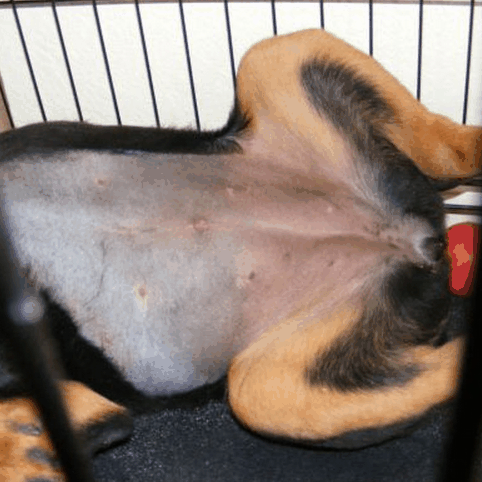
Is the surgical site clean? Inspecting the surgical area can give you a sense of your dog's overall condition. Does the incision look infected? Signs of infection may point to broader systemic issues. Keep the suture area clean even weeks after the procedure.
Some spay and neuter clinics use suture glue, but that doesn't guarantee there won't be problems, particularly with an energetic puppy. Learn about suture reactions, postsurgical conditions, and proper suture care.
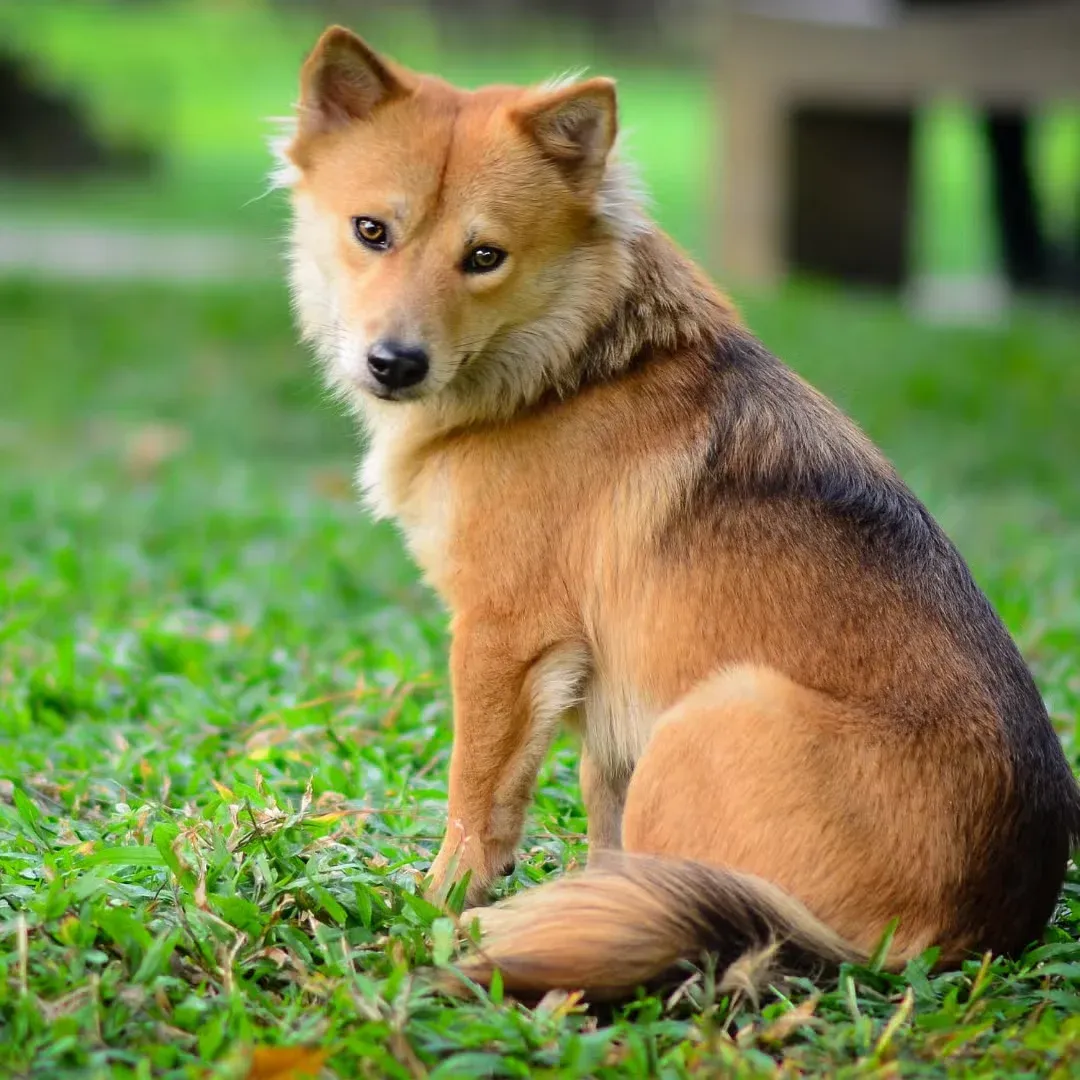
You may want to carry your dog outside to pee if they are in pain. Just monitor their behavior and intervene as needed.
Minh Pham
What to Do if Your Dog Is Not Peeing After Surgery
Whatever the cause, you may be asking how long your dog can safely go without urinating and what you can do to encourage peeing. So what can you do at home to help your dog urinate? Here are some suggestions.
Watch Your Dog's Behavior
If your dog urinated after surgery but hasn't gone again several hours later, they may have linked urinating with pain and are trying to hold it as long as possible to avoid the discomfort.
Again, it's worth checking whether your dog might have urinated somewhere in the house. With a small dog, it's easy to miss a spot on the carpet or in a corner. Unlike cats, whose litter box activity is easy to track, dogs can be more discreet about peeing in front of you, especially when they aren't feeling well.
Contact Your Veterinarian
You may want to call your vet if your dog appears to be in pain. They might need prescription medication, or if they're already on something, the dose may need to be adjusted.
Important note: Veterinarian Dr. Marie Haynes recommends seeing a vet if your dog hasn't urinated within 24 hours post-surgery or is trying to urinate but nothing comes out. In some cases, the vet may need to insert a catheter to empty the bladder.
Provide Assistance
If your dog has trouble walking after orthopedic surgery, a sling or a large rolled-up towel placed under them (avoid this if they had abdominal surgery or a soft-tissue procedure in the pelvic region) will help put less strain on their legs and possibly reduce pain.
Consider UTI Symptoms
In some cases, female dogs may get a urinary tract infection (UTI) after being spayed. Symptoms of a dog UTI include straining to urinate, urinating only a few drops at a time, pink, blood-tinged urine, and licking the private areas. If you suspect a UTI, bring a fresh urine sample to your vet.
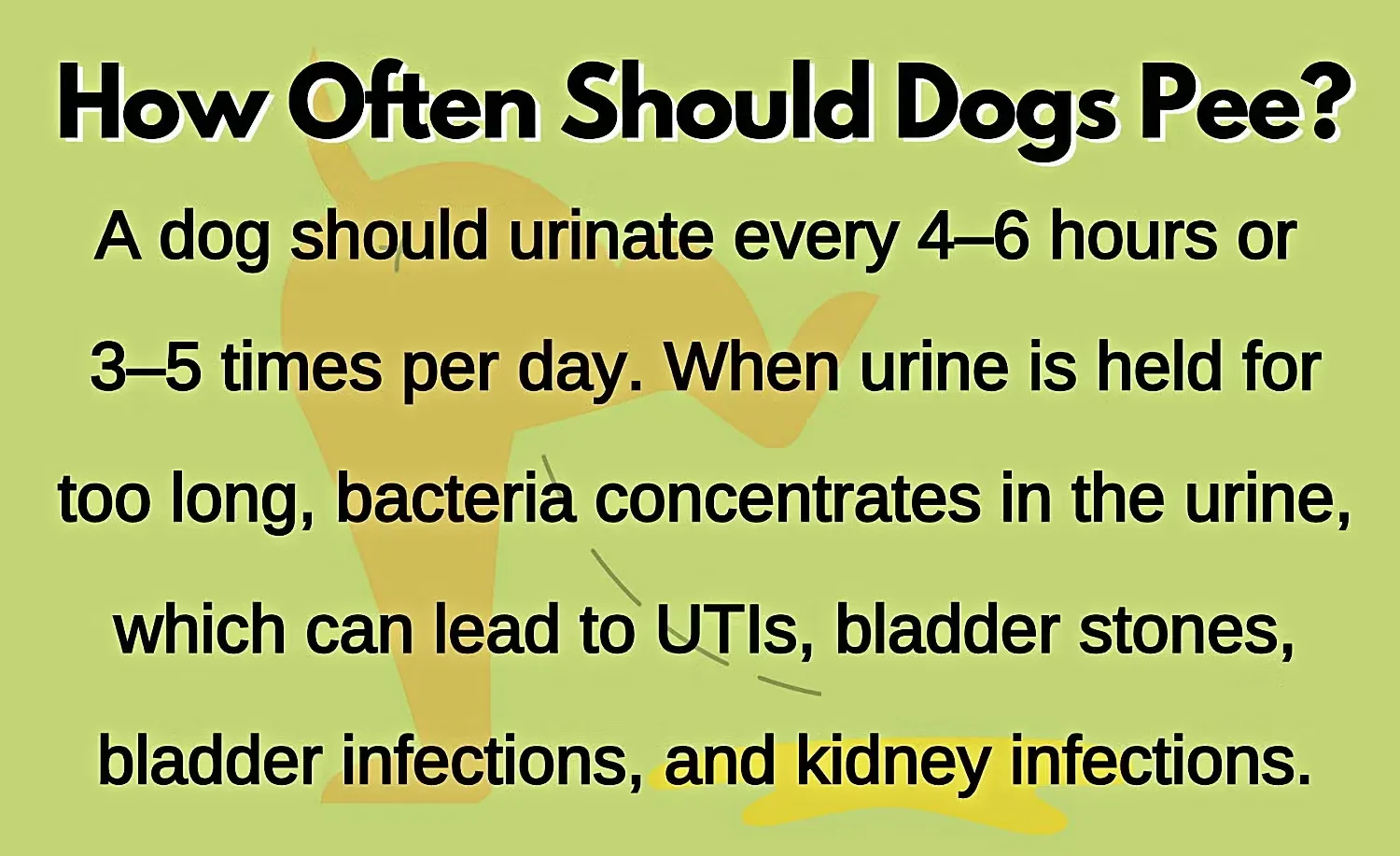
A dog should urinate every 4–6 hours or 3–5 times per day.
Canva.com/PhotoScape
How Often Should Dogs Pee?
You may be wondering how often a dog should urinate. According to Dr. Brian Evans, at a minimum, a dog should urinate every four to six hours, but this may vary depending on the amount of water consumed, diet, age, and activity levels. As a general rule, if your dogs pee 3–5 times per day, you should be okay.
As with humans, holding urine in isn't good practice. When urine is held for too long, bacteria concentrates in the urine, which may predispose a dog to a urinary tract infection, bladder stones, or worse, a bladder or kidney infection.
Know Your Dog
Prior to surgery, you will want to know your dog's "normal." Do they dribble when they urinate from old age? Crouch to potty? Lift a leg? Do they have an arthritic knee that may be even more compromised after surgery? Do they have a preexisting medical condition?
Take these individualized factors into account when determining what exactly is deterring your dog from urinating.
I've seen some dogs/cats after surgery not urinate for 2 days because they didn't want to and didn't have that much urine to begin with because they didn't drink much.
— JustAnswer.com's emergency vet "aggieervet"
"My Dog Hasn't Peed in 24 Hours"
If your dog hasn't urinated after surgery, you may be concerned about this change. According to PetMD, it's normal for dogs to urinate more or less frequently after surgery. Keep in mind that their bladder may have been expressed (emptied) after surgery as well, which buys them some time, so check with your vet on this.
If you are giving your dog enough opportunities to try to eliminate, continue to monitor until you reach the 24-hour mark. Sometimes, it's just a matter of assisting your dog or letting them walk around a bit. But when in doubt, or if you feel like something is wrong, call your vet.
"My Dog Hasn't Peed in 48 Hours (2 Days)"
Perhaps your dog has secretly eliminated when you weren't looking or even eliminated in their bed. Have you seen your dog drinking water, yet they refuse to pee? If it has indeed been more than 24 hours and you are certain that your dog has not urinated, this is cause for alarm.
Notify your vet right away in an effort to prevent serious health risks.
Urinary retention can put your pet's life in danger, especially if they have sustained some type of injury. This puts them at risk of a bladder rupture, which is life-threatening. In addition, lack of urine output may indicate serious dehydration.
How to Encourage a Dog to Urinate After Surgery
- Make sure fresh water is available at all times if they are alert.
- Be on top of their pain medication. Keep a detailed record of when each dose was given and how much. Communicate to your vet if you suspect that the pain management isn't adequate.
- Assist your dog with mobility. If your dog is in pain or medicated (yes, dogs on pain or sedation meds will "appear" lethargic), be sure to offer them regular breaks and assist them with mobility. You can use towels as slings if your vet hasn't provided you with one. If your dog is small, simply carry them outside.
- Let them "smell" their potty spot. Sometimes, it helps to take dogs to the ripest pee spot—even if you live in a multi-animal household. Just make sure to keep their incision site clean.
- Give them love and attention. Sometimes, dogs simply feel lousy and get depressed postoperatively. Make sure they aren't so isolated that they simply "give up." Offer them suitable stimulation.
- Communicate with your vet. If it has been 24+ hours of no urine, let your vet know! Depending on the surgery or injury, your dog may need its bladder expressed, catheterization, or similar.
What to Do if Your Dog Won't Pee With a Cone On
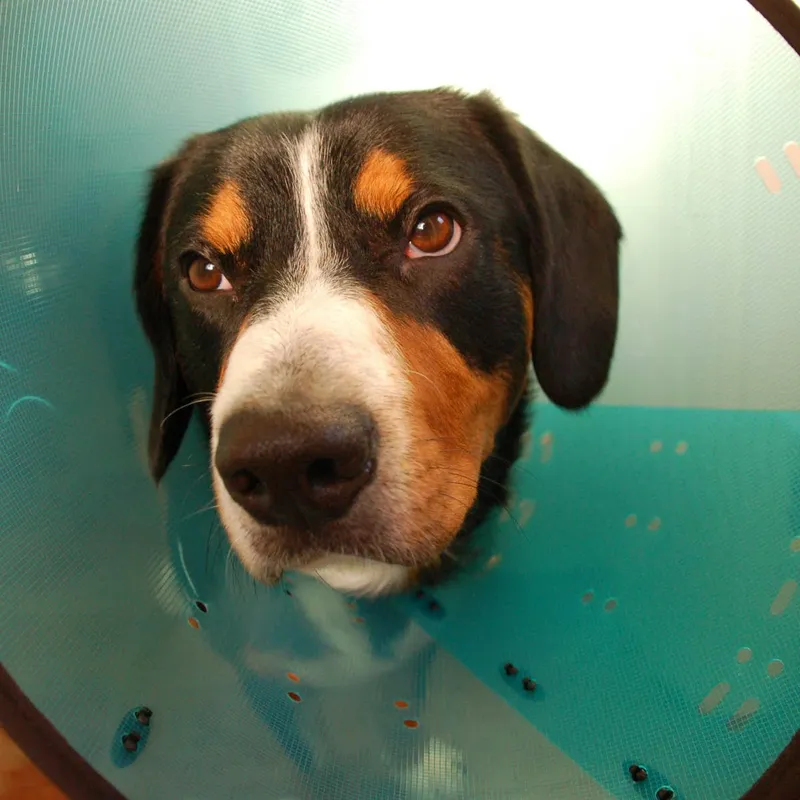
We all know that the Elizabethan collar, e-collar, or "cone of shame" is not a favorite for our canine companions. Sometimes, your dog will refuse to eat, drink, pee, or poop with the collar on. You may be wondering if it is okay to remove the collar.
Some dogs need to smell their usual potty spot (or smell the pee of other dogs) to feel encouraged to urinate. Keep in mind that the only time it is okay to remove the collar is if your vet approves of it or you will be fully supervising your dog.
If you can supervise your dog for the entire duration, you may choose to remove the collar during feeding, drinking, or potty breaks. This means that you are not looking away for even a second. It takes one lick or nibble to undo a suture or introduce bacteria into a surgical site. If your dog is quick to try to chew, you can use a leash to guide them—this offers some head control.
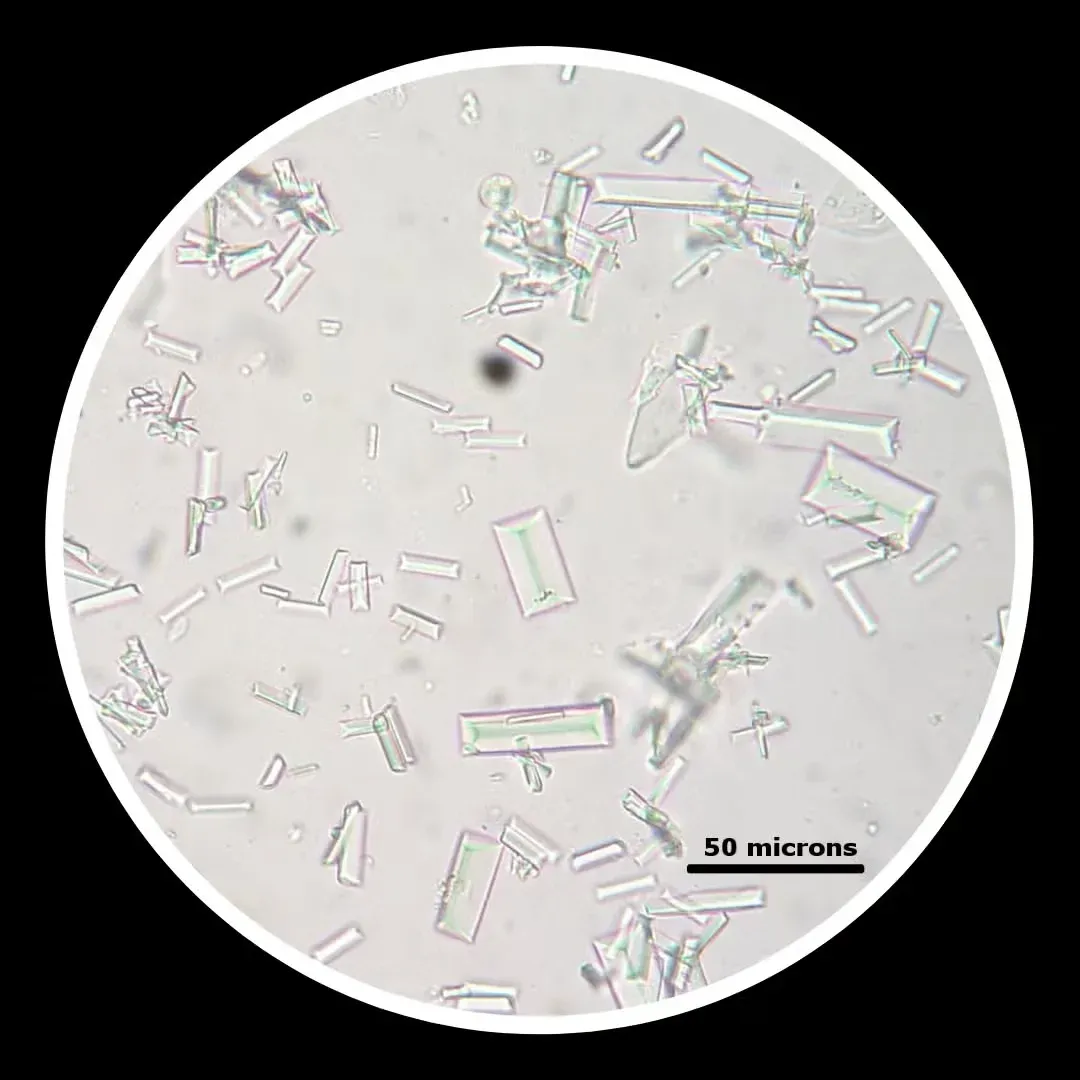
Struvite crystals in dog urine
Joel Mills, CC BY-SA 3.0, via Wikipedia
Urinary Tract Issues and UTI Symptoms in Dogs
Dogs are prone to UTIs—especially female dogs. Symptoms can range from too much urine output to too little urine output. UTI symptoms often mimic what we see in humans—there may be signs of incontinence, dribbling, blood in the urine, discharge, or pain. But what indicates blockages?
Infections and blockages of the ureters due to stone formation are common causes of blood in the urine, straining to urinate, and similar problems. Keep in mind, however, that frequent urination could be tied to preexisting medical conditions (occurring for months) like kidney disease (also acute) or similar. Here are some common urinary tract issues in dogs:
Bladder Stones
- Symptoms: Cystitis, hematuria (blood in urine), dysuria (straining), fever, pain.
- Description: Termed uroliths or cystic calculi, these are rock-like mineral formations in the bladder. Variations include struvite bladder stones. Struvites may form secondary to bacterial infections in the bladder due to excess ammonia. The condition is more common in female dogs than male dogs.
- Diagnosis and Treatment: Surgical removal after palpation, diagnostic imagery, urinalysis, urohydropulsion (flushing out with a catheter), ultrasonic dissolution (high-frequency ultrasound), dietary changes, and antibiotics. Stones can be life-threatening if a severe blockage of the urethra is not treated.
Kidney Stones
- Symptoms: Pain, kidney colic (abdominal pain), vomiting, swelling, fever, blood in the urine (hematuria), poor appetite, lethargy, and increased or decreased urine flow.
- Description: Also termed a nephrolith (nephro = kidney; lith = stone). Sometimes, nephroliths may be left untreated if urine flow is normal. Large stones or fragments may lodge in the ureter (connects to the bladder) and cause life-threatening conditions. Often caused by infection or breed predisposition (e.g., Dalmatians).
- Diagnosis and Treatment: Diagnostics include blood work and chemistries, urinalysis, urine culture and sensitivity test, radiographs, and a blood pressure measurement. Treatment includes dietary changes (acidifying the urine), increased water intake, surgery, and lithotripsy (ultrasound).
Mechanical Issues
Mechanical issues can range from loss of sphincter tone due to hormones, traumatic events, and age, to prostate issues. These issues can be related to soft tissue obstructions (tumors, growths, cysts), neuromuscular weakness, and injury—sprains, tears, trauma, etc.
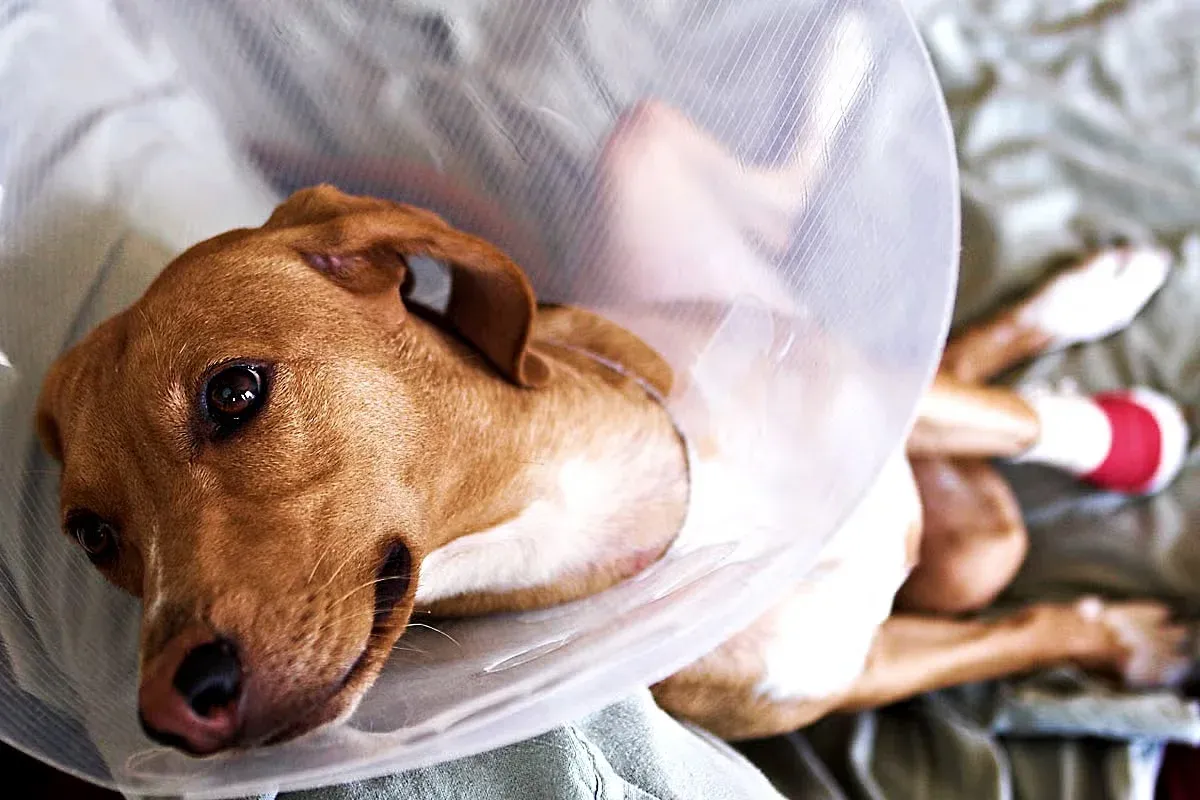
If your dog doesn’t pee for an entire day, work closely with your vet to see what’s wrong.
Photo by Tudor from Guelph, Ontario, Canada, CC 2.0, on Wikimedia Commons/PhotoScape
What if Your Injured Pet Won't Pee?
We've already reviewed the step-by-step instructions for how to handle a dog that refuses to pee after surgery, but if your dog has been acutely injured, ranging from something as simple as a fall to something as serious as a hit-by-car (emergency attention needed) and other painful accidents, you should take them to see a vet immediately.
Your veterinarian may order radiographs or an ultrasound in the clinic to diagnose any internal injury that is causing urinary retention or straining. Pelvic injuries and musculoskeletal injuries can cause your dog to stop eliminating as well. External urethral strictures, for example, are common with pelvic injuries (like hit-by-car patients). If your dog has been injured, don't delay medical attention.
As always, be sure to work with your veterinarian to investigate any underlying problems with your dog. Postsurgical complications do occur, and it is always better to be safe than sorry.
Resources and Further Reading
- Becker, Dr. K. (2022). "How Much Food Does Your Dog Really Need?" Bark & Whiskers.
- Indian Creek Pet Hospital. (n.d.). "Surgical FAQs."
- Just Answer: Ask a Vet. (n.d.). "My dog has not urinated in three days."
- Just Answer: Ask a Vet. (n.d.). "She had gotten spayed on Wednesday but hasn't urinated or defecated since then."
- Just Answer: Ask a Vet. (n.d.). "Why Your Dog Isn't Drinking Water After Surgery."
- Llera, R., DVM et al. (n.d.). "Bladder Stones in Dogs." VCA Animal Hospitals.
- PetMD. (2010). "Kidney Stones in Dogs."
- Pet Resource Center of Kansas City. (n.d.). "After Surgery FAQ."
This article is accurate and true to the best of the author's knowledge. It is not meant to substitute for diagnosis, prognosis, treatment, prescription, or formal and individualized advice from a veterinary medical professional. Animals exhibiting signs and symptoms of distress should be seen by a veterinarian immediately.
Questions & Answers
Question: My dog has not urinated for two days after knee surgery, should I be concerned?
Answer: Consult with your vet who has done the surgery. Most likely your dog is not urinating because the leg still hurts him/her and he/she is uncomfortable walking. Most dogs will start putting weight on the leg within 5 to 7 days – some though may do so much sooner. Your dog may need pain meds to feel better.
Question: My dog is not walking two days after being spayed, what should I do?
Answer: Greetings, you should consult with your vet about this. Normally, after spay surgery, your vet should have sent your dog home with some pain medications. If these were not provided, it would be a good idea to give your vet a call and see whether you can get a prescription. Another possibility is that the incision is inflamed or the stitches are particularly tight, and every time your dog moves to walk, this puts a strain on the incision which may pinch and hurt. Of course, if your dog appears weak or lethargic, has pale gums, slow capillary refill time, or feels cold to the touch, this warrants an emergency vet visit as this can be indicative of internal bleeding. Please see your vet to play it safe.
© 2014 Adrienne Farricelli CPDT-KA, Dip.CBST