Comparing Dog Recovery Collars: Beyond the Plastic Cone
Rowan Williams
The Unwelcome Plastic Cone
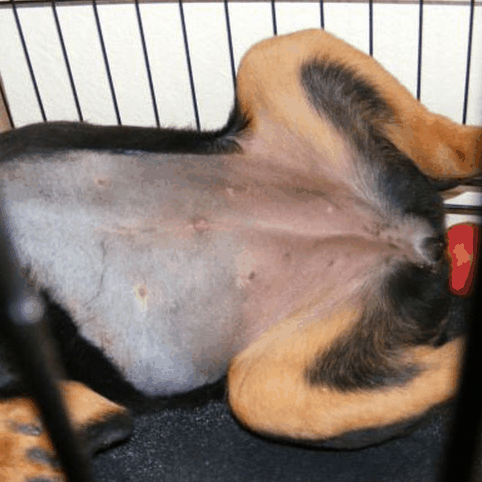
After our dog hurt his dewclaw and needed it trimmed to the quick, we combined that procedure with a long-planned neutering to avoid two separate recovery periods. This meant two surgical sites—his right front paw and his groin—that he had to leave alone for a week.
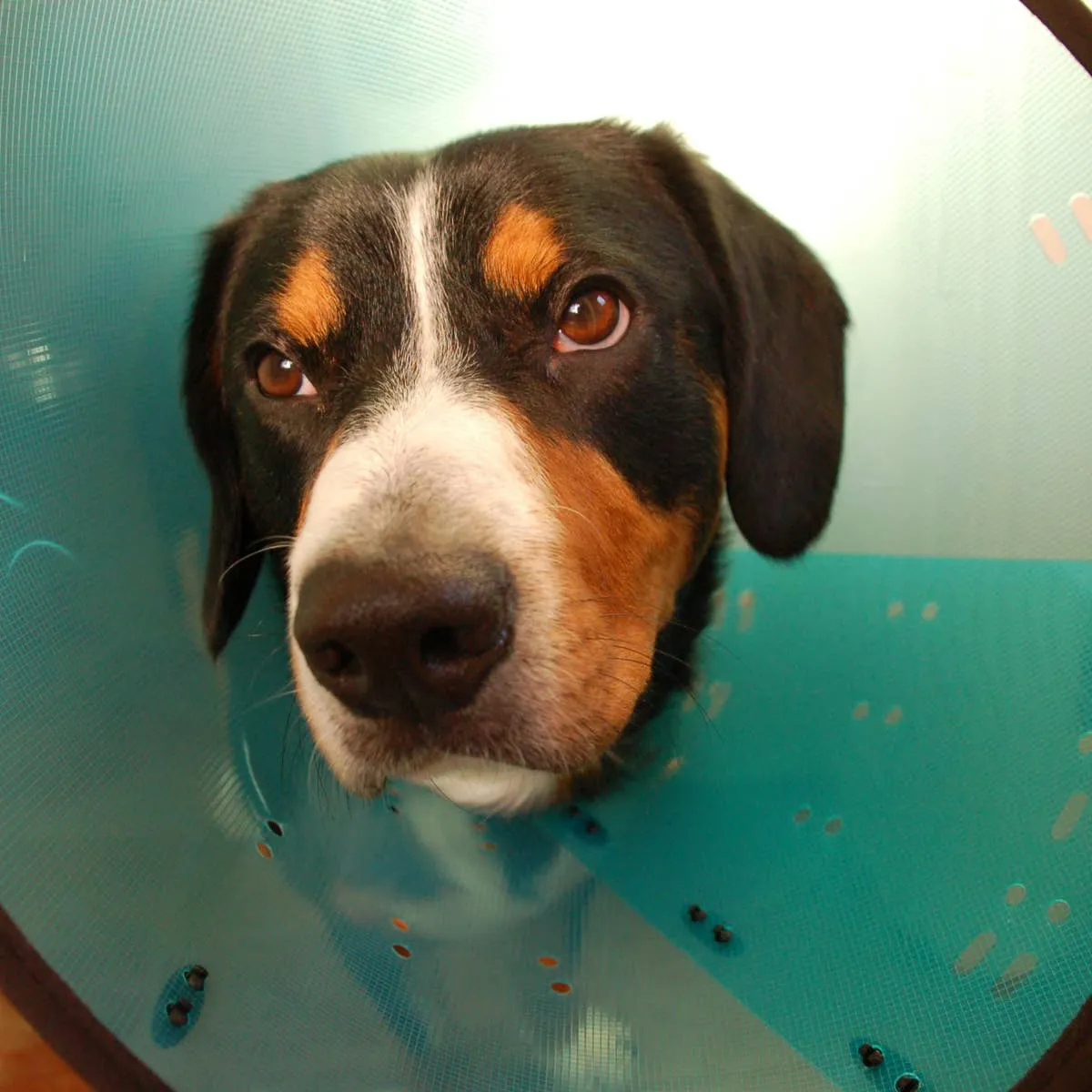
When we collected him from the vet, we were given the standard plastic Elizabethan collar, often called an E-collar. Like most dogs, ours took an instant dislike to it.
We were advised to watch him during the day but to keep the cone on at night to protect his wounds and bandages. He despised it from the start and spent the entire first night whining instead of sleeping, so we removed it at dawn.
It was hard to tell if his distress came from the surgery itself or the cone. A fellow writer on Hubpages mentioned an inflatable collar, and I also came across four other alternatives.
Five Alternatives to the Standard E-Collar
I looked into these five options, each with its own advantages and drawbacks.
1. Soft E-Collar
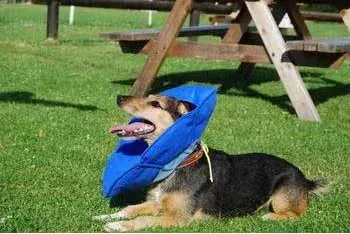
These resemble the classic cone but are made from a softer material.
They may not stop a determined licker from reaching the wound, but for many pets they offer a more comfortable option.
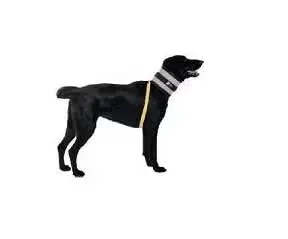
These bite not collars look a little like the neck braces human patients might wear after a whiplash injury.
2. Bite Not Collars
These look like the neck braces people wear after whiplash.
They work by preventing the dog from bending its neck to reach wounds. They are effective and fairly comfortable, though they may not suit dogs with thick necks like pugs or long-haired breeds like Bearded Collies.
3. Kong E-Collars
These are similar to traditional cones but are transparent, which can make life easier for the dog.
4. Anti-Lick Spray
Some owners report success with bitter-tasting sprays. I tried three different brands when my dog was teething, and he ignored all of them.
5. The Inflatable Collar
This is the one I ordered and review in detail below. Be sure to read about the peanut butter test.
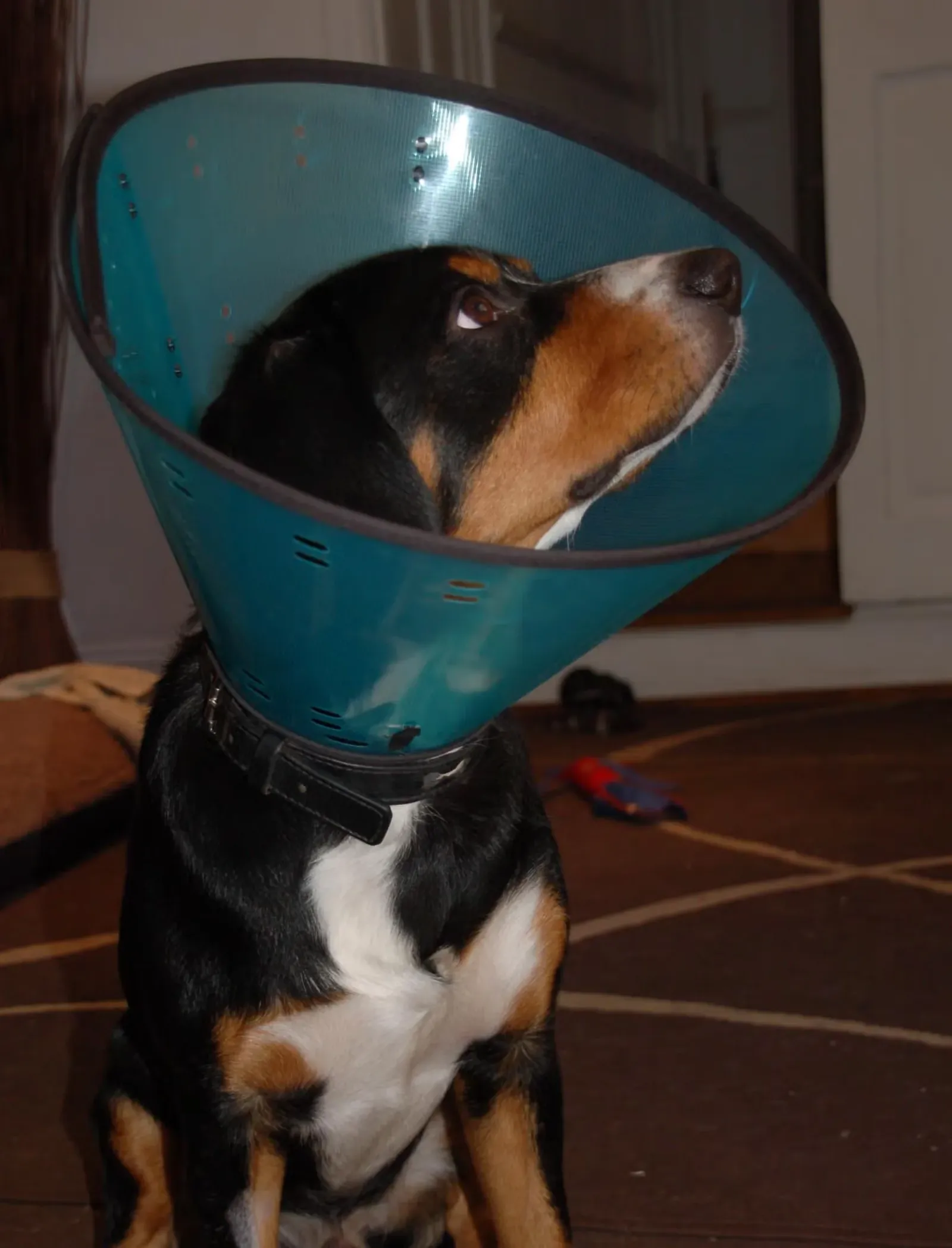
The dreaded cone of shame amplifies sounds and shields your dog’s peripheral vision
Linda Bliss
The Traditional Cone: Why It's Called the Cone of Shame
The classic E-collar is the hard plastic, often opaque cone most vets send home after surgery. It looks like a lampshade around the dog's neck.
- It was easy to put on and completely stopped him from licking anywhere.
- It blocked his side vision so he kept colliding with objects.
- He became more sensitive to outside noises, perhaps because the cone amplified them.
- It interfered with interaction—he constantly banged it into my legs and face.
- It seemed to depress him; he whined all night and couldn't get comfortable.
- It would pop open and fall off if he ran into something.
- He avoided his water bowl while wearing it.
- Vomiting inside the cone was a messy ordeal.
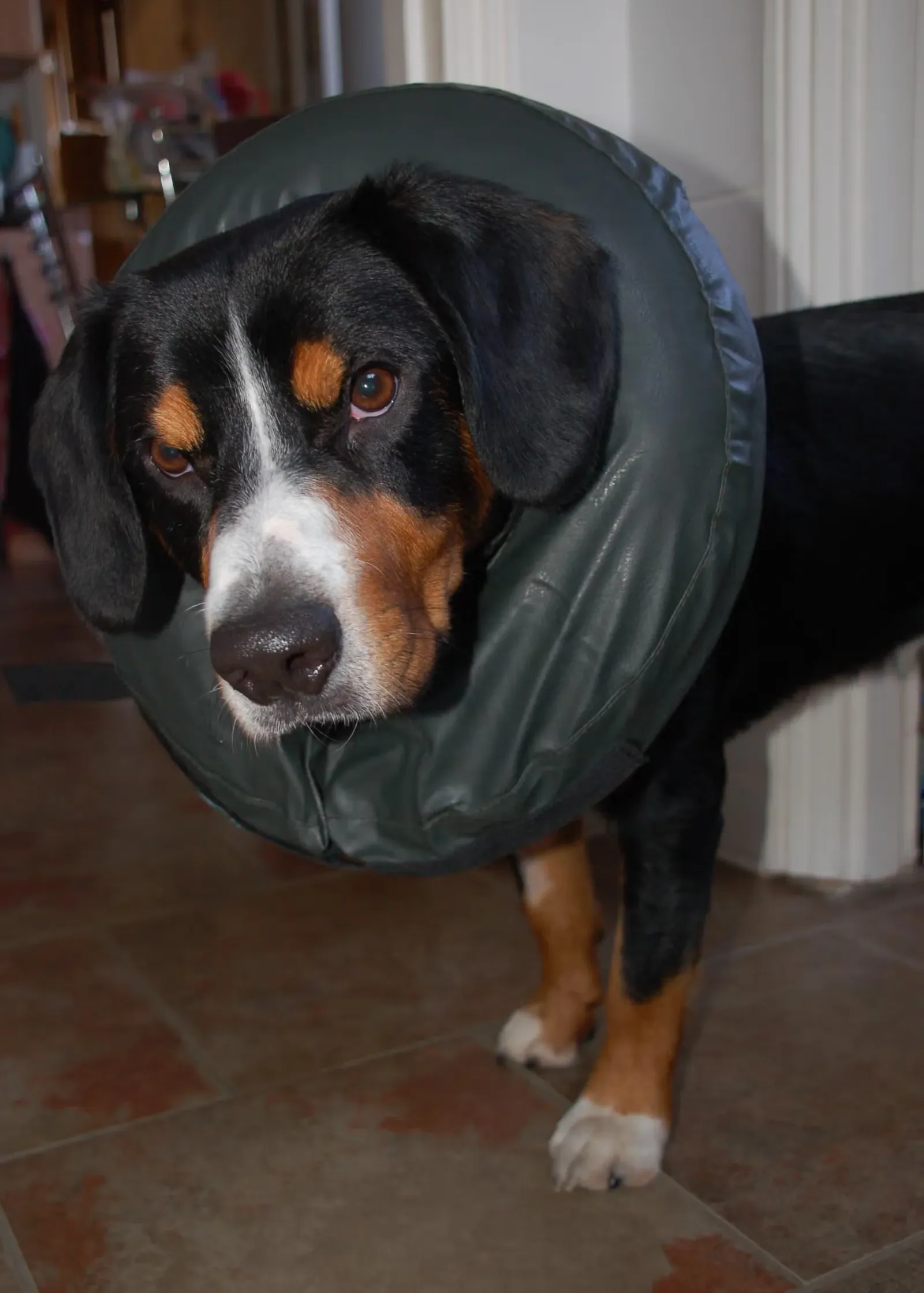
The Soft Comfy Doughnut Collar
Linda Bliss
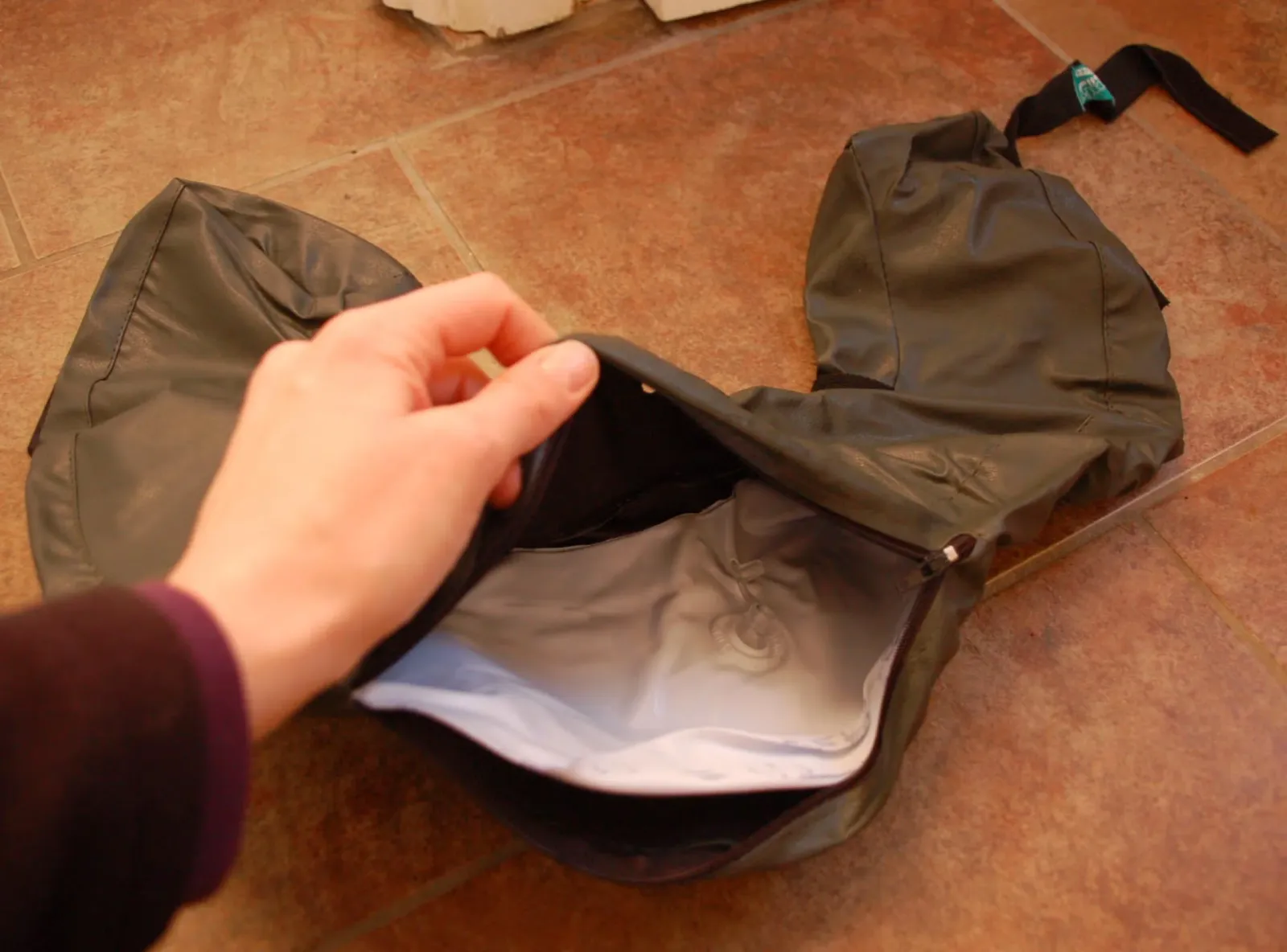
This is what the collar look like before its been inflated – the core is inflatable and the outer cover is made from a sort of slobber proof material…
Linda Bliss
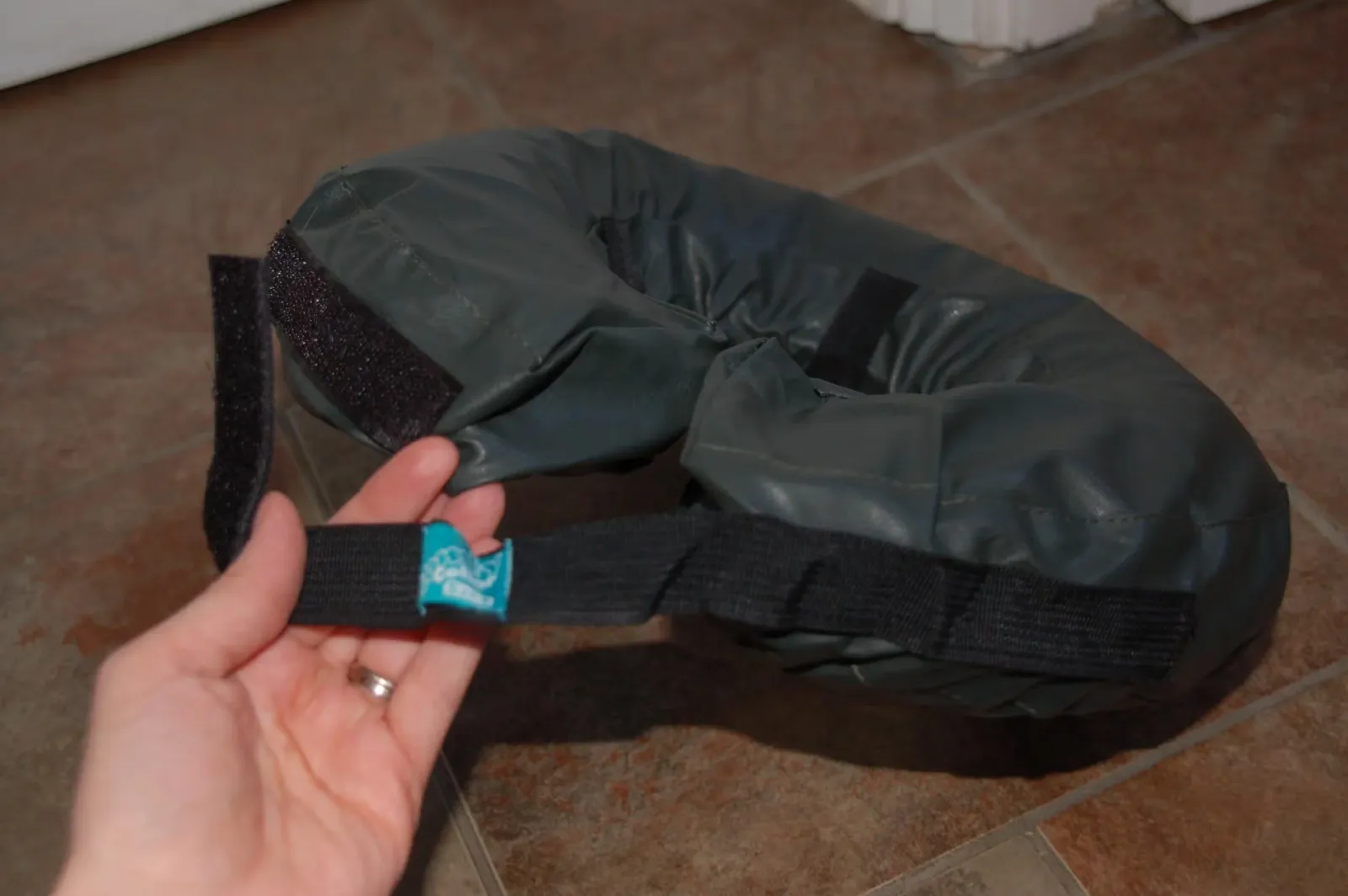
Inflatable Dog Collar – attach it with velcro straps, or add your dog’s own collar for added security
Linda Bliss
Review of the Inflatable Collar
The inflatable collar is doughnut-shaped with an air-filled core and a durable cover. It fastens with a velcro strap and can be attached to your dog's regular collar for security. It resembles a travel pillow.
They come in various brands and colors. The one I chose was easy to inflate and put on.
- After a quick sniff, my dog ignored it completely.
- He found a comfortable position and fell asleep; the collar seemed to work as a pillow.
- He still bumped into things, but the impact was cushioned and didn't seem to bother him.
- It is less intrusive, so you can cuddle and pet your dog normally.
- His peripheral vision and hearing were less affected than with the cone, and he was calmer.
- He could drink and pick up toys without difficulty.
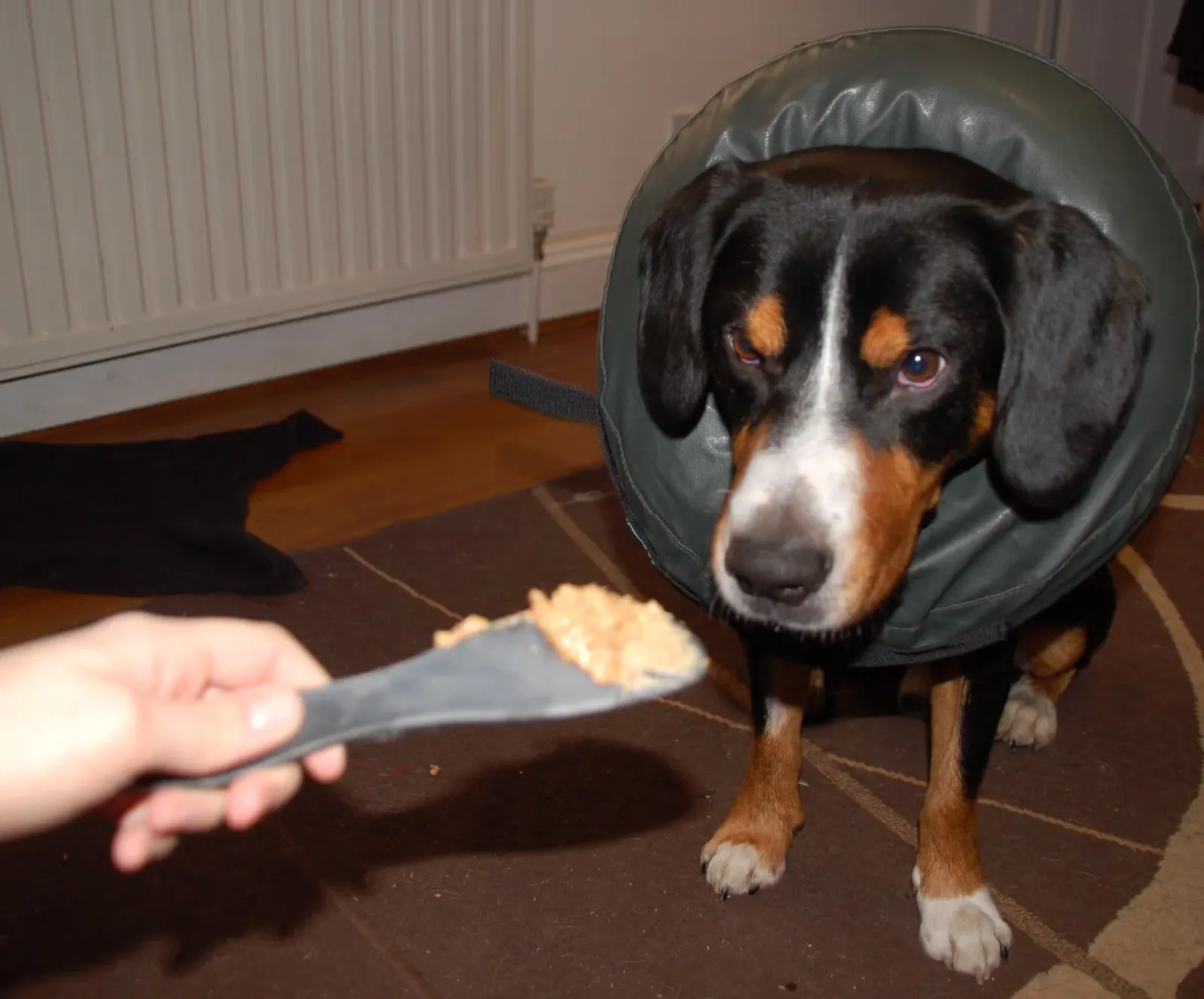
Can the inflatable cone pass the peanut butter on paw test?
Linda Bliss
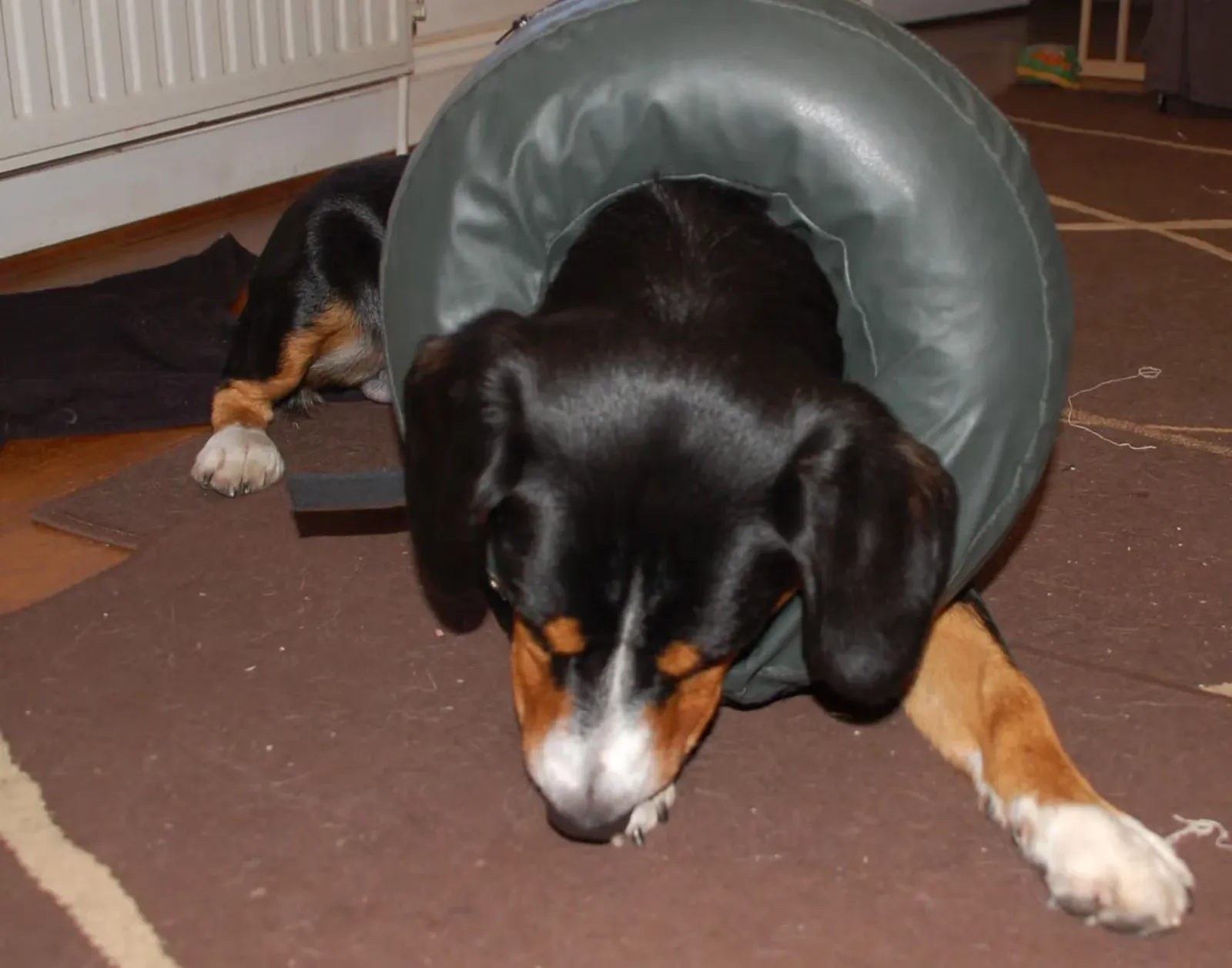
This collar is clearly not so good for paw injuries as he can easily lick of all the yummy peanut butter!
Linda Bliss
The Peanut Butter on Paw Test
Once I saw the inflatable collar on my dog, I doubted it could stop him from licking his paw or rear. It looked too soft, so I smeared a little peanut butter on his front paw to test. He licked it off in seconds.
Either my dog has an exceptionally long tongue, or this collar isn't suited for paw injuries. But I didn't give up.
The more critical test was preventing him from irritating the stitches in his groin. I'll spare you the photos, but he could reach the peanut butter there just as easily as anywhere else.
Overall, this collar was very comfortable—as a flotation device or travel pillow. It did not stop my dog from licking any part of his body.
I was disappointed, as I've seen other owners praise this collar. Maybe my dog is too flexible or long-tongued for it.
The Cone vs. the Doughnut Collar
| Elizabethan Collar | Inflatable Collar | |
|---|---|---|
| Comfort: Will your dog like wearing it? |
| | | |
Safety: Will it stay on?
| | | |
The peanut butter test: lickability
| | | |
Cuddles: Can you reach?
| | | |
Bumping into things
| | |
The more stars, the better the collar is!
What Have You Tried?
I hope this review helps you find an alternative to the cone of shame.
I recommend buying and testing these alternatives before your dog needs surgery or has an accident.
That way you can find the most comfortable option for your dog and get him used to wearing it beforehand.
This article is accurate and true to the best of the author's knowledge. It is not meant to substitute for diagnosis, prognosis, treatment, prescription, or formal and individualized advice from a veterinary medical professional. Animals exhibiting signs and symptoms of distress should be seen by a veterinarian immediately.