How My Labrador Overcame Laryngeal Paralysis: A Personal Journey
Charlie Ross
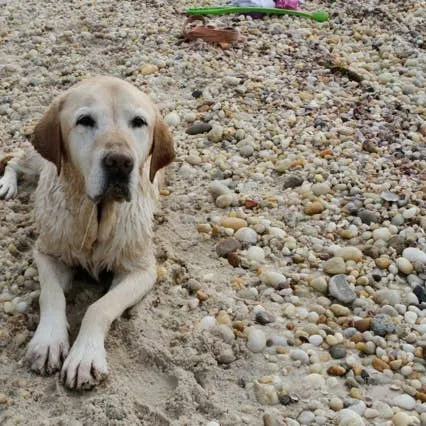
Sonny's Path Through Laryngeal Paralysis
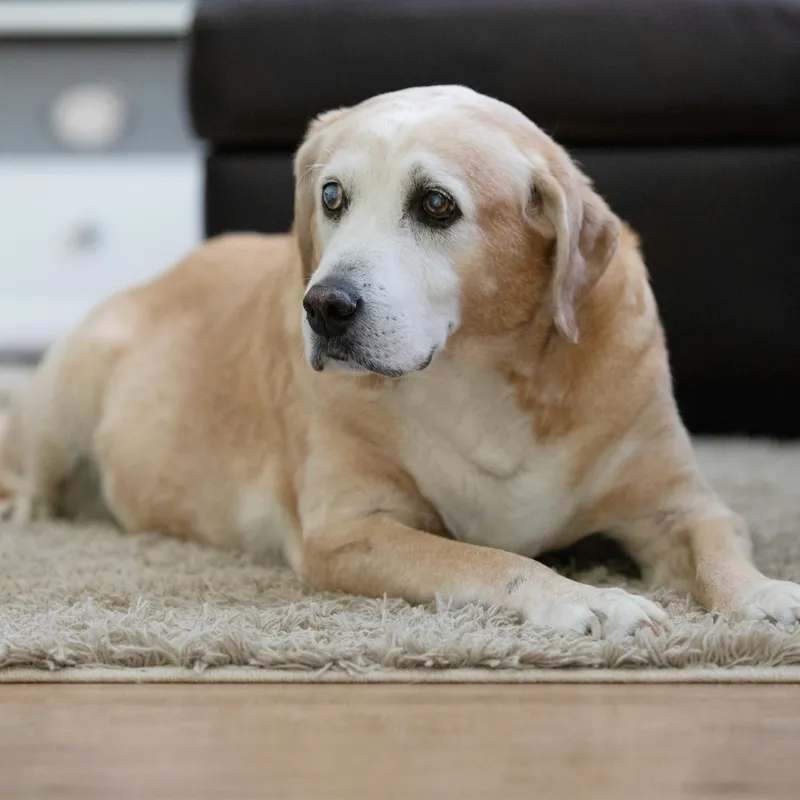
Sonny joined our family when he was almost three years old. His original name was different, but Sonny was simpler for him to pick up. Before he came to us, he lived with a family and another dog that frequently bit him. That family decided to rehome him because they considered him adoptable, so we were the fortunate ones. Like any dog, he has his quirks, but overall he embodies the traits people hope for in a Yellow Labrador Retriever: friendly, loyal, gentle, and intelligent.
Roughly two years back, when Sonny was around ten, his movement began to change. He grew lethargic and easily tired. We told ourselves he was ten but still healthy, so what else could explain it? He no longer swam as often and showed less enthusiasm for chasing the ball. He started making sounds when out of breath, and that happened more and more. His breathing was raspy, as if he had something caught in his throat or thick mucus he couldn't clear.
The Diagnosis That Changed Everything
When his low mood became something I couldn't ignore, I booked a visit with his veterinarian and we began searching for answers. Several appointments at New York's Animal Medical Center led to a definitive diagnosis: laryngeal paralysis. His lungs weren't receiving sufficient air, and his body was straining to breathe. He wasn't sad—he was worn out. It wasn't that he lost interest in fetching; he physically couldn't do it. Surgery was an option, but as with any procedure, complications were possible. What were we to do?
Some pet owners have the luxury of multiple options, but we didn't. Our dog was ten when the first signs appeared, and they only got worse. Some might have argued that he was already old and we should let nature take its course. But the veterinarian was unequivocal. The surgery would restore his ability to breathe. Instead of functioning on 30–40% oxygen as he was, he would return to normal. With surgery, he would survive the summer. The difficult caveat was that dogs who undergo this procedure are not supposed to swim. They risk taking in too much water and drowning because their larynx no longer closes properly.
Looking at that proud photo above, you can probably guess that we chose the surgery. When we learned he needed it, there was almost nothing helpful online—only a frightening account of a dog that died a few months afterward.
Recovery and Renewed Strength
This is our success story. Sonny returned from the hospital thin and frail. His new harness looked enormous on him—collars are permanently off-limits after this surgery, so we had already arranged a harness for his homecoming, but he seemed shrunken after hardly eating.
For two weeks, we fed him special meals shaped into meatballs to help him regain his strength, and he did bounce back. His first walk outside happened on a freezing April night, and when he exhaled, a huge cloud of vapor appeared. We realized we hadn't seen that in years. He was tired and so were we, but we were both recovering.
Sonny spent that summer with a friend so he could swim daily once he was past the critical period, and to avoid our steep stairs. He had the surgery at age eleven, and now he is twelve. He's aging and not as strong as before, but the swimming and beach walks have helped him build stamina. Breathing is no longer a problem for him.
Featured Gallery
1 / 1
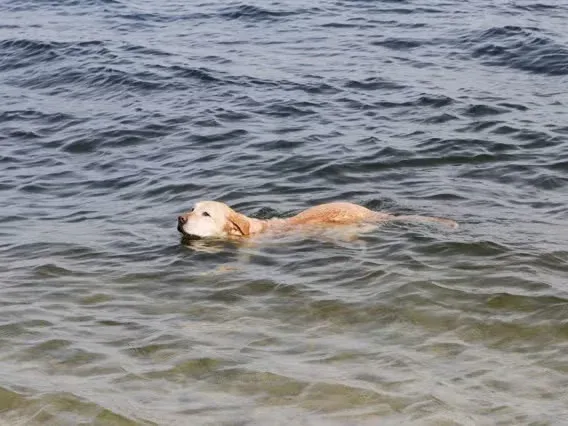
Sonny loves to swim!
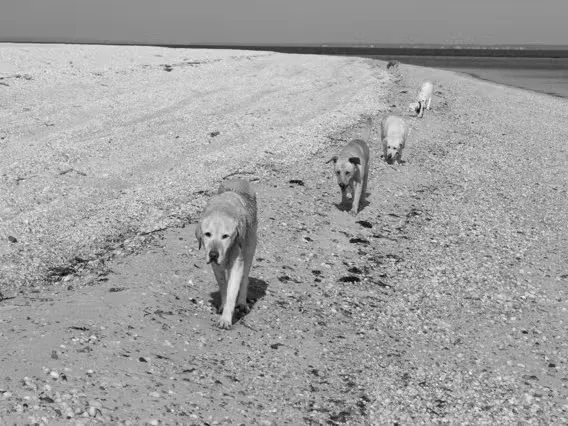
Sonny loves the beach!
If your dog is dealing with a similar breathing issue, I hope Sonny's success brings you some comfort. When Sonny was diagnosed, I couldn't find any uplifting stories or photos to give me hope.
Points to consider if your dog has this condition:
- How is your dog's quality of life right now, and will it be affected?
- Consult a specialist surgeon to help you decide what's best for your dog.
- Ensure you have the time to be present during your dog's recovery—it will be demanding both emotionally and physically.
- Think about arranging a caregiver if you can't be there enough—a neighbor who can drop by to feed at lunch and take your dog for a short walk.
- Get a harness—not only are collars no longer allowed for walks after this surgery, but even if you never used collars, a harness will be invaluable when your dog is weakened from surgery, anesthesia, and so on. (Ours is from Dean & Tyler, designed for large dogs, and very user-friendly.)
Allow your dog time to regain strength before you become frustrated. Surgery is a difficult choice—one we must make on behalf of our animals. It's even harder when the animal is older, as the risks are higher. For us, the decision was straightforward; without surgery, Sonny wouldn't survive a hot season. Would he pass away on the operating table or during a heatwave? We knew what we had to do for our family and, most importantly, for the happiness of a devoted companion, a loving dog.
I hope you enjoy these photos of a happy, healthy dog by the water.
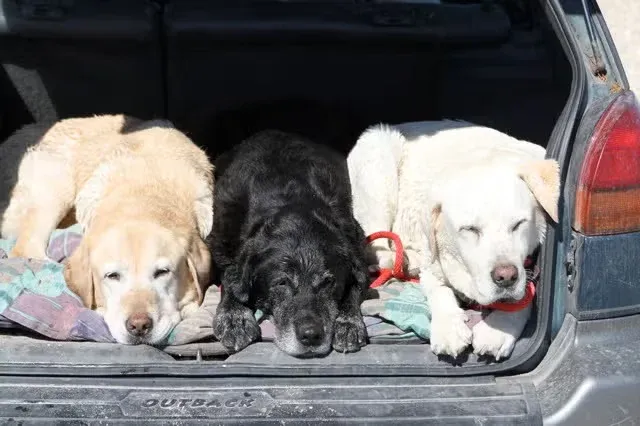
Sonny relaxing with his friends.
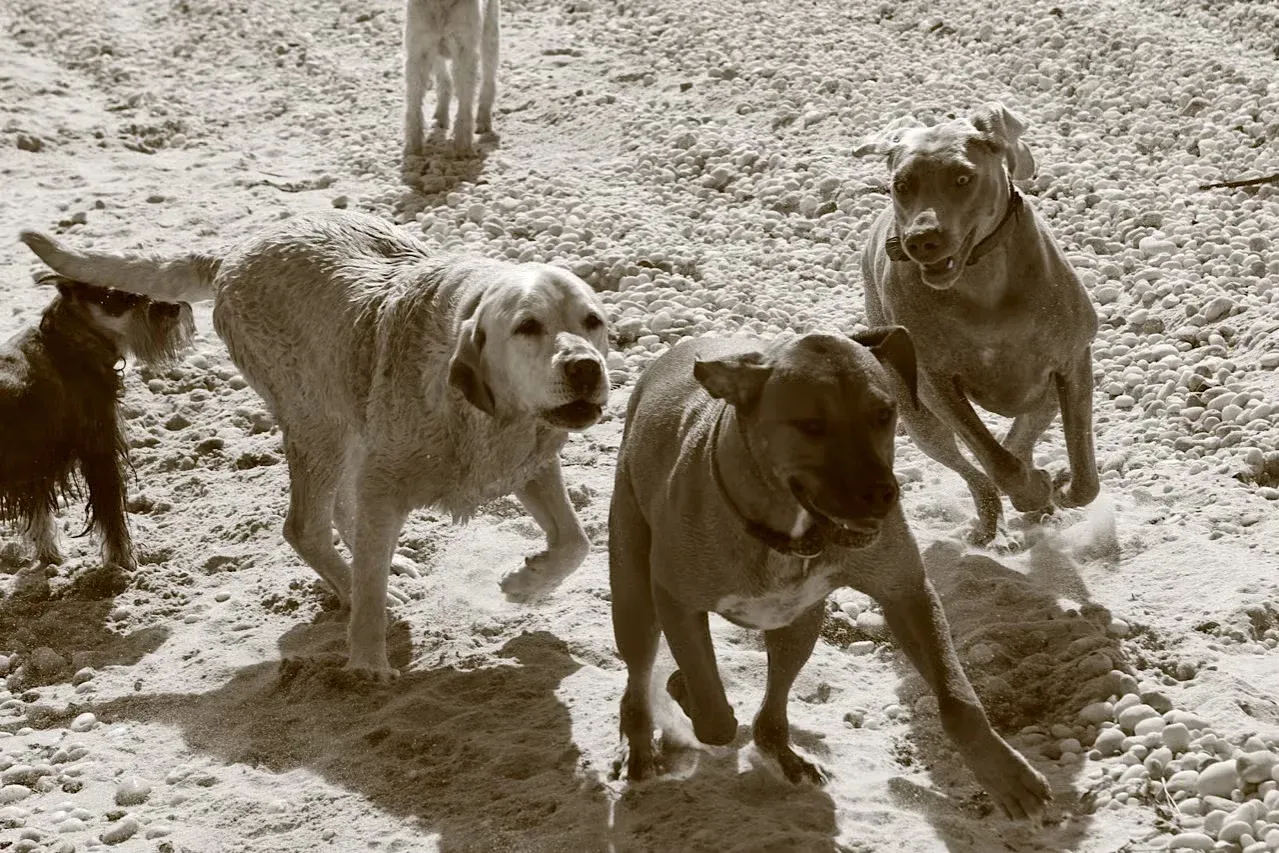
Sonny in the summer.
Resource
- Laryngeal Paralysis in Dogs Ask a vet online for free. Chat live with veterinarians and other pet experts. Find answers to health, behavior and nutrition questions about dogs and cats.
This article is accurate and true to the best of the author's knowledge. It is not meant to substitute for diagnosis, prognosis, treatment, prescription, or formal and individualized advice from a veterinary medical professional. Animals exhibiting signs and symptoms of distress should be seen by a veterinarian immediately.
© 2010 Meredith Clarke