Flea Treatment Fails: Common Causes and How to Fix Them
Taylor Mitchell

When Flea Medication Doesn't Stop the Itching
You've spent money on a flea product, yet your dog continues to scratch. This frustrating situation happens more often than you might think. Eradicating fleas involves more than just putting a product on your pet's skin.
Before you can successfully eliminate fleas from your pet and possibly your home, you need to consider several factors. We'll discuss all of them in this article.
Safety note for puppies: Most flea medications are not safe for puppies. Always consult a veterinarian about which product to use and when it's safe to use it.
Safety note for cats: If you have cats, only use flea medication specifically labeled for cats. Many dog products contain permethrin, a chemical that is dangerous to cats. Keep dogs away from other pets during flea treatment, at least until the medication dries.
What You'll Find in This Article
- Why flea treatments may not be working
- Top-performing flea products
- Table: Comparison of flea treatment products
- Eliminating fleas from your home
- Eliminating fleas from your yard
- How to test for flea dirt
- Are fleas a serious health risk?
Related: Why Is Frontline Not Killing the Fleas on My Dog?
Nothing is worse for you and your pup when flea treatment isn’t working.
Canva
Why Flea Treatments May Seem Ineffective
Many factors can explain why your flea medication isn't providing relief for your pet. Maybe you're using a cheap over-the-counter product, applying it incorrectly, or not keeping your pet's environment clean, which is crucial for eliminating fleas.
Here are several reasons your flea treatment might appear to be failing:
A Product Can Cause Temporary Increased Scratching
"I just applied a topical flea product, and my dog is scratching more than ever!" When I worked at a vet's office, I used to receive these frantic calls. The explanation for this is actually good news. Dying fleas tend to move around a lot, which triggers a short period of intense scratching. Don't worry—this is a sign that the product is working!
In fact, according to Frontline, fleas become hyper-excited, which brings them to the top of the coat. This makes them more visible to pet owners. Remember that in most cases, it takes about 12 hours for the fleas to die.
You're Not Using the Right Product
Cheap over-the-counter products may not be as effective as prescription options. Many fleas have developed resistance to over-the-counter products. You certainly don't want to cut corners when it comes to your pet's medication.
It's worth noting that many cats and dogs have also developed adverse reactions to cheap over-the-counter flea products.
You're Using the Product Incorrectly
You might be underdosing your dog if you don't know their exact weight. Weigh your dog carefully before purchasing a flea product. Many vets allow you to use their scales free of charge.
Also, avoid bathing your dog within 24 hours of applying topical flea products. If you apply the product after a bath, make sure your dog is completely dry.
Finally, ensure you're applying the topical product on your dog's skin, not just on the coat.
Fleas Are Still in the Dog's Environment
If you're already using a prescription product and still seeing fleas, remember that it takes time for fleas in a dog's environment to die. According to Frontline, several flea eggs may be present, causing the flea population to continue growing.
Consecutive monthly applications of topical products are needed to completely eradicate the flea population. This is because a female flea lays up to 50 eggs per day. These eggs take about 21 days to develop into adult fleas.
Once you see adult fleas, you are generally three months behind in getting them under total control. The fleas you find on your dog are only a tiny percentage of the whole population.
You're Only Treating One Pet
If you have multiple pets, are you only treating one? Just because one pet isn't scratching as much doesn't mean they don't have fleas. If other pets are left untreated, there are surely flea eggs within your home.
Be sure to treat all pets at the same time. Remember to use specific treatments for dogs and cats.
Your Dog Could Have Flea Bite Dermatitis or Allergies
If you've applied flea products both on your dog and in your home, why is your dog still scratching? It could be that your dog is suffering from flea bite dermatitis. Just one bite from a flea can cause your dog to be miserable, and the effects may linger for some time, even after successful treatment.
According to PetCoach, studies have shown that up to 40% of dogs may test positive for flea bite allergies. However, if your dog is still scratching and there are no signs of fleas, consider that your dog may be suffering from some other type of allergy.
Related: How Do You Get Rid of Fleas on a Young Puppy?
Which Flea Products Work Best?
You may feel slightly overwhelmed by all the dog flea products on the market. The list and table below will help you compare one product with another so you can get the best deal for your money.
- Frontline Plus contains fipronil, which kills adult fleas within 12 hours. It also contains the insect growth regulator methoprene, which kills fleas before they hatch out of the eggs.
- Advantage II is a topical product that kills adult fleas. It stops them from biting within five minutes and kills them within 12 hours. The insect growth regulator pyriproxyfen prevents fleas from developing into the next stage.
- K9 Advantix is a topical product that kills fleas, ticks, lice, and flies. The imidacloprid and permethrin in the product paralyze and kill adult fleas, while the pyriproxyfen prevents the flea from developing to the next stage.
- Comfortis is one of the most effective products on the market for killing fleas. It's an oral pill that not only kills fleas but also prevents fleas from developing into adults. It's given to dogs just once a month.
- Program is an oral pill that stops the flea reproduction cycle. It inhibits the development of flea eggs. It must be used with a flea adulticide if adult fleas need to be killed.
- Capstar is an oral pill that has 90% effectiveness against adult fleas in dogs, killing most within four hours. However, it does not have an effect on fleas in the dog's environment.
- Vectra 3D is a topical product that kills adult fleas and other pesky parasites. It has pyriproxyfen, which prevents fleas from developing into the next stage.
Comparison of Flea Treatment Products
| Product | Active Ingredient | Administration | How It Works | Dosage |
|---|---|---|---|---|
| Frontline Plus |
|
Firponil, Methoprene
|
Topical
|
Kills adult fleas as well as larvae. It's also effective on ticks. Treatment is effective for 30 days.
|
Once per month
| |
Advantage II
|
Imidacloprid, Pyriproxyfen
|
Topical
|
Kills fleas at multiple life stages, thus preventing their proliferation. This treatment also works on lice. Kills fleas within 12 hours and is effective for 30 days.
|
Once per month
| |
K9 Advantix
|
Imidacloprid, Permethrin, Pyriproxyfen
|
Topical
|
Kills adult fleas, larvae, and eggs. Also kills ticks and mosquitos. It begins working within 20 minutes and takes 24 hours to go into full effect.
|
For just fleas, apply once per month. If flea infestation is heavy, you should apply treatment once a week.
| |
Program
|
Lufenuron
|
Oral Pill
|
Fleas are exposed to lufenuron, which inhibits the development of eggs. This effectively kills the flea lifecycle. This is a long-term treatment and does not kill adult fleas.
|
Once per month
| |
Capstar
|
Nitenpyram
|
Oral Pill
|
This is a quick and short-term treatment that can begin killing adult fleas within 30 minutes. It can kill most fleas within four hours. The chemical interferes with the neurotransmission of the flea. This treatment does not prevent new fleas from getting on your dog.
|
As often as once a day
| |
Vectra 3D
|
Dinotefuran, Permethrin, Pyriproxyfen
|
Topical
|
Treatment works by killing adult fleas and repelling new pests. It is also effective on ticks, mosquitos, and lice. Can kill pests within six hours.
|
Once per month
| |
Comfortis
|
Spinosad
|
Oral Pill
|
This treatment attacks the nervous system of fleas and kills them within 30 minutes. It repels other adult fleas, but it does nothing to eggs that may be on your dog.
|
Once per month
|
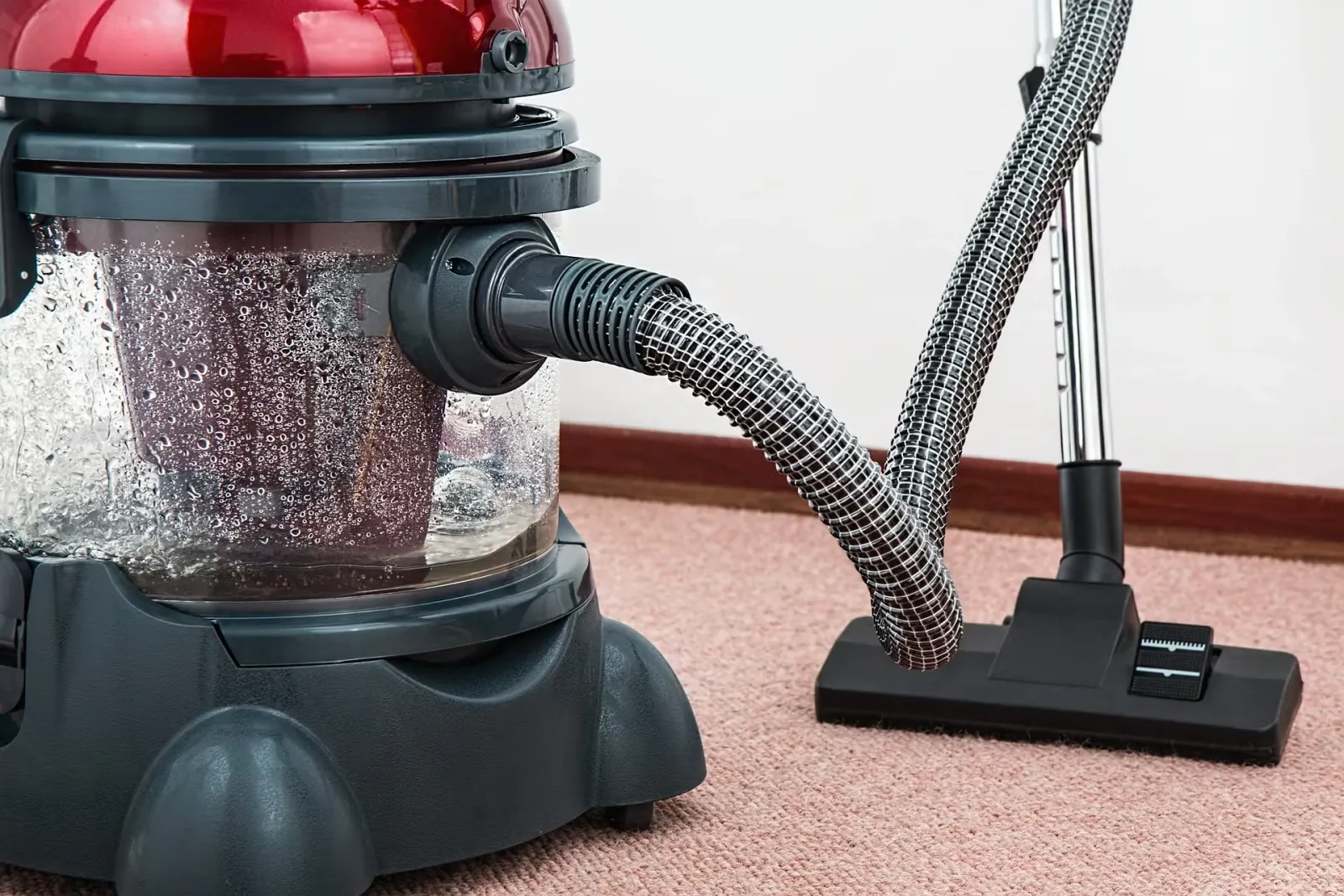
Vacuuming your carpet and furniture is a great way to combat a flea infestation in your home.
Stevepb via Pixabay
How to Get Rid of Fleas in Your Home
Flea treatment goes beyond simply getting rid of the specimens on your dog. If a treatment only shows temporary relief, it is possible that fleas are living somewhere in your home and are getting on your pet after treatment.
If you find that there are fleas in your home, here is what you can do:
- Vacuum your house. Using a vacuum can get rid of fleas, as well as their eggs. Be sure to focus on areas where your dog frequently hangs out. You should especially target carpets, furniture, and cracks in wood flooring. These are good hiding spots for fleas. If the infestation is severe, you should vacuum daily.
- Steam clean the carpets. If there is a major flea problem in your home, you may have to steam clean your carpets. This will kill adult fleas, but it may not remove all the eggs. Multiple cleanings may be necessary.
- Use hot and soapy water to clean the dog bed. If your dog sleeps indoors, you should wash its bedding with hot, soapy water. This will kill the fleas. If your dog frequently lies in other beds, you should give that bedding the same treatment.
- Use an insecticide. You can potentially use a spray for indoor flea treatment. You should do this when no one is inside and should make sure there is no contact with the sprayed areas until it is dry. Use a spray that contains permethrin, which kills adult fleas, as well as methoprene, which kills eggs, larvae, and pupae.
Related: Does My Dog Have Mites or Fleas? (And What Can I Do?)

Flooding your yard is a great way to get rid of fleas, as well as flea dirt.
Irene Dávila via Unsplash
How to Get Rid of Fleas in Your Yard
If your dog spends a lot of time outside, they may be susceptible to fleas that are present outdoors. Any treatment you give them will be in vain if the infestation in the yard is not dealt with.
Here's how you can eliminate fleas from your yard:
- Flood your yard. Flooding your lawn will kill any fleas living there. It will also wash away their feces, which flea larvae eat. Be sure to flood areas around any trees, fences, and where your doghouse is.
- Spray an insecticide. Be sure to use an environmentally friendly spray and avoid spraying anything your dog or any children can come into contact with. Spray the area your dog usually hangs out in, as well as under any decks, patios, or shrubs. A good insecticide to use is diatomaceous earth. This chemical works by absorbing all the moisture from the exoskeleton of the fleas and dehydrating them.
- Place nematodes in your yard. Nematodes are worms that feed on flea larvae and other pests like termites. You can purchase them and spread them around your yard. Put them in shady areas where the fleas are located.
- Spread cedar chips in your yard. Fleas hate the smell of cedar. You can spread some chips where you have located fleas. This is a great method to prevent new fleas from coming into your yard.
How to Test for Flea Dirt
How can you tell if those black specks on your dog's coat are just debris or actual flea droppings, aka flea dirt? There is an easy way to find out.
Collect the dirt and place it on a wet paper towel. If the dirt "bleeds" out and becomes red when rubbed, then you are looking at flea droppings, which are made of digested blood. If the color remains the same, then you are very likely dealing with actual dirt or debris.
Another good way to catch fleas and flea dirt is to brush your dog with a flea comb and look at what you collect. You may find actual live fleas or some traces of flea dirt. In this case, drown the live fleas in a bucket of water.
Related: 5 Ways to Get Rid of Fleas Without Chemicals
Are Fleas a Serious Threat?
Fleas are a lot more than just annoying pests. They can actually cause some health issues for your pets. They can potentially be a problem for humans as well—these are the same little pests that were responsible for spreading the bubonic plague.
Here are some of the major problems fleas can cause:
- Flea allergy dermatitis: This is one of the most common issues, where your dog is allergic to the fleas' saliva. This causes constant scratching and biting, which further leads to bald spots, hot spots, and potential infections developing.
- Tapeworms: If your dog swallows a flea, they may get tapeworms. This parasite will live in their intestinal tract and take away vital nutrients from your dog.
- Anemia: In extreme flea infestation cases, your dog can become anemic if left untreated. This is caused by the massive loss of red blood cells.
- Bites to humans: Fleas can enjoy a bite from humans as well. While they can't live on us as they do on pets, they can potentially spread diseases. The most common is cat-scratch disease (CSD), which is caused by the Bartonella bacteria they can spread.
Resources and Further Reading
- Claussen, K., DVM. (2024). "Getting Rid of Fleas." WebMD.
- Senestraro, A., DVM. (2020). "How to Get Rid of Fleas in the Yard." PetMD.
This article is accurate and true to the best of the author's knowledge. It is not meant to substitute for diagnosis, prognosis, treatment, prescription, or formal and individualized advice from a veterinary medical professional. Animals exhibiting signs and symptoms of distress should be seen by a veterinarian immediately.
Questions & Answers
Question: My dog ate a Bravecto pill, why is he still scratching?
Answer: It is possible to get flea bites while a dog is on a preventative as Bravecto if he frequents outdoor areas where fleas will inhabit such as under trees, brush, at dog parks, etc etc. Also, Bravecto is a flea prevention that works by stopping fleas from reproducing and continuing their life cycle. It works by killing a flea when it does bite. So your dog may be scratching because he may feel the flea biting.
Question: My cat is too wild to apply a topical product for flees. Is there a pill for cats?
Answer: I hear you. Have seen cats literally startle and jump in the air when a topical flea product is applied. There are nowadays several flea treatments for cats in pill form. One of them is Capstar flea tablets for cats. However, I just read some scary reports of cats having serious side effects, with some even dying from it. Perhaps, you can wrap your kitty Burrito style in a blanket when your cat is calm and relaxed and then uncover just slightly the area to apply? I have seen vets in our office immobilize cats by wrapping them in a towel or blanket this way when they needed shots or other procedure done. Please be careful, though. The best and safest option would be to bring your cat to the vet. They may charge you a little fee, but they are experts in restraining cats professionally.
© 2012 Adrienne Farricelli CPDT-KA, Dip.CBST