Keeping Your Dog Safe from Adder Encounters
Taylor Mitchell
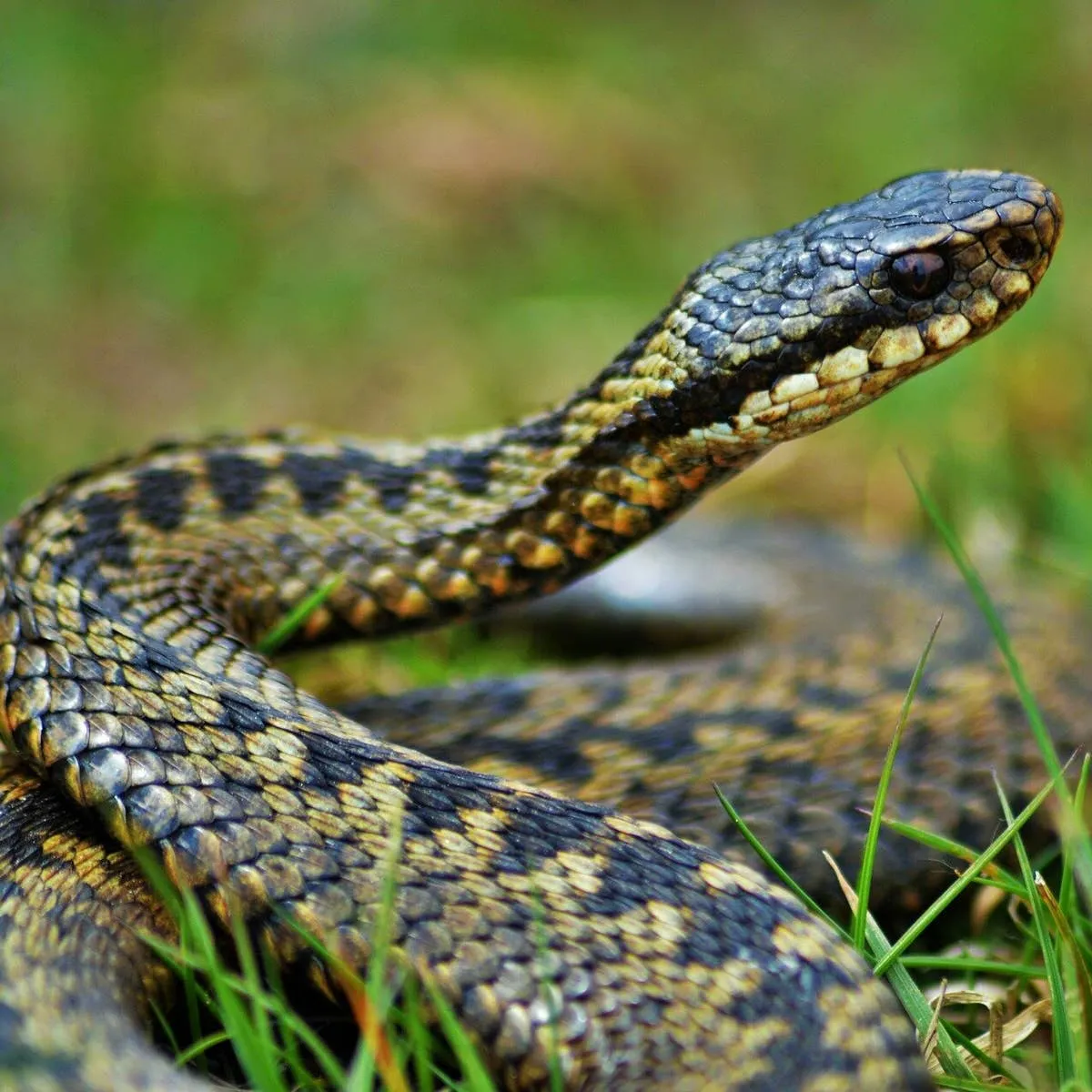
Are Adders Dangerous to Dogs?
As summer temperatures rise, many people venture further with their dogs to enjoy the warm weather. However, we often overlook that we are not the only ones appreciating the heat. Adders, the only venomous snake in the UK, emerge from hiding to bask in the sun before hunting.
Unfortunately, adders and dogs do not mix well, and on rare occasions, a dog may be bitten by one of these snakes. Knowing how to respond is crucial to ensure your pet survives a bite. Similarly, understanding how to avoid adders can reduce the risk of a bite, allowing you and your dog to enjoy summer without fear. This also helps these rare and declining reptiles continue to exist undisturbed.
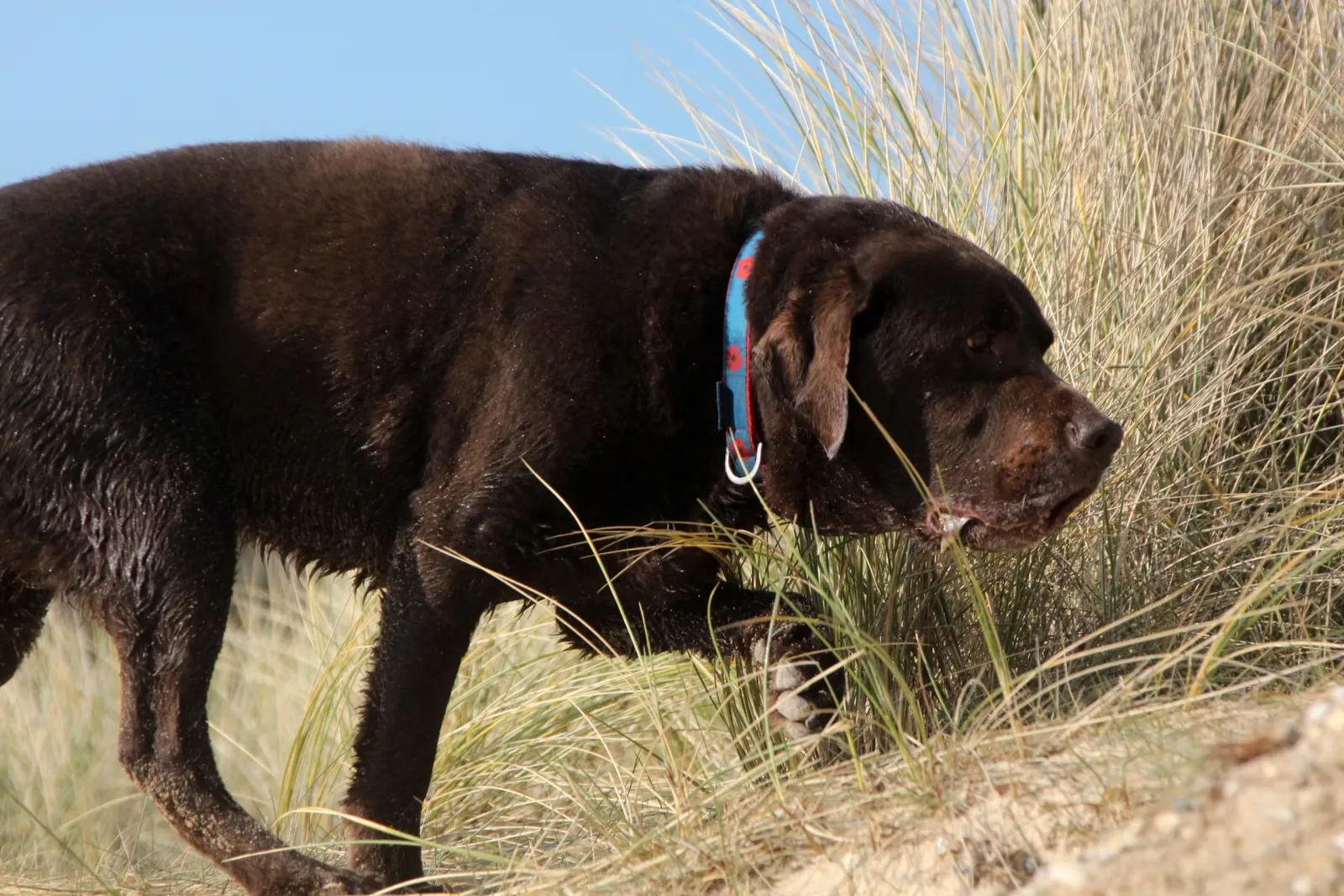
Sandy dunes are one of the locations where you might find an adder.
Author's Photo
The UK's Only Venomous Snake
Most Brits have never seen an adder in the wild. They are secretive and shy, preferring to avoid humans and dogs.
These snakes vary in colour from silver-grey to reddish-brown and have a distinctive zig-zag pattern on their backs and red eyes. Adults can measure 60–80 cm and weigh 50–100 g. They can live up to fifteen years if fortunate, but many are preyed upon by crows and buzzards, and some are even eaten alive by rodents during winter hibernation.
Being very shy, they dislike disturbance and will abandon their habitat if they feel threatened. Habitat destruction is a growing issue, and research indicates the species is in rapid decline and on the brink of extinction in the UK.
Adders are protected under the Wildlife and Countryside Act 1981, making it illegal to kill, harm, sell, or trade them. Despite this, unintentional human interference is rapidly eliminating safe environments for the snakes.
This species has far more to fear from us than we do from it, and as it becomes rarer, the chance of encountering one greatly diminishes.
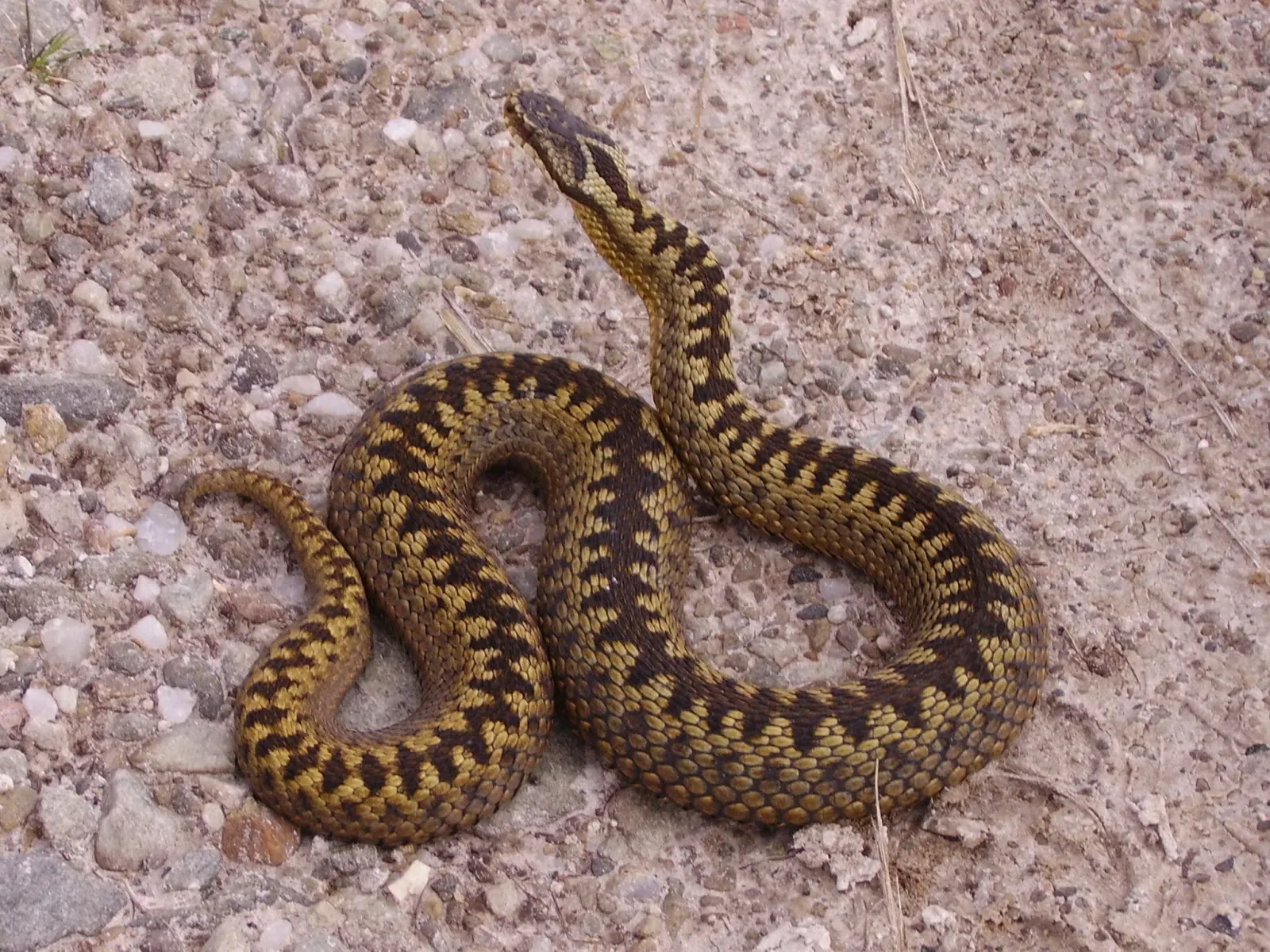
A beautiful female adder, showing the distinctive zig-zag markings
Public Domain
Avoiding Adders: What You Need to Know
Though in decline, dog walkers occasionally come across adders. Most encounters are a fleeting glimpse as the snake quickly slithers away from dog and human—remember, they want to avoid encounters as much as you do.
Problems arise when the snake cannot escape and feels it must bite in self-defence. Understanding the species, its preferred habitats, and active times is key to avoiding trouble and allowing adders to live undisturbed.
Adders are found across mainland Britain but are particularly common in the south and southwest of England, Western Wales, and Scotland. They favour grasslands, sandy dunes, heaths, rocky hillsides, moorland, and woodland edges. They seek areas where they can remain hidden while hunting but can easily reach open areas to bask. They also need safe places to hibernate over winter. An adder will return to the same hibernation spot year after year, which is why habitat destruction is so devastating.
Since these snakes inhabit a range of territories, many of which are popular walking spots, completely avoiding their habitats is nearly impossible. Fortunately, there are other ways to stay out of their way.
They are mainly active between March and October when temperatures are warmer. This varies by region; areas with short winters, like Cornwall, may see adders basking in November. Most bites to dogs occur between April and July, though the reason is not entirely clear.
According to the Cornwall Wildlife Trust, the key factor when watching for these snakes is temperature. When warm, they are alert and speedy; they will quickly move out of a dog's or person's way, as they really don't want to interact.
Cold snakes are different. When cold, they are sluggish and dopey; this is when they can be caught unaware and are likely to bite. Cold adders emerge from underground nests to bask in the sun to warm up, and this is when they are most dangerous. A dog coming across a sleepy, basking adder may step on it or sniff it curiously, and the adder will feel it has no choice but to bite in self-defence.
Best Times to Walk Your Dog
To avoid this, it's best to walk either before the day warms up or when it is much warmer. If the temperature is below 10C, it's too cold for an adder to leave its nest. This is also true in heavy rain. In contrast, in temperatures over 17C, these snakes are warm and don't need to bask. Hot snakes will easily avoid dogs and keep out of your way.
The Cornwall Wildlife Trust advises dog walkers to go out when the temperature is below 10C or above 17C (though they admit this is only a rough guide). They also suggest walking before 9 am or after 7 pm, as these snakes are usually more active between those times.
Walking after dark is another option to avoid adders. They like the sun and will be safely in their nests at night. Night walks can also help avoid the heat of the day in midsummer, though it may mean very late walkies!
Unfortunately, even with precautions, adder bites can occur. Knowing what to do is key to ensuring dogs or ourselves survive the incident.

Dogs are naturally curious and sometimes put their noses where they don’t belong.
Author's Photo
Adder Bites and Associated Risks
As scary as the thought of your dog being bitten by an adder sounds, we must keep risks in perspective.
According to Dick White Referral Vets, about 100 adder bites on dogs are reported each year. Considering the number of dogs walked daily in the UK, that is not many bites. In fact, during summer, vets are far more likely to see dogs suffering from heatstroke, sometimes with fatal consequences, rather than adder bites.
Another important point is that 96–97% of dogs survive a snake bite if they receive veterinary treatment. That means the vast majority of dogs who encounter one live to tell the tale. The unlucky 3% who do not are often those with underlying health issues or whose injury is not recognised as an adder bite immediately.
A similar number of bites occur each year to people. This is often due to a person trying to pick up a snake or placing their hand in a small hole or crevice to retrieve something. Most bites occur between June and August, with numbers peaking in July. There has not been a death from an adder bite to a person since 1975—that's over forty years.

Adders prefer the edges of woodland, where there is sunlight. Walking deeper among the trees may help avoid them.
Author's Photo
How to Recognise an Adder Bite
Adder bites are painful, and the shock is usually enough for a dog to yelp, run away, and limp if a limb is bitten. If a dog reacts this way after running in long grass, an owner should consider the possibility of a snake bite.
Dogs are commonly bitten on the face or limbs (faces because a dog has stuck its nose too close to a snake, limbs because it has trodden on the snake). The first thing to do is examine the dog for puncture marks. If a dog is limping or holding up a limb, it likely has been bitten on the sore leg, and this should be examined closely. If the dog is not limping, it may have been bitten on the face, especially if it rubs at its muzzle.
If you can't find a source for the injury and you have any concerns that your dog may have encountered this snake, it is best to head straight to a vet and have them examine your dog. The more prompt the medical treatment, the quicker your dog will recover.
On occasion, a dog may be bitten when the owner is unaware. In this instance, the bite site will swell over the next couple of hours. The affected area will be painful and bleeding, and a puncture wound should become apparent. The dog may be lame or show signs of discomfort. As the venom spreads, they may develop a racing heartbeat, fever, lethargy, heavy panting, drooling or vomiting, and they will wobble as they walk. Again, immediate medical treatment should be sought, even if it is outside your vet's usual opening hours.
Remember, adder bites are venomous, and this venom can cause problems beyond a sore leg or face. It can lead to convulsions or even death. Never hesitate to have your dog checked by a vet even if you only suspect an adder bite.

Dogs running through long grass may stumble on an adder.
Author's Photo
First Aid for Adder Bites and Veterinary Treatment
The moment you realise your dog has been bitten by an adder, it is vital you act. First, keep the dog still and examine for puncture wounds. The venom spreads faster if the dog is active, so carrying your dog, if possible, is a way to prevent the poison from spreading through the circulatory system. Get your dog to a vet as swiftly as possible. If you can, phone ahead and advise your vet of what you suspect has happened—that will enable them to be prepared.
You can bathe the affected area in cold water to ease the swelling, but the most important thing is to keep the dog still and warm as you reach the vet.
Your vet will aim to support the dog's organs and minimise pain, and they will also treat for shock. Fluids are given via a drip, while steroids and antihistamines may be given to reduce the after-effects of the bite. In severe cases, anti-venom is given, however, the anti-venom can induce an allergic reaction, and so is only administered if absolutely necessary. There is considerable debate as to how effective anti-venom is, especially as there is no canine version, so dogs receive the human anti-venom.
During treatment, dogs are kept quiet, possibly on cage rest, to prevent the venom from spreading through the circulatory system. Pain management is also given to help the dog be more comfortable.
In very rare cases, a dog will develop serious problems from a bite; these could include breathing problems, an abnormal heart rate, bleeding disorders or convulsions. These usually only happen when an adder bite has gone untreated for some time or when the dog has remained active after a bite, helping the venom spread through the body. Most dogs will make a full recovery if given prompt veterinary treatment.
On average, dogs can recover from an adder bite in 5 days, though some can take up to 30. Much depends on the size of the dog, how quickly it received medical care and how much venom the snake injected.
Adder bites can sound scary, and no one wants their dog bitten, but by taking precautions and knowing what to do in an emergency, this type of bite need not be the end of the world.
We have to remember snake bites are extremely rare, and it is an unlucky dog that finds itself on the wrong end of a snake. Equally, the majority of dogs will survive an adder bite. We must not, therefore, spend all summer worrying about the possibility or not walking our dogs for fear of what might happen.
And, at the same time, it is important to remember that adders are only acting in self-defence; they would prefer to avoid your dog than bite him. They are in rapid decline and it is feared that in the next twenty years they will be limited to a handful of locations in the UK. Rather than being frightened of them, maybe we should feel sorry for them—after all, they have far more to fear from us than we do from them.
This article is accurate and true to the best of the author's knowledge. It is not meant to substitute for diagnosis, prognosis, treatment, prescription, or formal and individualized advice from a veterinary medical professional. Animals exhibiting signs and symptoms of distress should be seen by a veterinarian immediately.
© 2019 Sophie Jackson
Sources
- Keeping Your Dog Safe from Adder Encounters — pethelpful