When a Dog Drops Weight Without a Clear Reason: Home Strategies and Hidden Causes
Alex Wood
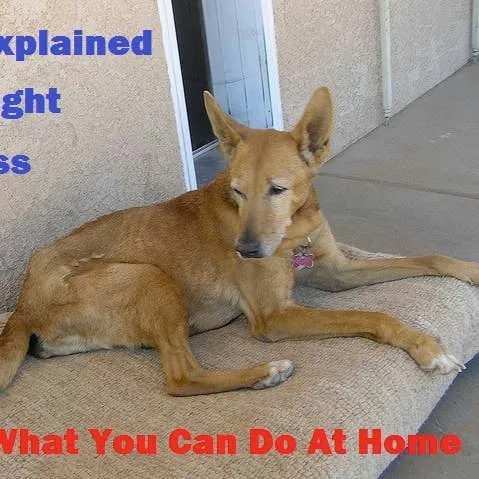
When a Dog Is Losing Weight but Seems Fine Otherwise
Seasonal fluctuations in activity can lead to minor weight changes in dogs, especially during spring and summer. But when the loss is significant, the most frequent culprits are:
- Providing food that lacks nutritional quality, even if just one key nutrient is absent.
- Inadequate food intake, whether due to insufficient portions or difficulty eating.
If you are giving your dog poor-quality food and he has no other food sources, he might be undernourished without your knowledge. Some dogs may refuse cheap food that tastes unappealing. Unlike cats, dogs won't starve themselves to death, but they can become thin and weak if the food is very poor.
The fix? Transition your dog to a better diet immediately. I suggest a raw diet—natural whole foods as nature intended. A paleo-style diet doesn't have to be costly if you avoid the "prepackaged" commercial raw foods sold in plastic. A natural whole diet offers many advantages, and dogs like the flavor.
It's also possible that your dog isn't getting enough food, even if it's high quality. Observe your dog during meals.
- Does he have at least 15 minutes to finish his food?
- Is another dog in the home taking over the bowl before he finishes?
What Can I Do at Home to Help My Dog Gain Weight?
- Identify the reason for your dog's weight loss. Many medical issues will improve with a diet change but cannot be treated at home until you know what's wrong. If your dog is allergic to wheat, and you switch him to a high-fiber diet with lots of wheat, do you think he will get better?
- Treat your dog appropriately. (Feed a better diet, medicate for internal parasites, treat chronic infection, regulate sugar levels in cases of diabetes, treat cancer, etc.)
If your dog is healthy and there are no medical reasons for his weight loss, you can try several things:
- Try a different food or feeding schedule. If you are feeding him with another dog, try allowing him to eat in a separate room. If he is eating alone, allow him to eat with your other dog or feed him when you are sitting down for your own meal. (Dogs are social and almost always prefer to eat with others.)
- Watch your dog and make sure he is eating what you give him.
- Supplement his diet. Coconut oil is a great supplement for his weight and contains antioxidants that will keep him in even better shape. Every dog should also receive some fresh food, so even if you feed your dog a commercial dry diet, you can give him a raw chicken wing every night as a calorie supplement.
- Yogurt is a great natural supplement. You can put this on his food or just give it in a bowl, and in either form, it is going to improve the bacterial flora in his GI tract.
Are you sure that your dog is healthy? If he is urinating excessively, having loose stools when you take him out, is straining when he needs to go, or having accidents in the house, there is something abnormal going on.
Common Causes of Weight Loss
- Dental disease
- Chronic inflammation and infections
- Diabetes
- Protein-losing diseases (Parasites, draining wounds, etc.)
- Cancer
- Maldigestion/malabsorption
- Elevated metabolic rate
- Less common diseases (Addisons, copper toxicity, esophageal paralysis, and others)
Weight Loss in Dogs Despite a Healthy Appetite and Eating
Dental Disease
Open your dog's mouth and take a look inside. Some problems are obvious. Are there any broken teeth, swelling in the gums, or a pus discharge when you press down on his gums? If your dog has any of these dental problems, he is probably in pain and needs to see his vet right away. This should always be the first thing to check in a senior dog that is losing weight.
Chronic Inflammation and Infection
Dogs with a chronic inflammatory condition, like arthritis, may stop eating normally because of pain. A chronic infection can be something as simple and easy to treat as worms, something more serious like heartworms or Rocky Mountain Spotted Fever, or even something like a chronic skin infection that your dog is using all of his energy to combat.
Sometimes, a dog with a chronic infection will appear normal. An infection, however, is one of the most common causes of sudden weight loss. Like most of the diseases that cause weight loss, your dog will need to be diagnosed through simple blood work before he can be treated. An elevated white blood cell count will tell the vet that your dog has an infection, even if it is not obvious at the first examination.
If your dog is losing weight and also has hair loss and pale gums, which is a sign of severe anemia, internal parasites should be suspected. The vet will check a stool sample for eggs from worms, and his skin might need to be scraped under a microscope to examine for mange.
Diabetes
If your dog is losing weight and drinking lots of water, be sure to find out if he has diabetes. Besides losing weight, one of the common symptoms of diabetes in dogs is excessive thirst. With excessive thirst, of course, the dog will have to urinate excessively, and it is unlikely that he will be able to hold his urine all night. If your dog is losing weight and drinking a lot, having "accidents" in the house even after being housetrained, the first thing to do is have a physical exam and blood work.
Diabetes is only one of the problems that can cause excessive thirst and urination. Diabetes is most frequently diagnosed in older dogs, and usually in females. Once your dog has lost the fat in her body, she will start to lose muscle mass. If your dog is losing weight and having accidents, be sure to get her to your vet for a physical exam and blood test today. A new diet will help, but the most important thing that can be done is to regulate blood glucose.
Kidney Disease
One of the ways in which chronic kidney disease causes weight loss is called "protein-losing nephropathy." In this condition, the kidneys leak and protein molecules spill out into the urine. No matter how much a dog eats, he cannot keep enough protein in his system to remain healthy, and without proper treatment, he will waste away.
Some other internal organs can also cause weight loss when they fail. The heart is one example of this, so all dogs with weight loss will have their chests examined to rule out "cardiac cachexia."
If your dog is losing weight and is vomiting, get him checked out immediately. All of the diseases associated with kidney disease can be discovered by a simple physical exam and blood work.
Cancer
This disease can strike in many different ways, but one thing you can watch out for is weight loss. If your old dog is losing weight and also appears to be losing a lot of muscle mass, and you have ruled out diabetes, this is something you should be worried about. The tumor or tumors starts drawing away the nutrients that the dog needs to keep the rest of his body healthy.
Diagnosing cancer can be difficult, but when it is found early, the chances of treatment are a lot better. If your older dog is losing weight with or without a good appetite, the cancer may have already spread so get your dog checked out right away.
Maldigestion/Malabsorption
Several different diseases can cause a dog to lose weight despite a healthy, even voracious, appetite. Dogs will have diarrhea and light yellow stools several times per day. Sometimes it will smell especially foul, like when dogs are suffering from Small Intestinal Bacterial Overgrowth.
When the pancreas is destroyed, no enzymes are released into your dog's GI tract, and he can suffer from maldigestion/malabsorption. All of the important nutrients that your dog eats every day pass right through his GI tract and are never absorbed. Some dogs can also be sensitive to gluten, and the little "fingers" (villi) in the small intestine die off and no longer absorb the nutrients passing through the GI tract.
Although dogs with maldigestion and malabsorption can have diarrhea and light yellow stools, that symptom alone is not enough to diagnose the problem. Like many other diseases that cause weight loss, he will need to have a physical exam from your vet and when the problem is recognized his stool can be looked at under a microscope, and his blood tested for digestive enzymes. Some dogs even need a biopsy of the intestine before this problem can be diagnosed.
If your dog is losing weight and vomiting or has diarrhea, or if your dog is losing weight and having gas, having your vet examine his stool is an important part of finding out what is wrong.
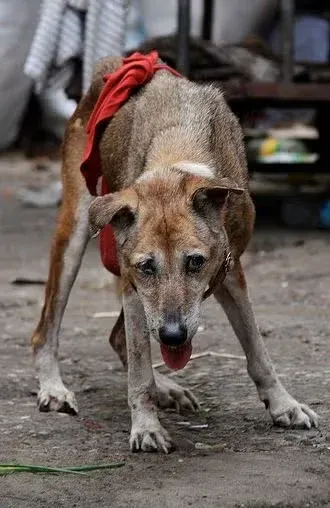
Unexplained weight loss is often caused by a disease.
cc-by ickr.com kojach 3956700390
Tests Your Vet Might Require
These are the tests most likely to be needed. I have listed the most common tests at the top of the list, but if your dog is still sick, more of these tests will need to be done.
- Fecal studies to look for intestinal parasites.
- Complete blood count (CBC) to look for infection, inflammation, leukemia, anemia, and other blood disorders.
- A biochemical profile that will evaluate kidney, liver, and pancreas function, and the status of blood proteins, blood sugar, and electrolytes.
- Urinalysis to determine kidney function, to look for infections/protein loss from the kidneys, and to determine hydration status.
- Chest and abdominal x-rays to observe heart, lungs, and abdominal organs.
- Tests to evaluate the condition of the pancreas.
- Ultrasound of the abdomen.
- Bile acids test to evaluate liver function.
- Hormone assays to look for endocrine disorders.
- Using a scope to view the intestines (endoscopy) and biopsy.
- Exploratory surgery (laparotomy).
What Should I Do to Help My Dog?
There are many reasons that a dog can lose weight. Many of those things can be managed at home, but almost none of them can really be dealt with until you find out what is going on. Even if you can tell what is going on, unless you have a specific diagnosis, you are not helping him out by trying alternative treatments.
There are several different methods to treat your dog's weight loss naturally. In order to start any treatment plan at home, however, you need to find out what is wrong.
If your dog is losing weight, make an appointment with your vet, and find out what is wrong.
Further Reading on Dogs
- Do-It-Yourself Physical Exam for Your Dog You should be aware of what is normal in your dog. This is a physical exam you can do at home before taking your dog in to see your veterinarian.
References
- Ettinger and Feldman: Textbook of Veterinary Internal Medicine, 6th edition, St. Louis, 2005, Saunders
This article is accurate and true to the best of the author's knowledge. It is not meant to substitute for diagnosis, prognosis, treatment, prescription, or formal and individualized advice from a veterinary medical professional. Animals exhibiting signs and symptoms of distress should be seen by a veterinarian immediately.
© 2018 Mark dos Anjos, DVM