Evaluating Slow-Kill Therapy as a Heartworm Approach for Dogs
Rowan Williams

Addressing Heartworm Infection in Dogs
When a dog contracts heartworm and receives no treatment, the eventual outcome is death from congestive heart failure. Something must be done. Traditional heartworm therapy—Immiticide injections—is costly, uncomfortable for the dog, and carries significant risks. This article examines an alternative approach, covering:
- drawbacks of the conventional treatment,
- the definition of the slow-kill method,
- its pros and cons,
- how to apply it to your dog, and
- why heartworm prevention matters.
Traditional Therapy Compared to the Alternative
During conventional treatment, the worms are killed rapidly. Unless the family monitors the dog closely, the dying worms can trigger a fatal embolism. The alternative is gradual. It may not even be the best choice for your dog, because your dog's heart can deteriorate while the treatment is underway.
This decision requires careful thought: a dog already suffering from advanced heart and lung disease may not be able to wait for the slow and safe treatment. Some veterinarians do not recommend this alternative; others think it is safe only in the earliest and mildest cases of infection.
If your veterinarian is open to alternative treatments, you can make this decision together.
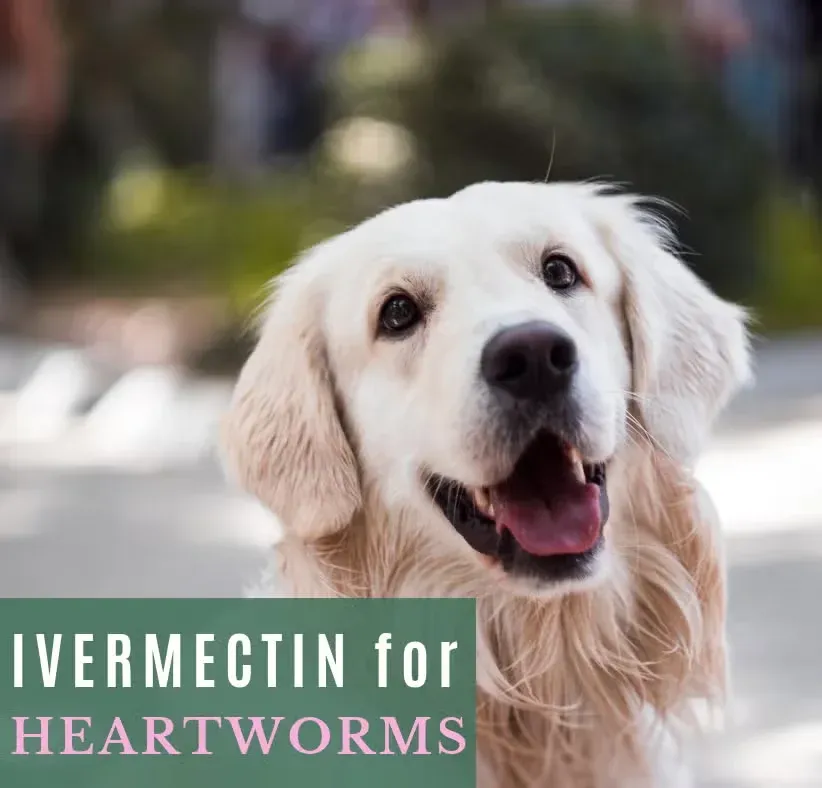
If your dog’s heartworms are caught early, ivermectin can be the safest treatment.
What Is Best for My Dog?
Without examining the dog and determining the changes to his heart, it is impossible to recommend which treatment is best.
The slow-kill alternative to conventional therapy (Immiticide injections) is the use of ivermectin every month. It is given by mouth, so it can be done at home. The American Heartworm Society does not recommend this treatment. (Of course, they also recommend that all dogs be on preventative, even when living in areas where there are no mosquitoes.)
The theory behind this alternative is that since the ivermectin will kill all of the developing larvae, no new heartworms will develop. The adult worms will take a few years to die, which is why your dog's heart can grow worse. A dog that is already suffering from late-stage congestive heart failure may not make it through the slow-kill method.

Dogs with heartworms will suffer, but slow-kill is safest.
ickr.com/photos/nats/175115003/
Which Treatment Can I Afford?
If you are in tight circumstances and cannot even afford to treat your dog with the conventional method, this alternative costs a lot less.
If you want to treat your dog's heartworm condition using the slow-kill method, I would recommend that you work with a veterinarian willing to use this alternative. Discuss the costs with them, and if you both decide on the injections, there may be some way to make payments.
Slow-Kill Details
To kill all of the microfilariae, the dose of ivermectin needs to be higher than regular heartworm preventative (it should be given at 50 micrograms per kilogram, instead of 5 micrograms per kilogram). So if you buy the 0.08% sheep drench, which contains 800 micrograms of ivermectin per milliliter, you need to give your sick dog approximately 0.06 milliliters per kilogram of body weight. (This is the oral solution that I use for my smaller dogs since it is already diluted.)
The medication needs to be given about 8 months and at that time you should take your dog in for a heartworm test. If the test is negative at that time the dog should be kept on preventative to avoid becoming infected again. If still positive the dog should be given another course of doxycycline and put back on the ivermectin slow-kill for another 6-8 months.
The added benefit is that since the ivermectin kills the microfilaria (the immature worms) that would infect your local mosquitoes, it prevents your dog from spreading the disease to other dogs. It is also more affordable than the Merial product and, since generic ivermectin has many manufacturers, it is unlikely to ever become scarce.
Owners of Collies, Shelties, OES, Aussies, and some other mixed-breed dogs might be sensitive to ivermectin. These dogs need to be treated with Immiticide or herbal therapies, which are still unproven at this time. If you are concerned in any way you can test for the mutation on the MDR1 gene that causes sensitivity. Testing is available through the Washington State University College of Veterinary Medicine.

These heartworm-free dogs are frolicking on the beach.
sonthebeach.weebly.com
Heartworm Preventative
The only way to guarantee that your dog will not have to endure the Immiticide, nor suffer deterioration to his heart and major blood vessels, is by providing heartworm preventative every month. If you are able to use a simple syringe (without a needle), this is not an expensive option.
There are also some dog owners who choose to go without heartworm preventative. They keep their environments mosquito-free or live in a region with no mosquitoes, so feel this is the best option for their dogs. If you are not able to guarantee this, do not take the risk.
If you want a safe heartworm treatment, then monthly ivermectin is your best bet.
This article is accurate and true to the best of the author's knowledge. It is not meant to substitute for diagnosis, prognosis, treatment, prescription, or formal and individualized advice from a veterinary medical professional. Animals exhibiting signs and symptoms of distress should be seen by a veterinarian immediately.
Questions & Answers
Question: Will black walnut alone get rid of heartworms in dogs all together?
Answer: There are no studies that prove that black walnut will kill off all of the worms, but if they are kept from reproducing for a time all of them will eventually die off. This form of treatment can be a lot more dangerous for a tiny dog that will have symtpoms with just a few worms in the heart.
Question: If a dog has heartworm, how does the blood test tell what stage they have?
Answer: The blood test will only tell you if your dog is positive or negative for the antigens in the heartworms body. It will not tell you what stage of heartworm disease your dog has. If your dog is small, and has just a few worms, it can be severe, and your dog may be suffering from congestive heart failure. If your dog is large, and has only a few worms, he may not even have clinical symptoms.
© 2012 Mark dos Anjos, DVM