Rethinking Canine Heartworm Testing: Why Annual Screening May Be Unnecessary for Dogs on Preventatives
Logan Rivera

Understanding Heartworm and the Purpose of Testing
Heartworm is a sizable internal parasite transmitted through mosquito bites. When an infected mosquito bites a dog, it deposits infective larvae that mature into adult worms residing in the heart. Initially, dogs with heartworm disease exhibit mild signs such as coughing and reduced exercise tolerance. As the condition progresses, they can develop severe heart disease, including cardiomyopathy and congestive heart failure, marked by limb swelling, fluid in the lungs, and reluctance to move due to exhaustion.
Testing is performed so that adult heartworms can be killed before they damage the heart. Testing is truly necessary for dogs from shelters, older dogs never placed on preventatives, and dogs that have been off preventatives for an extended period. However, yearly testing for dogs consistently on a heartworm preventative is not required. While frequent testing is not harmful to the dog, it can be costly for the owner. Unless you feel a strong need for such frequent testing, simply maintaining your dog on the preventative is sufficient.

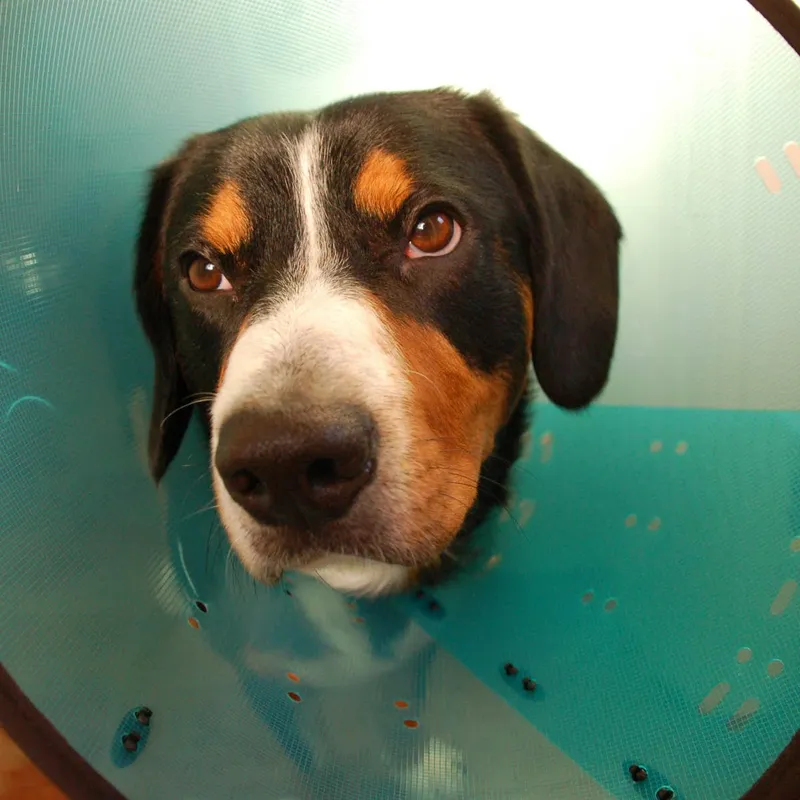
Find out whether your dog really needs an annual heartworm test if they’re already on heartworm preventative.
Image by Fran__ from Pixabay
Questioning the Rationale for Annual Testing
During my years in practice, including time in regions with some of the highest heartworm prevalence in the U.S. (such as the Mississippi Valley), I never encountered a dog that tested positive while receiving monthly heartworm preventative. I have also never met a colleague who found a positive heartworm dog that was on preventative—this is why manufacturers of heartworm preventatives offer guarantees for their products.
So is heartworm testing a scam? Why are dogs already on preventative required to be tested? Many websites I found through a web search echoed the standard recommendation from small animal practice: dogs had to be tested annually before their heartworm medication could be refilled.
(The explanation given was that administering a dose of preventative to a dog already infected with heartworms could cause a severe, potentially fatal reaction. This was true with older preventatives—medications that were common in the 1970s. If anyone has seen and documented such a case, I invite you to leave a comment.)
Veterinarians profit from each test, certainly more than from merely dispensing the medicine. The test does not harm the dog, only the owner's wallet, so there has been no outcry to stop the procedure.
Obtaining Preventatives Without Testing
If you want to avoid this issue and get a prescription to purchase medication online, dogs without a current test cannot receive a prescription from the vet. Most dog owners (at least those who do not own a large pack) will find they are better off buying ivermectin tablets online.
Several sources of nonprescription medications exist. Nuheart and Valuheart are generic ivermectin products that can be purchased through Canada without a prescription.
If you do have many dogs and want to use the ivermectin available in feed stores, be aware that it is concentrated for cattle, and a dog's heartworm preventative dose is very low. A product sold for sheep is much safer.
Ivermectin Preventative Doses
Some internet sources give absurdly high doses for ivermectin preventative, but the label on a common heartworm preventative is only 0.006 mg/kg, so a 20 kg dog would receive just 0.32 mg. Since Ivomec is sold at 1% (10 mg/cc), a 20 kg dog needs less than 0.05 cc.
The only way to approximate this dose is with an insulin syringe—preferably one that holds only 0.5 cc. For smaller dogs, there is really no way to dose that low.
(One of my professors recommended diluting that tiny dose with sterile water and then putting it onto a biscuit before giving it to the dog—that way, you can be sure he will consume the medication.)
That said, ivermectin is used at a much higher dose when treating demodectic mange (0.3–0.6 mg/kg) and for an extended period, averaging 3–8 months. It is quite safe, even at those levels.
Potential Issues with Ivermectin
Collies, Shelties, Old English Sheepdogs, Aussies, and some other mixed-breed dogs might be sensitive to ivermectin. If you have any concern, you can test for the mutation on the MDR1 gene that causes sensitivity. Testing is available through the Washington State University College of Veterinary Medicine.
Of course, these dogs can be given heartworm preventatives that do not use ivermectin. Revolution (selamectin) and Advantage Multi (moxidectin) are both topical, so they treat fleas as well as prevent heartworm disease.
The drug companies that marketed the preventatives also recommended telling clients not to buy a large dog dose and split it, as the medication might not be adequately mixed in the tablet, and one of the dogs would not be medicated. (If that were the case, it would be dangerous to prescribe one-half tablets of any medication.)
Heartworm Testing and Other Health Priorities
Dogs that do not have an annual heartworm test still need a physical exam.
If you choose not to go in for a heartworm test each year, do not forget about your dog’s teeth. Many dogs die each year from the secondary effects of periodontal disease.
If you live in an area where heartworms are a danger to your dog, and you do not have the income to spend on annual testing, at least spend what is necessary to prevent this disease in your dog.
Questions?
If you have any questions about this article or other health questions about your pet, you can contact me at my Ask a Vet column at Pethelpful.com.
Prevention is simple and inexpensive, and untreated cases are terrible to observe.
More About Heartworm
- Safe Herbal Heartworm Treatment Among the alternatives for heartworm treatment, herbal therapy is available. It may not be as good as slow-kill treatment, but it is a lot safer and less painful than the Immiticide injections. This article will discuss what is involved in the therap
- Safe Heartworm Treatment for Your Dog Safe heartworm treatment for your dog is possible but it is not always the best option. This article will give you details on how you can treat your dog safely if he contracts this disease.
- How to Avoid and Prevent Resistant Heartworm in Dogs There is a new strain of heartworm disease that does not respond to traditional prevention. Find out how to prevent it and how to protect your dog from this terrible disease.

My dog and her sister on the beach
sonthebeach.weebly.com
This article is accurate and true to the best of the author’s knowledge. It is not meant to substitute for diagnosis, prognosis, treatment, prescription, or formal and individualized advice from a veterinary medical professional. Animals exhibiting signs and symptoms of distress should be seen by a veterinarian immediately.
Questions & Answers
Question: Is annual heartworm testing mandatory to purchase heartworm meds?
Answer: Some vets will not give you a prescription for heartworm preventative until you have a test done. It is not mandatory in any state. If your vet does not want to give you a prescription, you can purchase the preventative online.
Question: Is there an actual law that requires vets to do a yearly checkup before they can refill a heartworm prescription or do they just tell us that so they get more money?
Answer: Laws are put in place to protect the human population, as well as to stop animal cruelty. Heartworm is not a disease that affects humans, so no law exists.
I do not think most vets are doing the test because they are making money on it. Most of them do so because they think it is in the best interest of the dog. If you tested dogs every week, you might even find one positive every 20 or 30 million. Of course, doing the test that often is not in the best interest of the dogs or the owners.
Question: Is an annual vet visit (yearly exam) required by law to prescribe heartworm prevention? I am not referring to the yearly heartworm test, but a separate vet exam. I live in Florida and was told that by law, all dogs need a yearly exam plus heartworm test to obtain heartworm preventative.
Answer: Some dishonest vet or vet tech is telling you a lie. If there is such a law, tell them to prove it. Of course, they cannot.
The ONLY thing required by law is that you vaccinate your dog for rabies, once every one to three years (depending on the state). Heartworm is not a zoonotic problem, so no legislature is going to create a law for something like this.
It is just a vet’s office telling you that story. That person should be reported to the state veterinary license bureau and have his license suspended.
At the very least call around and talk to some reporters in your area.
Question: Isn’t the rule about dogs getting a heartworm test every year based on the requirements of a state’s board of veterinary medicine, and don’t the laws differ by state?
Answer: The state board of veterinary medicine does not set laws. Laws are only put in place by state and national congresses.
Laws about pets are only put in place when the disease in question, like rabies, is a public health issue to humans. Heartworm does not spread to humans.
Question: My five-year-old dog has been on Heartgard for years. I missed a few months of treatment, and his vet said it’s too dangerous to refill without testing. That could make worms resistant, apparently. My last vet vehemently disagrees with this assertion. Is it dangerous?
Answer: Heartworms will not become resistant because you missed a few months. The dog may have become infected in that time, but it depends on how long the dog was off preventative and how long it has been since he stopped taking the meds. It takes about six months from the time is bitten by a positive mosquito until there are adult heartworms in the heart. The best thing to do would be to continue heartworm preventative and then test the dog later, at least six months after the time that he was off the preventative.
Question: My puppy has been tested for heartworm twice in eight months. Does he need another test this same year?
Answer: I am not quite sure why your puppy was tested twice in eight months, but if you are in an area that is heavily infested with heartworm, like the Mississippi Valley, and you stopped giving preventative for several months, a new test is a good idea. If your dog belonged to me, I would not choose to have another test.
Question: My puppy has been on Heartgard since she was four-months-old. My vet wants to do a heartworm test. Is this necessary?
Answer: If this is her first spring, then there is virtually no chance that she is going to have heartworm disease.
Unless you are living in an area where Heartgard resistant heartworms are found, I do not think it is necessary to have your dog tested at this time. (If you do live in an area where Ivermectin resistant heartworms are present, why was your puppy prescribed Heartgard?)
Question: If I give my dog the ivermectin medicine and he has heartworms will he get sick and die?
Answer: Preventative medication will kill the immature heartworms (microfilaria) in the blood, but it will not kill the adults. If the preventative is not given, the microfilaria will develop into adults and invade the heart. No, giving this preventative will not make him sick and die.
Question: My 4 year old Chihuahua has never been tested or treated for heart worms. No symptoms shown. My vet recommends a test now and again in 6 month before treating him. The problem is he’s too feisty for blood work without being sedated. Is it worth testing him twice? Or should I just start treating him now?
Answer: Do you mean give a preventative? (Treatment is for dogs that are already infected with heartworm.) If you mean preventative, then you can test just once.
If you mean treatment, how has your Chi been diagnosed?
Question: If a dog dies because of heartworm diseases what will it look like?
Answer: They usually die from congestive heart failure. The most common symptom is coughing because of fluid buildup in the lungs, but it is also common to see swelling in the legs and edema in other parts of the body.
© 2012 Mark dos Anjos, DVM