Safe Tick Removal: A Step-by-Step Guide for Dog Owners
Avery Wilson
Why Tick Removal Matters
Ticks do more than just bite and feed on your dog's blood; they can also pass along dangerous illnesses like Lyme disease, Rocky Mountain spotted fever, ehrlichiosis, babesiosis, and anaplasmosis, among others. If you live in rural areas or frequently hike with your dog through thick vegetation, regular tick checks are a smart habit.
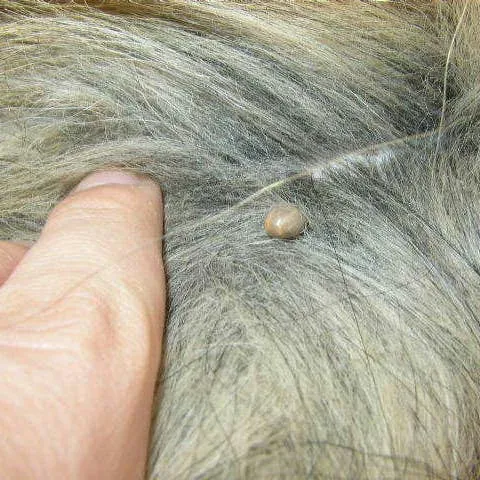
Spotting ticks can be tricky because they start out as tiny as poppy seeds. After feeding on blood, they swell up to roughly the size of a corn kernel. While woodlands are common tick habitats, these parasites also show up near lakes, ponds, parks, and even in urban backyards. They are resilient and can thrive in nearly every state and climate.
Ticks typically wait in grassy areas for a host to pass by. When they find a dog, they insert their mouthparts into the skin and begin feeding. They often choose spots that are hard for the dog to reach. During a tick check, be sure to examine the inside of the ears, between the toes, the armpits, and the belly area.
If you discover a tick, removal requires care. Follow specific steps to avoid leaving the tick's head behind in your dog's skin. Timing matters: removing the tick quickly is important because Lyme disease transmission usually takes 24 to 48 hours. So inspect your dog thoroughly and act promptly. This guide walks you through safely removing an embedded tick from your dog.
In This Article
- Avoid These Risky Methods
- Items Needed to Remove a Tick
- How to Remove an Embedded Tick From Your Dog
- What if the Tick’s Head Remains Embedded?
- Preventing Future Encounters
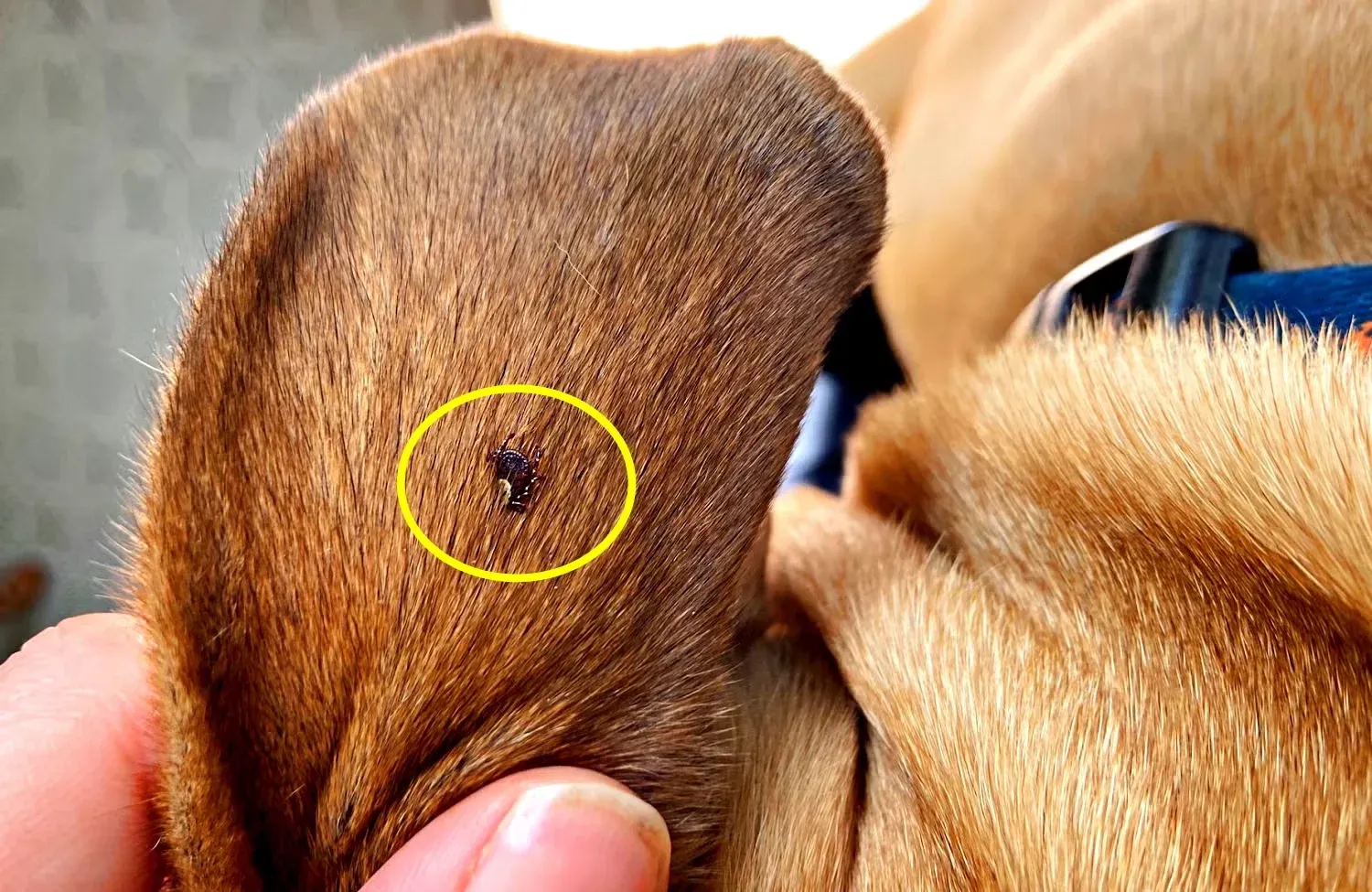
If you have to remove an embedded tick from your dog, do NOT use a match, cigarette, petroleum jelly, lighter fluid, nail polish, or alcohol.
Photo by Megan Marrs on Flickr/PhotoScape
Steer Clear of Dangerous Removal Tricks
When you find an embedded tick on your dog, knowing the correct removal technique is essential. Many suggested methods are ineffective or even harmful.
You may have heard about using a lit match, a cigarette, petroleum jelly, lighter fluid, nail polish, or alcohol. These approaches have resulted in serious burns and skin irritation in dogs from the chemicals involved. They can also prompt the tick to regurgitate infectious fluids, increasing your dog's exposure to pathogens.
Protecting yourself from potentially hazardous secretions is also important, so always wear gloves. To remove a tick effectively, continue reading for proper guidelines.
Tools You'll Need for Tick Removal
- Rubber gloves
- Tweezers
- A jar containing alcohol
- Neosporin
- Your dog's favorite treats
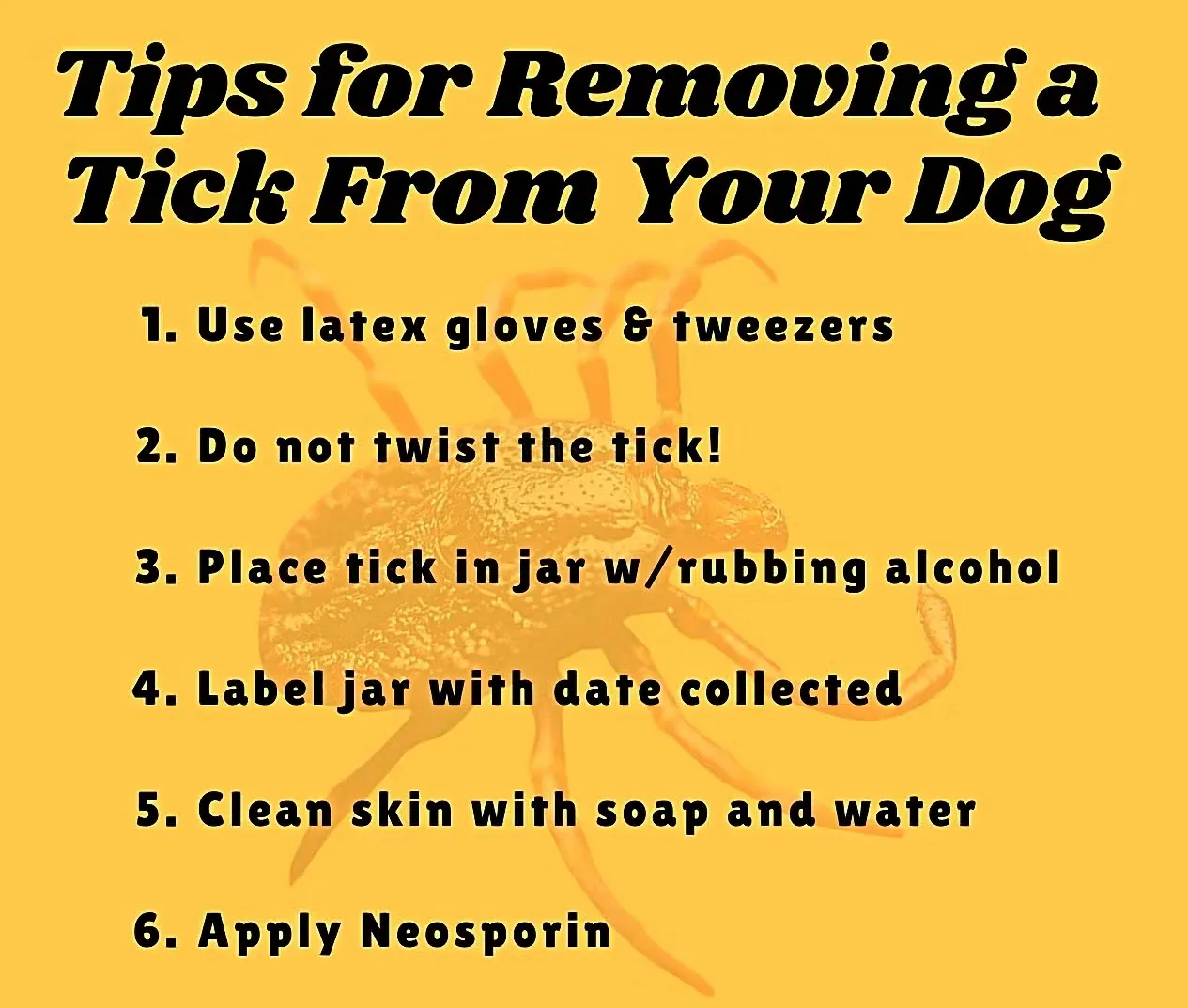
Here are six tips for removing an embedded tick from your dog
Canva.com/Photoscape
Removing an Embedded Tick From Your Dog
- Put on latex gloves and grab your tweezers. Move your pet to a well-lit spot where you can see clearly. Separate the dog's fur and, using the tweezers, grip the tick as close to the skin as possible. Pull firmly and straight upward. Be sure to grasp the tick's head so it doesn't detach from the body.
- Never twist the tick. Twisting can stress the tick and expose your pet to more pathogens. It might also cause the mouthparts to break off. Just pull straight up until the tick lets go. Your aim is to remove the tick alive so it doesn't release pathogens. You should remove the entire tick. And don't forget to praise your dog and offer a tasty treat!
- Don't flush the tick down the toilet; it can survive and seek another meal. Instead, put it in a jar with rubbing alcohol. Write the collection date on the jar. If your dog later shows possible signs of a tick-borne disease, you'll have a specimen for your vet to examine. They can determine whether it might have transmitted a disease to your dog. Typically, a dog begins showing signs of Lyme disease within two to five months.
- After removal, wash the skin where the tick was attached with soap and water. You can apply plain Neosporin to the area. This medication is safe if your dog licks it off (though it's best to prevent that).
Think of a tick as a little germ-filled balloon. Squeeze it too hard on its back end, and all the germs get pushed to the front end.
— DVM360
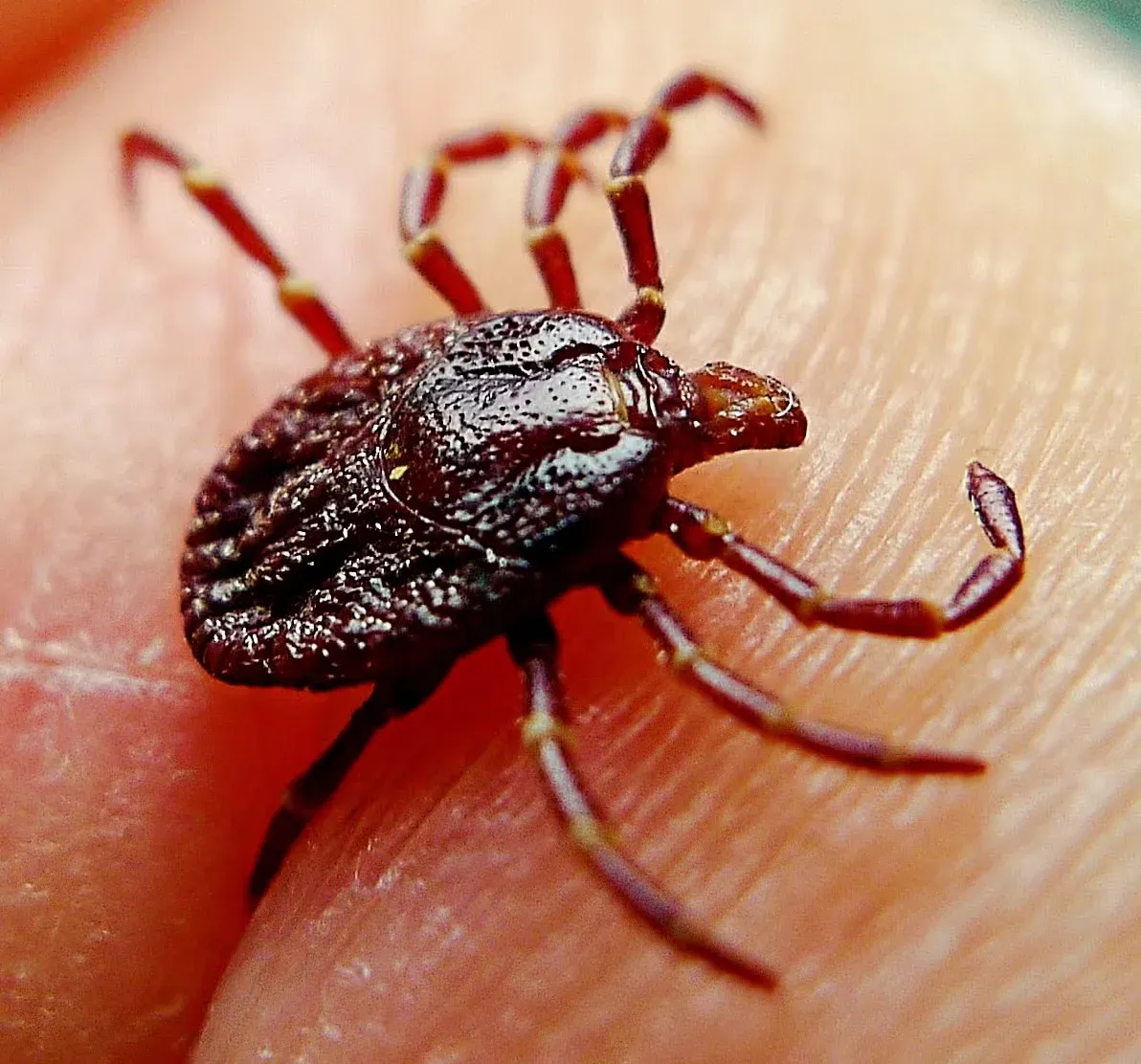
Ticks are germ-filled balloons—and look like nightmare fuel.
Photo by John Tann, Sydney, Australia, CC 2.0, on Wikimedia Commons/Photoscape
When the Tick's Head Stays Behind
If the tick's body comes off but the head remains embedded (often visible as a black dot in the center of the wound), treat it like a splinter. Try to remove it gently with tweezers. If you're still struggling, avoid irritating the skin too much. You could end up causing more harm than the tick's head itself.
At that point, you might choose to have your vet try to remove the embedded head. Your vet may numb the skin with a topical anesthetic and then carefully scrape it off with a surgical blade. Alternatively, you can monitor the area for a few days, watching for any signs of infection. After some time, the dog's skin will naturally push out the tick's head.
According to veterinarian Dr. Wade, it is normal for a sore to form after a tick is removed. The sore may take up to a week or two to disappear.
If the tick head is still embedded, your dog will be likely to develop a local pustule where the head is, and it will cause a sore and then should resolve after a week or two.
—Dr. Wade, DVM
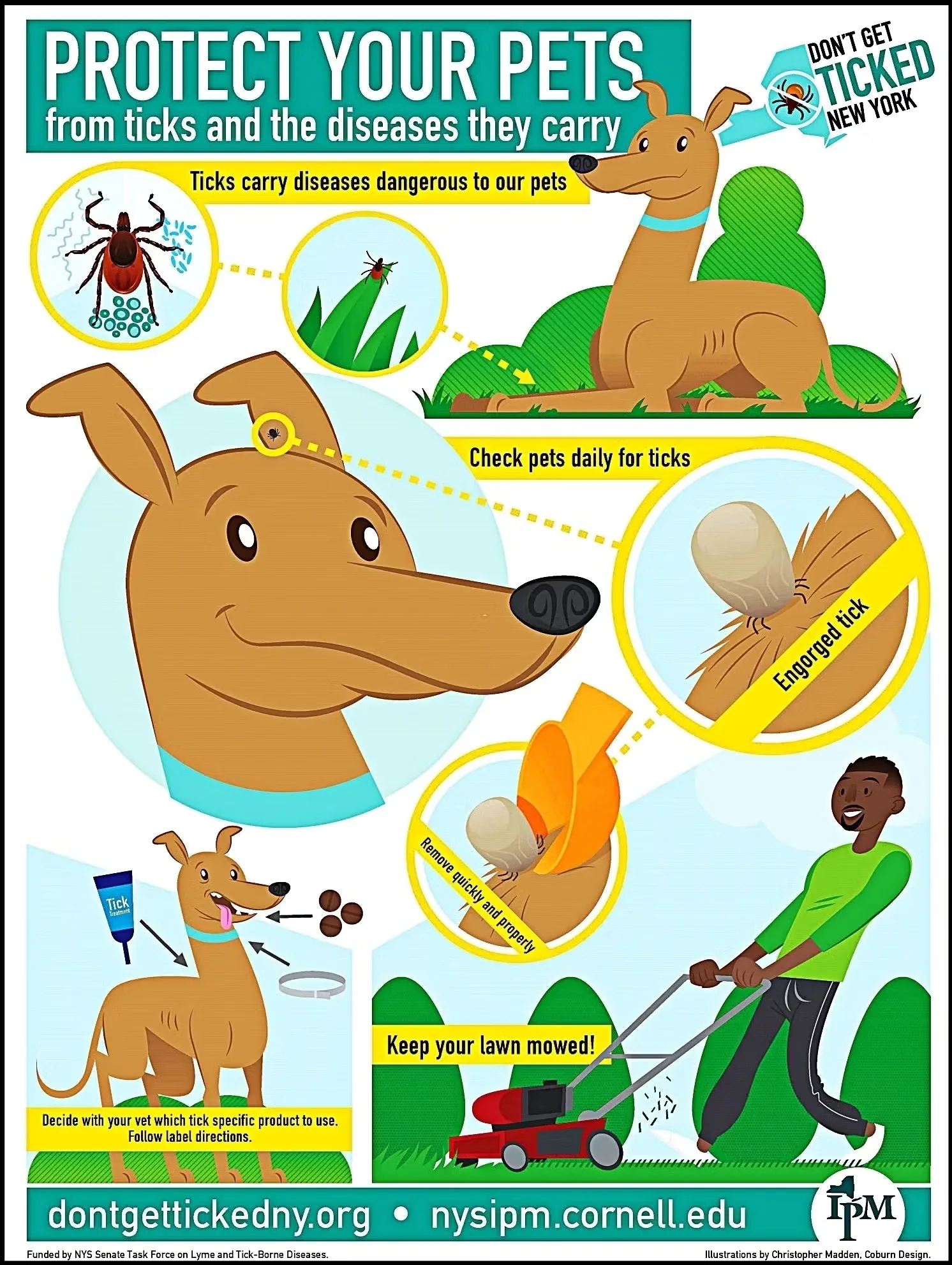
To protect your pup from ticks, here are a number of helpful hints.
New York State IPM Program at Cornell University
Preventing Future Tick Encounters
Ticks are troublesome disease carriers. Recent studies indicate they can remain active even in cold weather. That's why using tick-repelling products can be a lifesaver. These products may need to be applied year-round. If you use Advantix, be aware that such products can be toxic to cats. Also, try to avoid inexpensive over-the-counter products that have been linked to toxicity in some cases.
A reliable tick-prevention product is key. Preventic is a brand that makes collars designed to repel ticks. These collars may help protect you and your dog from these annoying parasites, offering valuable peace of mind. Treating your yard with a tick preventive can also help keep them away. Removing clutter eliminates hiding spots. Clearing tall grasses and brush around your home and yard can make a big difference too.
Additionally, consider vaccinating your dog against Lyme disease. Lyme disease has been confirmed in dogs in all 48 continental states. However, it is more common in the Northeast, such as Pennsylvania and Massachusetts, and the upper Midwest (e.g., Wisconsin and Minnesota).
“The biggest thing to hit on when it comes to ticks is the importance of year-round tick prevention. People sometimes think if it’s not spring or summer, ticks aren’t out, and that’s not true.”
—Dr. Richard Gerhold, DVM
This article is accurate and true to the best of the author’s knowledge. It is not meant to substitute for diagnosis, prognosis, treatment, prescription, or formal and individualized advice from a veterinary medical professional. Animals exhibiting signs and symptoms of distress should be seen by a veterinarian immediately.
© 2008 Adrienne Farricelli CPDT-KA, Dip.CBST