Recognizing and Naturally Managing Swollen Paws in Dogs
Jamie Reed

Home Care for Swollen Paws in Dogs
If you notice your dog's feet are swollen, sometimes the reason is clear—a thorn, a burn from hot pavement, or a spider bite. However, pinpointing the exact cause is often not straightforward. Before you decide on a course of action, take a moment to consider a few key questions.
What Leads to Swollen Feet in Dogs?
- Injury (such as a broken toe or nail)
- Infection
- Allergies
- Spider bite
- Puncture wound
- Tumor between the toes (rare)
- Circulatory issue (e.g., heart disease)
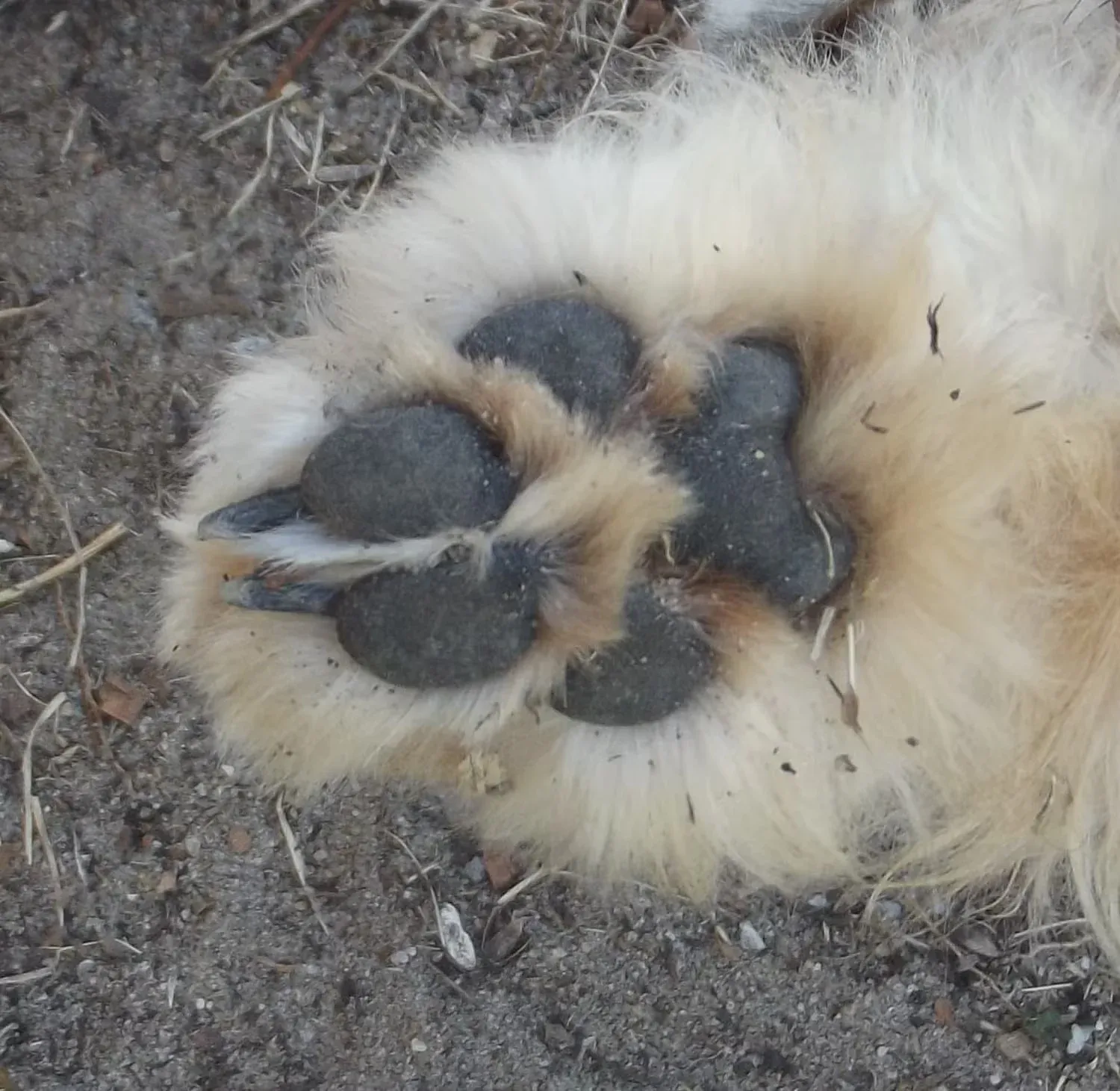
If your dog has long hair and you are not able to examine the paw for swelling, check to see if the toes are parallel.
DrMark1961
Key Questions for Diagnosis
To get a better idea of what's happening, start by asking these assessment questions.
How many feet are affected?
- Only one foot: This often points to trauma, a foreign object (like a thorn), or a spider bite. Lift the paw and inspect the nails, then feel the skin and check between the pads. Is there any growth between the toes?
- Just the front feet: If the front feet are swollen and your dog has been licking them a lot, allergies could be the culprit. Check if the ears are also red and swollen, or if the belly or other areas are raw from scratching.
- All four feet: If every foot is swollen, examine the pads for damage from hot pavement. If your dog is also coughing, heart disease might be involved. In this case, a vet visit is essential.
Where is the swelling located—leg, toes, or pads?
- Leg: Swelling in the leg could result from trauma or a lesion elsewhere, with the foot swelling being secondary to an injury higher up.
- Toe: If only one toe is swollen and the leg seems fine, check for tenderness. A fractured toe, torn nail, spider bite, or thorn could be the cause.
- Pads: If the pads are swollen and painful, a burn from hot asphalt is possible. If they are crusty but not painful, a genetic footpad disease, lupus, or an infection may be to blame.
Natural Remedies for Swollen Feet
- Betadine wash: For a wound from a sharp object, clean it with betadine solution. Since betadine can cause minor tissue damage, a chlorhexidine solution is an alternative. Betadine is widely available and considered more natural.
- Epsom salt soak: When the cause is unknown, soaking the foot in Epsom salts (about 2 tablespoons per liter of water) is a top option. It's not always easy—many dogs won't stay still—but aim for at least 15 minutes.
- Apple cider vinegar: If the paw smells yeasty, especially after licking, a yeast infection secondary to allergies may be present. These infections often affect the whole body, but early on, apple cider vinegar can help. Soak the foot in diluted (half-strength) apple cider vinegar, then let it air dry without rinsing. I prefer organic apple cider vinegar for its acidity and healing properties. Note: It may also reduce itchy skin from allergies, potentially avoiding the need for antihistamines.
- Benadryl: If your dog is scratching ears, digging at skin, and chewing feet, and apple cider vinegar isn't helping, Benadryl (diphenhydramine) at about 1mg per pound can offer temporary relief. It doesn't always work and is only temporary, so see your vet soon about the allergies.
- Warm water soak: For rough, scaly footpads, a warm water soak can soften them. Some vets suggest vaseline, but dogs often lick it off before it helps.
If soaking doesn't improve the swelling, have your dog seen by a veterinarian promptly. Conditions like lupus require extensive testing.
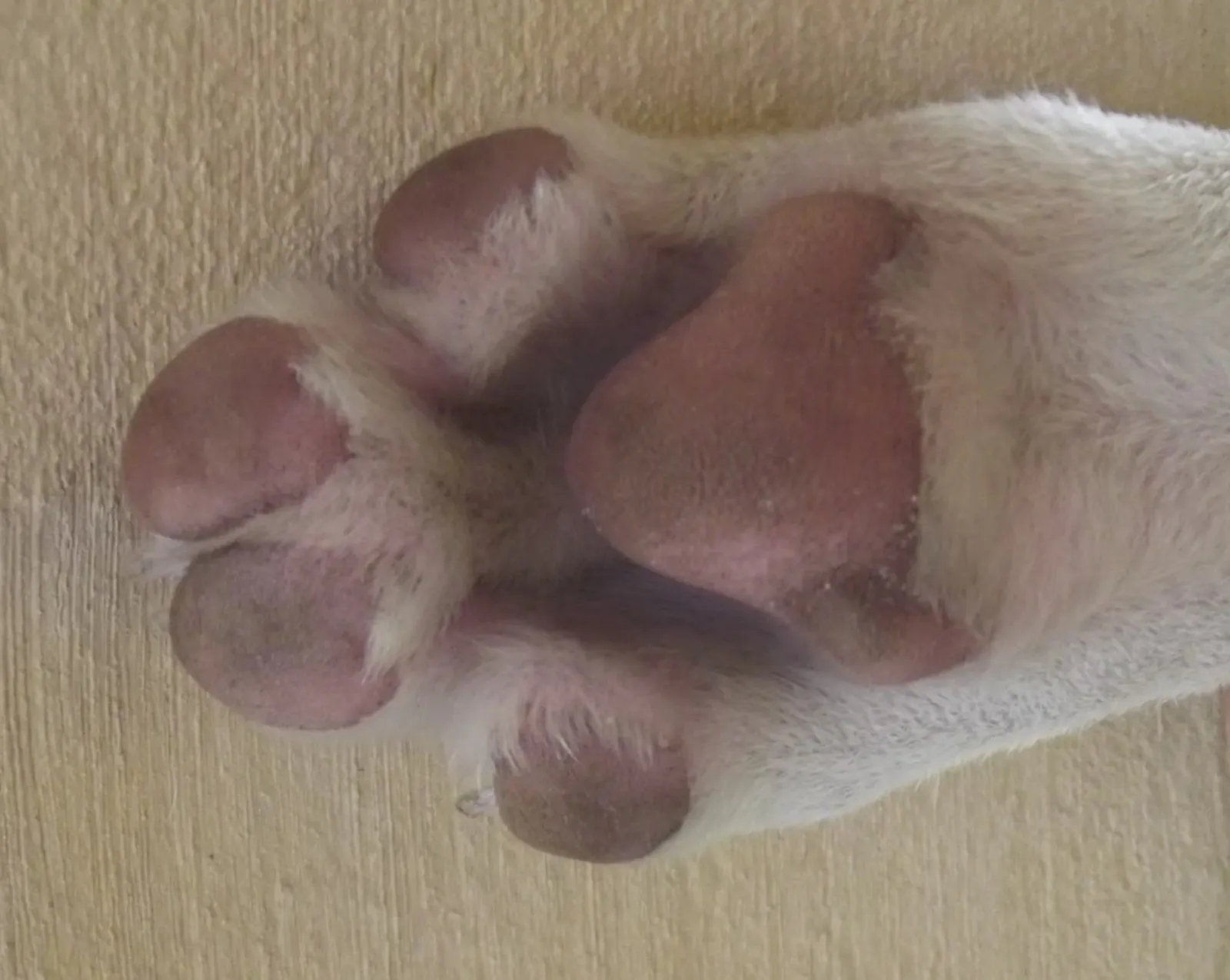
Some feet are naturally wide without being swollen. Look at your dog every day so that you are aware of what is normal.
DrMark1961
When to See Your Vet
Occasional foot licking is normal, but constant licking and chewing indicate a problem that needs investigation. If swelling persists, a serious issue may be present. Consult your veterinarian.
This article is accurate and true to the best of the author’s knowledge. It is not meant to substitute for diagnosis, prognosis, treatment, prescription, or formal and individualized advice from a veterinary medical professional. Animals exhibiting signs and symptoms of distress should be seen by a veterinarian immediately.
Questions & Answers
Question: My dogs legs are swollen and touchy. What do i do ?
Answer: If your dogs legs are swollen and sensitive it is an infection or a circulatory problem, like a heart disease. Neither of those should or can be treated over the internet. You need to get her to the vet as soon as possible.
Question: My Boerboel’s leg has been swollen since June 3rd. We’ve had X-rays done and has been on anti-inflammatories and antibiotics, but his leg is still swollen. What more can we do?
Answer: If the swelling is in the paw, you can try to soak in Epsom salts. If your dog has swollen elbows, look at this article and see if it helps: s.com/dogs/swollen-elbow-dog.
Question: My dog’s back left foot is swollen. There is no thorn or object in the foot, but now her mouth is swelling. What is going on?
Answer: If the dog’s lips are swelling that indicates a systemic allergic reaction. She may have been bitten by a bee, a spider, or even a snake. The bite may be too small even to notice.
Please take your dog to a vet so that she can be given an anti-inflammatory injection. If she suffers from swelling in her throat, she could stop breathing.
Question: My 2-year-old German Shepherd got into a fight with my pit and now the German Shepherd has swollen back legs. How can I get rid of my German Shepherd’s swollen back legs?
Answer: If the dogs back legs are swollen it may be because of bites and secondary infections. The best thing you can do for your dog is take him to your regular vet so that he can be treated with antibiotics.
If this is not possible you can try the Epsom salts as I described, but if the dog is already sick (a fever, not eating, vomiting, etc) he will need internal antibiotics.
Question: My dog’s foot is swollen, so I tried Epsom salt, but it hasn’t brought the swelling down. What else can I try?
Answer: It is possible that your dog has an infection from a penetrating wound. If the Epsom salts were not effective, you need to have the dog examined by your vet. He or she may need to be put on antibiotics.
Question: My Bullmastiff dog cross of four years has a swollen stomach and feet. He can’t eat or move around. What can be wrong with him? Is there any home remedy or natural treatment I can use?
Answer: Your dog may have heart disease or cancer of the cardiovascular system. No one can tell you without examining him. No, I cannot recommend any natural cures for a dog that is suffering from an undiagnosed disease.
Question: My Rottweiler has been on IV drip for three days. After the IV was taken out, his arm and paw became swollen. Is this normal?
Answer: It could be normal if there was any subcutaneous loss of fluids into the tissue around the arm. It will go away soon and is nothing to worry about.
The only reason you should be concerned is if the swelling gets worse or the dog becomes lame. That would indicate that there was an infection in the leg, possibly caused by the catheter, and you will need to take him back in for antibiotic therapy.
Question: My 10-year-old lab mix has a swollen toe. It looks like the nail is completely missing. How can I treat the toe at home?
Answer: When only one toe is swollen, it may be due to a spider bite, a puncture wound, or other trauma with a secondary infection. Try the suggestions in the article: soak the foot, see if there is pus coming out of a wound, and if you are not able to clean the wound with tincture of iodine, you might need to take her to a vet to be treated with antibiotics. If this is not possible, you need to try one of these home cures, which may be less effective in this area: aloe vera, coconut oil, etc.
Question: My 8-year-old male German Shepherd´s rear feet and ankles are swollen. He will not lay down. He’s eating and drinking normally but seems to have a cotton mouth and raw and moist around his genital area. I’m not sure if any of this is connected. Any ideas?
Answer: The swelling in the rear feet and ankles sounds like a circulatory problem, maybe a blood clot. The problem in the genital area sounds more like an infection. If the dog has a circulatory problem he should be seen by an emergency vet right away.
Question: My 10-year-old Maltese has swollen feet due to an allergic reaction to probiotics. Her front paws are raw from licking, and she’s been limping. Can I do an Epsom soak along with a little vinegar? If the vinegar solution is too strong I think it would sting at this point, but I do believe she is developing yeast issues.
Answer: If your Maltese has been licking so much that her paws are raw, she probably does have a yeast infection. Diluted apple cider vinegar (half water) is okay and will not sting too much, but you have to see how she reacts. If it is just an allergic reaction, she will probably not even need the Epsom salt solution.
Question: My dog has been limping for a month or more, and blood tests and X-rays reveal nothing. Now it looks like one toe is extended and higher off the ground than the others. Is there anything in particular to look for?
Answer: You do not mention if it is a front or rear leg, which might make a difference, but I assume your regular vet has already gone over most of the common causes of lameness.
The condition you describe sounds like it might be tendinitis. If the tendon that attaches to that toe is inflamed, and then becomes scarred and contracts, it can cause the toe to be lifted off the ground similar to that which you are describing.
I would ask my regular vet to investigate autoimmune diseases and things that might cause an inflammation of the tendon.
If the limping continues and he is not able to diagnose it, you should ask for a referral to a veterinary teaching hospital (university) in your area so that others can look at it and possibly give you a correct diagnosis.
Question: I have a two-year-old American bulldog. My dog lost weight over a weeks time, but he still eats twice a day and drinks normally. Now he seems to have no energy and his front feet are swollen and painful. What can I do to help him?
Answer: There is more going on than just swollen feet. He may have a generalized infection or a circulatory disease like heartworm, and the feet are only one of the signs of what is going on. Please take him to your regular vet right away for an exam and possibly blood work.
Question: My GSD is 3 years old and has swollen paws. They are inflamed, blood will come out sometimes, and he has lost hair. Any suggestions?
Answer: If it were just one paw, I would look for a draining tract that might indicate a foreign body that could be removed surgically. If several paws are involved, it could be cancer, but if the paws are inflamed it is most likely infectious. If you are in the tropics or if your dog walks around in a dirty kennel, there are parasites to worry about. This really needs to be looked at by your local vet, and the skin may need to be biopsied.