When Your Dog Ingestes a Fish Hook: Nonsurgical Approaches and Their Limits
Jamie Reed
How a Dog Might End Up Swallowing a Fish Hook
A fishing competition took place on the beach right in front of my home not long ago. The participants left behind a considerable amount of debris, and regrettably, I walked my dogs in the afternoon before the high tide could carry it all away.
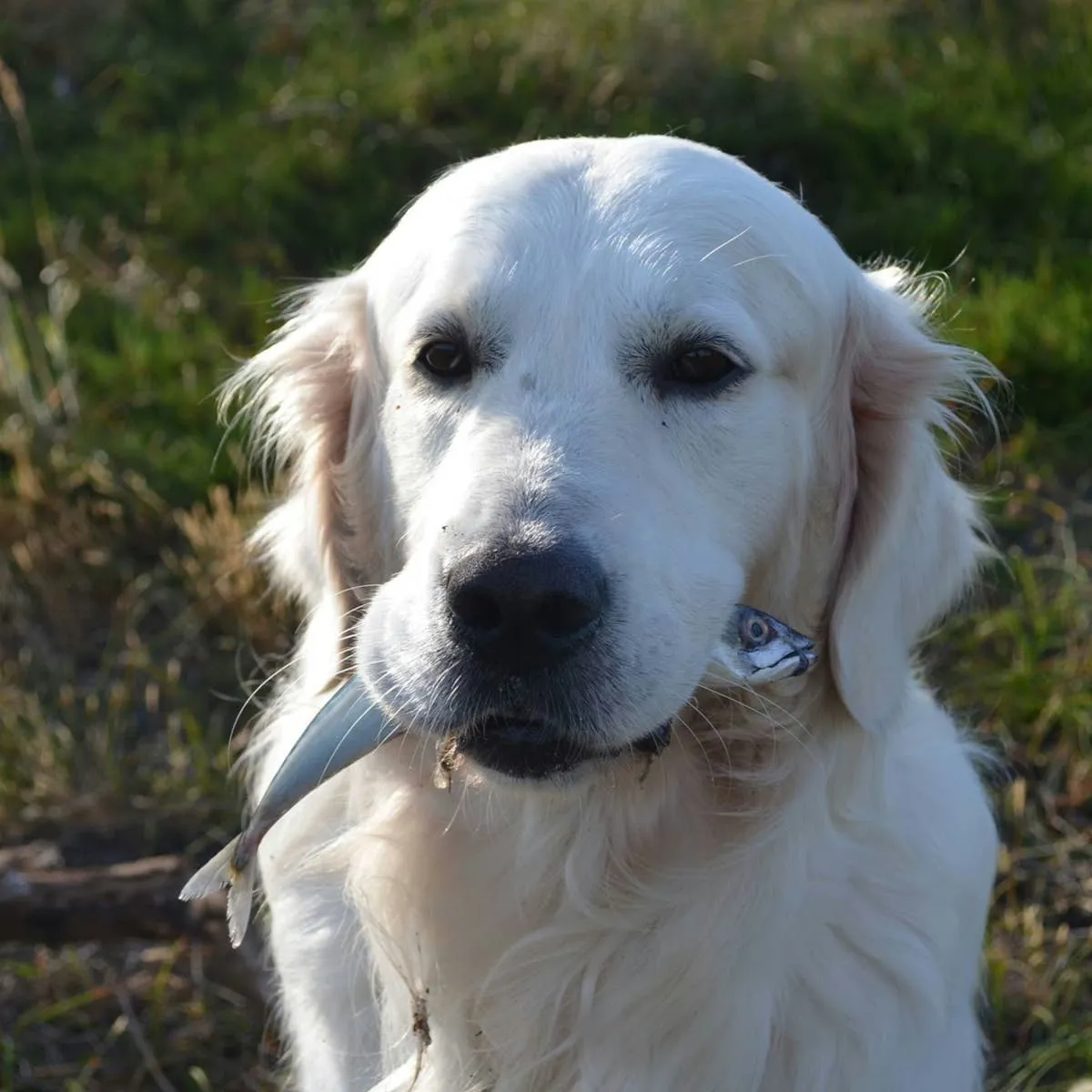
My smaller dog halted mid-run, gulped down a fish head before I could get to her, and then began frantically pawing at her mouth. Upon opening her mouth, I discovered a nylon fishing line already lodged far down her throat. She had swallowed a fish hook together with the fish head it was attached to.
I decided to try pulling it out. An old fishhook could scrape the esophagus on the way out—but I figured esophageal strictures were preferable to a perforated intestine or a linear foreign body caused by the nylon line.
Sadly, the line snapped, and the hook disappeared into her stomach.
When a hook is stuck in the mouth, the dog will likely require sedation so the tips can be clipped before removal. If the hook has been swallowed, the danger is even greater.
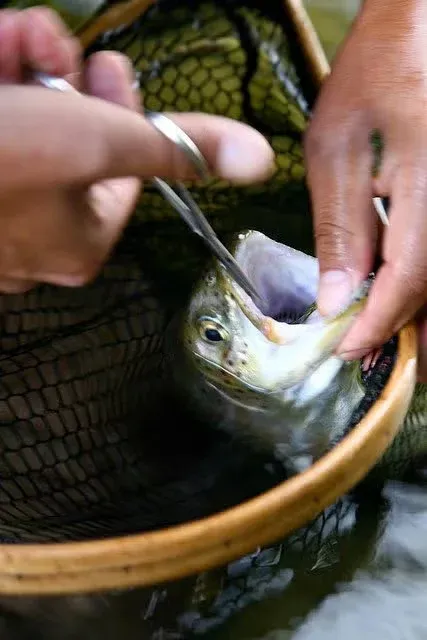
Sometimes hooks are not removed, and dogs will eat them with the fish head.
cc-by jbergen 1309593053
Ways to Remove a Fish Hook
Even if you didn't witness what your dog ate, it's safest to assume the worst. The fish head will break down in the stomach, and the barbs of the fish hook will injure the intestinal lining as they travel through.
The tears will likely heal, but if the intestinal lining is punctured, bacteria can escape into the abdomen. The dog would then probably die from peritonitis, an infection of the abdominal cavity.
Nearly every dog should have the hook taken out via endoscopy or surgery. There are a few situations where this might not be possible:
- No surgical facilities are available (remote location)
- The dog cannot survive surgery due to poor health
- The dog has a condition (such as protein-losing nephropathy) that would cause surgery to fail later (If endoscopy is available, it may spare your dog from traumatic surgery. This is definitely the best choice for that dog!)

Pumpkin is one of the methods to help your dog pass swallowed objects.
cc-by flickr N069798203224
Helping the Fishing Gear Pass Through
Where I live, there are no X-ray machines or surgical facilities. The first step in this situation is to bring the dog back to your house or fishing lodge.
Some people suggest feeding cotton balls to catch the end of the hook, but I don't believe this method by itself will solve the problem. Since this therapy has never been tested in a lab, there is no dose available. Give a small dog a few cotton balls, a larger dog more.
Cook some pumpkin. I usually have fresh pumpkin at home, but the canned product is just as good. (You can also use some squash varieties if you don't have pumpkin.) Pumpkin is a high-fiber food that will give your dog the best chance of passing a bulky stool. The bulky stool might surround the fish hook as it moves down the intestine and make damage to the intestinal wall less likely.
Let your dog eat as much pumpkin as she wants. To make the pumpkin taste better, you can add hamburger, hamburger grease, or sprinkle on some parmesan cheese. I keep dried shrimp in my kitchen, so I also added that to make the pumpkin more palatable.
You should also give Metamucil (psyllium), a fiber that will add more water to the stool, help bulk it up even more, and will aid the hook to pass. Give one teaspoon for every 10 kilos (22 pounds).
Finally, I always have lentils on hand, and since my dogs like the taste, I made up their meal with this high-fiber legume.
What to Do If You Can’t Get Vet Care
- Give cotton balls to coat the tips of the hook.
- Feed cooked pumpkin to increase stool volume.
- Administer metamucil to increase stool volume.
- Feed lentils to add more fiber to the diet and further increase stool volume.
Even if your dog is vomiting, do not administer an antacid. The metal and string might irritate the stomach, but the best chance of it being destroyed, or at least blunted, is in the acidic environment of the stomach.
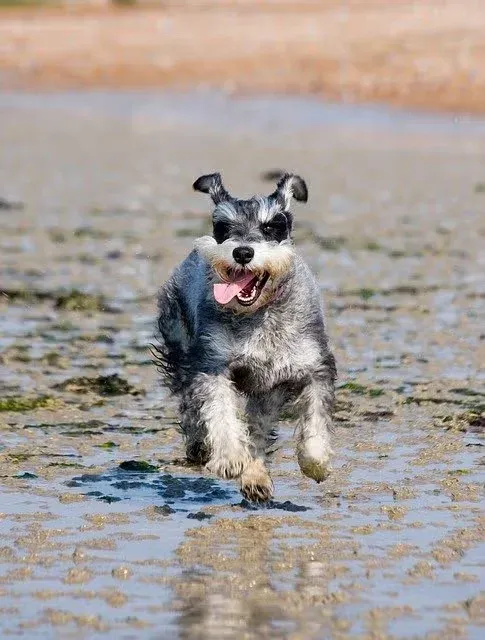
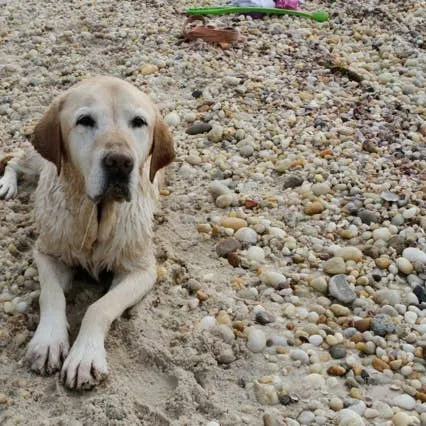
Back on the beach, this Schnauzer is looking for more things to eat.
Is This Method Reliable?
Unfortunately, it does not always work. If the fish hook is too new, the barbs may still be sharp after passing through the stomach, and no amount of padding is going to protect your dog. If there is too much line, or the sinker is made out of a dangerous material, the dog is going to have other problems.
Always Seek Veterinary Care
For those of you that live in an area where endoscopy is an option, that will give your dog the best chance to survive. His stomach will need to be x-rayed first, but if the hook can be reached, it can be removed with the least chance of trauma.
If there are surgical facilities available nearby, I recommend taking your dog to your local vet immediately for observation, x-ray, and surgery. Your veterinarian will decide how to proceed with the problem based on the x-ray.
Ask Local Clinics for Financial Help
If you are reading this article because you cannot afford surgery, call around and see if you can find any veterinary clinic willing to help. There are certain costs that cannot be avoided during surgery, which is why it is so expensive, but no veterinarian wants you to lose your dog, and most of us will do whatever we can to help.
If you live somewhere that does not have surgical facilities for dogs, this procedure may help—but although he may survive, your dog can still have a lot of problems. If your dog has damage to the intestinal wall and secondary infection, he will need to be on antibiotics to pull through.
I have been reluctant to publish this article since I do not want dog owners to ignore the seriousness of this problem. In some cases, however, fish hooks do need to be removed without surgery.
Do the best you can for your dog!
This article is accurate and true to the best of the author’s knowledge. It is not meant to substitute for diagnosis, prognosis, treatment, prescription, or formal and individualized advice from a veterinary medical professional. Animals exhibiting signs and symptoms of distress should be seen by a veterinarian immediately.
Questions & Answers
Question: Can I feed my dog squash instead of pumpkin?
Answer: Yes, that will also bulk up the stool.
© 2015 Mark dos Anjos, DVM