Dog Vaccination: Which Shots Are Essential and How Often Should They Be Given?
Morgan Hill
The Vaccination Debate
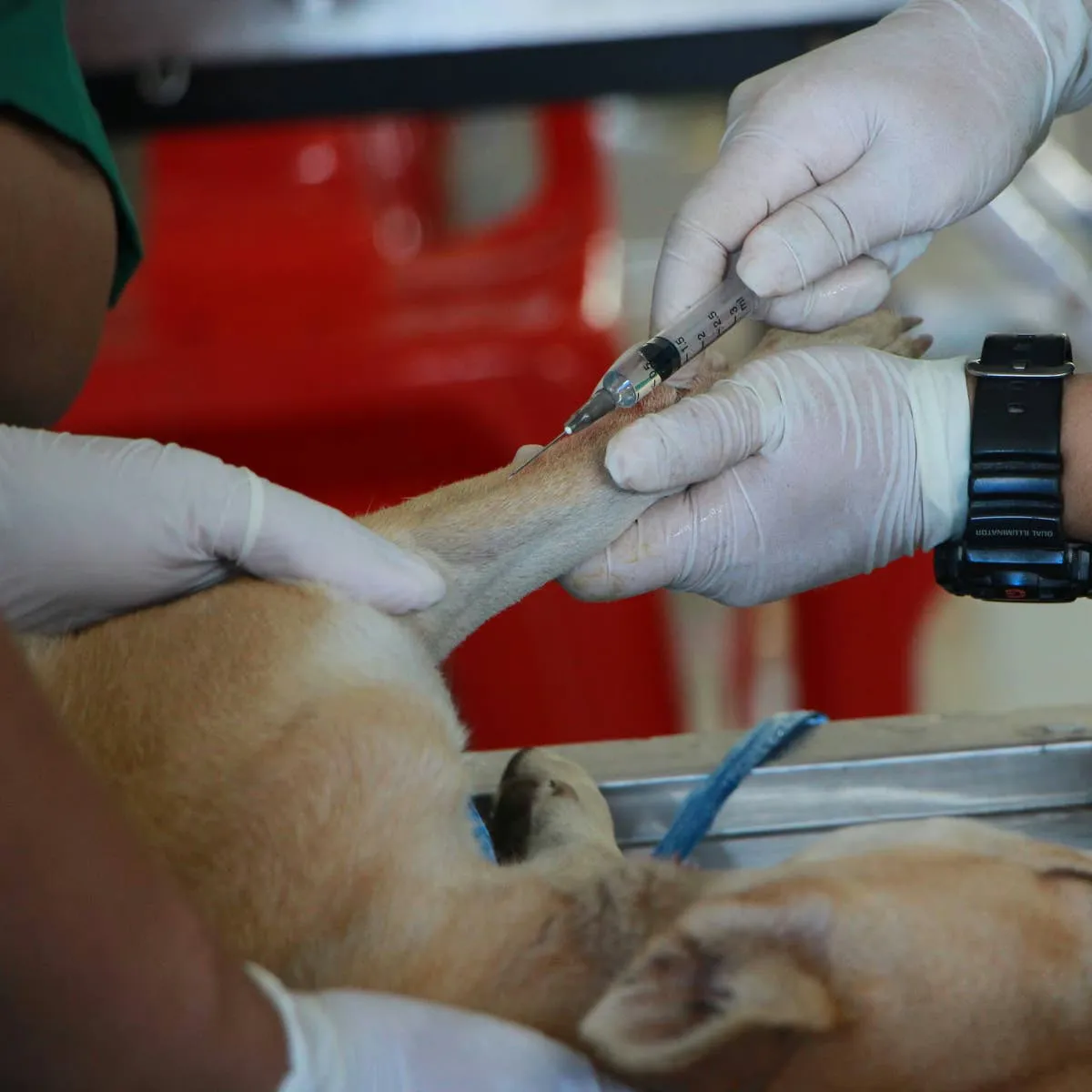
Debate over whether vaccines can be harmful has prompted certain dog owners to forgo all vaccinations. Based on my experience with many of the diseases we can prevent, this is a misguided choice that could cause your dog lifelong suffering, possibly even a short and agonizing life.
But which vaccines are actually necessary?
Learn about whether or not your new pup needs vaccines in this day and age.
Photo by Alvan Nee on Unsplash
Essential Vaccines for Dogs
Below are the key vaccines your dog should receive.
Core Vaccines
- Rabies
- Distemper
- Parvo
Non-Core (Optional) Vaccines
- Infectious Canine Hepatitis (adenovirus)
- Parainfluenza
- Leptospirosis
- Lyme disease
- Bordetella
- Canine Influenza
- Giardia

Rabies can affect all dogs, so vaccines are required in most states.
Pixabay
Rabies
Rabies still worries some people, and laws mandate that all dogs be protected against it. Once common, rabies is now so rare that most of us never think about it; many younger veterinarians have never encountered a case. Before rabies vaccines existed, dogs had a terrible reputation, and many people feared bringing a dog into their home lest it become a biter and cause a family member's death.
Rabies vaccination is legally required in every U.S. state and in many other countries. When the vaccines were created, laws were enacted requiring their use in dogs. Because the disease persists in wildlife, vaccination programs must continue to keep our dogs safe and owners worry-free.
(If your dog is allergic to vaccines, however, consult your veterinarian about getting a waiver so the vaccine is not required.)
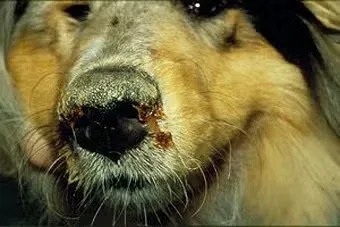
One of the symptoms of canine distemper
cc-by Wikimedia commons
Distemper
Distemper is now rarely seen in the U.S. because an excellent vaccine has nearly eliminated it; it guards against a disease we all used to fear. (Before vaccinations, this was the leading cause of death in dogs.)
There was never an effective cure for distemper; all we could do was provide supportive care and hope the dog survived. Dogs that did survive often had neurological aftereffects, such as a Parkinson's-like twitch, failure to thrive, difficulty moving, or even an inability to lift a leg to urinate on a tree like a normal dog.
Watching a dog pee on itself and then collapse from the effort is heartbreaking when you know it could have been prevented.

Parvo virus can kill your dog.
cc-by flickr.com lbr4648821029
Parvo
Parvo is another severe disease that all dogs should be vaccinated against because we can prevent it with vaccines. The virus persists in the environment for a long time, and parvovirus is still widespread. If your dog is unprotected, the disease attacks the intestinal cells and causes them to slough off. The dog bleeds out, and it is a horrible death.
When parvovirus first emerged, I recall most of the clinic's cages being filled with dogs suffering from bloody diarrhea and having no chance of survival. Although some strains remain resistant, most dogs will be protected, and the vaccine is well worth administering.
Other Vaccines
- Infectious canine hepatitis (adenovirus) is considered important by some practitioners (AAHA), while others, such as Dr. Dodd (Hemopet), do not recommend it because the vaccine can cause temporary immunosuppression. Parainfluenza and sometimes leptospirosis are also commonly vaccinated against alongside distemper and parvo. The combination vaccine sold almost everywhere already includes these antigens, so your puppy will receive that protection whether you want it or not. If your veterinarian uses a vaccine with only distemper and parvovirus and does not vaccinate against these other diseases, there is no reason to worry.
- Lyme disease vaccination is probably not for every dog but may be worthwhile for those living in affected areas. Some affected dogs do not show symptoms until the disease is advanced and damage is already done. However, the vaccine is so ineffective that many veterinarians will not even recommend it.
- The bordetella vaccine, marketed as a 'kennel cough' vaccine, may not prevent the disease but will prevent some types of cough from worsening. Many other pathogens are involved, and unless your dog is exposed through boarding or grooming, this is not a vaccine you need to put on your puppy's list.
- Other vaccines (such as Giardia or the flu) are available but should only be considered for dogs at risk. Talk to your veterinarian before giving these vaccines.

Dog vaccines
cc flickr.com
Are Annual Vaccinations Necessary?
While I am certain you need to vaccinate your puppies, are yearly vaccinations for your adult dog even necessary?
Research has shown they are not, and since all vaccinations carry potential side effects (such as allergic reactions and immune-mediated hemolytic anemia), you need to consider whether your dog is in more danger from the vaccine or the disease.
The best way to decide on booster vaccinations is to measure antibody levels in the dog's serum. However, this is expensive and may not even give an accurate picture. (There are cells in the body that are stimulated by the virus and become active in producing antibodies.) If you do not take your dog to a groomer or boarding facility that requires annual vaccinations, you can get by with testing every three or four years and then vaccinate only if needed. If your veterinarian insists on yearly vaccination (like some clinics' 'wellness plans' where vaccine costs are covered but serum titer levels are not), it is up to you to protect your dog's health by refusing the boosters.
Distemper is one of those diseases effectively prevented by vaccination. Protection likely lasts at least seven years, possibly up to fifteen. Parvo is another disease your adult dog will probably never get if properly vaccinated as a puppy. If you choose to vaccinate for Lyme disease, you must give it annually, and bordetella needs boosting every six months when administered intranasally.
Personally, I would recommend puppy vaccinations up to 16 weeks and then boosters at your dog's first birthday, fourth birthday, eighth birthday, and twelfth birthday. I make this recommendation because I am semi-retired and have no financial motivation. There is much controversy, but I am confident that vaccines last at least three years, so there is no need to subject a dog to unnecessary stress.

Healthy dogs on the beach
DrMark1961
Final Thoughts
In an area like mine, where serum antibody testing is not even an option, I give my dog a vaccination every four years. Even rabies vaccinations can be given every three years and still be effective and legal in most areas. (You must check your local laws to see if this is acceptable. Even though they are effective, some places do not allow three-year rabies vaccinations.)
I might even get by with far fewer vaccinations, but my dogs have no health problems that would contraindicate vaccination (such as autoimmune diseases). If one of my dogs developed vaccine allergies or any other disease, I would not vaccinate.
Providing this level of coverage is neither expensive nor stressful for your dog. Everyone can care for their dog, and they thank you for your concern every day!
References and Links
- Horzinek MC, 2006, Vaccine use and disease prevalence in dogs and cats, Journal of Veterinary Microbiology, Oct 5;117(1):2-8.
- Schultz RC, 2006, Duration of immunity for canine and feline vaccines: a review, Veterinary Microbiology, Oct 5;117(1):75
- Appel MJ, 1999, Forty years of canine vaccination, Advances in Veterinary Medicine, 41:309-24.
- AKC recommendations on vaccinating new puppies
This article is accurate and true to the best of the author's knowledge. It is not meant to substitute for diagnosis, prognosis, treatment, prescription, or formal and individualized advice from a veterinary medical professional. Animals exhibiting signs and symptoms of distress should be seen by a veterinarian immediately.
Questions & Answers
Question: My mini poodle, a Mexican rescue, has had several seizures in the eight years I’ve had him. He has never been on Phenobarbital because the seizures were far apart. It’s been three years since he had the required rabies to enter Canada. Should I ask to be exempted from vaccinating at this point?
Answer: You can try to find a veterinarian in your area willing to provide your dog with an exemption because of his illness but when you go into Canada they may or may not accept this. At his age, a rabies vaccine is not really necessary but the politicians who made the laws for rabies vaccines do not accept any new research and are unwilling to learn.
Question: Is there a vaccine for heartworm?
Answer: There is not a vaccine for heartworm. Some vets will require a yearly test for heartworm disease before they will prescribe more preventative. It is available over the counter for those that are interested. s.com/dogs/Is-Heartworm-Testing-Rea…