The Truth About Dewclaws: Why Dogs Have Them and When Removal Is Justified
Jordan Gray
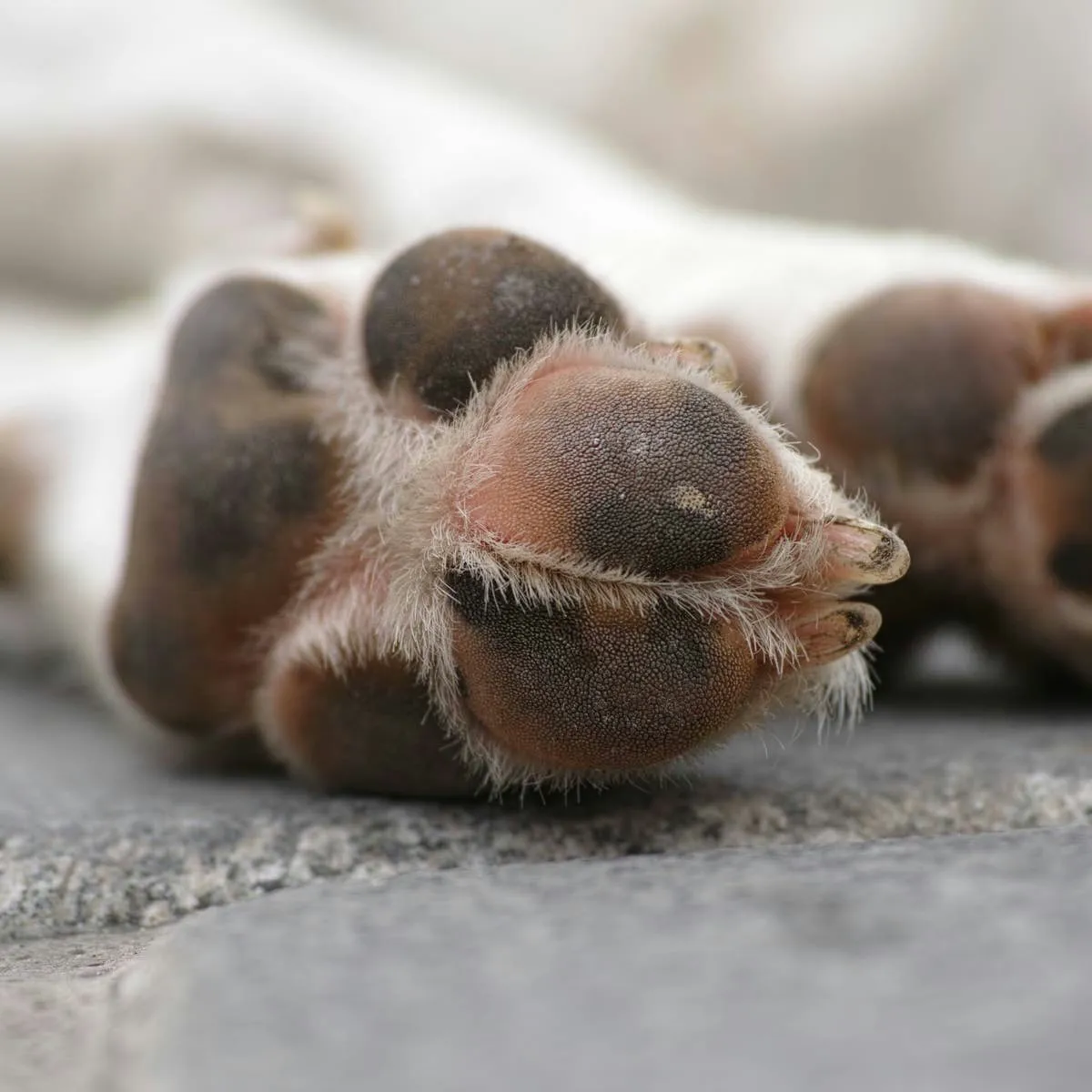
Understanding Dewclaws: Not Just an Extra Claw
If you've ever stroked your dog's front leg and felt an odd, clawed digit higher up than the paw, you've found a dewclaw. It looks out of place, almost like a mistake, and many assume it serves no purpose—especially since it doesn't touch the ground when the dog stands. Some even call it a useless leftover from wolf ancestry. But that assumption is wrong.
Underneath that claw is a complete toe, equipped with bones, muscles, and nerves. Anatomical drawings of a dog's foot clearly show the dewclaw as the fifth digit.
What This Article Covers
- The purpose of dewclaws
- Reasons for removal
- How dogs use their dewclaws
- Injuries and complications
- Risks of removing them
- Rear dewclaws explained
Featured Gallery
1 / 1
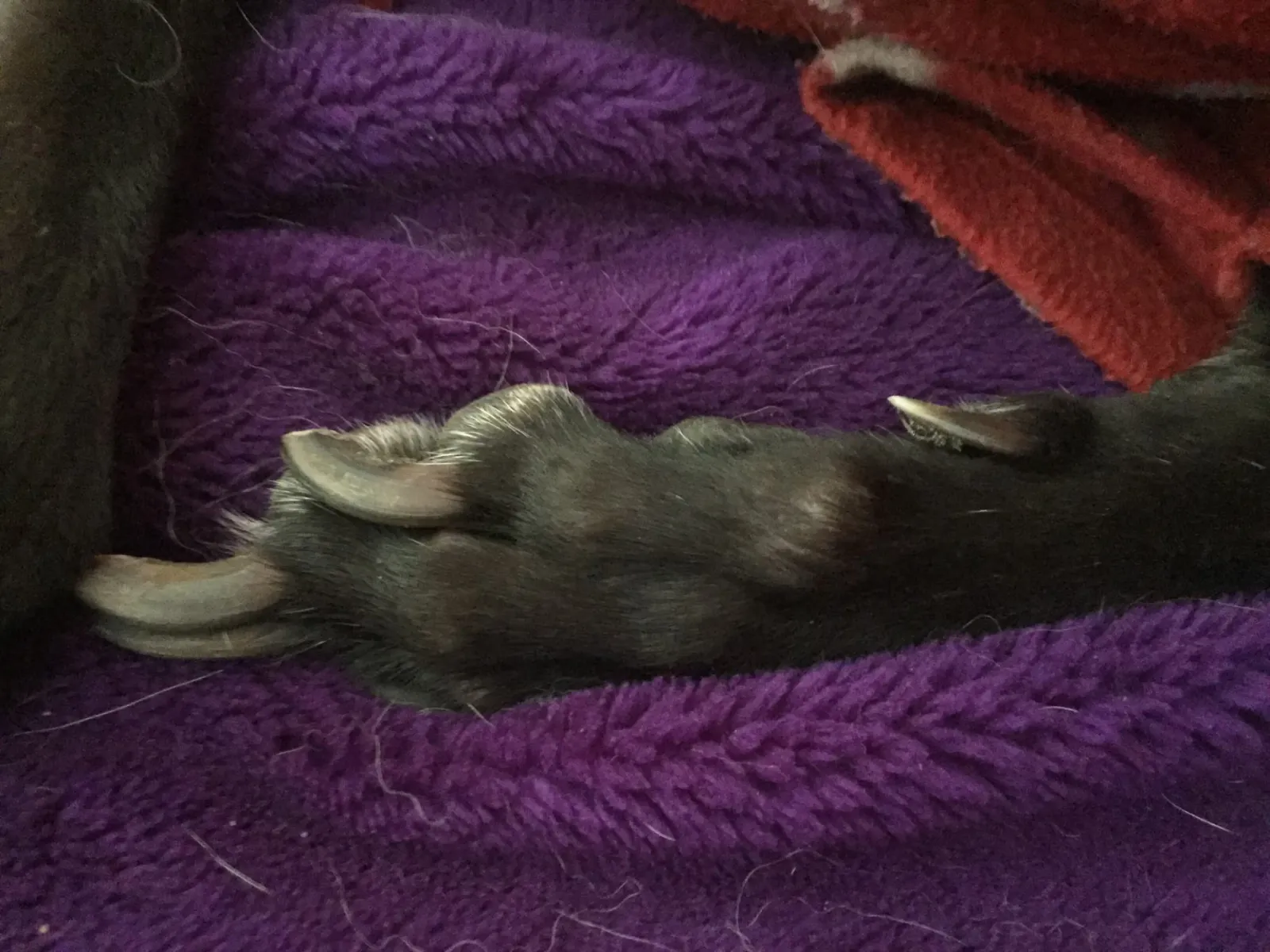
_This photo of a greyhound’s front paw clearly shows the large dewclaw. These claws would benefit from a trim.
Author's Photo_
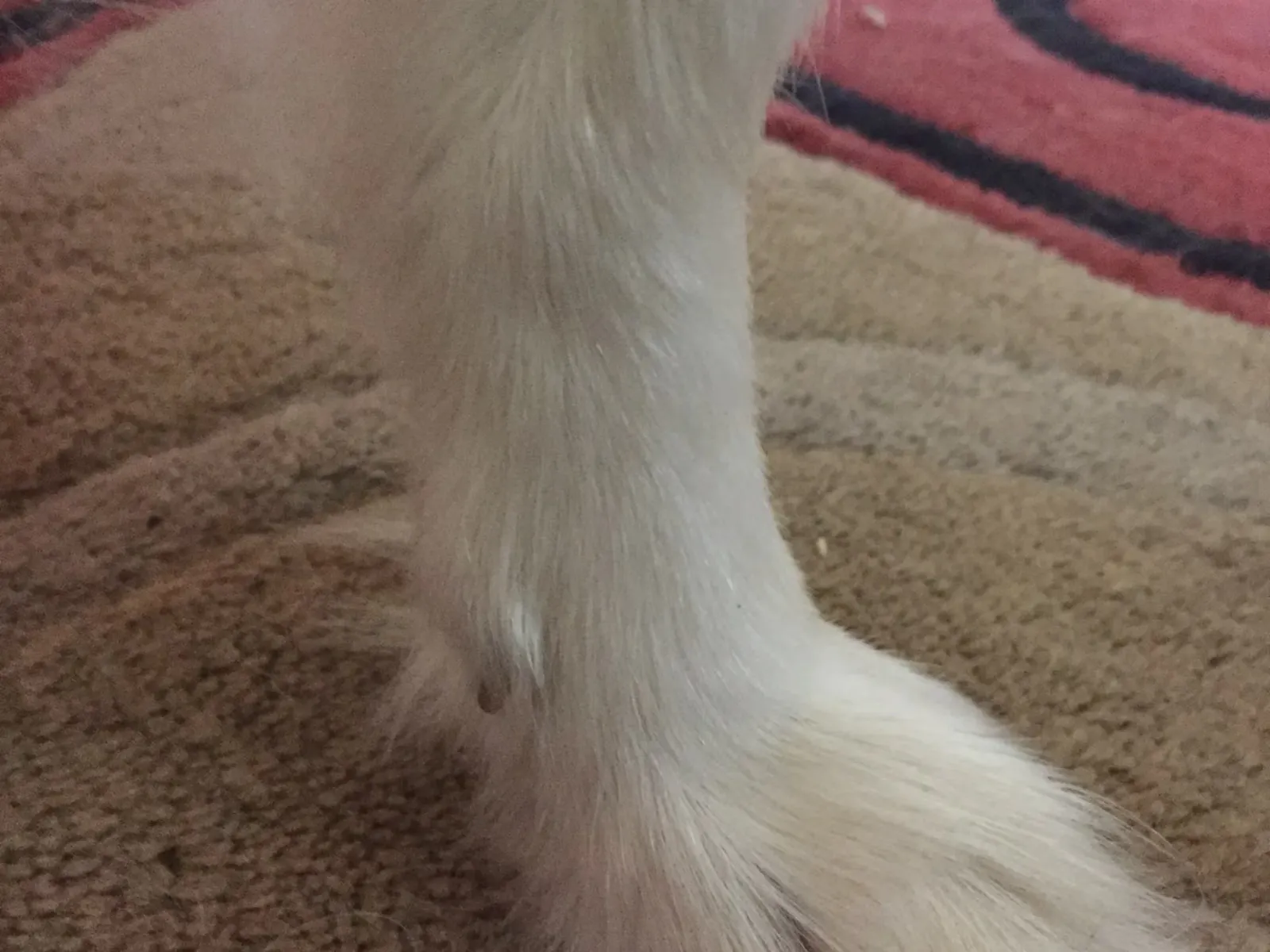
_Here’s a Sheltie’s dewclaw. It can be harder to see the claw on long-haired breeds.
Author's Photo_
Why Dogs Have Dewclaws
The dewclaw is surprisingly flexible and agile. Dogs use it to steady a bone or toy while chewing, or to gently wipe away eye discharge. More crucially, it comes into play during high-speed running and turning: when a dog sprints, its forelimbs land lower, bringing more of the leg—including the dewclaw—into contact with the ground. This happens so quickly that most people never notice, but photos of running dogs reveal how much extra leg surface is used during galloping or jumping. It can look quite odd.
At speed, the dewclaw works as a stabiliser. During a sharp turn, it spreads out and helps the dog pivot. It also reduces pressure on the other toes; without it, dogs running fast could dislocate or damage toes or injure the wrist joint.
This is also why dewclaws sometimes get torn, prompting owners to have them removed in the belief they are preventing further injury. However, many veterinarians now argue that removal actually does the opposite and may lead to long-term problems.
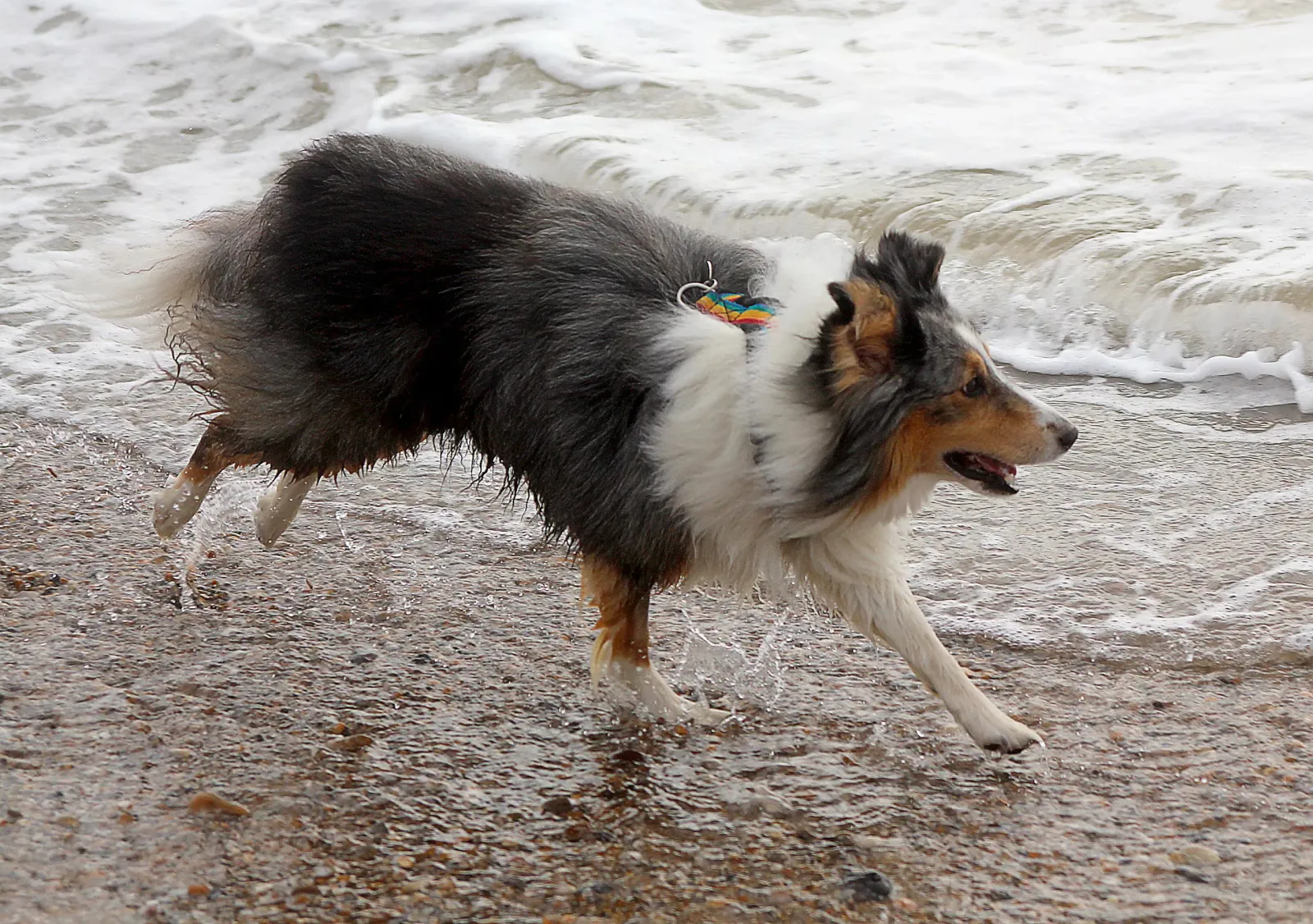
As this dog runs fast and his front legs flex deeply, the dewclaw comes into contact with the ground and helps the dog to dig in.
Author's Photo
Why Dewclaws Are Removed
People choose to remove dewclaws for several reasons. Many genuinely believe it is in the dog's best interest. Breeders often have puppies' dewclaws removed within days of birth. The practice varies by breed and country; it is very common in the US, while in the UK it tends to be limited to certain breeds.
Some breeders remove dewclaws because they think it improves the dog's appearance in the show ring. In the UK, the Kennel Club states it does not support removal for cosmetic reasons, and no UK breed standard requires it. However, the procedure is not illegal.
Removing dewclaws for cosmetic reasons is certainly not justifiable, especially since it is likely to cause complications later in life.
Other breeders remove dewclaws believing it will prevent future injuries. This is understandable but not accurate. Dogs do suffer dewclaw injuries, but that is because they use them and therefore need them. Occasionally an adult dog will irreparably damage a dewclaw and need it removed, but the majority of dogs with dewclaws go their whole lives without a problem. The number of dewclaws requiring veterinary removal does not justify removing a useful and important part of a dog's anatomy.
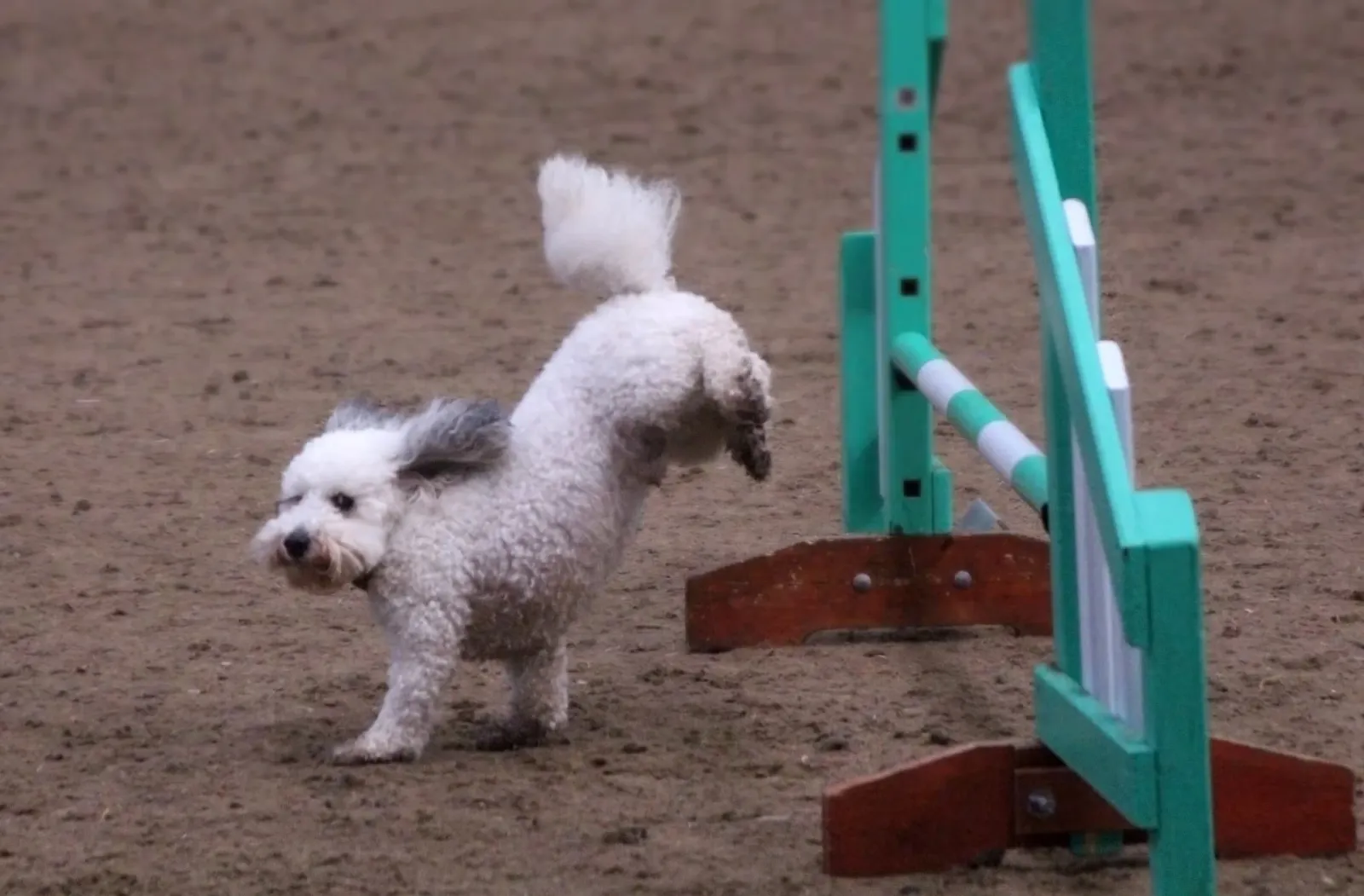
When a dog lands after jumping, the dewclaw comes into contact with the ground.
Author's Photo
Arguments For and Against Removal
Some argue that dewclaws should be removed to prevent them from becoming overgrown. They claim too many owners neglect to clip their dog's claws and let them grow into the leg. But removing a body part because a human is neglectful seems cruel. In any case, most properly exercised dogs naturally wear down their dewclaws; some even chew them to keep them short. If a dog cannot wear down the claw due to age, lifestyle, or conformation, then it should be clipped regularly.
All these reasons for removal rely on one argument: that the dewclaw is unnecessary. Once you realise this is not the case, removing them no longer makes sense. All the arguments for taking off the dewclaw (aside from cosmetic appearance) could apply to any of a dog's toes, but most people would not remove a toe from a puppy to prevent injury or to avoid the claw growing long because they know how important they are.
Some people believe that if puppies have not opened their eyes yet, the dewclaws can be removed without anaesthetic because puppies at this age do not feel pain as their nerve endings are not all formed. This is inaccurate. The procedure is painful, especially as it is necessary to cut through bone.
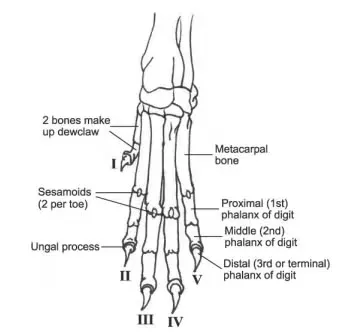
When looking at the bones of a dog’s paw, it can actually appear more like a hand, and it becomes obvious that the dewclaw is an integral part.
Clean Run
How a Dog Uses Its Dewclaw
Let's take a closer look at the function of a dewclaw. While dogs vary in how much they use them, they certainly play a part in their lives. The dewclaw has been described as a dog's thumb and can be amazingly flexible.
For Holding Objects and Scratching
Probably the most obvious way you will see your dog use his dewclaw is when he is trying to control a bone, toy or other objects that he wants to chomp on. Paws alone aren't great for holding items, especially if they are round or uneven. That dewclaw, however, can be spread out from the foot and latch on to the object, dig in and hold it.
Some dogs can use their dewclaws with remarkable dexterity. They will employ them to rub the sleep from their eyes or scratch the inside of an ear. They might even use them to clean their teeth. You may even find your dog will hold onto your arm with their dewclaw when trying to get your attention.
For Climbing
Climbing is another thing that the dewclaw is vital for. Certain breeds are renowned for their cat-like ability to climb, but all dogs have the capability and can employ their dewclaws in the process. This might be climbing up a tree stump after a squirrel or scaling a fence. I once watched my Labrador use his dewclaws as he climbed an A-frame.
For Stabilising
When your dog runs fast, he uses his dewclaws to reduce the torque, or twisting action, that will occur with speed. The dewclaw acts as a stabiliser and stops the other ligaments in the dog's wrist from being overworked. Dogs that do agility or flyball will use their dewclaws heavily as they make turns and dig in for more speed. Racing greyhounds also use their dewclaws as they corner, and their dewclaws can be extremely big and sturdy.
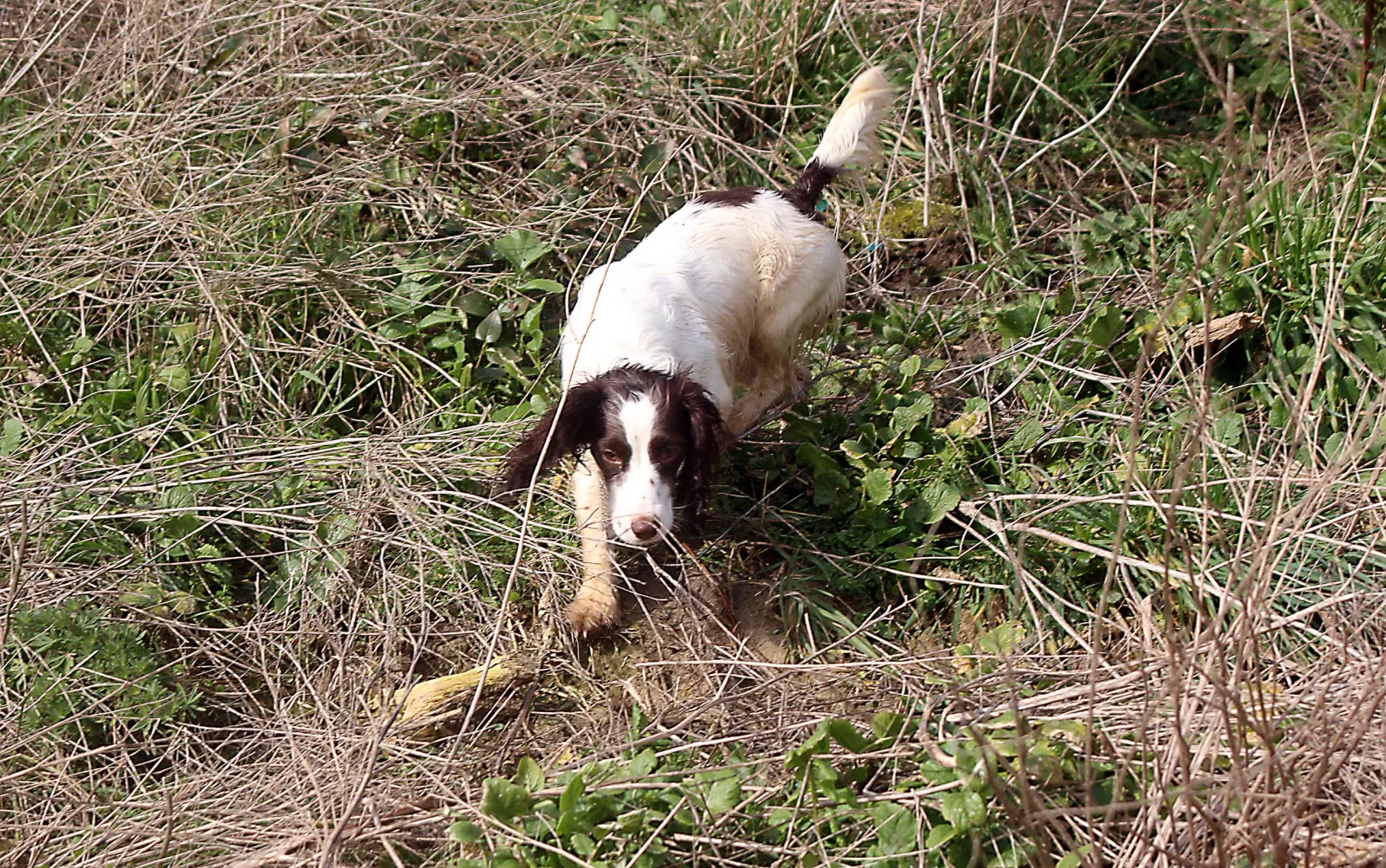
As this dog climbs a rough slope, she splays her toes, including the dewclaw, to help her grip.
Author's Photo
Problems With Dewclaws
Dewclaw injuries are the main reason people give for having them removed as puppies. As mentioned above, with the amount of use dewclaws get, it is not surprising they occasionally get damaged—just like our fingernails get ripped off or torn when we use our hands for manual work.
One of the main reasons dewclaws become prone to damage is when they are allowed to get too long and then snag on something, such as a fluffy carpet. The same applies to all the claws on your dog's feet, and you should regularly inspect them and trim them as necessary. If you don't like using doggy toenail clippers, you could try using a toenail grinder, a number of which are available on the market. You can also try teaching your dog to scratch at a piece of sandpaper around a wooden block. This trick will have to be played often to be effective!
However, most active dogs will wear their claws down by themselves simply from running about and using them.
From time to time, a dog will prove prone to ripping their dewclaws even though they are trimmed. As with everything in life, accidents happen, and some dogs do have issues with their dewclaws. This could be due to weak nails or the dewclaw being malformed. Equally, when a dewclaw has been damaged, it will sometimes grow back wrong and be more likely to snag again. The key is to keep an eye on the claw, keep it trimmed and watch for any early signs of damage. If it does rip or break, you'll need to take care as it regrows to make sure it comes back straight.
Dewclaw injuries can appear dramatic, as the ripped claw does bleed well, but they are easy to treat. Make sure to clean the wound and keep the area bandaged. The biggest problem for these injuries is an infection in the nail bed. This can occur to any of your dog's nails; for that matter, your dog can split any of its toenails and potentially have to have that claw removed. If the nail bed does become infected, you need to see a vet and get antibiotics.
In a few rare cases, a dog may so badly damage its dewclaw that it becomes necessary to remove it completely. This is far from common. In fact, I only know one dog that had to have its dewclaws removed as an adult, but I know of two dogs that had to have toes removed due to chronic injury and infection. The dewclaw is not unusual for injury; any toe can be injured!
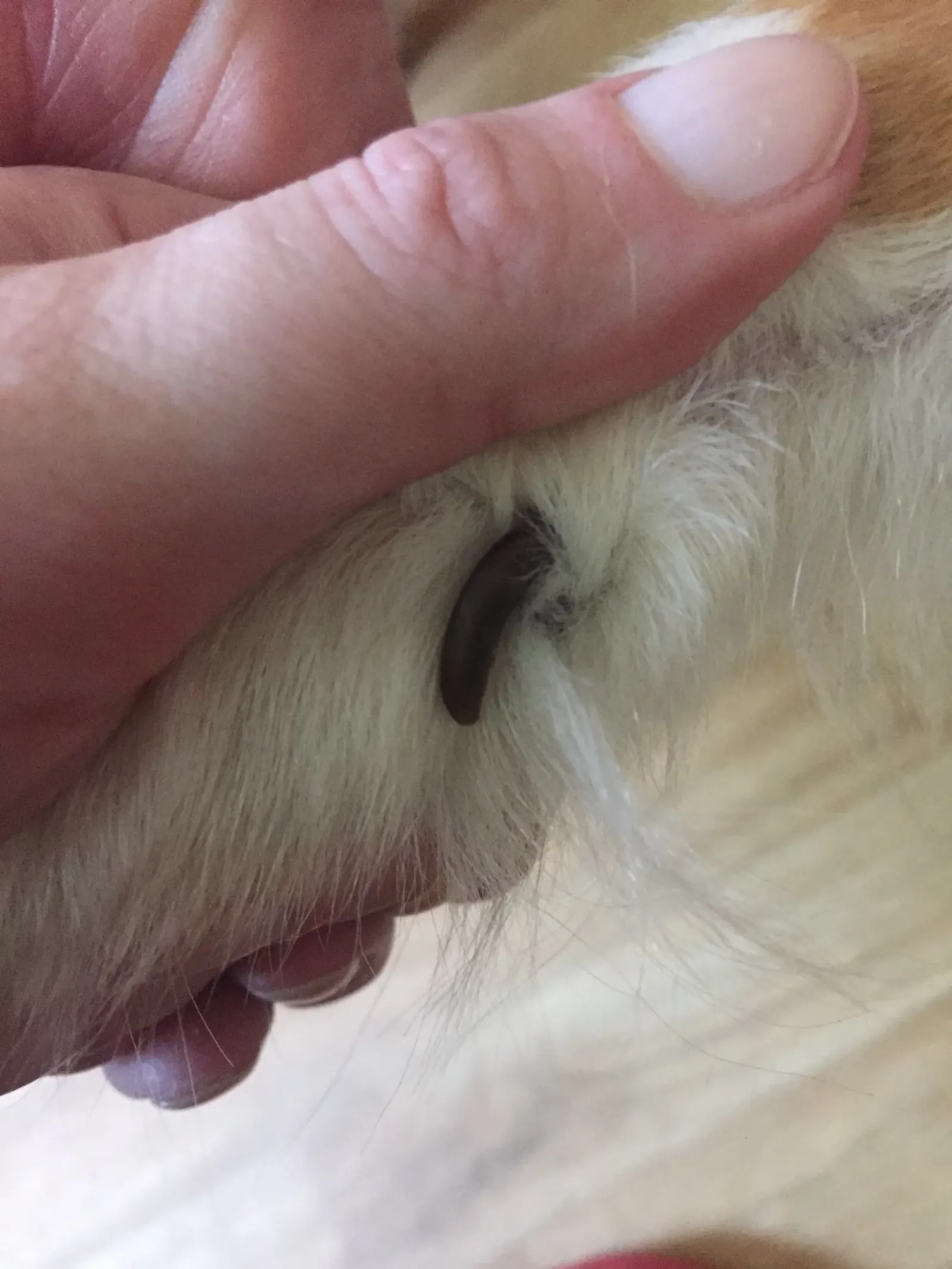
This dog ripped off his dewclaw while running; it has now grown back perfectly normally and does not cause an issue
Author's Photo
Problems Without Dewclaws
Dewclaw injuries are annoying, maybe even frustrating, but they will usually heal in time and leave your dog able to live a normal life. There is growing evidence, however, that the lack of dewclaws could lead to problems that could impair your dog's long-term well-being.
Veterinarian Chris Zink noted nearly fifteen years ago that there appeared to be a causal link between arthritis in the wrist of the dog and the lack of a dewclaw. Chris had found that arthritis was more common in dogs without dewclaws. The Australian Shepherd Health and Genetics Institute concurs with this opinion and specifically states that the removal of dewclaws leads to an increased risk of arthritis in later life.
Chris Zink works exclusively with canine athletes, and her insights into the problems caused by dewclaw removal are insightful:
“I have seen many dogs now, especially field trial/hunt test and agility dogs, that have had chronic carpal arthritis, frequently so severe that they have to be retired or at least carefully managed for the rest of their careers. Of the over 30 dogs I have seen with carpal arthritis, only one has had dewclaws.
If you look at an anatomy book, you will see that there are 5 tendons attached to the dewclaw. Of course, at the other end of a tendon is a muscle, and that means that if you cut off the dew claws, there are 5 muscle bundles that will become atrophied from disuse.
Those muscles indicate that the dewclaws have a function. That function is to prevent torque on the leg. If the dog then needs to turn, the dewclaw digs into the ground to support the lower leg and prevent torque. If the dog doesn't have a dewclaw, the leg twists. A lifetime of that and the result can be carpal arthritis, or perhaps injuries to other joints, such as the elbow, shoulder and toes.”
Simply put, in an effort to prevent a short-term injury, the risk of a dog developing a long-term, debilitating problem is significantly increased. This is especially true if your dog is a canine athlete competing in a high-energy sport.
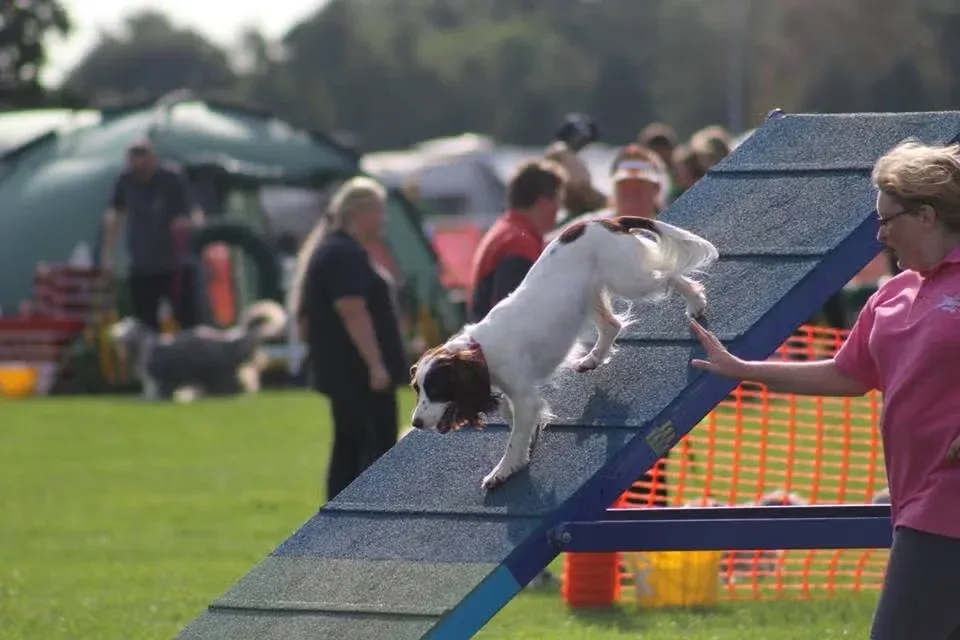
As this dog runs down an a-frame, her dewclaws are engaged. Without them, she would place great strain on her wrist joints.
Author's Photo
What About Rear Dewclaws?
This article is mainly about front dewclaws, which most dogs are born with. Some dogs are also born with rear dewclaws.
Rear dewclaws appear to be exclusive to the domestic dog. While wolves and many wild dog breeds have front dewclaws, they do not have rear dewclaws. Rear dewclaws are called 'vestigial', meaning they once had a function but no longer do and are gradually disappearing. That is why most rear dewclaws have no bone and are just fleshy protrusions with a claw attached.
These dewclaws are often loose, as they have no bone, and can easily become caught. They do not serve a purpose and are usually removed to avoid injury. However, I would suggest this is always done under an anaesthetic, as cutting through flesh is still painful.
Some dogs have bone in their rear dewclaws; in fact, my spaniel does. In this case, the claws are likely to be tight to the leg and are unlikely to cause a problem. I have opted not to have my spaniel's rear dewclaws removed as they are so clearly attached and contain bone. At nearly five years old, she has never damaged them. However, rear dewclaws are not used like front dewclaws and must be regularly trimmed to keep them from growing into the pad of the toe or leg.
In certain breeds, double-rear dewclaws are considered desirable. They are not functional but are seen as a characteristic of the breed.
Featured Gallery
1 / 1
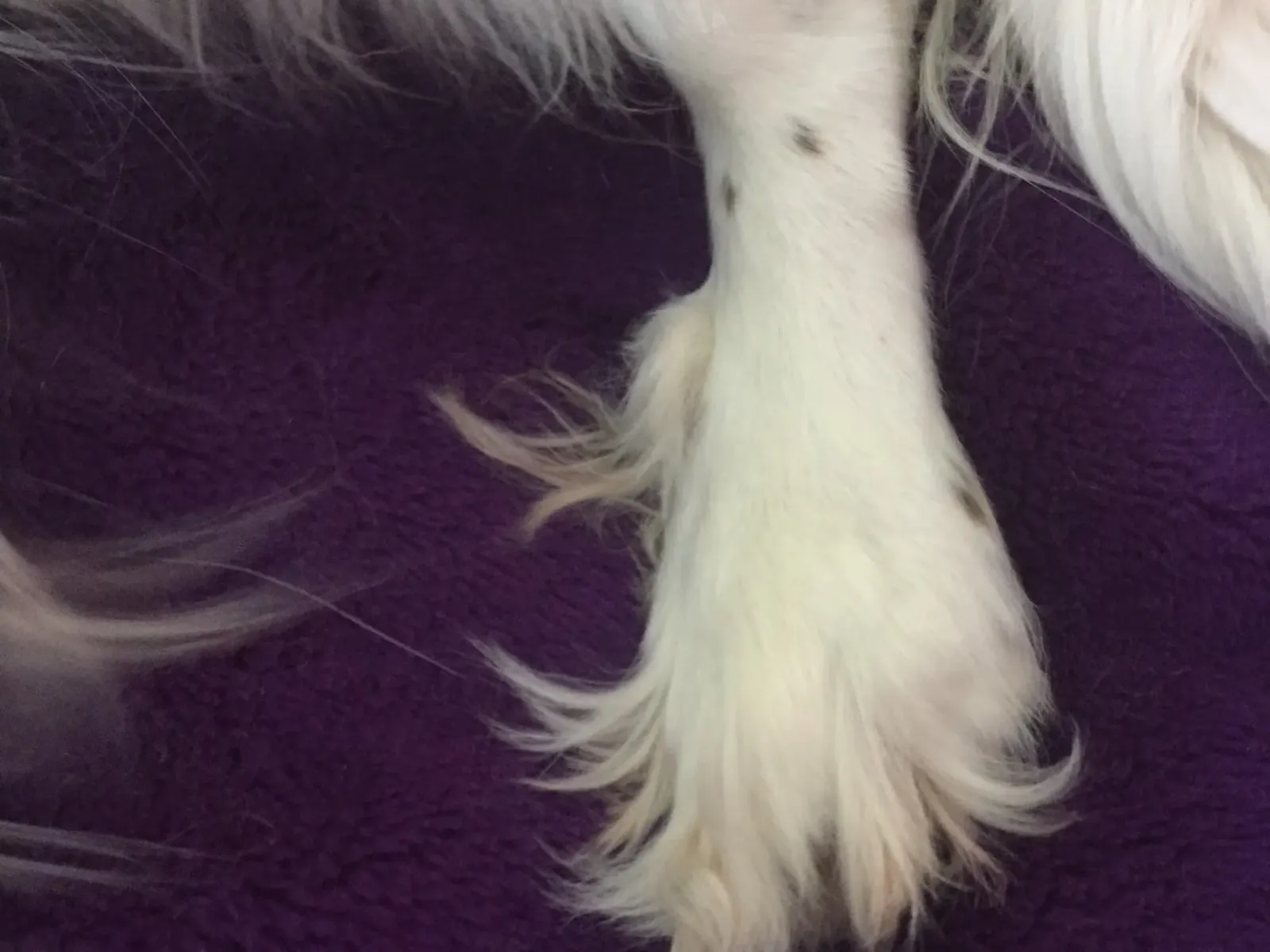
_This dog has a rear dewclaw that, unusually, is a bone digit.
Author's Photo_
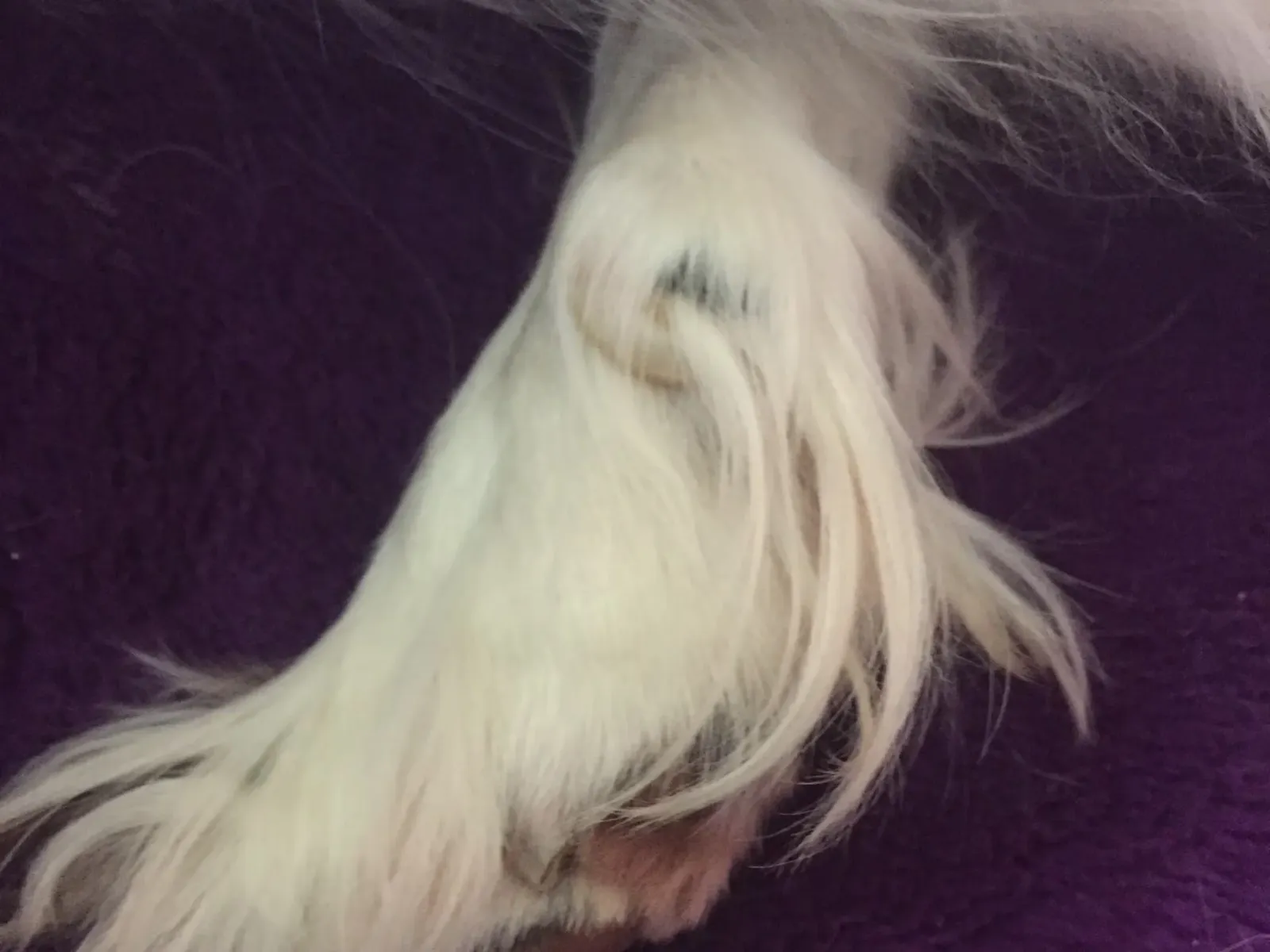
_Rear dewclaws will require regular trimming, as they do not wear down naturally.
Author's Photo_
Closing Thoughts
I hope this article has clarified the purpose of your dog's dewclaws and why they are an important part of their anatomy. They are very misunderstood but can do such amazing things, along with being a vital support for the leg in general. The next time your dog has a bone or runs around, try to see that claw in action. It truly is a fantastic element of canine design!
This article is accurate and true to the best of the author's knowledge. It is not meant to substitute for diagnosis, prognosis, treatment, prescription, or formal and individualized advice from a veterinary medical professional. Animals exhibiting signs and symptoms of distress should be seen by a veterinarian immediately.
© 2019 Sophie Jackson