Bloody Stool in Dogs: 16 Causes and How to Identify Them
Jordan Gray
What Does Blood in Dog Stool Mean?
Discovering blood in your dog's stool can be a worrying experience, particularly since many people immediately think of cancer when they see blood. Fortunately, in dogs, the reasons behind bloody stool are often far less severe.
Still, as a conscientious dog owner, it's wise to have a veterinarian examine the possible causes to rule out any serious conditions.
This guide covers what you need to know about dogs passing blood in their poop, including how to distinguish fresh blood from digested blood, what might be causing it, and how to help your dog through it.
In This Article
- Understanding Bloody Stools in Dogs: Fresh or Digested
- Dog Hematochezia vs. Melena
- Check Your Dog's Stool for Abnormal Signs
- Possible Causes of Bloody Dog Stools
- 6 Causes of Fresh, Bright-Red Blood in a Dog's Stool
- 6 Causes of Black, Tarry Blood in a Dog's Stool
- Slippery Elm Bark Remedy for Dog Diarrhea and Bloody Stool
- What to Do if Your Dog Has Blood in His Stool
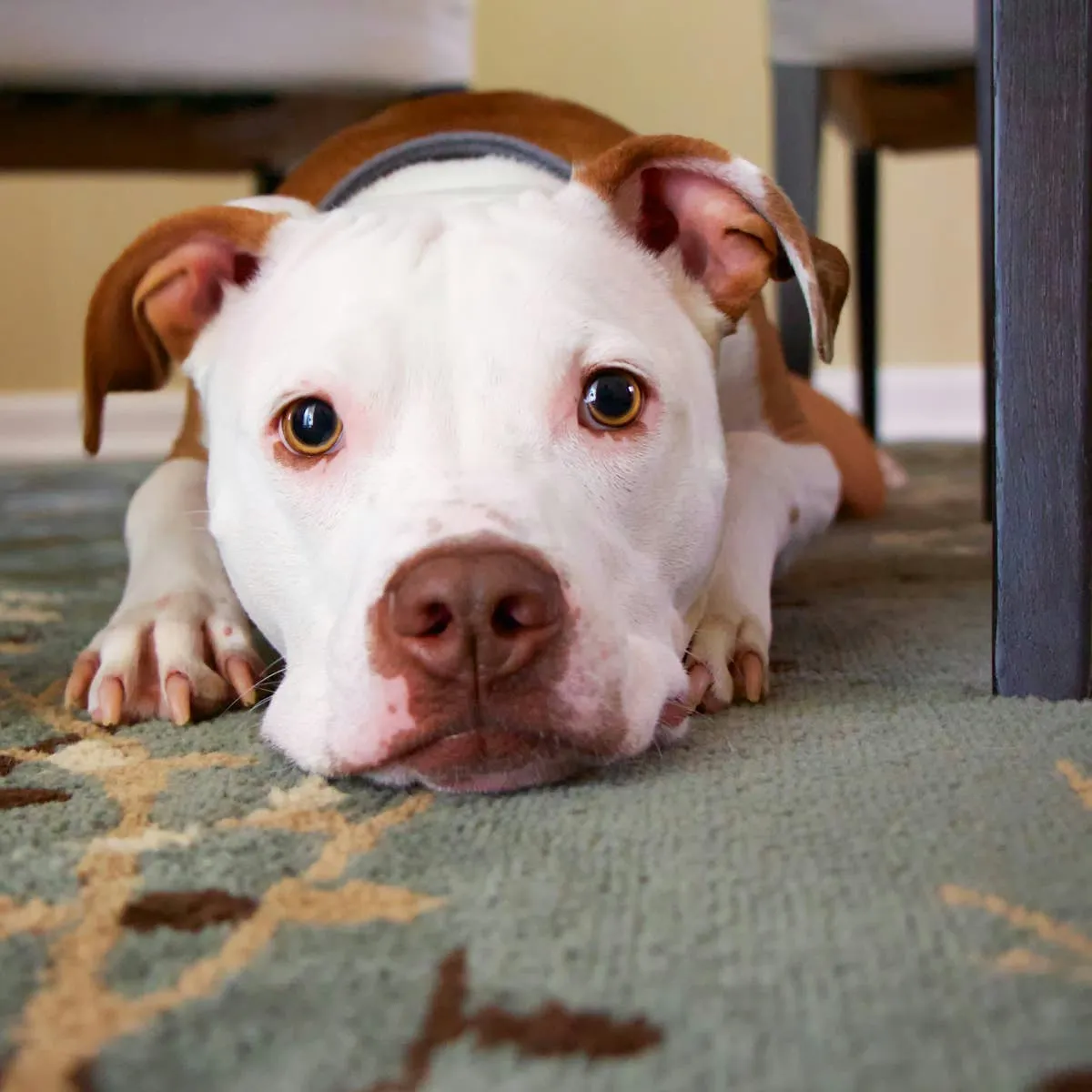
Does your dog have bloody stool?
Image by TheDigitalWay from Pixabay
Understanding Bloody Stools in Dogs: Fresh or Digested
When blood appears in stool, it is medically referred to as either hematochezia or melena, depending on whether the blood originates from the lower or upper digestive tract, respectively. Recognizing the differences between these two is important because they can influence your dog's diagnosis. Below are some ways to tell them apart.
Hematochezia
With hematochezia, the blood in the dog's stool is bright red, indicating it is fresh and most likely coming from the lower intestines, typically the colon or rectum. It can be mixed into the stool, or you might notice a few drops of blood as your dog defecates.
Melena
With melena, the blood in the stool makes feces look tarry and black like asphalt, suggesting the blood has been digested and possibly originates from the upper intestinal tract. Melena is usually, though not always, more concerning than an occasional case of hematochezia.
Melena is often harder to recognize than hematochezia because dogs frequently have dark stools that don't necessarily contain blood.
Dog Hematochezia vs. Melena
| Hematochezia | Melena |
|---|---|
| Bright red blood in stool |
|
Tarry black stool
| |
Blood is fresh
|
Blood has been digested
| |
Comes from colon or rectum
|
Comes from esophagus, stomach, or upper small intestine
|
Check Your Dog's Stool for Abnormal Signs
How can you determine whether your dog's dark stools actually contain blood? Michael D. Willard, a board-certified veterinarian specializing in internal medicine, offers these steps:
- Put the feces on white absorbent paper, like a paper towel.
- Look for any unusual signs in your dog's stool and write down what you observe.
- Then check if a reddish tint spreads from the feces—if it does, that strongly suggests melena.
- If blood is present, the causes can vary widely, from minor issues like dietary changes to more serious ones such as cancer or parvo.
Possible Causes of Bloody Dog Stools
Below are some common reasons for blood in dog stool that you may want your veterinarian to investigate.
Causes of Red Blood (Hematochezia)
- Parvovirus
- Parasites
- Dietary Indiscretions
- Hemorrhagic Gastroenteritis
- Rectal Injuries
- Stress
Causes of Black Blood (Melena)
- Use of NSAIDs
- Blood Clotting Disorders
- Post-Surgery Complications
- Tumors/Cancers
- Pepto-Bismol
- Ingestion of Blood
Other Causes
- Intestinal Blockages
- Fissures
- Trauma
- Bacterial Infections
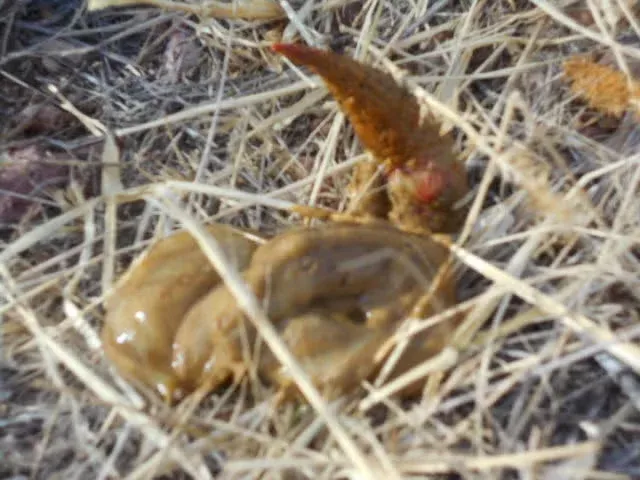
Here, you can see mucus and blood in a dog’s poop due to a case of colitis.
alexadry all rights reserved
6 Causes of Fresh, Bright-Red Blood in a Dog's Stool
As mentioned, hematochezia is fresh, bright-red blood in—or mixed with—your dog's stool. Unlike humans, fresh blood in dogs does not point to hemorrhoids. The streaks of bright red blood in stool most likely come from the dog's rectum or colon.
It's best to have hematochezia checked promptly by a vet, because some causes can be serious. Here are a few possible causes of hematochezia in dogs.
1. Parvovirus
This is a serious virus often found in puppies. Black-and-tan breeds, such as Rottweilers, German Shepherds, and Dobermans, are more prone to parvo. Typically, dog parvo symptoms include vomiting, diarrhea, lethargy, loss of appetite, and blood in stools.
Note: Because this disease can be deadly, puppies suspected of having parvo should be seen by a vet promptly.
2. Parasites
Parasites are one of the most frequent causes of blood in the stool. The most common parasites that cause blood in the stool are hookworms, whipworms, and roundworms. Aside from blood appearing in your pet's feces, there are other clear signs and symptoms that indicate your dog has worms.
Protozoans such as coccidia may also cause bloody stools. A veterinarian can identify the offending parasites and prescribe specific dewormers to help get rid of these annoying beings.
3. Dietary Indiscretions
Overeating or dietary indiscretion may irritate a dog's colon, causing diarrhea and bloody stools, which can also have mucus.
Changes in the dog's diet can have similar effects. If you are switching your dog's food, do so gradually over the course of several days. If a diet change is done too suddenly, vomiting and diarrhea may take place. Even giving your dog a new treat or feeding him people food may cause an inflamed colon.
Other dietary causes of blood in the stool include eating spoiled foods and food intolerances or allergies.
Mild cases of stomach upset can be treated with these simple upset stomach remedies.
4. Hemorrhagic Gastroenteritis
Hemorrhagic gastroenteritis involves copious dark, jelly-clot-like, bloody diarrhea, along with vomiting and diarrhea. Often the cause cannot be found, but your dog may need intravenous fluids and proper medications to let this condition subside.
Note: Affected dogs are very sick and can get dehydrated quickly, so they need immediate care.
5. Rectal Injuries
If a dog ingests a stick, bone, or another sharp object, it may eventually scrape the lower intestinal lining or rectum as it makes its way out through the feces. Often, you might spot the object visibly protruding from the feces once it has worked its way through your dog's system. In such cases, the blood is bright red and will eventually stop.
Avoid giving your pet sticks or cooked bones to play with. If your dog has already ingested some, try feeding him some high-fiber bread or rice to help him pass the bone.
Also, check for any rectal injuries, especially any involving the anal glands. Look for any localized swelling, injuries, or protrusions.
Rectal polyps: If the dog's stools are well-formed and have fresh blood on the surface, this can be indicative of the presence of a rectal polyp, which is an abnormal growth. When the stools pass over the polyp, which is highly vascularized, it will bleed. Sometimes you can see polyps protruding externally, but they can also be internal, in which case an endoscopy may be necessary in order to see them.
According to the Merck Veterinary Manual, "The polyp can be felt by a veterinarian during a rectal examination, and its surface tends to bleed easily. Periodically, the polyp may protrude from the anus." All polyps should be checked out by a vet, as sometimes they can be cancerous growths.
6. Stress
In some cases, blood in stool may be caused by stress. Stressful life events for a dog include changes such as a move, the addition of a new dog or family member to the household, and being boarded in a kennel. These events may cause a case of colitis with bloody diarrhea with mucus.
6 Causes of Black, Tarry Blood in a Dog's Stool
As mentioned, melena is the medical term for digested blood in dogs' stools, which causes them to appear black and tarry. Some dog owners describe such stool as looking like "coffee grounds."
The blood may originate from the dog's lungs, pharynx, esophagus, stomach, or upper small intestine. Because melena can be caused by serious conditions, including acute bleeding, it should be investigated by a vet.
1. Use of NSAIDs
If your dog is on aspirin or some type of non-steroidal anti-inflammatory drug (NSAID) like Rimadyl or aspirin, he may develop ulcers from its use. Dogs with bleeding ulcers will typically have black, tarry stools, meaning digested blood is coming from the stomach. Inform your vet promptly if your dog is on such medications, and always keep a watchful eye on his stools.
2. Blood Clotting Disorders
There are several canine conditions that may cause blood clotting disorders and bleeding. Affected dogs may also exhibit symptoms other than black, tarry stools, such as purple-tinted skin, suggesting bleeding underneath the surface.
Note: Rat poison may also cause blood clotting disorders and bleeding, which may manifest as dark tarry stools. If you think your dog may have eaten rat poison, have him seen by the vet ASAP.
3. Post-Surgery Complications
If your dog has recently undergone surgery and has black stools, call your vet immediately. There may be internal bleeding somewhere. This complication may appear up to 72 hours after the surgery.
4. Tumors/Cancers
Anytime your dog presents dark, blackish stools, have your dog seen by a vet. You want to rule out the possibility of bleeding tumors such as polyps or cancer, which can be quite common in elderly dogs.
5. Pepto-Bismol
On a lighter note, if you have recently given Pepto-Bismol to your dog, the medication may temporarily turn poop black. This potential side effect is actually written on the bottle if you read it. When you stop giving it, the stools should soon turn back to normal.
Warning
Pepto-Bismol can cause gastric bleeding. It should only be given if recommended and overseen by a veterinarian.
6. Ingestion of Blood
A dog's stool may also appear black and tarry from ingesting blood. For instance, your dog may have licked a bloody wound, or he may have had a mouth injury or nose bleed causing him to swallow blood.
Note: Because the blood may also come from a bleeding ulcer, it's important to see your vet if you see dark stools and cannot find an explanation.
More Causes
As seen, there are many possible causes of blood in the stool. The ones listed above are not the only possibilities. Others include:
- Intestinal blockages
- Fissures
- Trauma
- Bacterial infections (such as those caused by Campylobacter or Clostridium perfringens)
Slippery Elm Bark Remedy for Dog Diarrhea and Bloody Stool
Slippery elm bark works well for many health issues with dogs, including diarrhea that causes hematochezia (bloody stools), which can happen with colitis. I have a dog who comes for boarding that gets stress colitis with bloody stools, and we use GastroElm Plus during his stay.
GastroElm Plus is made with 80% slippery elm bark powder, and it's intended for use with pancreatitis in dogs and ulcers in horses, as well as vomiting, diarrhea, and other gastrointestinal problems in cats, dogs, or horses. It is formulated and manufactured in the U.S. using the finest human-grade herbs available.
Here is some advice on preparing for your vet visit.
Alexadry (all rights reserved)
What to Do if Your Dog Has Blood in His Stool
- See your vet if your dog is pooping blood. If your dog has pale gums, becomes lethargic, vomits, or has diarrhea, see the emergency vet at once.
- Bring along a fecal sample so your vet can immediately start ruling out parasites and protozoans. The stool sample needs to be no more than 12 hours old to grant testing accuracy.
- If you're dealing with colitis, you can ask your vet about trying a brief fast followed by a bland diet.
Sources and Further Reading
- Canine Parvovirus: Information for Dog Owners | AKC Canine Health Foundation Canine parvovirus is a very contagious viral infection that occurs globally. Disease typically affects unvaccinated puppies (< 6 months of age) but can occur in unvaccinated dogs of any age.
- 7 Important Causes Of Bloody Diarrhea In Dogs | Kingsdale Animal Hospital Bloody diarrhea in dogs is an important sign that something is wrong. Find out what's making your dog sick and learn how to treat it with these guidelines from the experts.
- Blood in Dog's Stool: Emergency & What to Do | New Hope Vets Today, our New Hope vets discuss some possible causes of blood in your dog's stool, when it's an emergency, and what you should do.
- Tarry Feces Due to Presence of Blood in Dogs | Wag Tarry feces due to the presence of blood (melena) makes your dog's stools look black and tarry.
- Slippery Elm for Dogs: Safely Treat Irritation | Whole Dog Journal Slippery elm for dogs is a supplement that is used to treat constipation and diarrhea. It is also used externally to soothe hot spots.
This article is accurate and true to the best of the author's knowledge. It is not meant to substitute for diagnosis, prognosis, treatment, prescription, or formal and individualized advice from a veterinary medical professional. Animals exhibiting signs and symptoms of distress should be seen by a veterinarian immediately.
Questions & Answers
Question: My chihuahua vomited foam last night. This morning, he had a runny tummy with blood. He died at 9 p.m. What could have caused his death?
Answer: Could your dog have had a platelet disorder where he could not clot his blood? Could your dog have gotten in contact with some kind of poison? Rat bait can cause internal bleeding and blood in the diarrhea. There are so many possibilities, only a necropsy done at the vet may provide you with answers. So sorry for your loss.
Question: My pit is twelve-years-old. There was a red tint to his bowel movement today. It was runny with a dark color to it; he is not vomiting. He has been drinking a lot of water. Not finishing all of his food when I feed him. And his paws are cold to the touch. Dry nose. No energy? He lives inside. Watched him closely, so he hasn't eaten anything out of the norm.
Answer: Your pit's symptoms sound worrisome. The cold paws, no energy can be indicative of internal bleeding. I suggest you take your dog to the vet as soon as you can. At this age, one big concern would be a bleeding tumor.
Question: My dog is a year old, and she doesn't eat anything besides water. Her stool is red and watery, and she's stopped barking. What is wrong with her?
Answer: Your dog's symptoms are concerning. The reduced barking maybe because she's not herself and feeling ill. There are too many differentials when it comes to bloody stools in dogs, and therefore, seeing the vet is a must for a proper diagnosis and treatment. Bring in a fresh stool sample along to your vet appointment.
Question: There are no vets or animal hospitals open, and my dog had dark red blood in his watery black stool. Will he be okay until Monday when they open? I don't know what to do.
Answer: It is hard to say because there are so many possible causes for blood in a dog's stool. Particularly concerining are pale gums, lethargy, weakness and slow capillary refill time. There should be an emergency vet in your area open if things appear concerning.
Question: After my dog poops, I wipe him with a baby wipe. Today there was blood from his rectum, though I noticed he been scooting on the rug and constantly looking towards his back end. What could it be?
Answer: If your dog has been scooting, this can be indicative of an issue with the anal glands. Anal gland issues are known to cause issues when they do not empty as they should, and this can lead to local irritation, infection and even an abscess. The blood can be from friction with the carpet or a ruptured anal gland. In this latter case, you would notice a lump or red looking "wound" under the tail right around the rectum at the 4 o'clock or 8 o'clock position. However, there can be several other things going on. You should have your vet check your dog to pinpoint the problem.
Question: My dog is a Lab and German Shepard mix and about nine years old. Today, I keep noticing a drop of blood on my floor here and there. Then later that day I let him out to use the bathroom and I seen he had diarrhea and when he walk up to the sidewalk then I seen 5-7 drops of deep red colored blood. He still has an appetite and energetic and wants to play. How worried should I be because I have to find a way to get money together to take him to a vet?
Answer: As you can see the list of causes of blood in dog stool is quite comprehensive so it can be very difficult to pinpoint what is going on. Even your vet cannot predict what is going on without seeing your dog and doing a fecal test +- blood test or further types of tests to rule out some causes. The good news is that you have an older dog so the deadly parvovirus which is so notorious in puppies can be put lower down the list of possible differentials. However, it's also true that being a senior there are other possible things going on. Hopefully, it's just a case of colitis causing diarrhea and bloody stools, but there are other worrisome things that you may want ruled out. Perhaps as a starting point, if your dog saw the vet not too long ago, and you have a veterinarian-client-patient relationship, you can drop off a stool sample to have it tested . In general a dog's fecal flotation testing (the most basic) costs around $15 to $40. However, chances are you may still have to take your dog to the vet for possible antibiotics if there is a bacterial infection.
Question: I have a three-year-old dog. She is eating, but her stool is red. What can I do naturally to help her with this process?
Answer: Without knowing what is triggering the red stools in the first place, it would not be a good idea to try to treat it naturally. This may lead to delayed diagnosis and treatment, not to mention more costs if the natural treatment fails to work and you may need to see the vet anyway.
Question: My lab is 1.3 months old. And he just pooped, and there was blood in that. What could be the cause? He is vaccinated against Parvo too.
Answer: There are many possibilities. Blood in a dog's stool is not pathognomonic (specifically indicative) of any one particular disorder but several. Your vet is the best person for diagnosis.
Question: My puppy has diarrhea with blood in it, but he's still eating, drinking and playing. Should I be worried?
Answer: This would be something to keep an eye on. It could be just a case of colitis. But because puppies can get parvo, (especially those who weren't vaccinated or haven't finished their series of booster shots), and other worrisome conditions like HGE or coccidiosis, you are better seeing your vet if this persists, or if your puppy seems not to be doing well. On top of that, consider that with diarrhea, your puppy can get dehydrated quite quickly.
Question: My dog is 3 years old. He is a jack Russell mix with corgi. His appetite is normal and we've been going on our normal 4 mile walks. He seems a little thinner and more sleepy than usual. The last two times he has gone to poop, there have been a few drops of red blood that fall on his normal poops. What could be wrong with my dog?!
Answer: As you can see the list of possible causes for blood in a dog's stool are several. Sorting through all the causes and finding the actual culprit requires diagnostic testing. For example, your vet may start by taking a look at a stool sample through a microscope to see whether there are any parasites or protozoans. If nothing is found, blood tests may look for any underlying systemic issues. Then further tests may be needed to sort through more possibilities. A vet visit is therefore needed to get at the bottom of this.
Question: I have a three-month-old puppy, but she hasn't eaten for three days. She vomits sticky bubbles of watery saliva when I try to put some food into her mouth then she poops blood. Is my puppy going to survive?
Answer: Your puppy's survival depends to a good extent on how quickly you take her to the vet. This sounds very serious, and the symptoms you are seeing can be a potentially lethal disease known as parvo, or it can be an intestinal blockage. Please see your vet as soon as possible.
Question: I have a 10-month-old female Westie. She just came out of heat. Her stool is black, and she won't eat. It has been eight days. What's wrong with her? I took her to the vet, and they did x rays and blood work and tested her for other diseases. They found nothing.
Answer: This may be one of those medical mysteries. Black stools in dogs can be a sign of internal bleeding or a bleeding ulcer. Some dogs get black stools when exposed to rat poison. It may be worth seeking a second opinion by another vet or pursuing more testing as your dog sounds like she's doing poorly and not eating well. A referral to a specialist in internal medicine may also be insightful.
Question: My dog has had diarrhea with blood for nearly 3 weeks now. The vet said it wasn't a worry, gave me probiotics and said put her on a light diet of chicken and rice but 3 weeks later there has been no improvement, I know my vet said not to worry but obviously. I am worrying. Is this concerning?
Answer: I would suggest updating your vet. Perhaps your vet intended to say to not worry at the moment, and he/she assumed things would improve soon with the bland diet and probiotics which give the gut some rest and supply it with good bacteria. Unless your vet hears from you, she/he may be assuming all is fine, and the issue solved. I would give him/her a call and update. Your vet may decide to take further action at this point with more testing and/or perhaps a trial of antibiotics. Diarrhea with blood that persists is suggestive of some issue that needs to be addressed. It is not normal for sure.
Question: What could cause my diabetic 12yr old Lhasa Apso to have bright, red bloody diarrhea?
Answer: As you may have seen in the article, there are countless causes of bloody stools in dogs. The fact your dog is senior warrants investigation to rule out some medical disorders, especially if this is an ongoing problem. Diabetes may or may not have to do with this presentation. Indirectly, since diabetes puts a lot of stress on the body, bloody diarrhea can be a sequelae of stress in dogs as often seen in in the case of colitis.
Question: I have a three-month-old dog. He's not eating, and his stool is red and watery. Is it possible that he's gonna die?
Answer: I am so sorry your puppy is not eating, and his stool is red like water. Death from a severe disease like Parvo is possible. You should see your vet as soon as possible. There are chances that Parvo (or any other condition your puppy may be suffering from) can be treated if you get help soon.
Question: My puppy was sick for no more than 24 hours, vomiting up anything eaten or drank, had runny poops, loss of appetite, resting a lot and I found a light bloody watery mess (can't tell if poop or vomit). She is all better and being herself now. I couldn't go to a vet because there aren't any vets in the community. I don't know what happened with her. I'm asking around for help to understand why she got sick?
Answer: It could have been a dietary indiscretion, eating something that didn't agree with her and various other possibilities. Had my puppy go through something similar and was diagnosed with gastroenteritis after being hospitalized for 2 days. The vets were clueless as to what may have caused it which was frustrating because I didn't know what to do in the future to prevent it.
Question: We have a ten-month old English Spaniel Springer, and we take him to the park every day. We have noticed that whenever he goes into this pond, he immediately poops and his stool is bloody. But other than that, his stool is fine. Do you think we should deworm him or take him to the vet?
Answer: In my opinion, it is best to see the vet. Blood in the stool is not normal, and you want to have this investigated. While dewormers may be useful in ridding dogs from certain types of worms, there are chances your dog may have parasites that are not covered by the average dewormer or he may not even have worms in the first place. I would go to the vet and bring along a fresh fecal sample.
Question: I have a 10-month-old Westy female. She has black stool, she will not eat and she just came out of heat. She hasn't eaten anything substantial in eight days. What do I do?
Answer: Your dog has not been eating regularly for over a week and has black stools which can be indicative of the presence of digested blood. It's important to have your dog seen by a veterinarian to sort this out.
© 2008 Adrienne Farricelli CPDT-KA, Dip.CBST