Canine Addison's Disease: Recognizing the Condition and Available Treatments
Emerson Wood

Understanding Addison's Disease in Dogs
Addison's disease, medically known as adrenal insufficiency, presents with symptoms that overlap with many other health conditions, which can make diagnosing it somewhat challenging. However, once a diagnosis is confirmed, your dog can still enjoy a relatively normal life.
Every kidney is associated with an adrenal gland, which consists of two parts: the cortex and the medulla. The cortex, the outer layer, produces corticosteroid hormones, while the medulla, the inner section, produces adrenaline. In Addison's disease, it is typically the cortex that is affected.
When the adrenal cortex fails to properly produce and regulate cortisol and aldosterone—hormones that are essential for maintaining sodium balance in the blood—sodium levels drop. This leads to a rise in potassium and a decrease in blood pressure.
Elevated potassium can slow the heart rate, which is a normal response to low blood pressure. The combination of a slower heart rate and reduced blood pressure can send your dog into shock, which can be life-threatening.
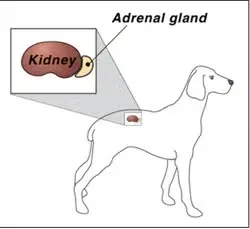
Where the adrenal gland is located
Forms of Addison's Disease
There are three forms of Addison's disease:
- Primary: Often results from immune-mediated damage to the adrenal glands. In primary Addison's, the glands do not produce mineralocorticoids and glucocorticoids. Treatment requires mineralocorticoid replacement.
- Secondary: Typically occurs when the pituitary gland fails to stimulate the adrenal glands with adrenocorticotropic hormone (ACTH). Without ACTH secretion from the pituitary, the adrenal glands do not receive the signal to produce hormones. This form requires glucocorticoid replacement.
- Atypical: Usually caused by immune-mediated damage to the adrenal glands, and if left untreated, it can progress to primary Addison's disease. Glucocorticoid replacement is needed.
Which Dogs Are More Susceptible to Addison's Disease?
While any dog can develop canine Addison's disease, it is more commonly seen in young to middle-aged dogs, and female dogs are more prone to it. Certain breeds, such as Labrador Retrievers, Standard Poodles, and Portuguese Water Dogs, are also more susceptible.
Dogs with other conditions that affect the adrenal glands, including infections and tumors, are at higher risk. Additionally, some toxic drugs and certain steroids used to treat other illnesses can actually cause the adrenal glands to stop functioning properly.
Dogs that have experienced direct kidney injury, infection, hemorrhage, or other autoimmune diseases may also potentially develop Addison's disease. Dogs undergoing treatment for Cushing's disease or that have been on long-term steroids are also more prone to developing Addison's.
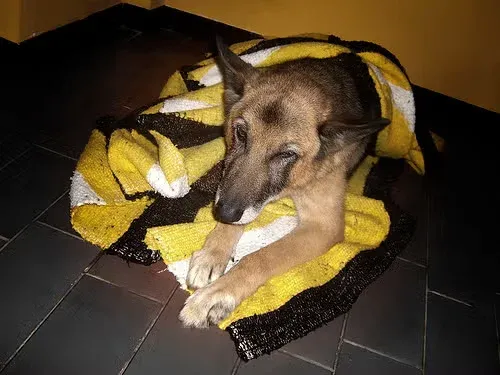
by Rafael Millan
Signs of Addison's Disease
The symptoms of canine Addison's disease are often vague and resemble those of other health issues. The primary sign is usually weakness and lethargy.
Other common symptoms include vomiting, diarrhea, decreased appetite, tremors, shaking, muscle weakness, pain in the hindquarters, and depression. Collapse is another serious sign that requires immediate veterinary attention.
Symptoms often begin subtly and may persist for months or even years before becoming a noticeable concern. Many dogs are initially misdiagnosed with renal failure because their BUN and creatinine levels may appear elevated.
Diagnosing Canine Addison's Disease
Your veterinarian may perform a heart EKG to check for a slowed heart rate. Blood tests are also common to detect abnormally low sodium and high potassium levels. Electrolyte levels may be checked as well, though this is not a definitive test for the disease.
An ACTH stimulation test may also be done to assess whether the adrenal glands are functioning properly by measuring cortisol levels in the blood.
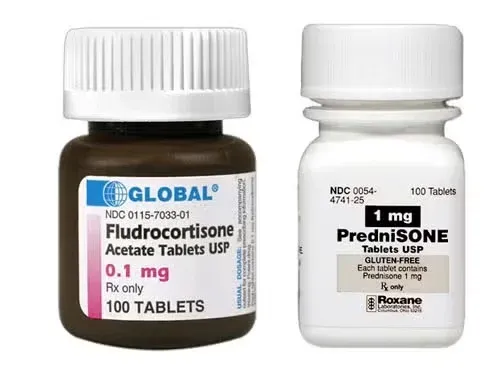
Fludrocortisone is a common medication to treat Addison’s in dogs. Both Fludrocortisone and Prednisone require a veterinarian’s prescription.
Veterinary-Prescribed Medications
Various medications can be prescribed to manage your dog's Addison's disease. These medications serve as replacement therapy for the missing hormones. Typically, your dog will receive an injection every 28 days.
Most vets will also prescribe prednisone or hydrocortisone shots in combination with hormone replacement to help replace the cortisol that the adrenal glands are not producing properly.
The type of Addison's disease your dog has will determine the specific medications needed. Generally, for primary Addison's, your vet will prescribe medications that act as a mineralocorticoid to replace aldosterone, the hormone responsible for maintaining electrolytes. Common options include oral medication (Florinef) or injectable medication (Percorten).
Dietary Adjustments for Managing Addison's Disease
Beyond medications, it's wise to consider your dog's diet. Ensure your dog receives necessary vitamins and nutrients; this often means avoiding generic grocery store dog foods. Steer clear of foods listing "meat by-product" on the label.
If you need help selecting a good dog food, familiarize yourself with how to read dog food labels.
You might also consider adding certain herbs to your dog's diet.
- Licorice: Interacts with and prolongs the effectiveness of corticosteroids. It can boost glucose and mineralocorticoid production.
- Milk Thistle: An antioxidant that supports the immune system.
- Ginger: Strengthens steroid production.
- Valerian: Generally supports the heart and helps maintain blood pressure.
- Taraxacum officinale (Dandelion): Aids the liver, kidneys, and adrenal glands by promoting adrenal function.
- Astragalus membranaceous (Huang Qi): Helps restore balance to the adrenal glands.
This article is accurate and true to the best of the author's knowledge. It is not meant to substitute for diagnosis, prognosis, treatment, prescription, or formal and individualized advice from a veterinary medical professional. Animals exhibiting signs and symptoms of distress should be seen by a veterinarian immediately.