When Your Dog Won't Stop Licking His Lips: Possible Explanations
Taylor Mitchell
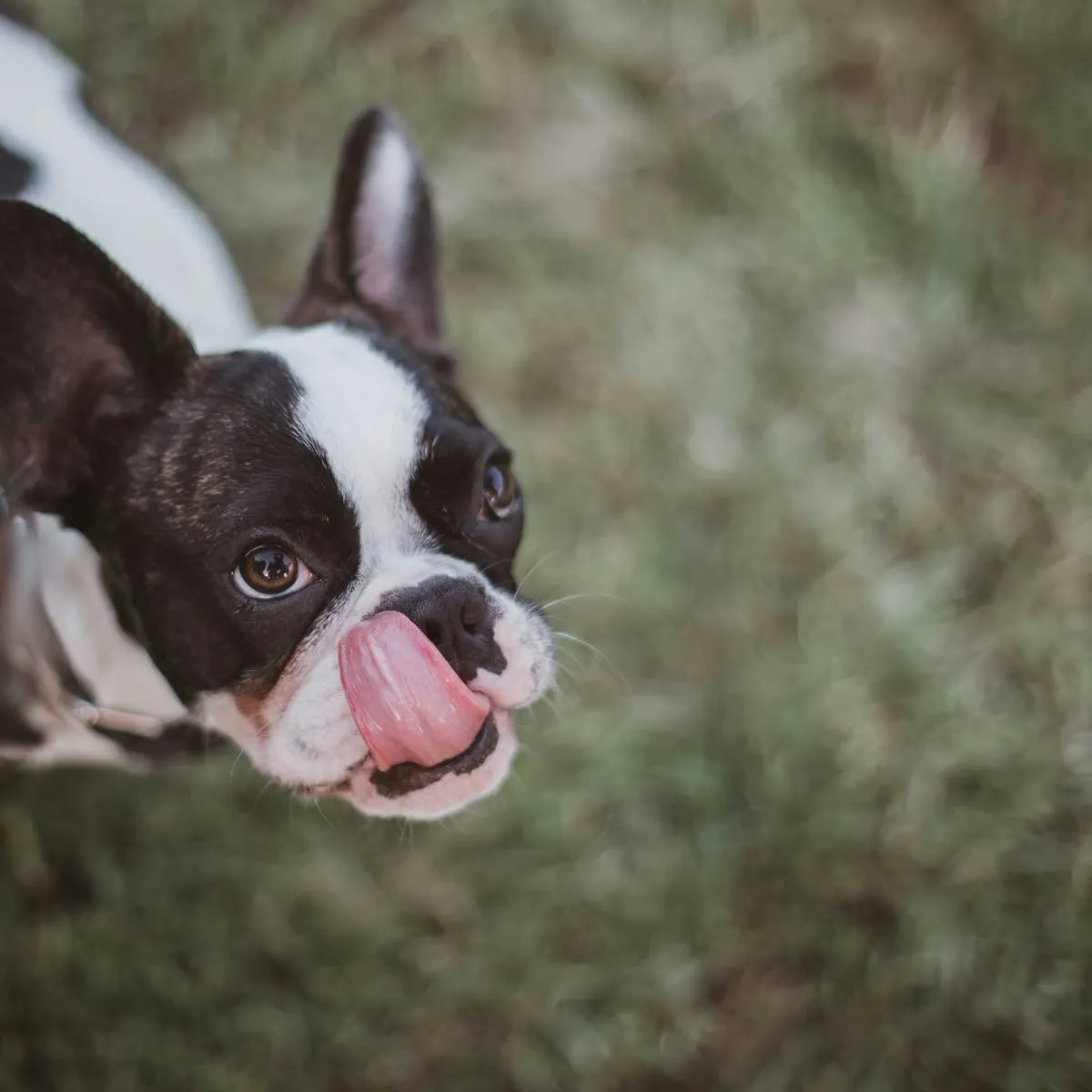
Why Does My Dog Keep Licking and Smacking His Lips?
Is your dog making licking noises that keep you awake at night? For some owners, giving water provides only brief relief before the dog starts again—as though something sticky is clinging to the roof of his mouth.
There are a few straightforward explanations for why a dog might repeatedly smack his lips.
- Hunger: Dogs often lick their chops over and over when they're hungry. Show a dog a treat or get his food ready, and you'll probably hear that smacking sound. In this situation, the dog is salivating, and licking keeps small amounts of saliva from spilling out. He licks because food is present.
- Stress: Dogs also lick their lips when they feel stressed or uneasy. This is usually a quick lip-lick that may be hard to notice. It's considered a calming signal, showing up most often when a dog is uncomfortable or under pressure. Think of the fast, nervous lip-lick a politician might do when asked a tough question. You might see this kind of licking if you scold your dog after another dog growls at him, or when he gets startled.
What do these two situations share? Both have a clear trigger for the lip-smacking. The behavior happens in specific contexts, not out of nowhere.
Below, we'll look at some possible reasons for lip-smacking that occurs out of context, when no obvious explanation can be found.
Related: 12 Reasons Why Dogs Lick Their Paws Constantly
6 Causes of Lip-Smacking in Dogs
Remember that these are only some possible causes of a dog smacking its lips. A veterinarian is the only one who can diagnose the issue with certainty.
1. Something Is Stuck in Your Dog's Mouth
If your dog will let you, carefully check inside its mouth as a first step. Sometimes a piece of a stick could be lodged somewhere, a tooth might be bad, or your dog could have gingivitis (a bacterial infection). Any of these can lead to drooling and lip-smacking.
What to do: If you don't feel comfortable looking in your dog's mouth, take him to your vet.
2. Nausea and Digestive Upset
When a dog is nauseous, he might drool and smack his lips while swallowing saliva. If he's let outside, he'll often try to eat grass. If that's not available, he may lick surfaces around him—carpets and walls included—in a frantic way. If he throws up, the nausea and lip-smacking typically ease off.
If your dog seems to get nauseous at night, it could be that too much bile is accumulating in his stomach. Some dogs will smack their lips a lot before vomiting yellow bile at night or early in the morning.
What to do: A snack late in the evening can help prevent this. More serious cases might need antacid medications.
3. Discomfort or Pain
Sometimes lip-smacking is a reaction to pain. Has your dog been limping lately? Does he have an orthopedic condition? Could it be neck pain? Does he yelp when you touch a particular spot?
What to do: Finding exactly where a dog hurts can be very challenging. Your vet may be able to determine it.
4. Dehydration and Dry Mouth
When a dog is dehydrated, he may smack his lips to moisten his gums. To check for dehydration, lift the skin over the dog's shoulder blades and back. If the skin snaps back right away, your dog is still well-hydrated. If it goes back slowly, check his gums. If they feel dry and sticky, then your dog is dehydrated.
What to do: Depending on how severe it is, the dog will need fluids given orally, under the skin, or into a vein.
5. Nervous System Disorder or Seizure
If your dog has eaten something toxic, it could impact his nervous system. This can cause a dog to lick his lips excessively. For instance, if a dog eats any part of a poisonous toad, he may start drooling, licking his lips, and foaming at the mouth right away.
In some cases, even coming into contact with bitter-tasting substances can make a dog lick his lips again and again. Also, certain types of partial or simple seizures can cause a dog to lick his lips more than usual.
What to do: If you suspect your dog has eaten something toxic or had a seizure, call the Animal Poison Control Center at (888) 426-4435 and/or take your dog to the closest emergency vet.
6. Salivary Gland Problem
A dog's salivary glands can swell, leading to a condition called a sialocele. When this occurs, saliva collects in the mouth and doesn't flow as it should. The dog may lick his lips to help move the saliva around normally.
What to do: Check under your dog's tongue, where the salivary glands are. If you notice any swelling, see your vet. This problem can be fixed with a simple surgical drain.
Related: 10 Reasons Why Your Dog Might Be Drooling a Lot
Resources and Further Reading
- Buzby, Dr. J. (2023). "Dog Keeps Licking Lips: 10 Causes."
- Stenhouse, E. (2024). "Why Dog Dogs Lick and Smack Their Lips?" Rover.
This article is accurate and true to the best of the author's knowledge. It is not meant to substitute for diagnosis, prognosis, treatment, prescription, or formal and individualized advice from a veterinary medical professional. Animals exhibiting signs and symptoms of distress should be seen by a veterinarian immediately.
© 2013 Adrienne Farricelli CPDT-KA, Dip.CBST