Peace Among Paws: Strategies for Halting Aggression Between Dogs in the Same Home
Charlie Ross
Understanding and Addressing Dog Aggression in the Home
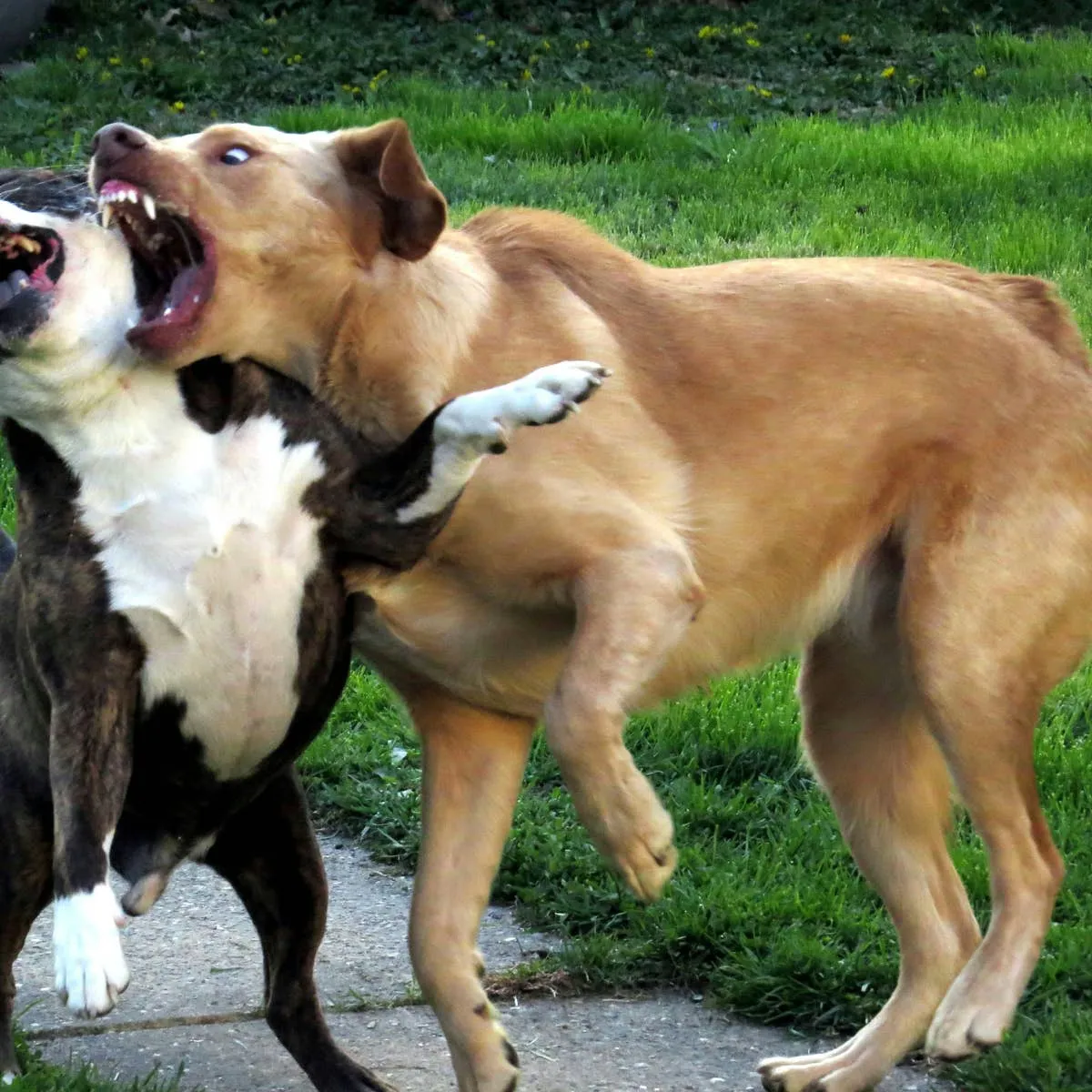
Most dogs can learn to coexist. As social pack animals, even combinations like two females, two males, or a rambunctious puppy with a grumpy older dog often can be managed. However, when dogs in the same home fight, it's a serious issue that demands attention. The solutions aren't simple, but they are worth pursuing.
Distinguishing Play from Real Fighting
Is it truly a fight, or just rough play? During energetic play, growling and teeth baring can look intense. My own senior Pitbull sounds like she's about to attack, but when the smaller dogs retreat, she rolls over, exposes her belly, and invites more games. So how do you know when it's real?
Signs of play include:
- The play bow.
- The stronger dog running away from the smaller one.
- The stronger dog lying on her back to encourage play.
- Growling without skin-breaking bites.
In a real fight, you may observe:
- Louder growling.
- The weaker dog acting submissive, tail tucked.
- The stronger dog mounting and possibly throwing a leg over the other to pin him.
- The stronger dog flipping the other onto his back.
- Forceful biting that often breaks the skin when the stronger dog has the other down.
If play gets too rough and you sense a fight brewing, make noise (avoid yelling, which can escalate things) or clap to interrupt. Try grabbing a leash, using an excited voice, and announcing a walk.
If a fight has already started, you can take steps to prevent injury.
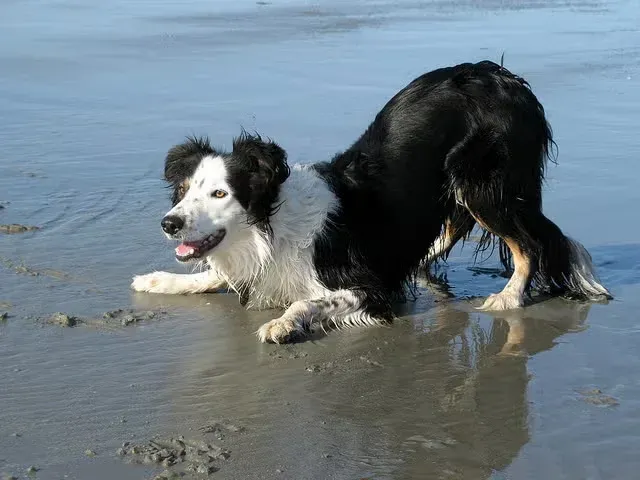
Not all dogs will perform a play bow but you should watch for it.
cc-by ickr.com remcat 5545205338
Safe Ways to Break Up a Dog Fight
Separating fighting dogs is risky. Yelling intensifies the fight, and grabbing collars—as some trainers suggest—often leads to bites. Here are safer options:
- Ring the doorbell: Fighting dogs become hyper-focused, which is why owners get bitten. Breaking that focus can stop the fight. A doorbell is more effective than talking because dogs often turn to check the door.
- Throw a blanket over the attacker: This works best at the start of a fight. If you have a blanket, use it immediately. Combined with spraying water, the wet blanket may make dogs back off. If you don't act fast, it's useless.
- Spray with a hose: If the fight is in your yard, a hose can help. It's more effective early on, so grab it quickly.
- Use pepper spray: Some consider it cruel, but it's crueler to let a strong dog injure a weaker one. Spray the attacker without getting bitten. Some brands are milder; I use one to deter loose dogs on walks. If both are fighting, spray both. It usually works, though not always because dogs are so worked up.
- Throw a leash on one dog and pull him away: Try pepper spray first. If that fails, use a leash to separate them. The problem: dogs may keep pulling, risking choking and passing out. This happens more often than you'd think.
- Grab both dogs by their back legs and pull apart: This requires two people; pulling one dog alone lets the other attack more fiercely. It's dangerous—dogs may bite even without meaning to. To reduce risk, spin the dog as soon as separated to off-balance him, so he's too busy to bite.
- Pry the dogs apart: This should be a last resort. Use a large stick, but it's dangerous for both dogs and owner. Angry dogs resist, and it can be worse than pulling them apart.
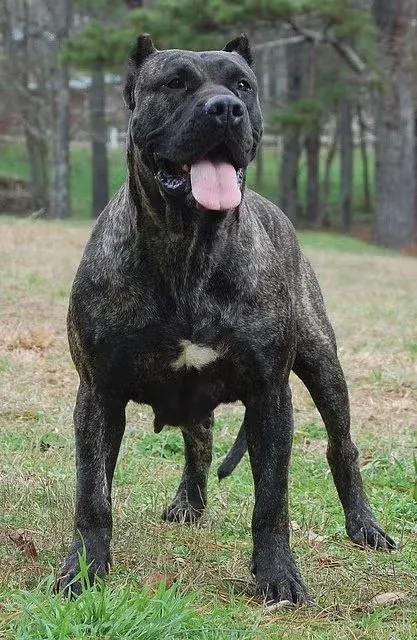
Some dogs might be difficult to separate in the middle of a fight. If you own a strong dog learn techniques to prevent fights while he is still a puppy.
cc-by ickr.com erprofe 4670987525
Fostering Harmony Between Your Dogs
Whether you have same-sex or mixed-sex dogs, training is often key to getting along. While avoidance works on walks, it's not possible at home.
- Prevent fights before they start: Identify triggers—doorbell, passing dogs, favorite person, new pet, toys, or dinner time. If you know the trigger, you can sometimes avoid a fight. For example, when the doorbell rings, command dogs to down/stay and leash them to separate rooms before answering. Prevention isn't foolproof, but when it works, it's simple and effective.
- Obedience training: Dogs that obey commands make life easier. Your dog must respond to "down" 100% of the time, even when distracted. If you're inexperienced, start a class soon.
- Provide adequate exercise: A long morning walk increases the chance dogs will sleep during the day. Walking dogs together also builds a bond.
When fights occur despite your efforts, two approaches exist:
- Flooding: This old technique may not work and can traumatize your dog. Some trainers suggest keeping dogs together when stressed so they "fight it out." Sometimes it works—the loser becomes submissive and avoids future fights. But it's dangerous, risking lacerations, lost eyes, torn ears, and thousands in vet bills, possibly killing a dog.
- Classical counterconditioning: Though slower than flooding, results are more consistent. Put basket muzzles on both dogs before bringing them together. (These muzzles allow breathing and calm some dogs.) While in the same room, command both to lie down and reward with treats and praise. If one growls, say no and separate. Keep sessions under 5 minutes, or less if a dog is very reactive. Gradually increase time together. As noted, this can take a long time.
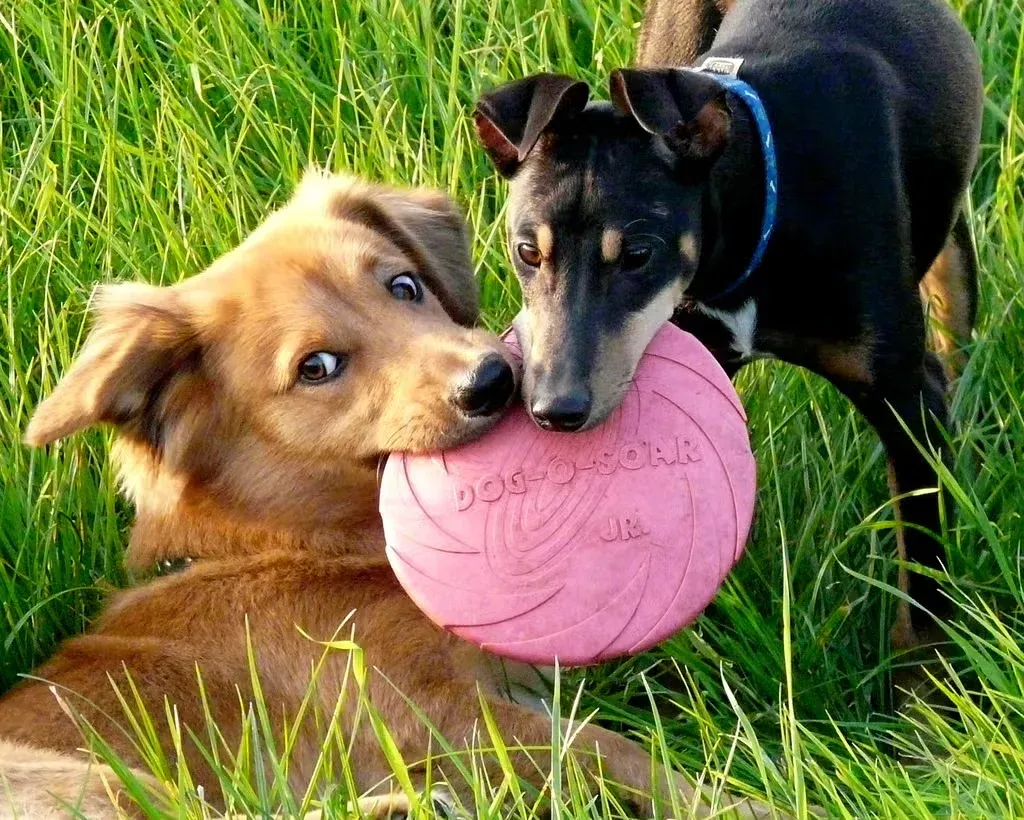
Even dogs that get along will fight sometimes.
cc-by flickr.com 30005100235050
Breeds Better Suited for Multi-Dog Homes
Some breeds do better as the only dog, while others are bred for pack living and fight less.
- Basset Hound
- Beagle
- Coonhound
- Foxhound
- Otterhound
- Some spaniels (Cocker Spaniel, English Springer Spaniel)
- Some sighthounds (Borzois, Greyhounds, Whippets)
Dogs adapted to kennel/pack life are notoriously hard to obedience train. They can learn basics, but if you want a dog for obedience competitions, these breeds likely won't work.
When Rehoming Is the Best Option
Some dogs will never get along. It's hard to accept, but consider: remember a classmate or coworker you disliked? Imagine living with them 24/7. For some dogs, it's that bad. Rehoming a miserable dog isn't cruel.
If you must rehome, be honest with the new owner about the situation. The dog may be fine in a new home, but if not, take responsibility and find another placement.
Don't just dump your dog at a shelter. A dog with aggression issues may be euthanized quickly.
Consulting an Animal Behaviorist
Every dog is an individual; there are no universal rules. If you've tried these tips and your dogs still fight, consider seeing an animal behaviorist.
Your vet or trainer can refer you to a specialist nearby.
This article reflects the author's best knowledge and is not a substitute for veterinary diagnosis, prognosis, treatment, prescription, or individualized advice. Animals showing distress should see a vet immediately.
Questions & Answers
Question: My 1 yr old lab constantly tries to play with my 1.5 year old lab. They will play for a minute or so then the older one ends up hurting the younger. Twice she has split his ear. What to do?
Answer: I think you have seen why many of us Pitbull owners crop our dogs ears. Many people complain about it, but when my dog wrestles and plays with another she never hurts her ears.
I am not sure it is going to be okay to interfere with your dogs at this time. You can try the counterconditioning exercise that I descdribe in the article, but without worrying about the muzzles, but if your dogs are okay together they are probably okay together unsupervised and you probably leave them together all of the time. If you are around most of the time, you can also tell your dogs to lie down when they start playing, which will discourage the behavior.
Question: Why is my older dog attacking my new puppy?
Answer: Young puppies are almost never attacked and hurt by older dogs. When a puppy gets older, however, he loses that special aura of protection and is more likely to be thrashed for misbehaving.
The age at which a puppy has to act like an adult varies. In a multiple dog household, the older animals will start training the young dog as soon as he gets home.
It is hard to tell what the dynamics are between your older dog and your puppy, but it sounds like the puppy is becoming an adult and is being seen as challenging. Of course, some old dogs never like the new puppy trodding on their home turf, and will attack without provocation.
What kind of training have you done? Are you in charge? You need to spend some time in the backyard with them when you let them out. Watch the older dog, and see if the puppy is committing some “crime” that is causing the attack (stealing favorite toys, for example). If this is the case, you can remove the triggers, and the dogs might get along.
If the dogs still fight, you should try to talk to a behaviorist, and you may even need to rehome the puppy. It is not right to make her grow up and live in a world where she is always afraid of being attacked.
© 2018 Mark dos Anjos, DVM