A Step-by-Step Guide to Teaching Your Puppy Loose-Leash Walking
Avery Wilson
How to Train Your Dog to Walk Politely on a Leash
Teaching a dog to walk off-leash is fulfilling, but many people live in places where leash laws apply. If you must walk your dog on a leash and he pulls, making walks a struggle, the following tips can help make those outings more pleasant.
- Begin training in an enclosed yard.
- Use a loose collar and have treats ready.
- Reward the dog with praise and treats when he doesn't pull.
- Keep sessions engaging by adding new movements.
- Add some new moves.
- Try walking in a different location.
- Return to the yard if needed.
Important
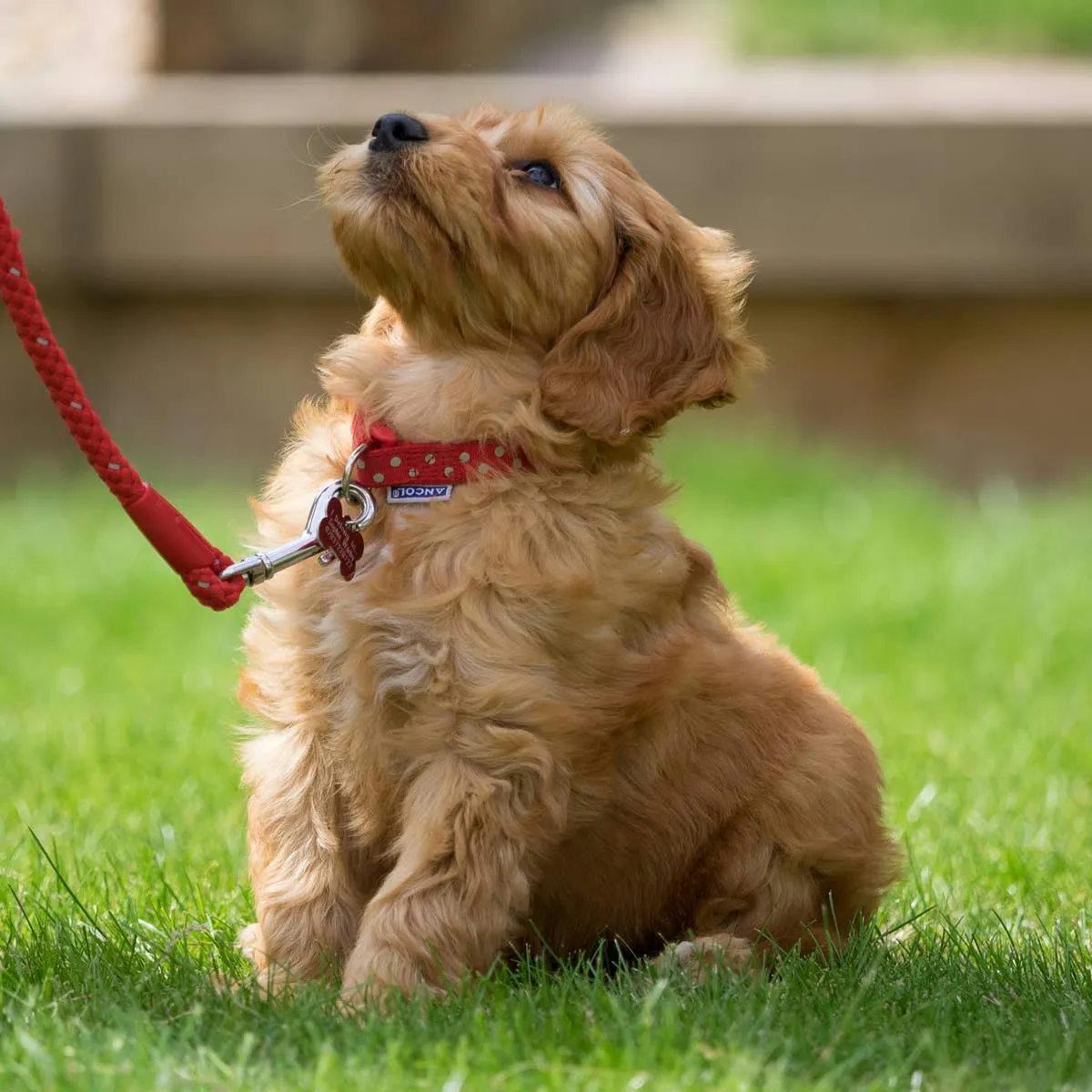
Leash training your new puppy is one of the best ways to build a bond.
1. Begin Training in an Enclosed Yard
Put a buckle collar on your puppy. For the first few days, walk in a fenced or walled area so the dog isn't actually going anywhere. (If no enclosed yard is available, find a park with no other dogs or people. Quiet parks with chain-link fences work best, but if other dogs are present when you start, this may not be suitable.)
2. Use a Loose Collar and Have Treats Ready
Offer your dog a small treat to get his attention, attach the leash, and start walking. If he pulls right away, stop, turn right, and walk again. If he pulls again, repeat the exercise. You may need to do this several times, but most dogs will quit once they realize they aren't getting anywhere.
3. Reward the Dog with Praise and Treats When He Doesn't Pull
If your dog lags behind instead of pulling ahead, call his attention to you and give him a treat. (You can say his name but avoid the recall command. Some people use a clicker; I prefer to make a sound in the back of my throat.) This usually keeps the dog focused on you, making him too interested to start pulling—this is key to teaching your puppy to walk with you on a loose leash.
4. Keep Sessions Engaging by Adding New Movements
Walk around the yard with your dog at your side, giving him a treat now and then to keep his attention on you.
5. Add Some New Moves
Once your dog walks by your side without pulling, introduce new moves. Try a circle, walk in a square, try a figure eight, etc. Do this twice a day for about 15 minutes for at least a week.
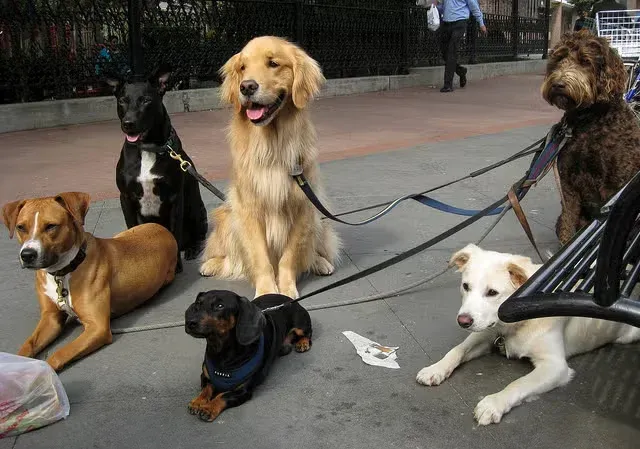
Walking on a leash is basic good behavior.
cc-by ickr.com kpaulus 4903209928
6. Try Walking in a Different Location
If your dog doesn't pull in the yard, walk in another area with distractions. (I walk on the beach, but a park is also great. There are usually fallen logs and driftwood to practice figure eights and keep the walk interesting for your dog.)
7. Return to the Yard
If your dog starts pulling again as soon as you leave the yard, you have several options. You can go back to the yard and reinforce the basics, try a harness designed to make your dog off-balance and less likely to pull, use a prong collar, or as a last resort, use a choke collar.
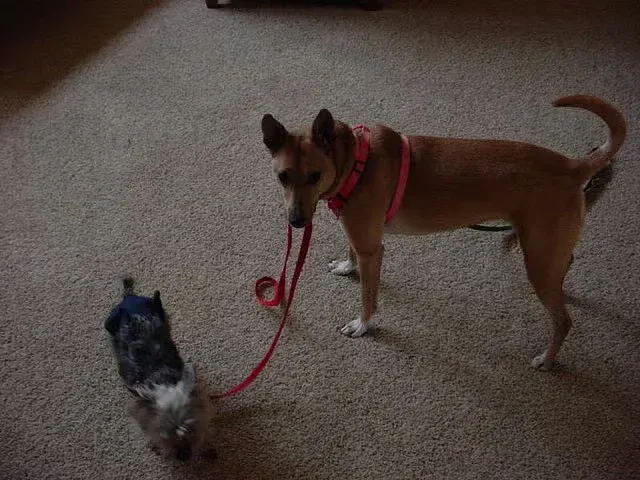
Walking the dog should be fun for everyone.
cc-by flickr.com dru2u 100966521
What if Nothing Works?
In the early 90s, when Uncle Matty was the dog trainer everyone listened to, Cesar Millan was not yet known. Clickers were only used for training dolphins, and the best way to stop your dog from tugging was to stop and walk the other way.
That still works best.
If your dog doesn't respond to the stop-and-turn method, try a no-pull harness. If you're still having trouble and the dog is too strong, I recommend a prong collar.
I have used a prong collar to stop dogs from pulling when the stop-and-walk-other-way technique had no effect. A German neighbor of mine, over 80 years old, walks his Rottweiler on the beach. They used to arrive at my house blue in the face—both of them. He had tried a no-pull harness with little success, tried stopping and turning, and finally decided to use a choke chain on his 130-pound dog each morning. Despite what Reddit moderators believe, a prong collar is not cruel.
When the dog's owner switched to a prong collar, the dog stopped pulling. This was the only way for the owner to avoid being cruel and tugging on the dog.
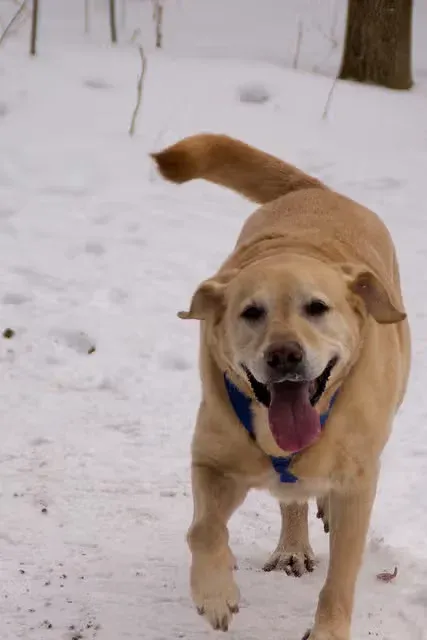
Walking off leash can be fun too.
cc-by ickr.com stevieontario 6739362937
The Gentle Leader and Halti Head Collar
What about using a head harness like the Gentle Leader or Halti head collar?
A head halter can actually cause more neck damage than a prong collar, at least according to many dog trainers, including Joaquim and Wendy Volhard. They have had to send some of their client dogs to canine chiropractors after using a Halti, but have had results similar to my own after using a prong collar. Not everyone agrees on this, of course, and if you'd like an opposing view, read other articles and form your own opinion.
There are many options if you want to train your dog to stop pulling on the leash. If you need more help, just leave a comment and I'll respond as soon as possible.
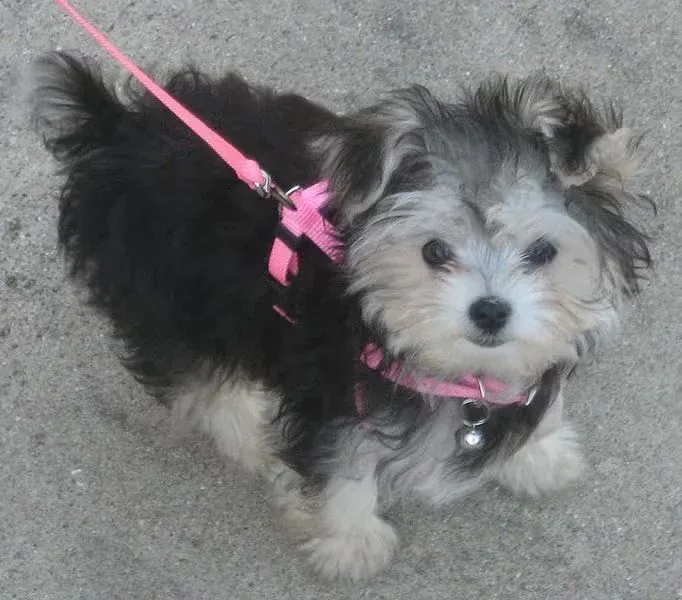
A tiny dog does not pull much on a leash.
cc-by wikimedia commons Morkie Walk
More on Training Your Dog
- How To Teach A Dog Not To Jump Up On People Jumping is normal behavior and not something you should punish your dog for. If you don't want a dog that jumps, you can use these training techniques. Even if your dog is well-trained, she might make a mistake, so don't punish her for it.
- How to Train Your Dog to Stop Digging Dogs love to dig. This article will explain why dogs dig and give you a few tips to reduce your dog's digging.
- How to Train a Dog Not to Bark The main cause of excessive barking in dogs is boredom. Boredom comes from lack of a job, lack of diversion, and most of all lack of exercise. Learn what you need to do to stop barking.
This article is accurate and true to the best of the author's knowledge. It is not meant to substitute for diagnosis, prognosis, treatment, prescription, or formal and individualized advice from a veterinary medical professional. Animals exhibiting signs and symptoms of distress should be seen by a veterinarian immediately.