Cat Obedience Training: Techniques, Advice, and Behavioral Insights
Hayden Scott
Reasons to Consider Cat Obedience Training
Many people do not think of cats as trainable, largely because most owners never feel the need to teach their pets anything. Dogs, by contrast, have a well-established history of obedience training, and they require instruction in areas like house training and bathing. Cats do not need these same lessons. As a result, the general public knows little about what cats can actually learn. Obedience training can be a meaningful way to improve your cat's quality of life.
Benefits of Training Your Cat
- Strengthens the owner-cat relationship — the cat learns that you are the one in control, meaning he must comply with your wishes to obtain what he desires.
- Provides mental stimulation — keeps your cat's mind engaged and active.
- Develops social and behavioral skills — helps your cat interact appropriately with others.
- Calms anxious cats — the predictable repetition and structure of training can soothe nervous or uneasy felines.
Target training and clicker training are two widely used approaches. Here is a quick overview of each:
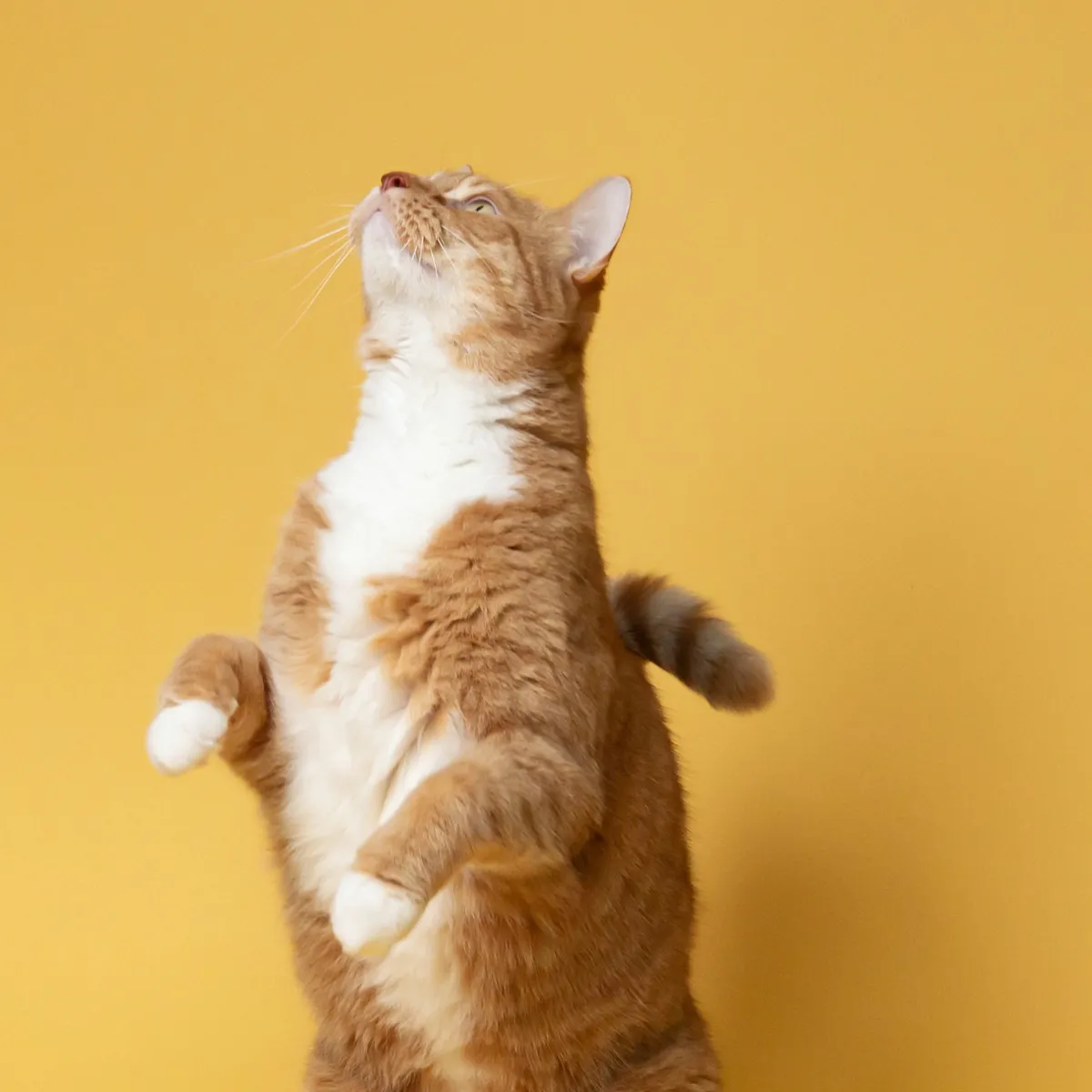
- Target training — you draw your cat's attention and then shape desired behaviors using a specific tool. In the 'beg' command, for instance, a training wand is used to draw the cat's gaze upward, prompting him to lift onto his hind legs and 'beg.'
- Clicker training — a type of operant conditioning in which the animal learns a conscious link between a particular action and a consequence. The trainer employs a small mechanical device (the 'clicker') that produces a brief, sharp sound. The clicker is activated at the exact moment the cat performs the wanted behavior — for 'sit,' the click occurs the instant the cat's rear touches the floor. Immediately after the click, a small, tasty treat is given. Through repetition, the cat comes to connect the click with food and realizes he can earn treats by performing the action on command.

Obedience training isn’t just for dogs. Read on to learn about training your cat.
Photo by Gratisography on Pexels
Practical Training Advice
- Exercise patience. Every cat is an individual with distinct abilities and preferences. Some tricks will come quickly, while others may be harder. Choose training that suits your cat's personality, and avoid getting frustrated if progress does not match your expectations.
- Do not free-feed. If you currently leave food out at all times for your cat to eat whenever he likes, stop. Putting your cat on a feeding schedule serves two purposes: it makes food treats more valuable as training rewards, and it adds a sense of routine to your cat's day — which, surprisingly to some, most cats actually prefer.
- Time sessions wisely. If you use food treats (which is strongly advised), plan training just before meals. Your cat's natural hunger at his usual mealtime will heighten his concentration and his motivation to follow your cues.
- Start small. Build a firm foundation with the basics before trying to add more complex behaviors. Cats have short attention spans and lose interest easily. Keep sessions brief and engaging, and always aim to finish on a positive note.
- Use the clicker carefully. When clicker training, always pair the click with the same behavior to avoid confusing your cat. Without a clicker, it is too easy for the cat to link the treat to an unrelated action, since you cannot deliver a treat at the exact moment he performs a trick.
Frequently Seen Cat Behavior Issues
Many people assume that cats pay little attention to their owners as long as they have clean litter, fresh water, and food. Cats can act in puzzling ways, which can leave owners confused and struggling to interpret what their cat wants. While feline behavior can be hard to read, there are ways to address common problems.
Territorial Behavior
Nearly all cats rub their heads on objects that permit it. You have likely witnessed this with table legs or TV stands. It becomes more noticeable when visitors who have pets or allergies come to your home. When the cat notices them, he may rub his head against the person.
By depositing saliva on an object or person, the cat gives it a familiar smell. Though this can be irritating, it is important to realize that other people in your home are viewed as strangers by your cat. When he does this, he is trying to make the visitor feel like part of the household.
When he brushes against them and leaves saliva, he is placing his scent on them, which in his mind means they belong to his territory. While scent-marking with saliva benefits the cat, saliva is also one of the most common sources of pet allergies. If someone wipes the saliva away, the scent disappears, and the cat will likely return and try again.
Refusing to Leave Guests Alone
Although it may seem that cats single out people with allergies, they are actually just attempting to make the visitor belong. If a guest cannot tolerate the saliva, let the cat rub against their pant leg a few times. Usually, that is enough for the cat to stop bothering the person.
Natural Hunting Drive
If you keep your cat indoors, expect him to spend a good deal of time lying near windows. During these periods, you may hear unusual noises or see odd movements. There is no cause for concern; whether it is another cat or a moving object outside, the cat sees it and simply shifts into his natural hunting instinct.
As most people know, cats enjoy playing. They will pounce on things. If you try to stop this behavior, your cat may react negatively, and you could end up with many broken items in your home. You can always engage your cat with a string, as he will enjoy chasing it around the room.

Start training your cat as soon as possible.
Reading Your Cat's Behavior
The longer you share your home with a cat, the more unusual behaviors you will observe. Cats act in strange ways, yet there is always a reason behind their actions. If you can grasp why your cat behaves as he does, you will be able to keep him healthy and content without difficulty. Simply paying attention to your cat and his patterns will help you understand him better.
This article is accurate and true to the best of the author's knowledge. It is not meant to substitute for diagnosis, prognosis, treatment, prescription, or formal and individualized advice from a veterinary medical professional. Animals exhibiting signs and symptoms of distress should be seen by a veterinarian immediately.