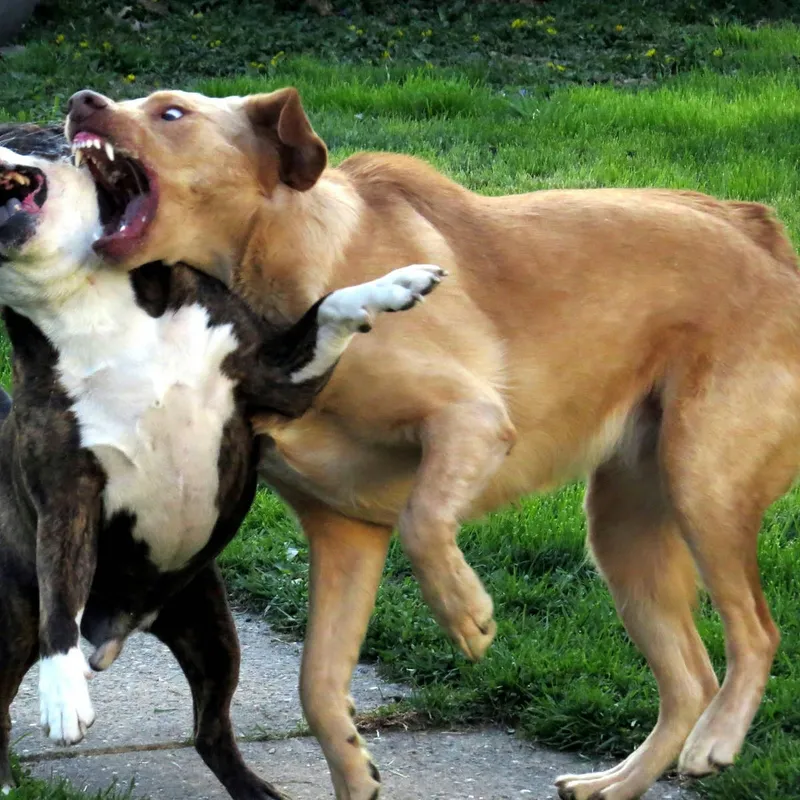
Effective Approaches to Canine Aggression: What the Latest Studies Reveal
Sage Bennett

Five Forms of Aggression in Dogs
Canine aggression can take one or more of these five forms:
- Aggression between dogs living in the same home
- Fear-based aggression directed at other dogs
- Conflict aggression toward familiar people (previously called dominance aggression)
- Fear-based aggression toward humans
- Predatory aggression
Opinions about what causes dog aggression and how best to treat it are often strongly held, but until this research was completed, the specifics were not well understood. What follows summarizes what works across all types of aggression.
Could a Medical Condition Be Behind My Dog's Aggression?
In this large study, 15% of owners who brought their dogs to a veterinarian for aggression learned that a medical issue was responsible for the behavior. (1)
A medical problem may not seem connected to aggression, but when a dog feels unwell, aggression is sometimes the only way they can communicate that.
Some cases are clear, such as a seizure disorder leading to aggression. But I have also seen dogs who were aggressive toward family members because of diarrhea and a bowel problem, others whose aggression stemmed from pain caused by an injury, and still others who bit due to an undiagnosed hormonal disease.
If nothing obvious is found, blood work may be needed after the examination. When a medical cause for aggression can be identified, your dog will feel better and the problem can be addressed early.
If all results are normal, training is the next step.
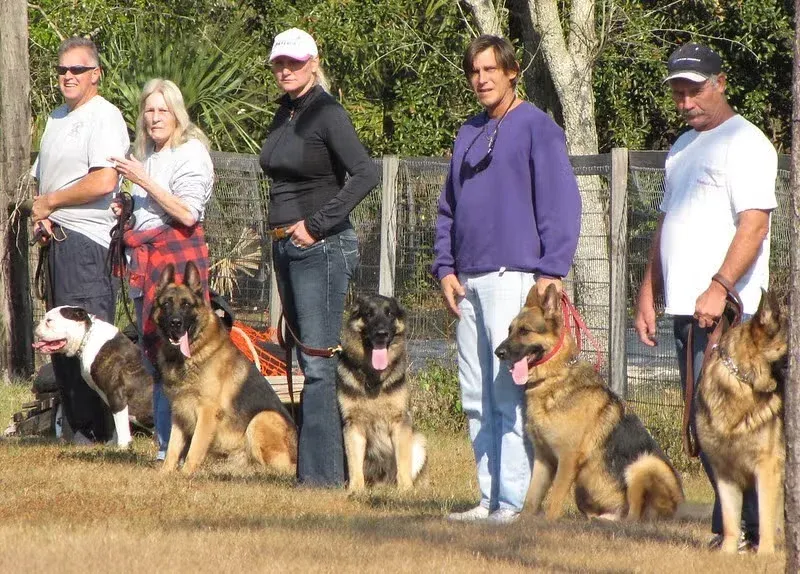
Frequent training sessions are one of the best way to help an aggressive dog.
flickr.com airwaves13225953904
Can Training Improve Aggressive Behavior?
Above all, this recent study demonstrates that behavior modification and training are effective. What kind of training should you do with an aggressive dog?
- Obedience training: Short, frequent sessions are more likely to help than training once a day or a few times a week. Every dog needs to learn basic cues (sit, down, stay) as well as important commands like “leave it” and “drop it”. Dogs also need a safety word so they can be brought back under control quickly.
- Relaxation: Reactivity means a dog responds to something in their environment. An aggressive response is considered inappropriate, and dogs can be taught to be less reactive through relaxation. Counterconditioning is one form of relaxation training; it can be very helpful in making a dog less reactive and calmer, but you need to identify what the dog is reacting to.
- Habituation: This is a specific type of training in which your dog becomes accustomed to the trigger of their aggression through repeated exposure. You might want to hire an experienced obedience trainer, but you can also do this yourself once you pinpoint the aggression trigger. If your dog becomes aggressive around other dogs, for example, they need repeated exposure to other dogs until it is no longer an issue.
- Better communication: When you begin training, communication improves. Your dog will start looking to you for signals, commands, and treats. Spending more time on all types of training reduces aggression and teaches you to recognize your dog's signals before they react.
But is equipment also necessary for training?
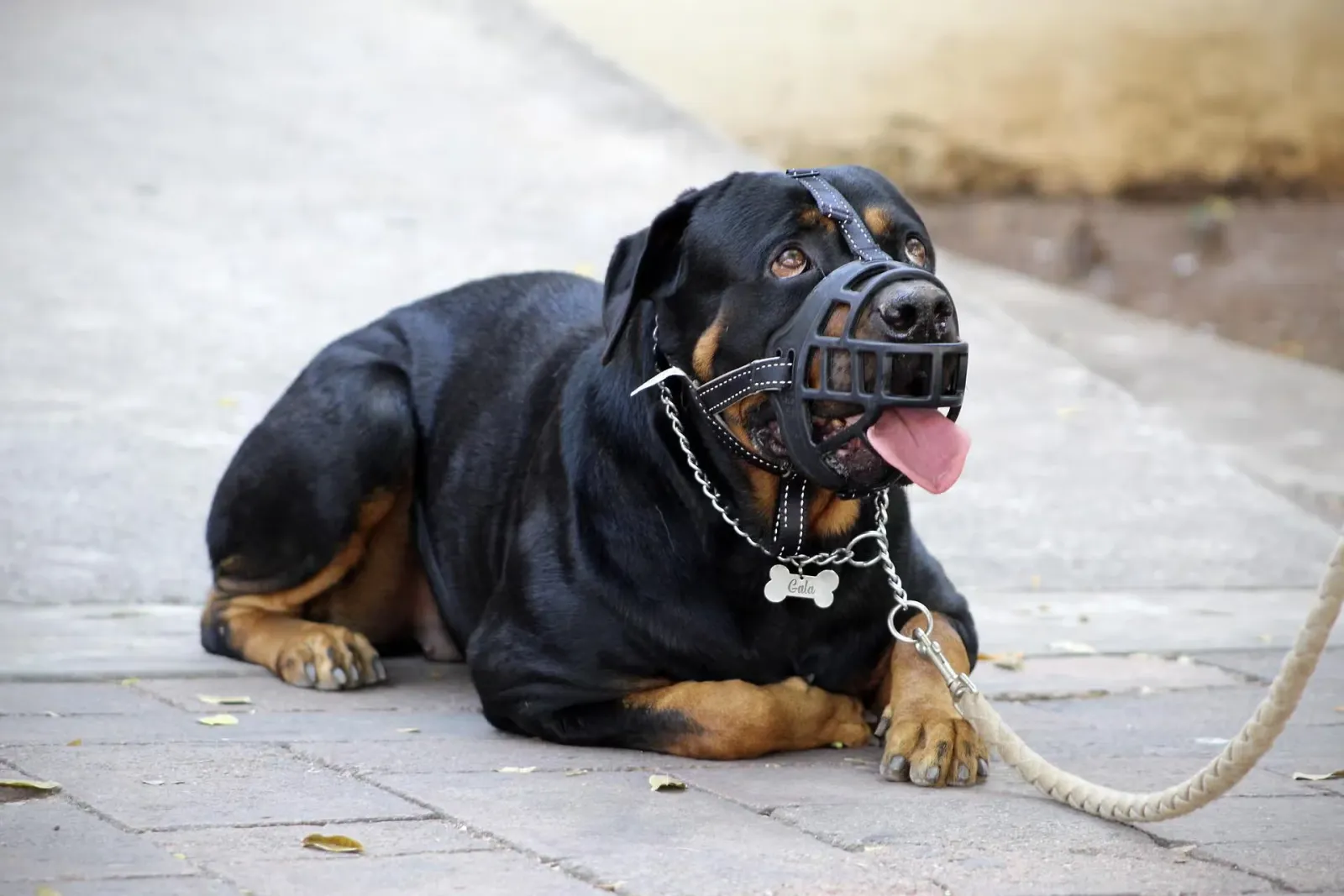
Muzzles do not help to lessen dog aggression.
pixabay
Are Muzzles Useful for an Aggressive Dog?
In the nearly 1,000 dogs studied, none of the training equipment (muzzles, anti-bark collars, etc.) improved the outcome of aggression treatment. When owners depend on this type of equipment, they are actually less successful in helping their dogs overcome the main problem.
What muzzles can do is help control a dog who is still untrained and unpredictable. If you do not yet have your dog under control through obedience training and are unsure whether your dog will stop their aggression when you use a safety word, it is best to use a basket muzzle when walking outside.
But should you put your dog on medication until they are trained?

Dogs of all sizes and types can become aggressive.
pixabay
Do Medications Help Aggressive Dogs?
Many types of medication have been used for aggressive dogs over the years, including sedatives and mood-altering drugs. Not all are helpful in every case, and not all dogs respond the same way to a particular drug.
If you try a medication and your dog seems “doped up” (like a zombie), talk to your veterinarian about changing it.
Medications can help if given early and alongside behavioral training.
If training was not enough and you have tried medications, what else can you do?
Are There Other Therapies That Help Aggressive Dogs?
If your dog becomes aggressive, follow these steps:
- Take them to your veterinarian for an examination. If the physical exam and blood work are normal, proceed to the next step.
- Begin obedience lessons. Keep in mind that short, frequent sessions work better.
- Consult a trainer. Techniques beyond basic obedience can be very helpful, and an experienced trainer can identify some problems and help set up a program to improve communication between you and your dog.
- Return to your veterinarian for medications to use with behavioral training. Not every dog will need medication, but if you do use it, start early when training does not seem to be resolving the behavior.
- Consult a behaviorist. The majority (81%) of people who consulted a behaviorist found the advice helpful in reducing their dog's aggressive behavior. I do not recommend this first because if your dog is sick, no behaviorist will stop the aggression. If the dog is not trained, that is the next step. Some dogs will need a behaviorist to resolve their aggression, but other steps should come first.
Spending time training your dog with desensitization and counterconditioning is the most helpful proven behavioral therapy.
Sources
(1) Ian R. Dinwoodie, Vivian Zottola, Nicholas H. Dodman, “An investigation into the effectiveness of various professionals and behavior modification programs, with or without medication, for the treatment of canine aggression,” Journal of Veterinary Behavior, Volume 43, 2021, Pages 46-53..sciencedirect.com/science/article/abs/pii/S1558787821000174
National Canine Research Council. “Growling, snarling, snapping, and biting behavior: incidence and correlates; a literature review.” NCRC, July 2016. ionalcanineresearchcouncil.com/research_library/growling-snarling-snapping-and-biting-behavior-incidence-and-correlates-a-literature-review/
Simpson BS, Papich MG. “Pharmacologic management in veterinary behavioral medicine,” Vet Clin North Am Small Anim Pract 33:365-404, 2003.
Feltes ES, Stull JW, Herron ME, Haug LI. “Characteristics of intrahousehold interdog aggression and dog and pair factors associated with a poor outcome.” J Am Vet Med Assoc. 2020;256(3):349-361. i.nlm.nih.gov/31961268/
Reisner IR, Shofer FS, Nance ML. “Behavioral assessment of child-directed canine aggression.” Inj Prev. 2007 Oct;13(5):348-51. i.nlm.nih.gov/17916894/