Teaching Ground Safety: A Hands-On Horsemanship Session for Newcomers
Charlie Watson
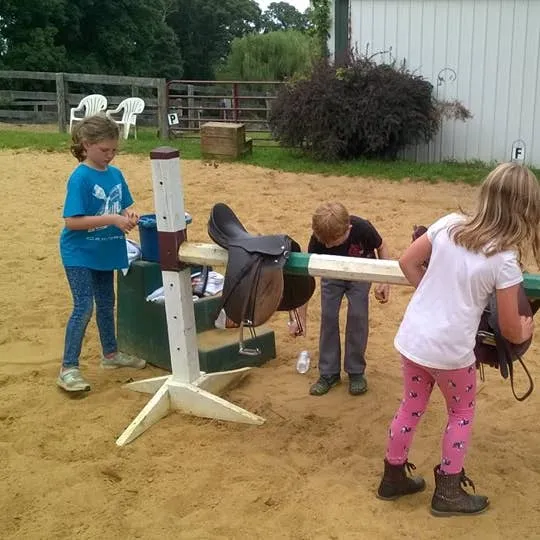
Why Off-Horse Instruction Belongs in Every Program
Good horsemanship is not built in the saddle alone. A rider who knows nothing about the animal underneath them is missing something essential. Horses deserve our respect, and that respect starts with learning as much as we can about them.
Structuring the Lesson Around the 5-E Model
My curriculum writing habit follows the 5-E instructional model, an approach used in experiential science education. I first encountered it at a farm-based education seminar. Lessons framed this way can open a useful income stream, since school groups looking for field trips need activities that fit the format teachers are already required to use; handing them a ready-made plan in that structure is a real convenience.
The five E's are Explain, Explore, Engage, Elaborate, and Evaluate. Their order is flexible as long as all five appear somewhere in your program.
At first, I assumed a strict format would feel constraining, but it has actually made it much easier to produce solid lesson plans that any instructor could pick up and teach, while keeping the learning accessible for kids.
Setting the Objective
The goal is to get participants comfortable with basic, safe handling practices while working with horses from the ground. This format fits several situations: an orientation for new clients, a scout troop working toward a horse badge, the opening day of summer camp, or a rainy-day session within a regular lesson program.
Task 1: Explain
Split your group into pairs. If participants are unfamiliar with one another, either assign partners yourself or pair them at random. This activity requires your horses to be in the barn.
- Greet the students and hand each of them two slips of paper.
- Give each pair the names of two horses currently in the barn.
- Explain that this is simply a fun game: they will guess the weight of each of their two assigned horses.
- Stress that it is only for fun—any best guess is perfectly acceptable.
- Collect the guesses and keep them safe for later.
Task 2: Explore
Ask the group why a horse's weight would matter to us. Invite their ideas, then steer the conversation toward the key point: horses are far larger than people. Even the smallest horse greatly outweighs us, so safety awareness around them is a constant requirement.
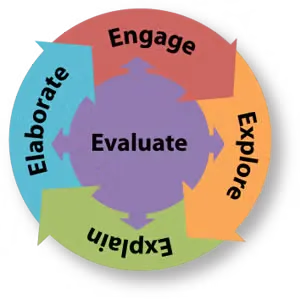
The 5-E model is a lot easier to work with than you might think.
Task 3: Engage
Hand out paper and drawing supplies to each student. Explain that each of them will create a poster illustrating one safety rule. Beforehand, write every safety rule you intend to cover on slips of paper and place them in a hat.
- Each student draws a rule at random and reads it aloud to the group.
- After everyone has a rule and understands its meaning, allow as much time as you judge necessary to finish the posters.
- When the posters are done, display them somewhere prominent in the barn as ongoing reminders.
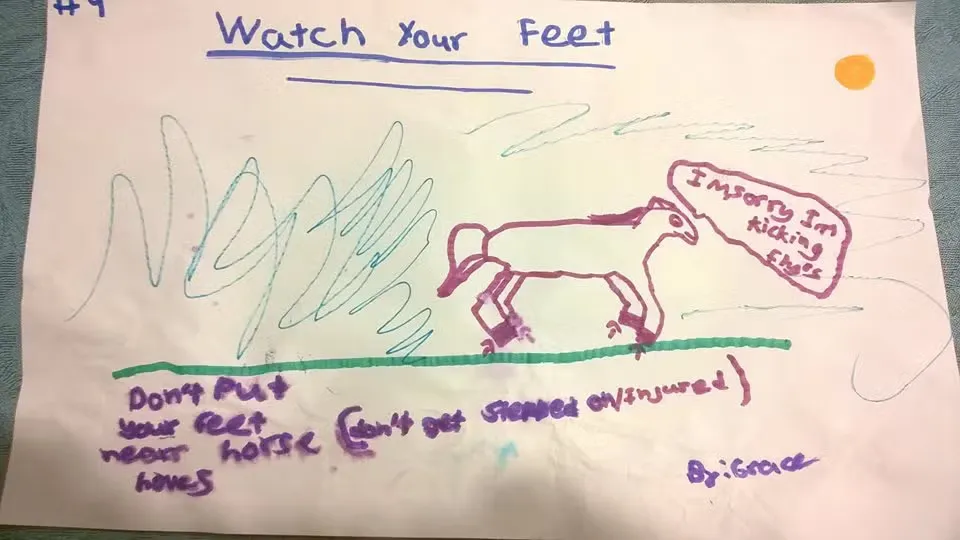
Safety posters are always a fun project
Task 4: Elaborate
Ask the students to find a safe spot to stand and observe while you demonstrate each of the safety rules they illustrated. Use a calm horse on crossties for this demonstration, since the kids will be working with the horse as well. Be sure to call attention to the safety rules throughout. I would run through all the rules on both sides of the tied horse, so each one is shown twice.
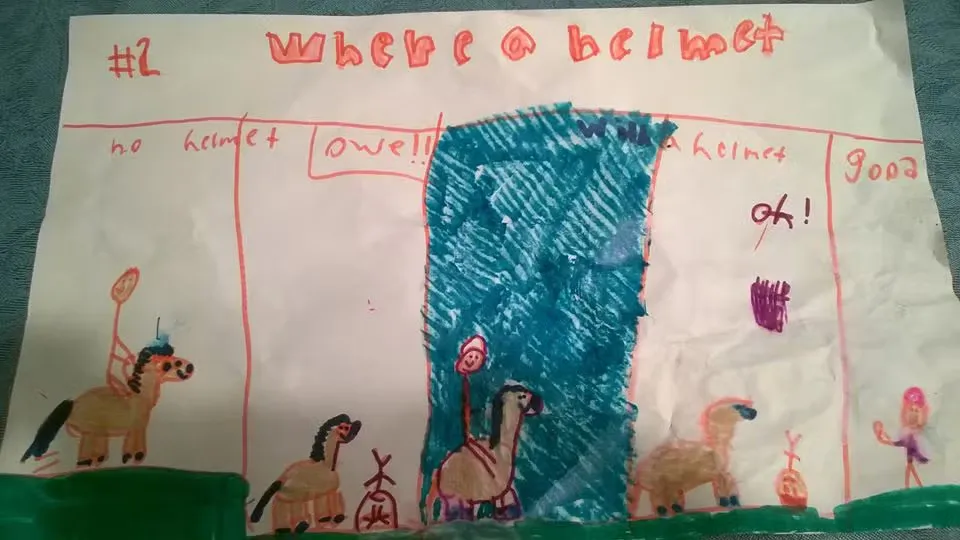
Safety posters always turn out interesting. I normally hang them up for the duration of the class, but then they can take them home if they want!
Task 5: Evaluate
Each child then takes a turn demonstrating the rule shown on their poster. The rest of the group should watch closely, because they will grade the demonstrator on how well the rule was shown. Each observer assigns an A, B, or C and then explains the reason for that grade.
Having them justify their grades shows whether they genuinely understand the rules and why they matter. After everyone has demonstrated and been graded, return the weight guesses collected at the start.
Now move from stall to stall. Students read out their guesses, the others predict whether the true weight is higher or lower, and then you use the weight tape on the horse to reveal the actual figure. As you take each weight, keep referencing the safety rules and record the real weights as you go.
Closing the Session
With all the actual weights known, you may choose to award a small prize to the pair whose guesses came closest. To wrap up, ask the group whether they had fun and whether they feel they learned the safety rules. Then point out how the weight exercise connects to safety: it serves as a reminder of how much larger even the smallest horse is compared to us, and how we must stay mindful of our safety at all times.
Happy unmounted horsemanship!