A Skin-and-Bone Colt, a Skeptical Vet, and 33 Years of Partnership
Sage Howard
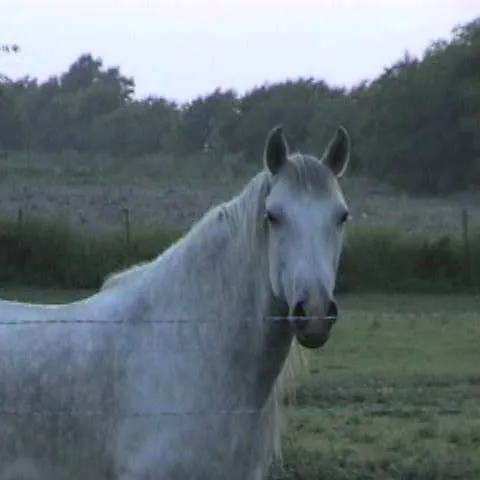
The Colt in the Field
I was 38, married, and raising a nine-year-old stepson named Kelley who could not get enough of horses. He kept begging to ride Cisco, my strawberry roan. Cisco was my roping and cattle-working horse, and he was on the rough side back then — not the sort of mount you hand to a beginner.
The first time I saw Pancho, he was down in a field, and every bone in his frame showed through his hide. Talking to the owner, I learned that Pancho's mother had died not long after foaling; he had gotten the first milk, and then she was gone. The owner figured the colt did not have much time left.
I asked his price. He said $650, since Pancho was a son of Piloto, a well-known Peruvian Paso, and indeed the colt was full-blooded. I went ahead with the purchase to see whether I could bring him back. My thinking was that if he pulled through, he would be something special.
Lifted Into the Trailer
At a year and a half old, Pancho was nothing but skin and bone and could not get to his feet. I fetched a trailer and got help from a deputy who happened to be on hand, and between us we physically lifted him inside.
As I was pulling out of the ranch, the owner walked up and handed me back $600. He said he knew the horse was headed to a good home and hoped the money would go toward his recovery.
A Vet's Dim Prognosis, and a Batch of Oat Balls
Back home, I called my veterinarian out to examine Pancho. His verdict was that the colt would not survive the night. I was not convinced. At the store I picked up every vitamin on the shelf and a big canister of oatmeal, then rolled the vitamins into oat balls and put them in Pancho's mouth; with a bit of help, he swallowed them.
By the following morning Pancho was up on his own. I phoned the vet with the news. He asked what I had done, and when I explained, he was doubtful — then astonished at the colt's sudden strength. He drove straight out, could not get over the change, gave Pancho all his shots, and did not charge me a cent.
Kelley's First Ride
Once Pancho had recovered enough to be worked with, Kelley was the first one on his back. I coached the boy through what to do, and Pancho absolutely adored him — his behavior and his expressions made that plain.
Kelley and his mother left that Christmas and never came back, so finishing the horse's training fell to me. By then Pancho was two and a half, a genuinely good horse, naturally five-gaited and a pleasure to ride. He has been with me ever since.
Five Pounds of Carrots and a Night at the Hospital
At age 10, Pancho accepted a full five-pound bag of carrots from a neighbor's boy — and the next day he was in colic. Once I understood what had happened, I called the vet at once. We dosed him with two gallons of mineral oil, and nothing moved.
The vet directed me to Las Colinas Veterinary Hospital, saying they would sort him out. Las Colinas is a costly facility, but when I called, the vet there told me not to worry — they were expecting Pancho and me.
We arrived and they set to work immediately. When I asked about the bill, I was told to put it out of my mind: Pancho mattered, and nothing else did.
They kept him overnight and I went home. The next morning the call came that Pancho was ready to be collected. While I was there, the vet had me come look at what they had found.
On the floor lay the carrots compressed into one large ball — the impaction, the vet said. They had examined Pancho thoroughly and he was entirely fine, with no damage to his intestines or anything else.
You might assume Pancho would never touch a carrot again. Not so — he still loves them, but he will only take two.
An Old Friend and a Clever Horse
In our younger days Pancho and I worked cattle together, herding especially. He is so capable at it that he has done a great deal of that work around here, longhorns included, and he can cover ground when the job calls for it.
Pancho is roughly 33 now, still attentive to detail, and he answers to his name. I am 68 and still trim and shoe my own horses when they need it. Pancho is due for a trim, so off I go.
We are both seniors, yet I still get on Pancho now and then. It has been an exceptionally muddy year in North Texas; once the ground dries and the mud is gone, I intend to clean him up and take him out.
He is eager to get out and so am I, and I have no worries about him remembering how to be ridden, even though it has been a good while since we last saddled up. Pancho is unusually intelligent and strongly bonded to me.
He has taught me plenty, in fact. He once knew around 20 tricks; he could work knots loose from a rope and open locked gates by himself, and he will fetch his feed bucket when he is hungry or when asked.
The Nail He Would Not Put Down
Pancho communicates well with me and stays very calm. One morning, on my way to feed him and Cisco, I saw him standing by the gate holding his left front foot up. Looking at the sole, I saw a large nail sticking out of it.
I told Pancho not to move, went for my pliers, drew the nail, and flushed the hole with betadine from a Monoject syringe. The vet came out, gave Pancho his shots, and examined the injured foot.
We have been through many episodes of that kind. Once he ended up with a sizable ball of fencing wire caught in his tail. He could have panicked, but he did not; he stood perfectly still while I worked the wire out.