Ceramic Heat Emitters for Reptile Enclosures: A Practical Guide
Sam Cooper
Choosing a Ceramic Heat Emitter for Your Reptile
For cold-blooded pets, ceramic heat emitters rank among the top options for delivering warmth. They cost less than many alternatives and outlast standard light bulbs by a wide margin. Though they have an unusual appearance, their value justifies the expense.
Comparing Zoo Med and Repticare Heat Emitters
I have personally used two brands of heat emitters with my snakes and lizards: Zoo Med and Repticare. When it comes to cost, build quality, and how long they last, both manufacturers perform similarly. Further details on these two brands appear below.
Cost: Ranges from $20 to $30, and some styles cost even more, depending on the seller.
Expected Lifespan: Roughly five years, or about 25,000 hours.
Wattage Guidelines
- 100 watt for enclosures of 30–40 gallons
- 150 watt for enclosures of 50–100 gallons
Common Applications
These devices are most often employed for:
- Reptiles
- Amphibians
- Plant terrariums
The product can raise the internal air temperature of a terrarium by 10 to 20 degrees Fahrenheit above the ambient room temperature. After extensive testing, I found that the bulb lives up to the claims made by both manufacturers.
Important Safety Note for New Users
This product requires extreme caution during use. Be sure to follow every guideline provided by the manufacturer.
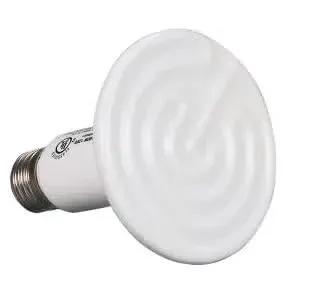
What the bulb looks like.
Setting Up a Heat Lamp
Similar to a light bulb, this emitter sends heat in whatever direction the fixture faces. Unlike a light bulb, it produces no visible light. The drawback is that you must ensure the fixture is aimed exactly where you want it. Positioning can be tricky because, unlike with a light bulb, you cannot see the light to guide you.
Which Clamp Is Appropriate?
Some people claim that an ordinary clamp works with this fixture as long as the socket is made of porcelain. Because of the heat this unit releases, I hold a different view. This bulb becomes extremely hot! Using a standard clamp fixture with a plastic socket risks melting from the intense heat.
I suggest using a porcelain clamp lamp fixture made specifically for this product. It costs a little more, but can you really put a price on safety? A picture of a porcelain clamp lamp fixture is included below.
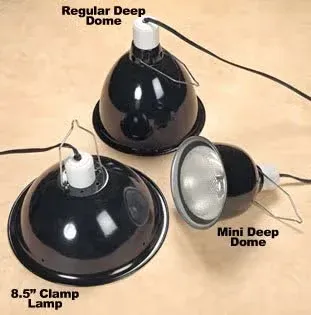
Porcelain clamp lamp fixture
Advantages and Disadvantages of Ceramic Heat Emitters for Reptiles
Like any product of this kind, there are positive and negative aspects. I have outlined some of each below.
Advantages
- Delivers the penetrating heat that cold-blooded reptiles require
- Emits no light at all
- Works well for both daytime and nighttime use
- Produces more heat and lasts longer than light bulbs
- Supplies deep warmth that helps reptiles stay active and healthy
Disadvantages
- May overheat the pet if not used properly
- Can burn the pet if placed too close or if the pet touches the bulb
- Becomes very hot and must be positioned to avoid creating a fire hazard
- Can burn you if you are not careful
- Requires time to position correctly and close monitoring until the placement is right
- Somewhat expensive
My Conclusion: Best for Careful Keepers
Overall, I have a very favorable view of this product. I recommend it, but only for users who are careful and attentive to detail. If misused, it can harm or even kill the pet. Careless use can also create a fire hazard. On the whole, it is an excellent product—thumbs up and highly recommended!
Important Safety Note for New Users
This product demands extreme caution. Please adhere to all of the manufacturer's usage guidelines. If used incorrectly, it can severely burn or even cook your pet. You must monitor temperature and placement very closely until it is set perfectly. Careless use can also lead to a fire hazard.
This article is accurate and true to the best of the author's knowledge. It is not meant to substitute for diagnosis, prognosis, treatment, prescription, or formal and individualized advice from a veterinary medical professional. Animals exhibiting signs and symptoms of distress should be seen by a veterinarian immediately.